
In this article 8
The annual vegetable garden follows an exhausting cycle: sow, transplant, harvest, pull everything up, and start from scratch the following year. Each spring, the soil is left bare and the plant starts again from seed.
Edible perennials reverse this pattern. Once established, they produce for years, occupy the soil permanently, and develop root systems that no annual has time to build. It is another way of designing a vegetable garden — slower at first, but far more economical afterward.
What a perennial really changes
- Unmatched root development. An annual has only a few months to explore the soil; a perennial works it for years. It reaches layers and reserves inaccessible to lettuce, making it significantly more drought-tolerant.
- Soil that is never bare. No annual reset means no erosion, no crusting, and no nitrogen loss through leaching between crops.
- A mycorrhizal network takes hold. This is the most interesting point: root symbioses take several years to develop and are destroyed every time plants are pulled up. In a perennial bed, they become established over the long term — and the plant gains greater water and mineral autonomy. See The Basics of Living Soil.
- A dramatically reduced workload. No sowing, transplanting, or intensive weeding once the ground cover is established.
- Staggered harvests. Many perennials produce early — in March and April — when the annual vegetable garden still has nothing to offer. This is the most tangible day-to-day benefit.
The trade-off is real: you have to wait. Asparagus can be harvested from the third year, artichokes from the second, and a sown berry even later. Perennials do not replace the annual vegetable garden: they complement it, and should be planted with five years from now in mind.
Perennial vegetables
- Green asparagus — the most productive perennial over the long term: a well-established asparagus bed produces for fifteen to twenty years. Sow in spring; the first light harvest comes in the third year. It requires deep, well-drained soil and a permanent spot.
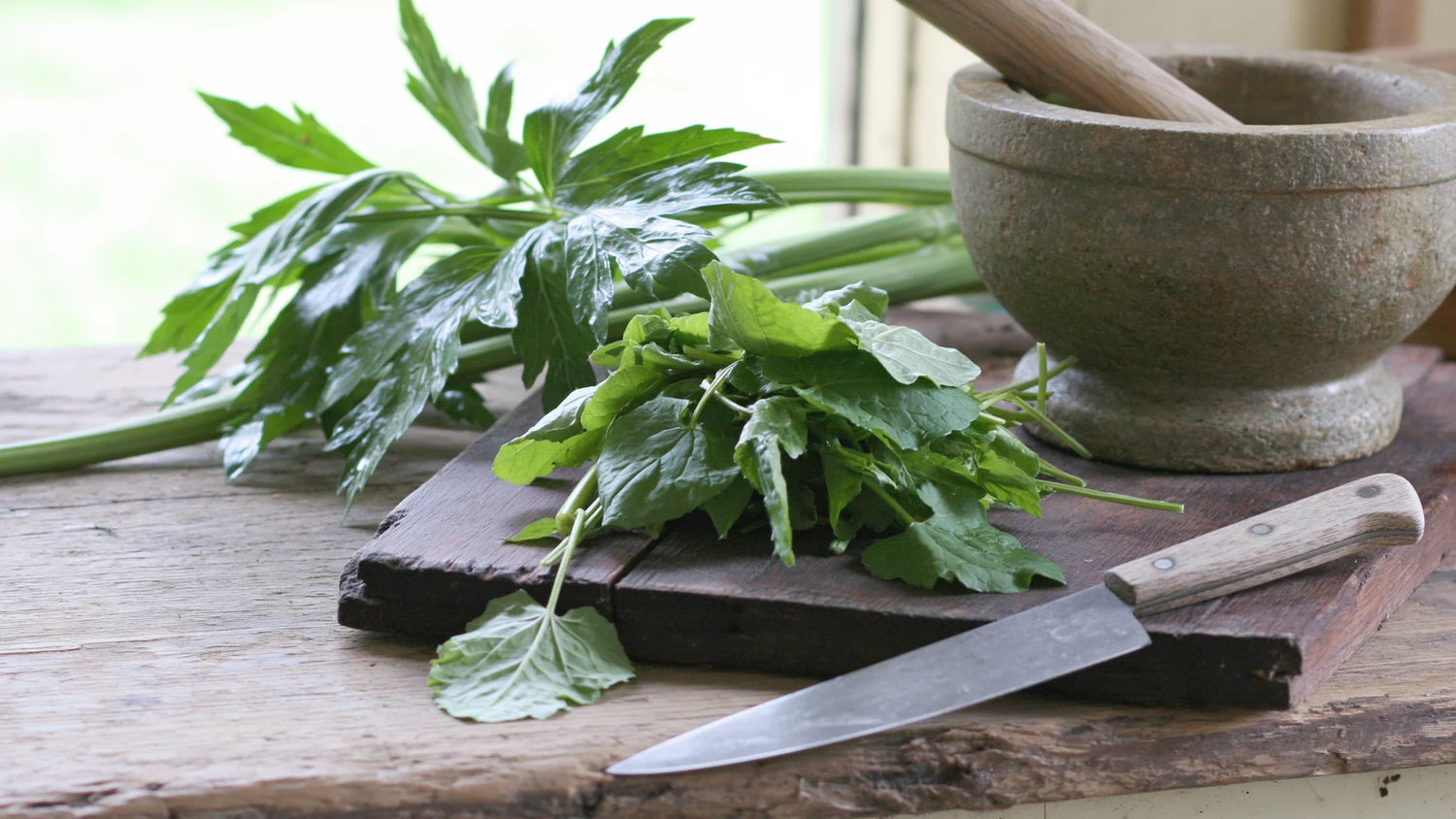
- Lovage (perennial celery) — a very powerful celery flavor, without celery’s demands. One plant is more than enough for a household; it reaches two meters.
- Horseradish — pungent root, remarkable condiment. Very difficult to eradicate once established: the slightest fragment of root will regrow. Plant it in a buried pot or in a spot you will never want to change.
- Wild garlic — the quintessential shade perennial, beneath trees or on the north side of a wall. Harvested in March–April, before everything else. Its seeds require cold stratification, and emergence may take two winters—do not throw away the pot.
- Hops — a vigorous climber, reaching up to six metres in a season. The young spring shoots can be eaten like asparagus. An excellent cover for a trellis or an unattractive wall.
- Thornless caper bush — for dry, rocky, full-sun ground. Germination is unpredictable and growth is slow, but it is remarkably well adapted to conditions where nothing else will thrive.
To complement them, add the great classics that only need to be planted once: rhubarb, sorrel, artichoke, cardoon, perennial leek, Jerusalem artichoke.
Small fruits
These are the perennials offering the best pleasure-to-effort ratio, and they fit very well along the edge of the vegetable garden or in a fruiting hedge.
- Wild strawberry — the easiest to grow from seed. It self-seeds and sends out runners on its own, tolerates partial shade, and makes an excellent edible ground cover at the base of shrubs.
- Wild raspberry — smaller and far more fragrant than commercial varieties. It spreads by suckers: plan for a boundary.
- Wild blackberry — vigorous and ideal for a defensive hedge. Keep it in check: it takes up space.
- Redcurrant and blackcurrant — tolerate partial shade, making them good candidates for the northern areas of the garden.
An honest clarification: small fruits grown from seed require patience—often three to five years before the first substantial harvest—and produce variable individuals, since these species are cross-pollinating. It is exciting if you enjoy selecting; it takes longer than buying a plant if you simply want to harvest. The two approaches complement each other well.
Perennial herbs and flowers
These are the most rewarding perennials for Zone 1, the ones you pick while cooking.
- Woody herbs — thyme, sage, lavender, oregano, savory. Well-drained, poor soil; no watering once established.
- Herbaceous herbs — lemon balm, chives, tarragon, mint. Lemon balm and mint are invasive: contain them.
- Perennial edible flowers — mallow, hollyhock, daisy, coneflower. See Edible flower seeds.
Installing them correctly
A poorly placed perennial is a problem for ten years. Five things to sort out before sowing.
- Choose the permanent location. Away from rotating beds, along an edge, or in a dedicated area. A perennial in the middle of an annual vegetable garden gets in the way and eventually gets pulled up.
- Prepare the soil deeply, just once. Loosen it with a broadfork and add mature compost before planting. You will not be able to intervene afterward — this is the only opportunity.
- Plan for their mature size. Lovage grows to two metres, and hops to six. Place tall plants to the north so they do not shade the rest.
- Contain invasive plants — horseradish, mint, lemon balm, Jerusalem artichoke, raspberry. Use a buried pot, an edging sunk 30 cm deep, or an isolated spot.
- Water generously during the first year, then ease off. This is when the root system that will make them self-sufficient develops.
Fall planting is clearly preferable: the plant has winter and spring to establish its roots before its first dry spell.
Pitfalls to avoid
- Plant everything in the same year. You will wait three years without harvesting anything. Plant two or three perennials per year, alongside the annual vegetable garden.
- Underestimating invasive plants. Horseradish and Jerusalem artichoke are practically impossible to eradicate. This is not a minor detail.
- Harvesting too early. Asparagus cut as early as the second year will never become properly established. Patience is an investment here.
- Putting them into the rotation. They have no place there — that is the whole point.
- Forgetting to feed them. A perennial uses the same soil every year: applying compost to the surface in autumn, every year, makes a difference over time.
Frequently asked questions
Can you create a vegetable garden made entirely of perennials?
It is possible, but the plate would be unbalanced: few fruiting vegetables and few traditional root vegetables. The most effective approach combines a perennial area along the edge with annual beds in rotation — each with its own strengths.
How long before the first harvest?
It varies greatly: a few months for sorrel, lemon balm, or herbs; two years for artichokes and rhubarb; three for asparagus; three to five years for berries grown from seed.
Do perennials deplete the soil?
Less than you might think: they recycle some of their reserves each autumn by drawing minerals back toward the roots, and their falling foliage nourishes the surface. An annual application of compost is enough to maintain the balance.
Does it work in a pot?
For herbs and alpine strawberries, absolutely. For asparagus, lovage, or berries, no — they need depth. See Balcony vegetable garden.
Seeds or plants?
Sowing costs little, lets you harvest your own seeds afterward, and produces plants adapted to the location. Buying plants saves one to three years. For species that are difficult to germinate — wild garlic, caper bush, asparagus — sowing requires technique; that is also what makes it interesting.
Key takeaway
Edible perennials do not replace the annual vegetable garden; they add a layer that works on its own. Start with three easy ones — sorrel, chives, and alpine strawberries — plant them along the edge in autumn, and add two or three more each year. In five years, part of your harvest will require nothing more from you.
To go further
- Planning your garden according to zones and exposure
- Edible flower seeds
- Cold stratification: why and how to germinate seeds?
- Drought-resistant plants
Discover our collection of perennial plants and our fruit seeds — sow once, harvest for years.

Leave a comment
This site is protected by hCaptcha and the hCaptcha Privacy Policy and Terms of Service apply.