Rubus fruticosus
Wild blackberry, common bramble, hedge blackberry, catimuron: the bramble is one of those plants you pull out of the garden and bless in September, basket in hand. Hardy down to -25 °C, virtually indestructible, it produces sweet black fruits without asking for anything in return—few crops can match its generosity.
Characteristics:
-
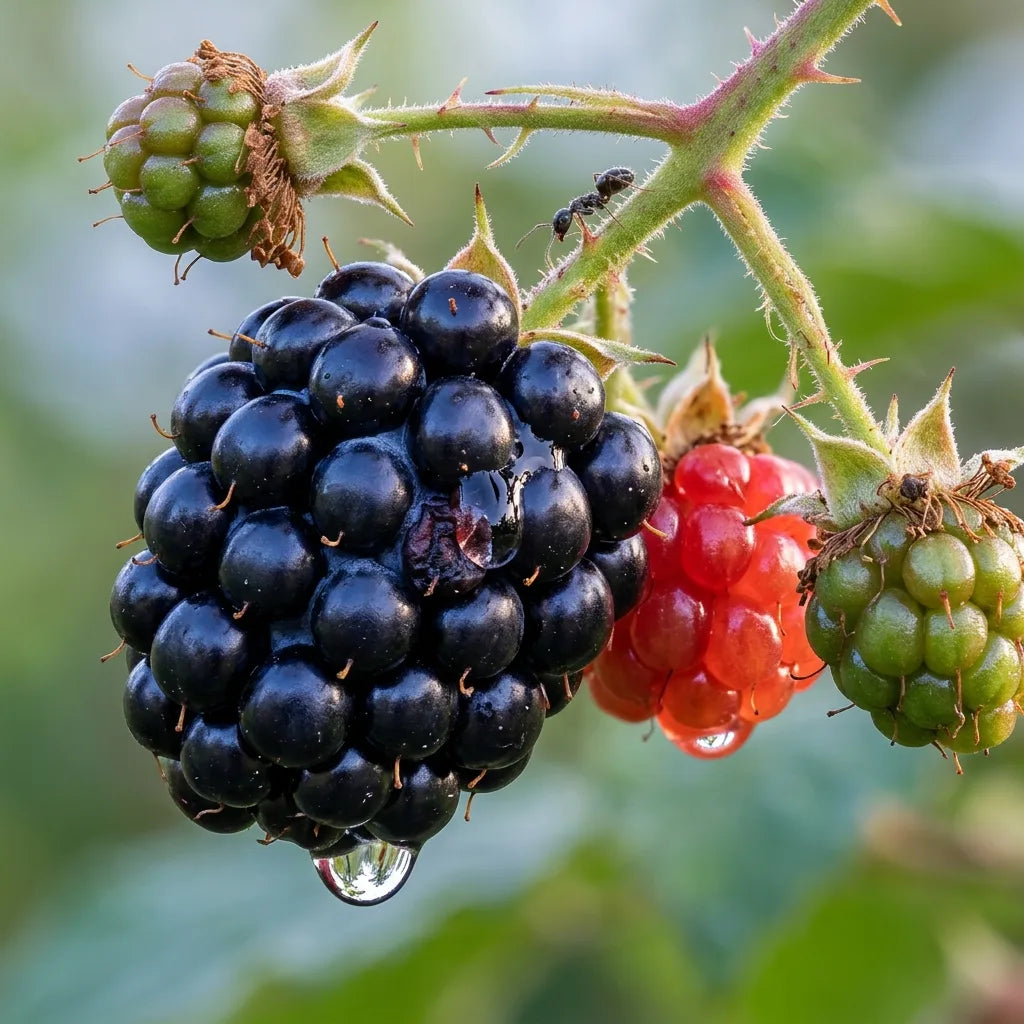
Sweet black fruits: they ripen progressively from August to October, extending the harvest.
-
Extremely hardy: it withstands temperatures down to -25 °C and grows in conditions where nothing else survives.
-
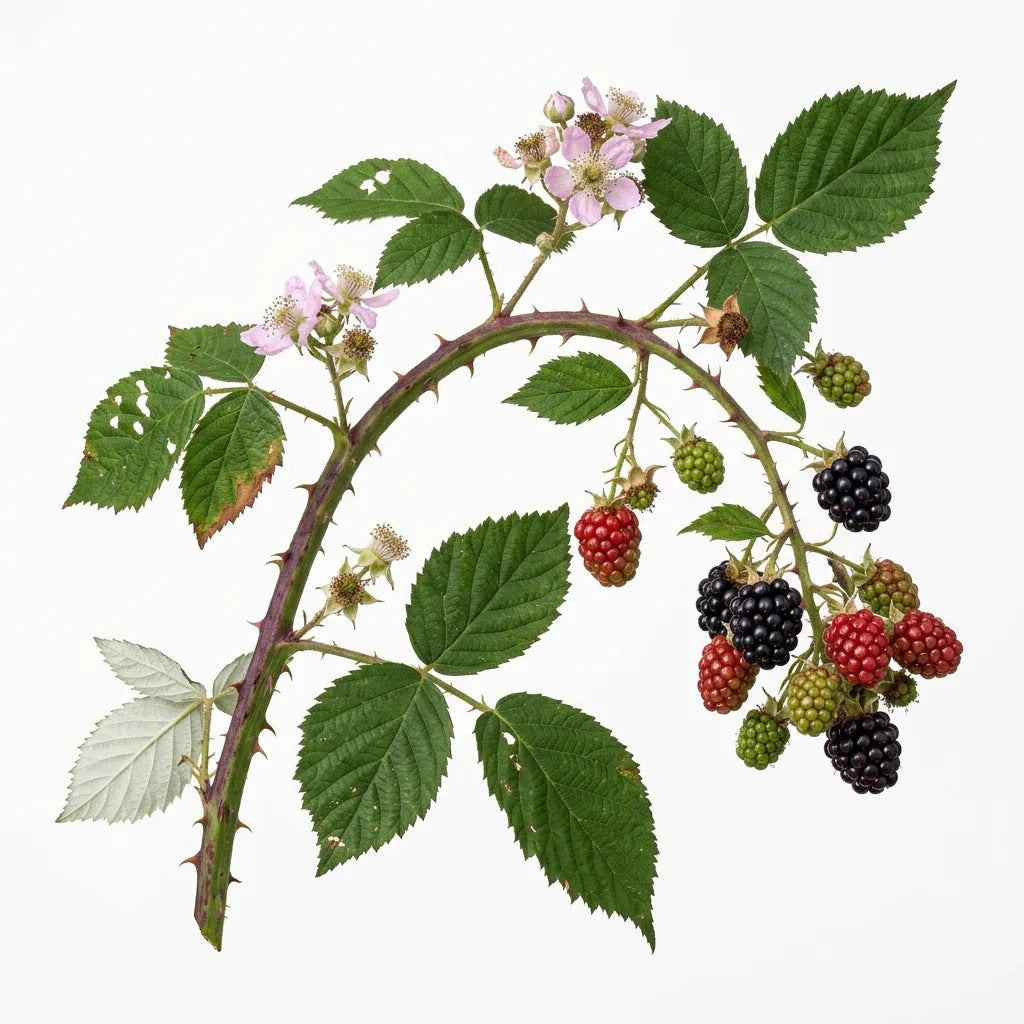
Long, trailing canes: thorny, they take root wherever they touch the ground.
-
Undemanding: a sunny or partially shaded position and deep, well-drained soil are sufficient.
Precautions — read before sowing:
-
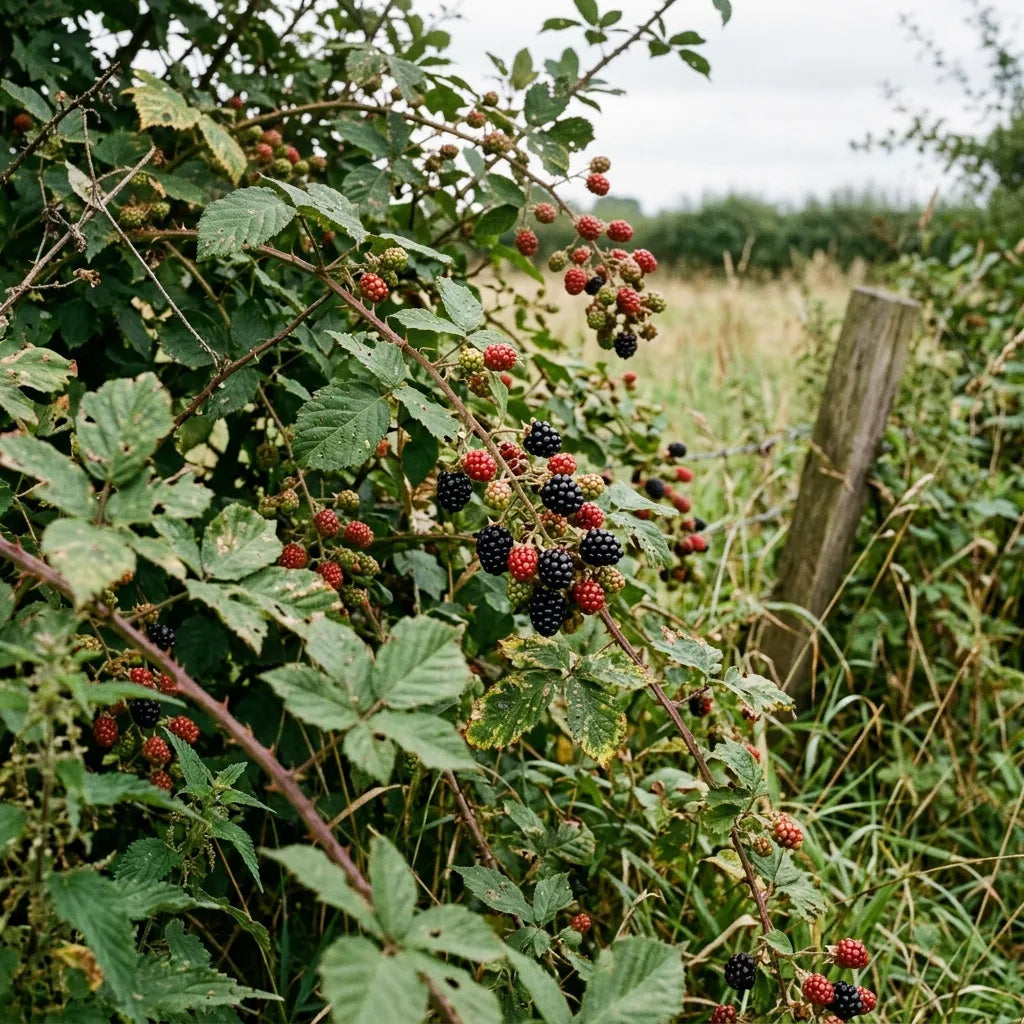
The bramble is highly invasive. Its trailing canes take root when they touch the ground (natural layering), and it also produces suckers: an uncontrolled plant forms an impenetrable thicket within a few years. Sow it only with full knowledge of the consequences, in an area where you accept that it will spread, or commit to strict annual pruning.
- Its curved thorns are formidable: thick gloves and long sleeves are essential for any intervention.
- Do not plant it against a shared fence or on a property boundary without discussing it with your neighbour.
Sowing advice:
-
Position: sunny or partially shaded. Full sun produces sweeter fruits, while partial shade results in a leafier plant.
-
Soil: deep, rich in humus, rather sandy and well drained—but frankly, it will settle for almost anything. It only fears permanently waterlogged soil.
-
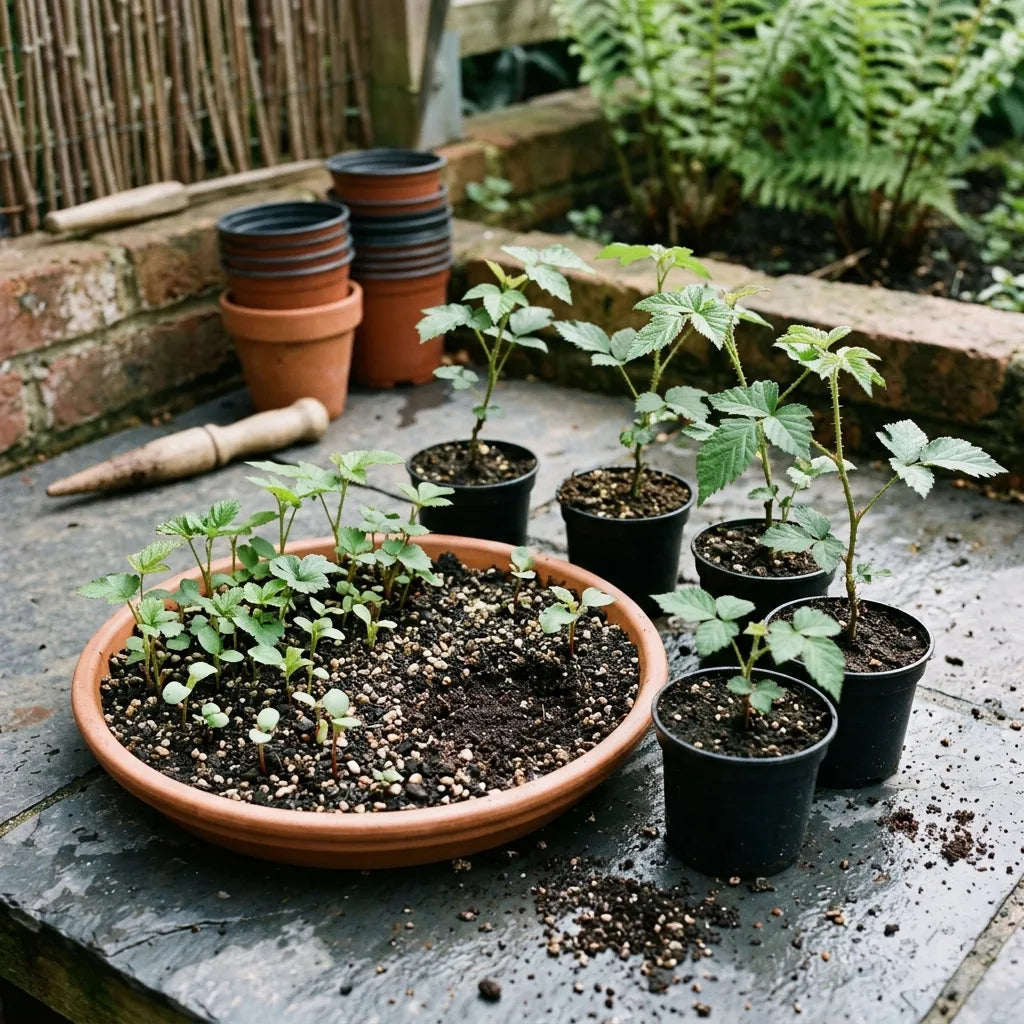
Method: 4 to 8 weeks of cold stratification is necessary to break dormancy. Then sow in a pot in spring, covering the seeds lightly. Germination is slow and staggered: be patient. See how to sow your seeds.
Planting advice:
- Transplant at the edge of the garden, at the back of the garden or in an informal hedge, spacing plants 1.5 to 2 metres apart. Choose the permanent location from the outset: it will be difficult to move later.
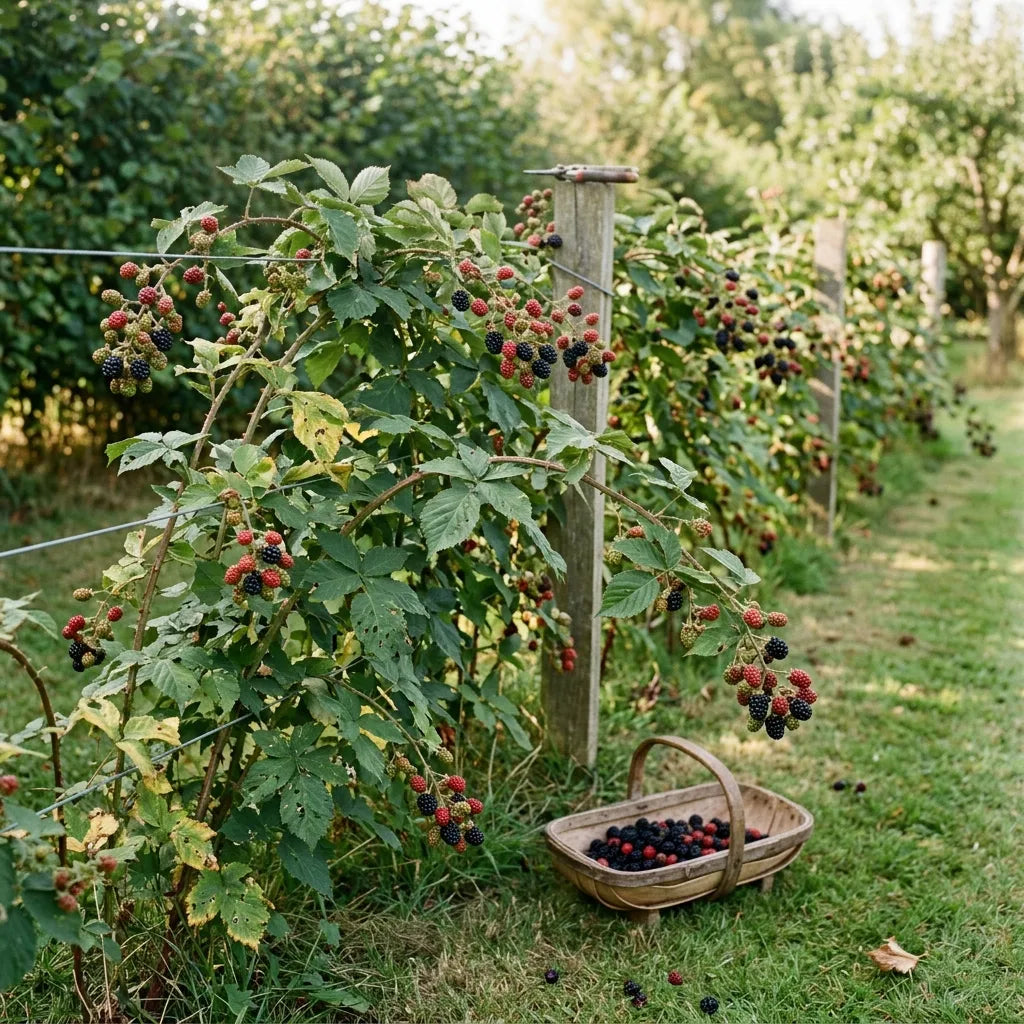
- Training it along taut wires makes harvesting and pruning much easier.
Care advice:
- No watering is needed once established, except during exceptional drought in the first year.
-
Pruning: the bramble fruits on second-year canes. Cut the canes that have produced fruit down to ground level at the end of the season, and keep the young shoots from the current year. This annual pruning is also the main way to keep it under control.
- Raise the tips of trailing canes to prevent them from taking root where you do not want them to.
Harvesting advice:
- Harvest when the fruit is dull black and comes away on its own—if it resists, it is still sour. Shiny blackberries are not yet ripe.
- The harvest extends over several weeks: return every two or three days.
Beneficial combinations:
Benefits for biodiversity:
- The bramble is one of the most useful plants for wildlife: its thorny thicket provides an impregnable nesting refuge for warblers, blackbirds and robins.
- Its flowers are heavily visited by bees and butterflies in midsummer, and its fruits feed birds and mammals in autumn.
- It serves as a host plant for the caterpillars of many butterfly species.
Uses:
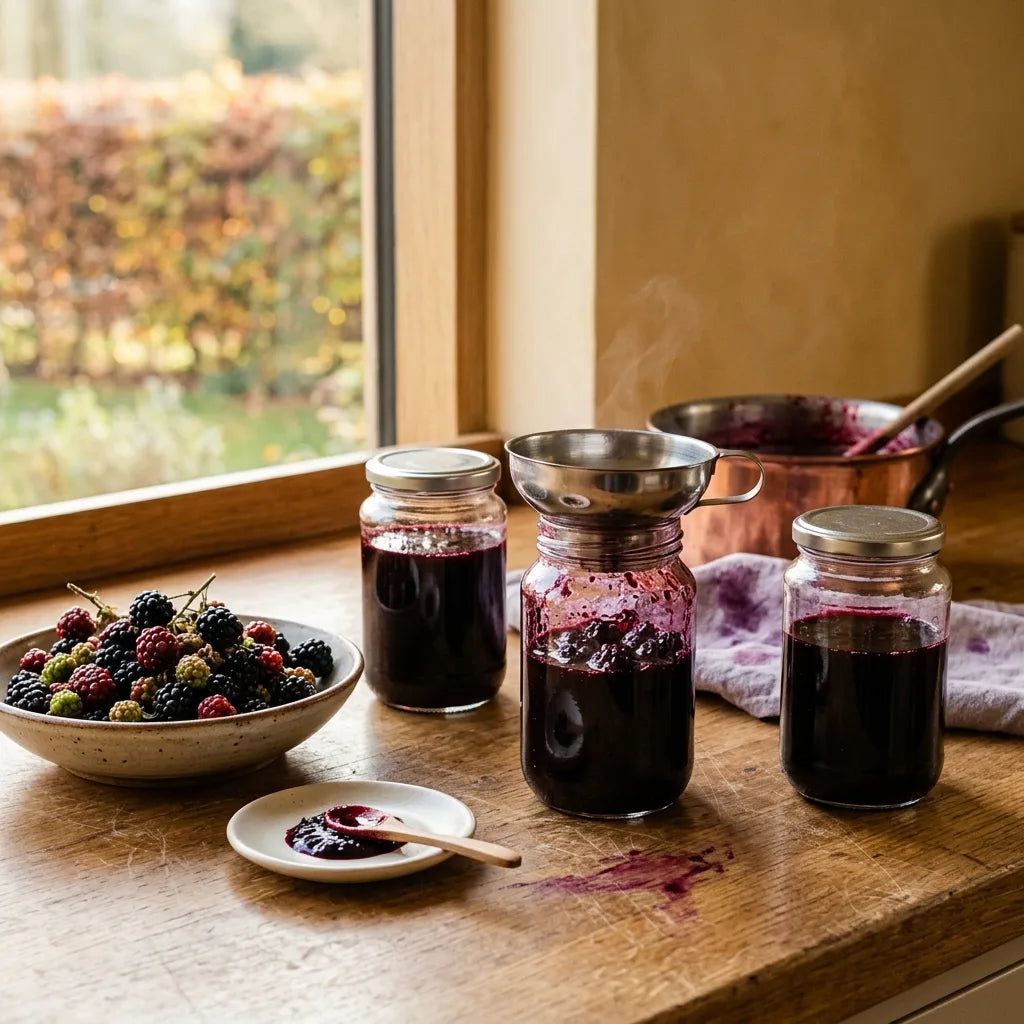
- Fresh, in jam, jelly, tarts, sorbets or syrup. They freeze very well when spread out on a tray before being transferred to a bag.
- Its young spring shoots and leaves are traditionally used in herbal tea.
Harvesting your own seeds:
Crush very ripe blackberries in a little water, rinse several times to separate the seeds from the pulp, then dry them flat before winter stratification. It also propagates very easily by layering: bury the tip of a cane, and it will root on its own. See how to store your seeds.
Our Commitment to Quality: at SemiSauvage - Permaculture, we grow and select our seeds with respect for all living things as our guiding principle. Based near the Auvergne Volcanoes, we choose open-pollinated, non-hybrid varieties, tested for their germination rate, carefully sorted and packaged, with no chemical treatment whatsoever. Our belief: to give gardeners back the ability to resow, year after year, seeds that truly belong to them.
The most precious refuge in the wild garden, and baskets full in September.