Capparis spinosa
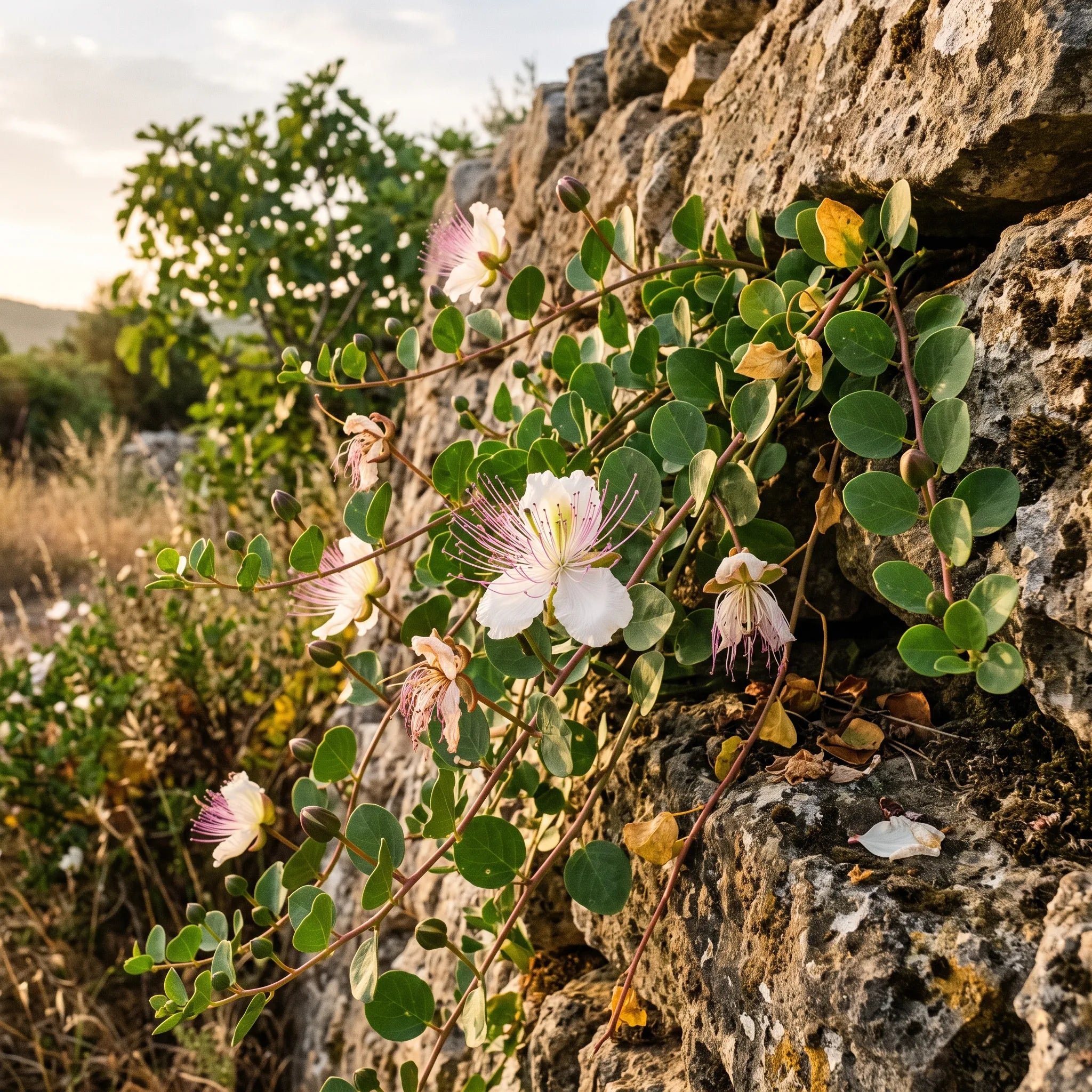
The caper bush has a remarkable survival secret: it is often seen growing directly in the cracks of old Mediterranean stone walls, with almost no soil. This thornless variety retains all the hardiness of the Mediterranean, without the inconvenience of thorny branches.
Characteristics:
-
Graceful habit: a bushy, trailing shrub with a spreading habit of approximately 50 cm by 1 metre, with drooping branches.
-
Ephemeral flowering: the fragrant white flowers, with long purple stamens, last only a single day each, between June and July.
-
Semi-hardy: it tolerates temperatures down to -5 °C and withstands drought remarkably well once established.
Sowing advice:
-
Exposure: full sun, as warm as possible — against a south-facing wall is ideal.
-
Soil: dry, stony, chalky, very poor and, above all, perfectly drained. This is a plant that thrives in extreme conditions: never enrich the soil, and avoid any heavy or damp soil, which is fatal to its roots. In a pot, use a mixture of potting soil, sand and gravel.
-
Method: germination is known to be difficult and slow. Soak the seeds for 24 hours in lukewarm water, then apply cold stratification for 2 to 3 weeks before sowing in pots in spring. Be patient: emergence may take several weeks.
Planting advice:
- Plant in the ground only in southern France. Elsewhere, grow it in a pot and bring it indoors for protection from the cold in winter, in a cool, bright room.
Care advice:
- Water very sparingly, only during the first year. Cut back the branches at the end of winter to encourage the production of new buds.
Harvesting advice:
- Pick the flower buds early in the morning, while they are still tightly closed: these become capers after being preserved in salt or vinegar. The smallest ones are the most sought after.
Beneficial pairings:
Benefits for biodiversity:
- Its large flowers, although fleeting, are highly valued by bees during their brief day of bloom.
- Its ability to colonise low walls and rock gardens makes it a welcome refuge for small wildlife in dry gardens.
Uses:
- The flower buds become capers; the young fruits, harvested later, produce caper berries, which are equally popular in Mediterranean cuisine.
Harvesting your own seeds:
Allow a few buds to open and then develop into fruit. Harvest the fruit when fully ripe, open it and extract the small brown seeds from the pulp, then rinse and dry them. See saving your seeds.
Commitment to Quality: at SemiSauvage - Permaculture, we grow and select our seeds with respect for living organisms as our guiding principle. Based near the Auvergne Volcanoes, we choose reproducible, non-hybrid varieties, tested for their germination rate, carefully sorted and packaged, without any chemical treatment. Our belief: to restore gardeners' ability to sow, year after year, seeds that truly belong to them.
Transform a corner of your garden into a Mediterranean-inspired setting with these thornless caper bush seeds.