Echinacea purpurea
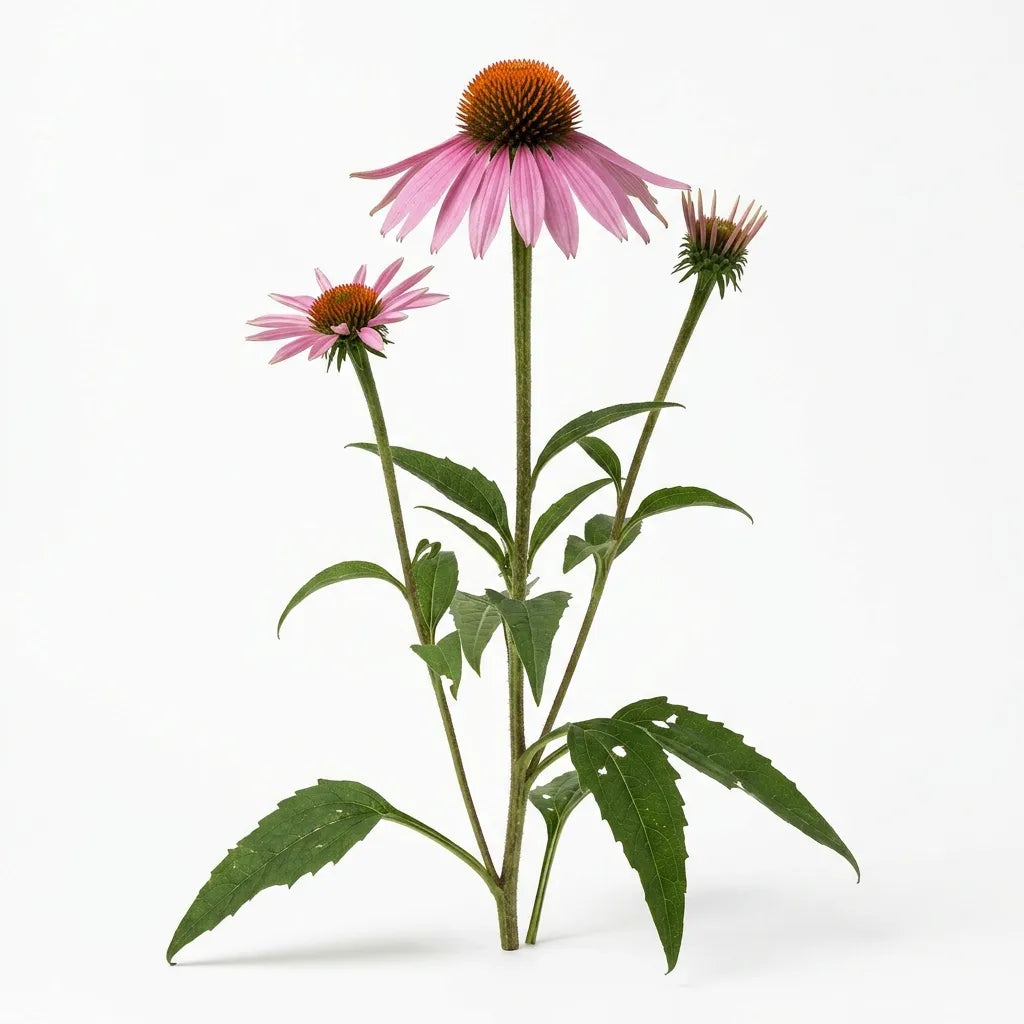
Purple coneflower: its name comes from the Greek echinos, meaning hedgehog, referring to its raised, spiky center that remains upright long after the petals have fallen. Native to the prairies of North America, it has retained a remarkable hardiness from its origins.
Characteristics:
-
Hardy perennial: remarkably resistant to cold and disease, it requires very little care once established.
-
Extended summer flowering: large pink-purple daisy-like flowers with drooping petals surrounding a raised orange center.
-
Winter structure: its dried centers persist throughout the winter, creating lovely frosted silhouettes.
Sowing advice:
-
Exposure: sunny; it tolerates light partial shade but flowers less abundantly.
-
Soil: ordinary, deep, and above all well drained, even stony or somewhat alkaline. Important: it tolerates heavy, waterlogged winter soils very poorly, where its crown rots—this is the main cause of failure. In clay soil, plant it on a slight mound.
-
Method: the seeds require 4 to 6 weeks of cold stratification to germinate properly. Then sow in spring, directly in the ground or in pots, barely covering the seeds.
Care advice:
- Water only during the first year, while it establishes its roots. After that, it takes care of itself.
- Do not cut back the stems in autumn: leave the dried centers standing for wildlife and winter structure, and prune at the end of winter.
Beneficial combinations:
Benefits for biodiversity:
- It is one of the best butterfly plants for the garden: its broad, flat center serves as an ideal landing pad, and bees, bumblebees, and hoverflies flock to it all summer.
- Its centers, left in place over winter, feed goldfinches and tits, which come to collect the seeds—a further reason not to prune too early.
Uses:
- Traditionally used by the peoples of the North American plains, it remains one of the most widely cultivated medicinal plants in the world today. See our medicinal plants to sow.
- An excellent cut flower with a long vase life.
Harvesting your own seeds:
Leave the centers to turn brown and dry completely on the plant, then crumble them over a container while wearing gloves: the scales are prickly. Separate the seeds from the debris. See storing your seeds.
Commitment to Quality: at SemiSauvage - Permaculture, we grow and select our seeds with respect for the living world as our guiding principle. Based near the Volcanoes of Auvergne, we choose reproducible, non-hybrid varieties, test them for germination rates, and carefully sort and package them without any chemical treatment. Our belief: to give gardeners back the ability to resow, year after year, seeds that truly belong to them.
Sales reserved for amateur gardeners seeking quality and authenticity.