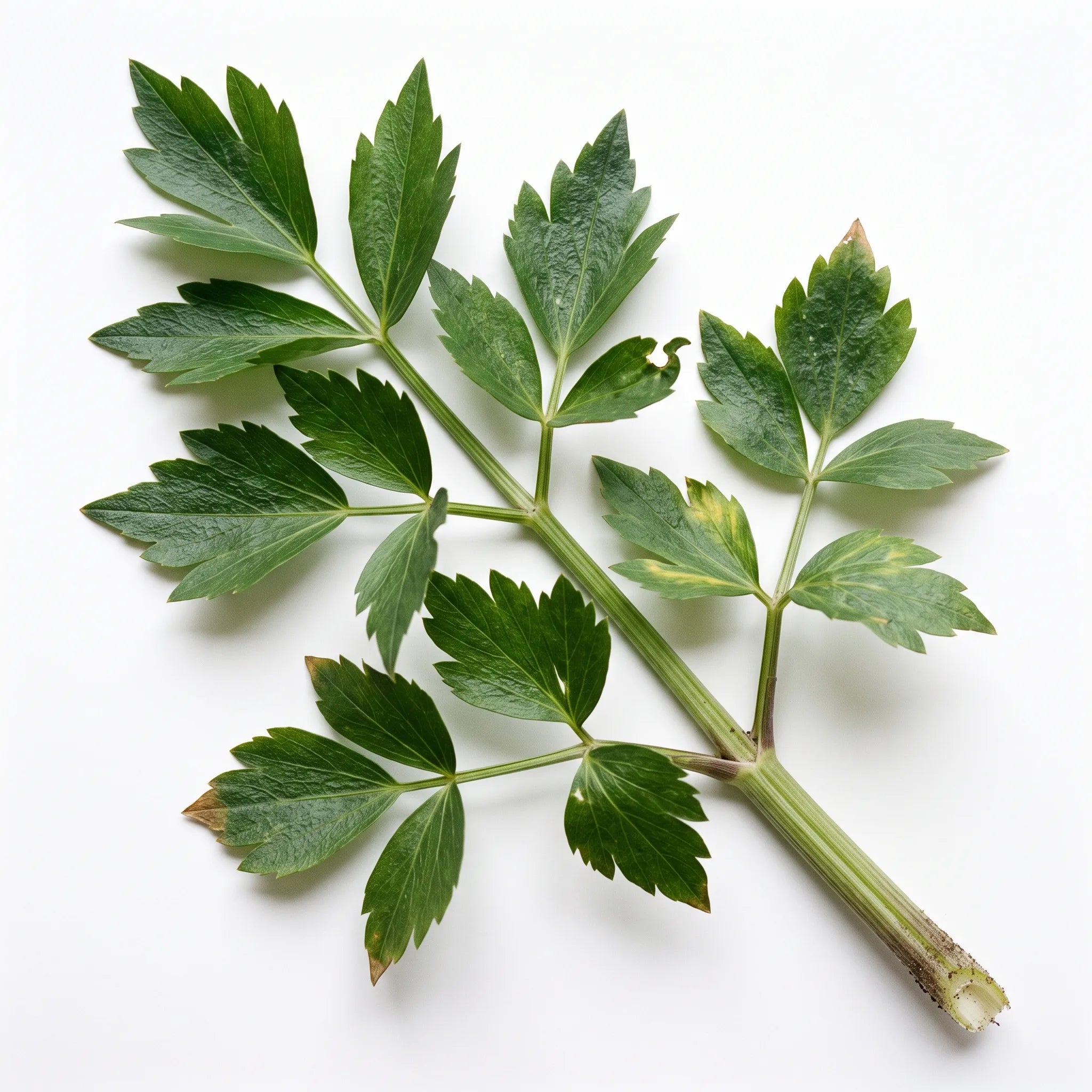
Levisticum officinale
Lovage, mountain celery, perennial celery, Maggi herb: that last nickname says it all. A single crushed leaf releases an aroma so close to that of the famous liquid seasoning that you recognize it immediately—even though the brand has never contained any. A powerful, hardy and virtually indestructible herb.
Characteristics:
-
Very powerful aroma: similar to celery but much more intense, so use sparingly.
-
Large perennial: up to 2 metres tall in full bloom, it returns every spring for many years.
-
Every part is edible: leaves, stems, seeds and even the roots.
-
Readily self-seeds: once established, it perpetuates itself.
Sowing advice:
-
Exposure: full sun to partial shade; partial shade suits it well in hot regions.
-
Soil: deep, rich, moist and well drained. This is a hungry plant that appreciates added compost and soil that does not dry out in summer. As its root grows deep, work the soil thoroughly before sowing.
-
Method: its seeds quickly lose their viability, so sow them fresh. Sow in spring or late summer, on the surface or barely covered: they need light. A period of cold improves the uniformity of germination. See how to sow your seeds.
Planting advice:
- Allow plenty of space: a mature plant easily occupies 1 metre in diameter and exceeds 1.50 metres when in flower. Plant it at the back of an herb bed, where it will not shade smaller plants.
Care advice:
- Water during dry periods and mulch. Cut back the dry stems at the end of winter.
- Tip: cut off the flower stalks as soon as they appear if you want to encourage the production of tender leaves.
Harvesting advice:
- Harvest the young leaves as needed, from spring to autumn. They freeze very well and can also be dried while retaining most of their aroma.
Beneficial companions:
Benefits for biodiversity:
- Its broad yellow umbels are genuine landing platforms for hoverflies, beneficial insects whose larvae devour aphids—allowing a lovage plant to flower creates a refuelling station for them.
- Like all umbellifers, it is a host plant for swallowtail caterpillars.
Uses:
- Leaves and stems in soups, stocks, stews and salads; seeds as a seasoning; root as a vegetable. As its aroma is very powerful, start with small quantities. See our edible perennial plants.
Harvesting your own seeds:
Allow an umbel to ripen fully and harvest the seeds as soon as they turn brown. Sow them promptly, as their viability barely lasts beyond one season. Lovage also readily self-seeds. See storing your seeds.
Commitment to Quality: at SemiSauvage - Permaculture, we grow and select our seeds with respect for living organisms as our guiding principle. Based near the Auvergne Volcanoes, we choose reproducible, non-hybrid varieties, test them for germination rates, and carefully sort and package them without any chemical treatment. Our belief: to give gardeners back the ability to resow, year after year, seeds that truly belong to them.
A single plant to flavour all your stocks for years to come.