Thymus vulgaris
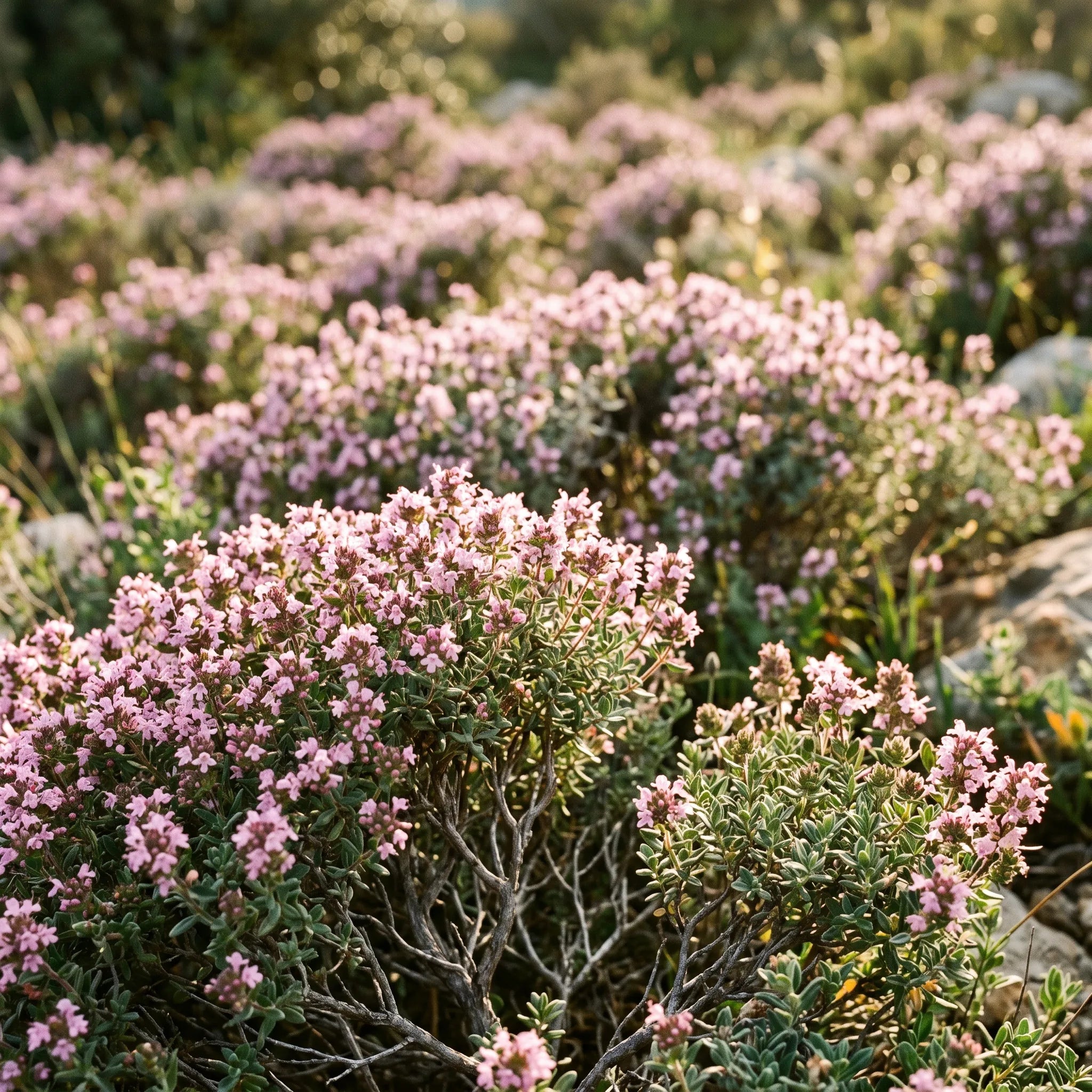
Common thyme, farigoule, frigoule, pote: it is the very aroma of the garrigue. This woody subshrub of the dry Mediterranean hills concentrates even more fragrance the harsher its conditions — poor, stony, dry soil suits it far better than good garden soil. It is one of the rare plants you need to resist fussing over.
Characteristics:
-
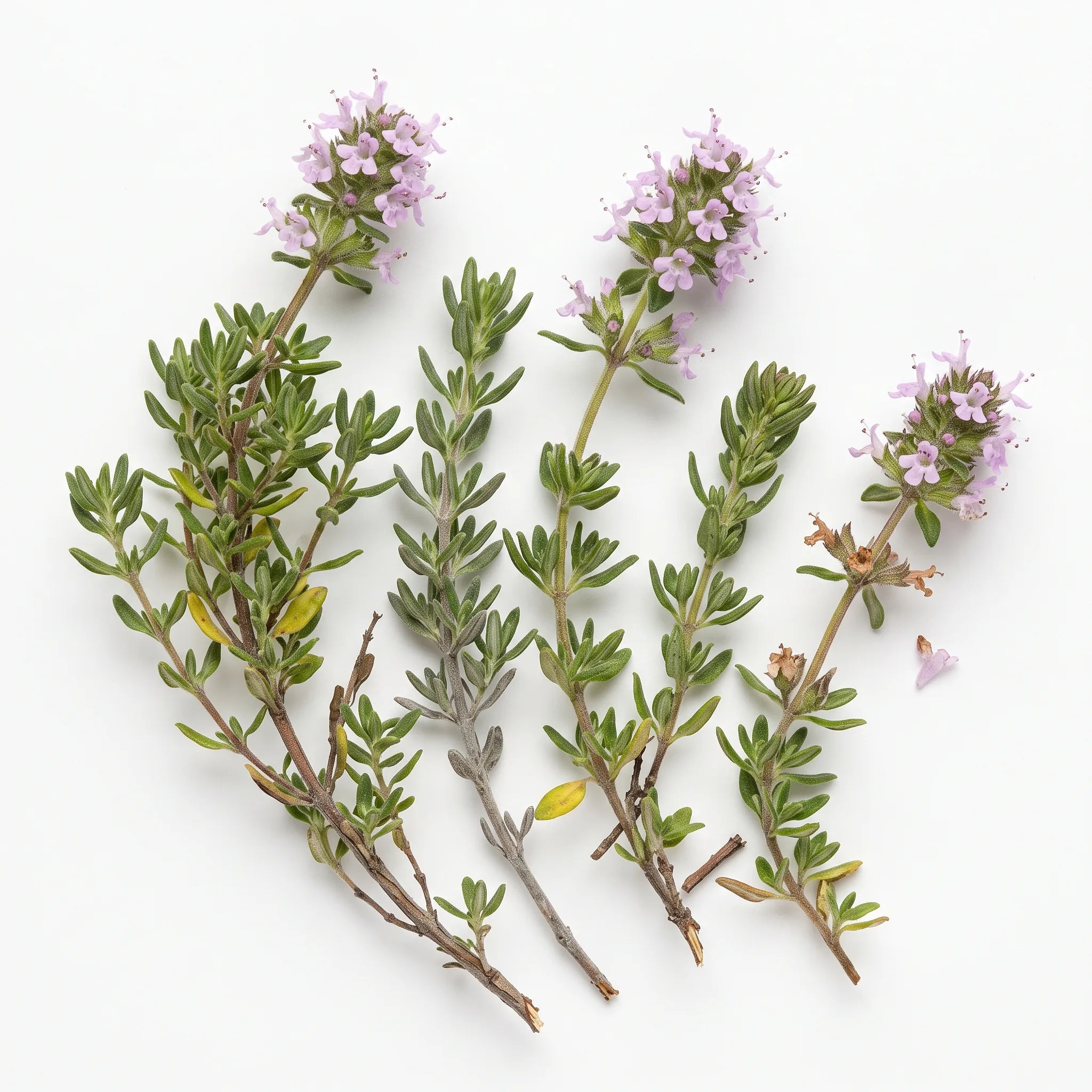
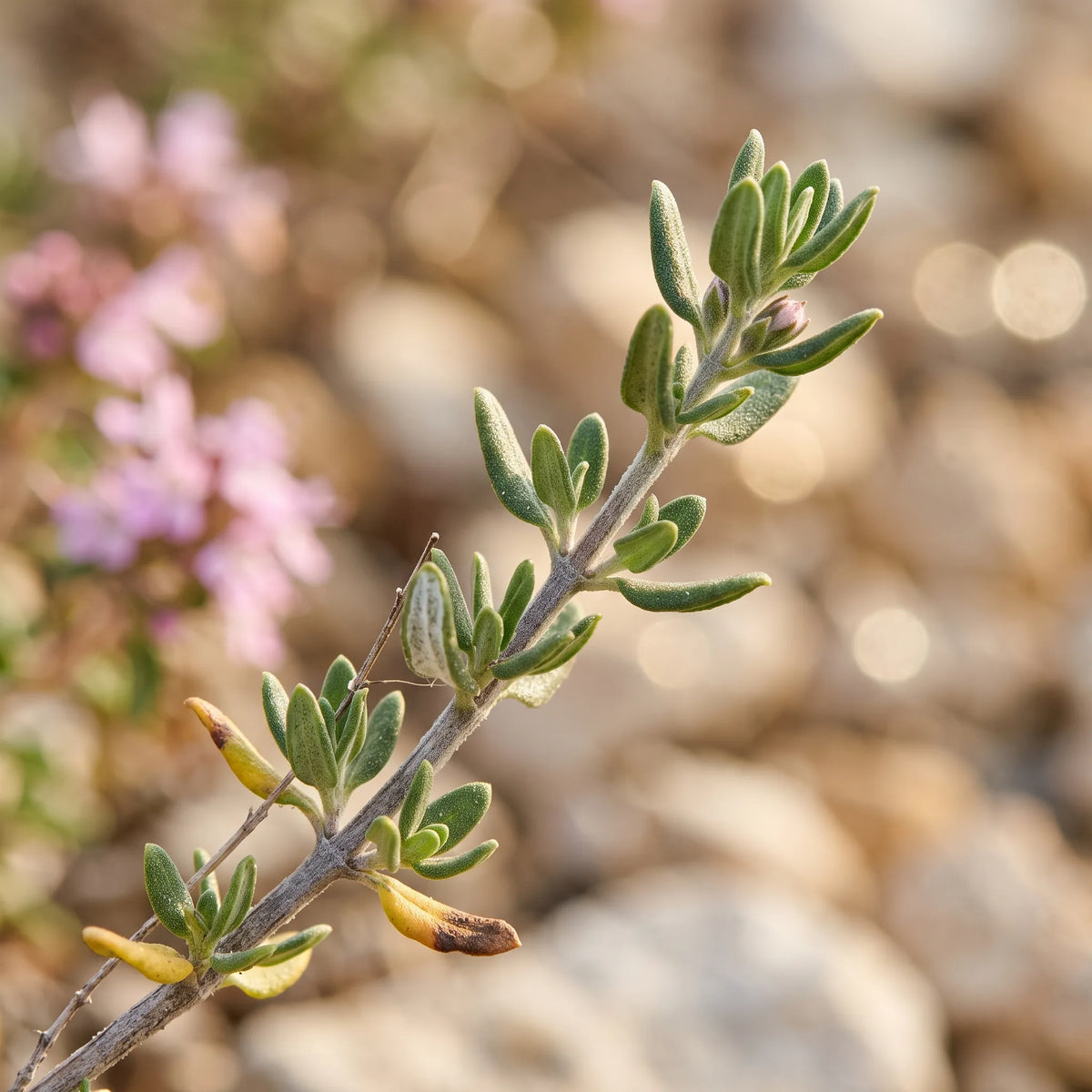
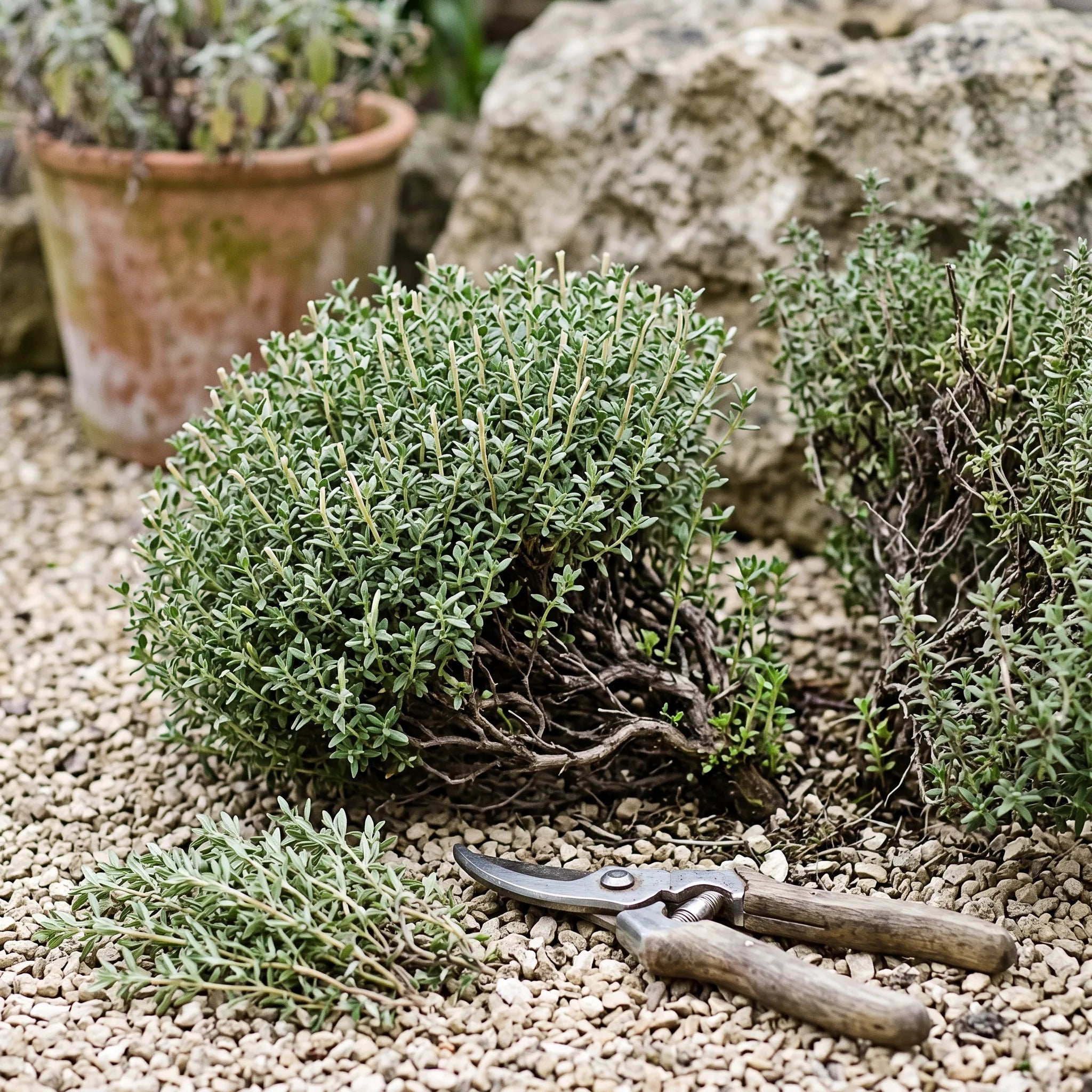
Distinctive fragrance: tiny gray-green leaves that are highly aromatic, with a characteristic, slightly spicy flavor.
-
Woody perennial: it forms a small evergreen bush that can be harvested year-round.
-
Extremely hardy: tough and virtually indestructible, it grows wherever the soil is well drained.
-
Bee-friendly flowering: small white to pink flowers in spring, covered with bees.
Sowing advice:
-
Exposure: full sun, absolutely essential. In shade, it becomes spindly, loses its fragrance, and eventually withers.
-
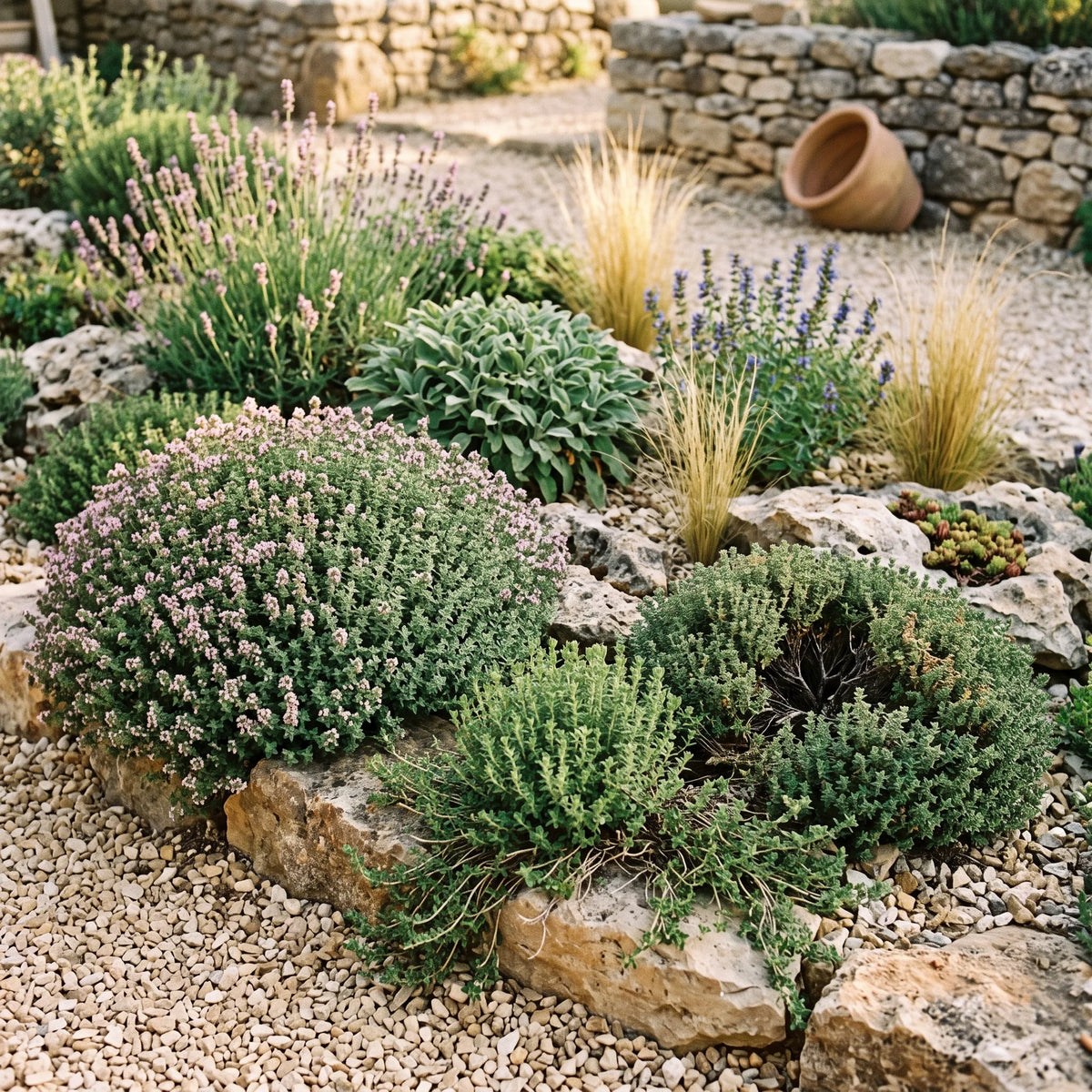
Soil: poor, dry, stony, or calcareous, and above all perfectly drained. This is the decisive point: thyme almost never dies from cold, but very often from stagnant winter moisture. In heavy soil, plant it on a mound or in a rock garden. Do not enrich the soil: rich soil dilutes its aroma and shortens its life.
-
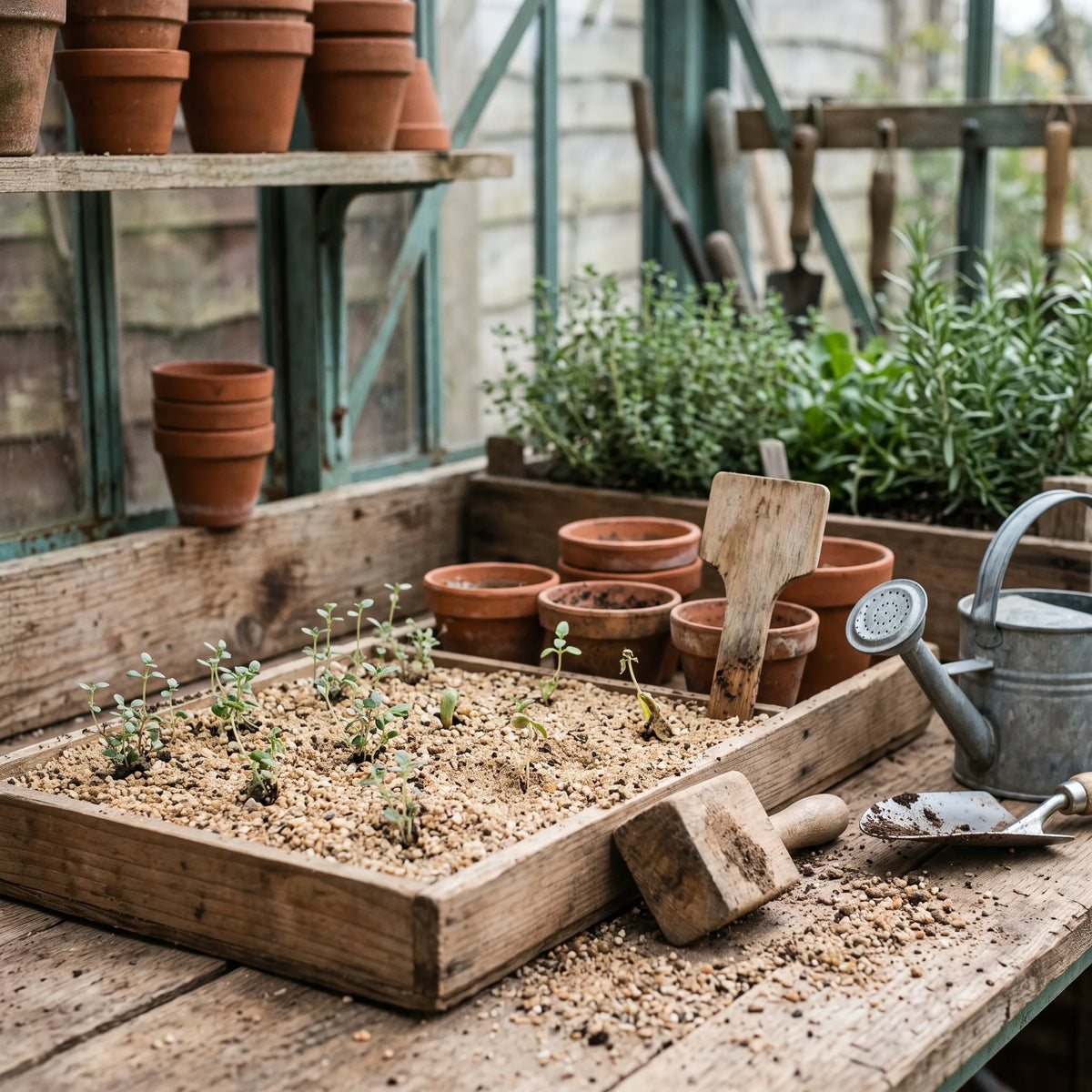
Method: sow in April–May or September–October, on the surface or barely covered — its tiny seeds need light to germinate. Sow in pots at 18–20°C, or directly in place. See how to sow your seeds.
Planting advice:
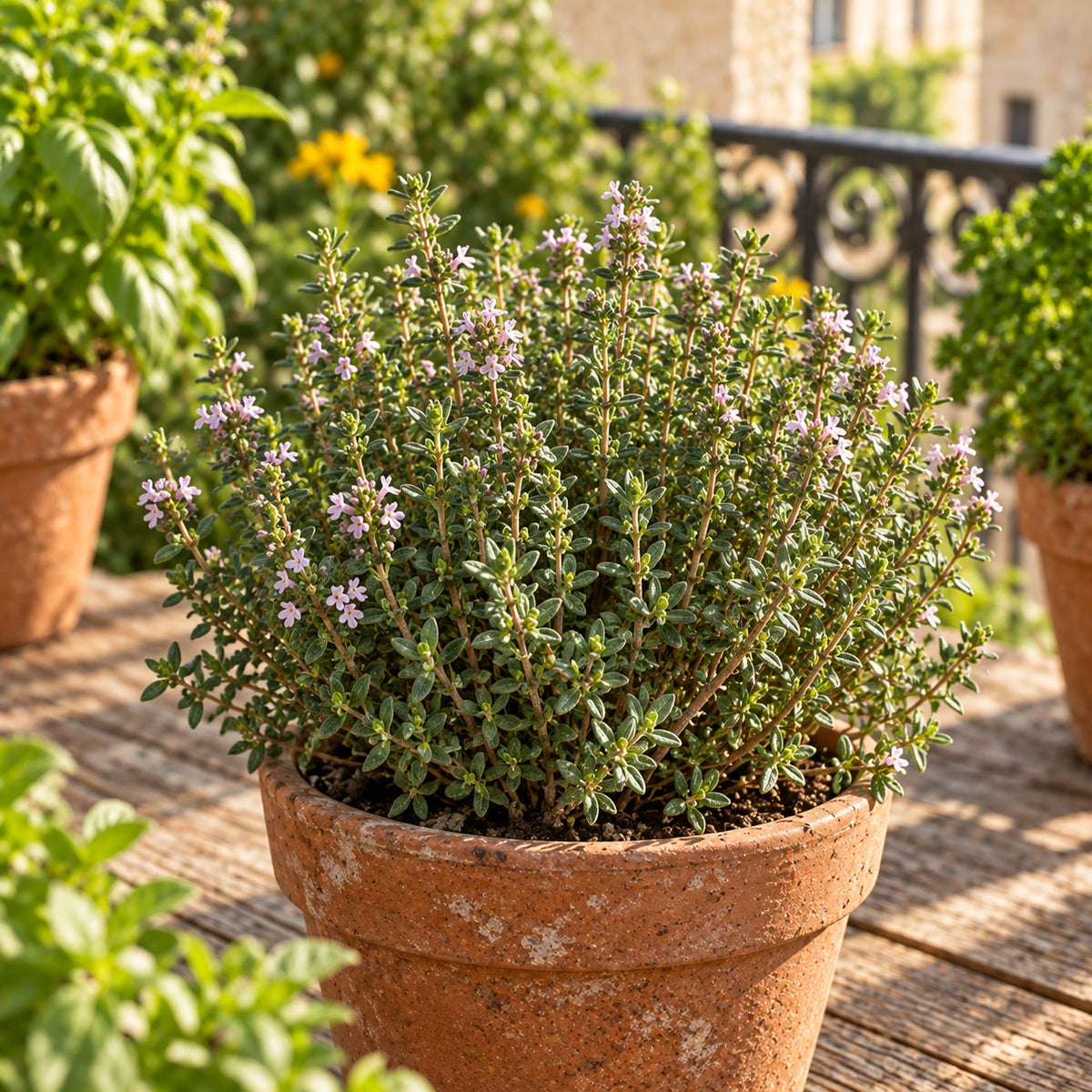
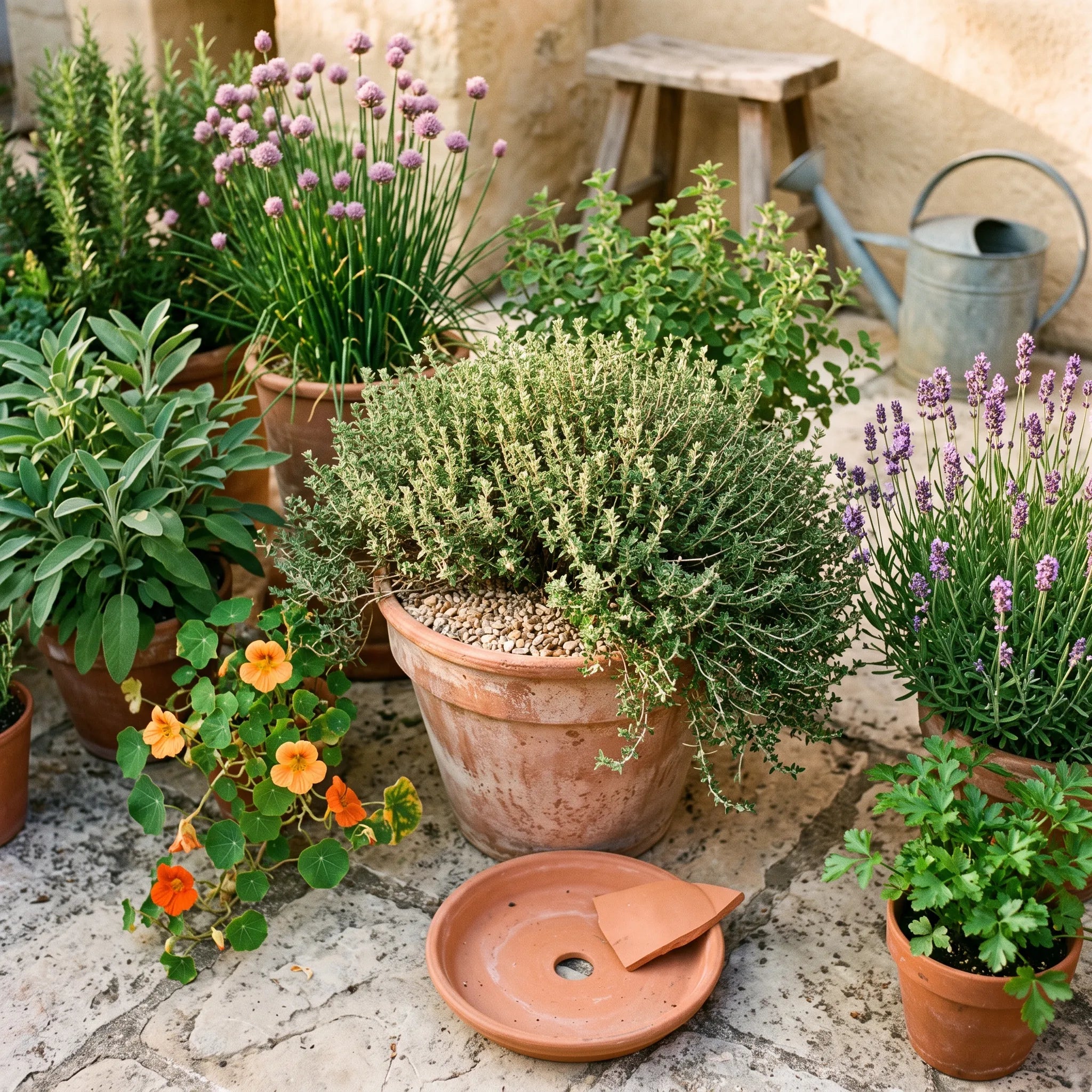
- Transplant with 30 cm spacing, in a rock garden, dry border, wall, or large pot. It grows very well in containers, provided the water can drain freely.
Care advice:
- No watering once established. No fertilizer.
-
The essential step: lightly prune each spring, after flowering, never cutting into the old wood — it will not regrow. This pruning prevents it from becoming bare in the center and extends its lifespan by several years.
Harvesting advice:
- Harvest the shoot tips as needed throughout the year, since it is evergreen. For drying, harvest just before flowering, in dry weather and late morning: this is when its essential-oil concentration is at its highest.
Beneficial combinations:
Benefits for biodiversity:
- Its spring flowering is among the most visited of all: thyme honey from the garrigue is testament to this. Domestic and wild bees flock to it in large numbers.
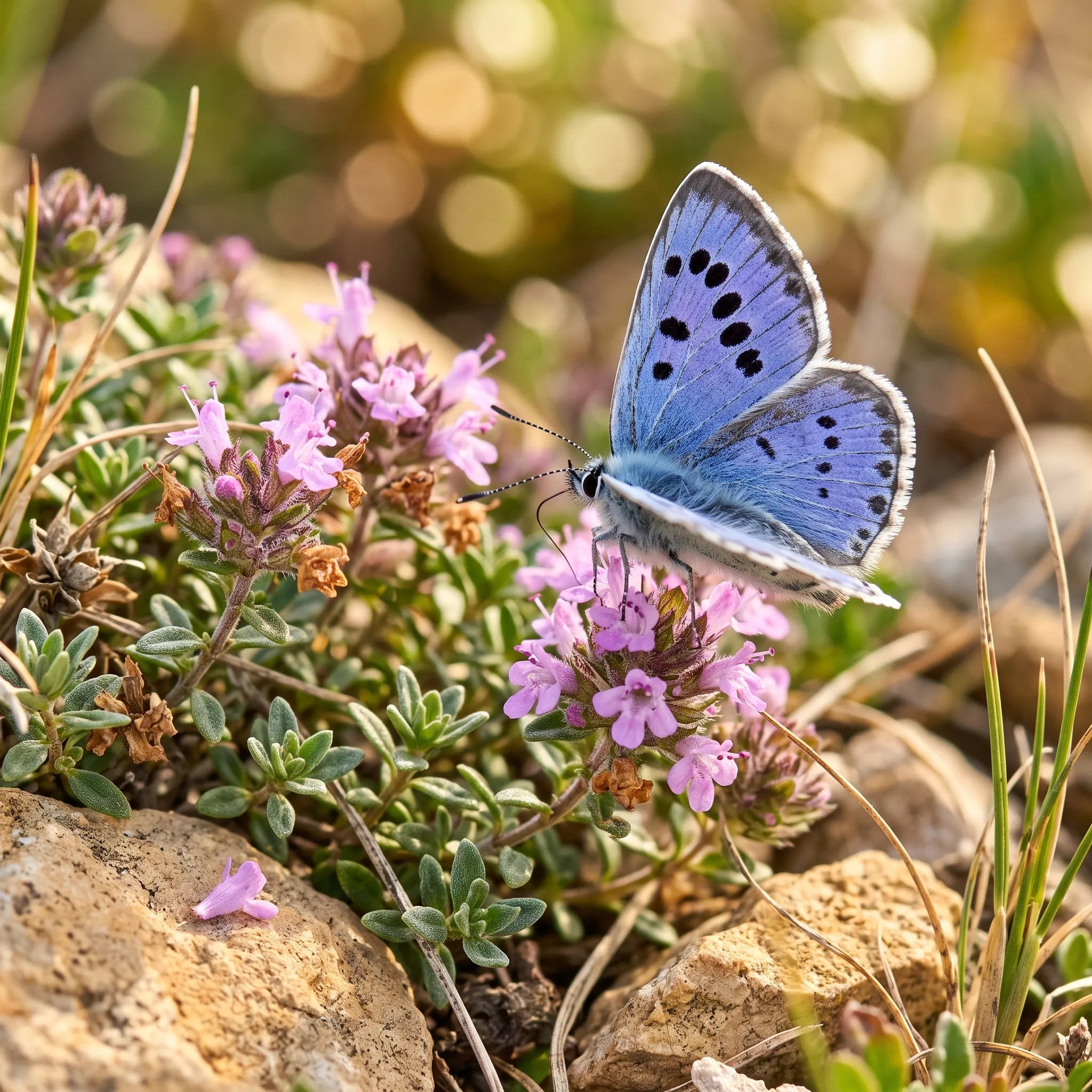
- It is also the host plant of several butterflies, including the Chequered Blue.
- As ground cover in a rock garden, it shelters lizards and insects in a hot, dry environment where few species take hold.
Uses:
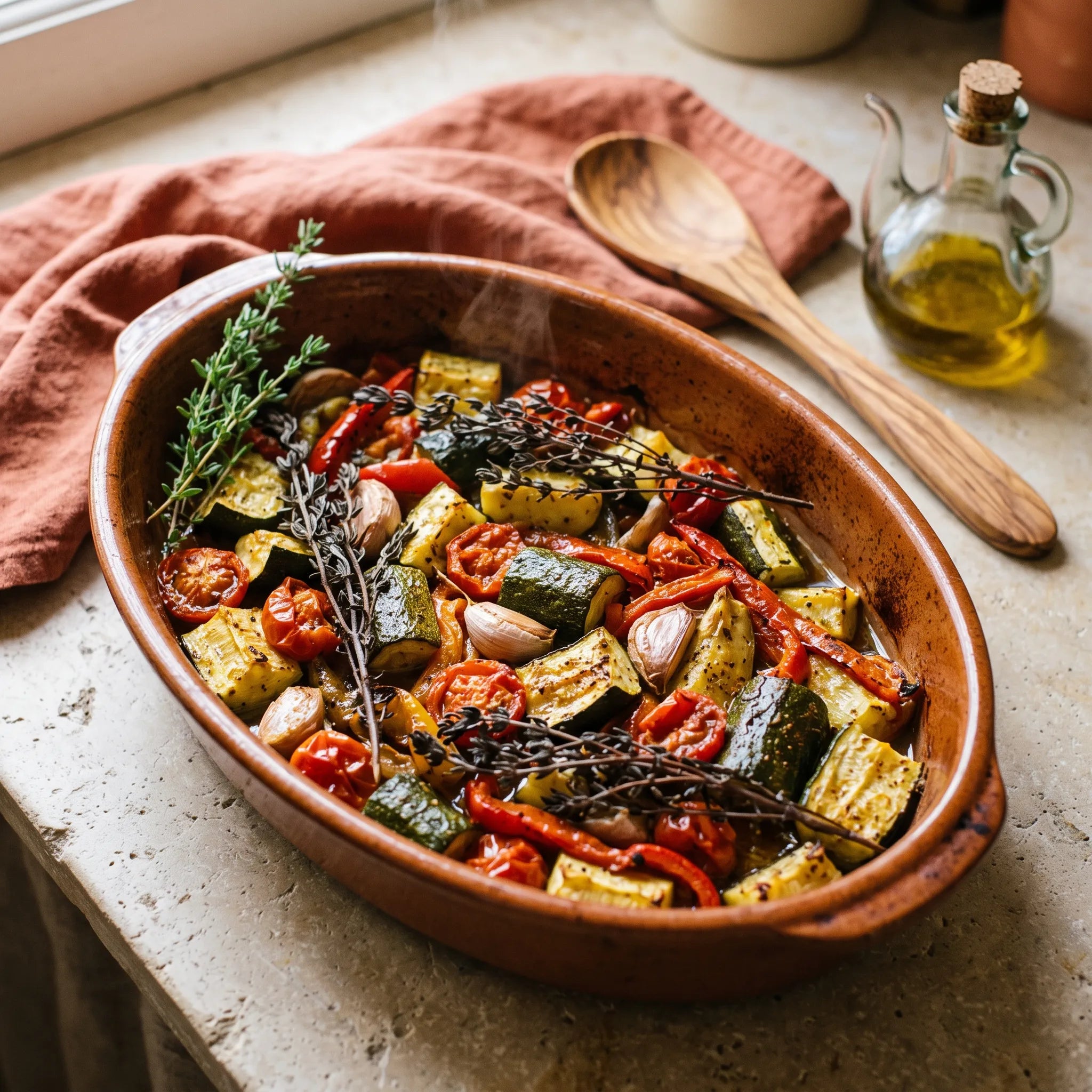
- Essential in Provençal cuisine: grilled meat and fish, court-bouillons, marinades, stuffings, and summer vegetables. It is part of the classic bouquet garni and flavors oils and vinegars.
- A traditional medicinal plant, listed in the French Pharmacopoeia and used in herbal medicine since Antiquity. See our medicinal plants to sow.
Symbolism:
The Greeks burned thyme in temples, while the Romans scented their baths with it: its name is said to come from the Greek thumos, meaning courage. Knights were given an embroidered sprig before leaving for battle.
Harvesting your own seeds:
Leave a few flowering shoot tips to dry completely on the plant, then crumble them over a container and winnow them: the seeds are tiny. Thyme is also very easy to propagate from cuttings, a faster method for reproducing a particularly fragrant plant. See how to store your seeds.
Commitment to Quality: at SemiSauvage - Permaculture, we grow and select our seeds with respect for all living things as our guiding principle. Based near the Auvergne Volcanoes, we choose reproducible, non-hybrid varieties, tested for their germination rate, sorted and carefully packaged, with no chemical treatment whatsoever. Our belief: to give gardeners back the ability to sow, year after year, seeds that truly belong to them.
The aroma of the garrigue, in the driest corner of your garden.