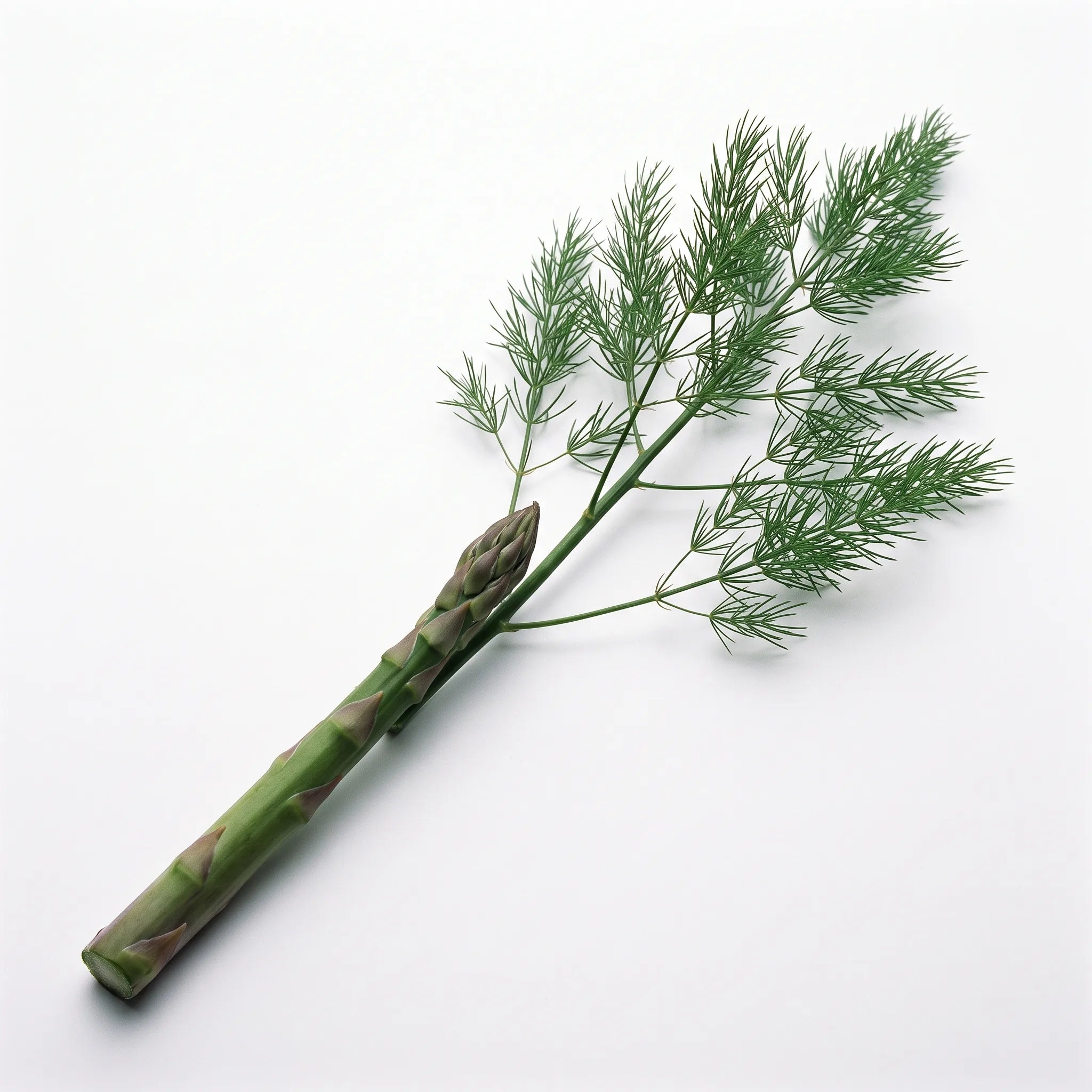
Asparagus officinalis
Green asparagus, garden asparagus: growing your own asparagus is an investment in time. The first harvest does not come until after three years—but a well-established planting then produces for fifteen to twenty years. Few vegetable crops offer such longevity from a single sowing.
Characteristics:
-
Very long-lived perennial: a planting produces for 15 to 20 years.
-
Green asparagus: grown in the light without earthing up, it is simpler to grow than white asparagus and has a more pronounced flavor.
-
Ornamental foliage: after harvesting, the stems develop into light, feathery foliage that is highly ornamental.
-
Very hardy: it withstands harsh winters without protection.
Sowing advice:
-
Position: sunny.
-
Soil: deep, loose, sandy, and above all perfectly drained. A crucial point: its crowns rot in heavy, damp soil. Clay soils also give the asparagus a slightly bitter taste. In heavy soil, grow it on a raised mound.
-
Method: sow from March to June in a nursery bed, in well-loosened soil, spacing the seeds 10 cm apart in rows 30 cm apart, and covering them with 1 cm of fine soil. Soaking them for 24 to 48 hours in lukewarm water significantly speeds up naturally slow germination (3 to 6 weeks).
Planting advice:
- Leave the young plants in the nursery for one year, then transplant the crowns obtained to their permanent location, in deep trenches spaced 1.50 m apart.
- Do not harvest anything during the first two years: allow the plant to build up its reserves. This is essential for long-term production.
Care advice:
- Weed carefully, as asparagus does not tolerate competition well. Mulch generously.
- Cut back the yellowing foliage only in late autumn: it is what replenishes the crowns for the following year.
Harvesting advice:
- From the third year onward, cut the spears when they reach 20 cm, at ground level. Stop harvesting at the end of June to allow the plant to rebuild its reserves.
Beneficial companions:
Benefits for biodiversity:
- Its dense, feathery summer foliage provides excellent shelter for beneficial insects and spiders throughout the warm season.
- Female plants produce decorative red berries that feed birds in autumn—be careful, as they are not edible for humans.
Uses:
- Steamed, roasted, in risotto, or in a velouté. Unlike white asparagus, green asparagus generally requires no peeling.
Harvesting your own seeds:
Only female plants bear red berries. Harvest them when fully ripe in autumn, crush them in a little water, and rinse to extract the black seeds, then dry them. See saving your seeds.
Commitment to Quality: at SemiSauvage - Permaculture, we grow and select our seeds with respect for all living things as our guiding principle. Based near the Volcanoes of Auvergne, we choose reproducible, non-hybrid varieties, tested for their germination rates, carefully sorted and packaged, with no chemical treatments. Our conviction: to restore gardeners' ability to resow, year after year, seeds that truly belong to them.
Invest three years of patience for twenty years of spring harvests.