Hyssopus officinalis
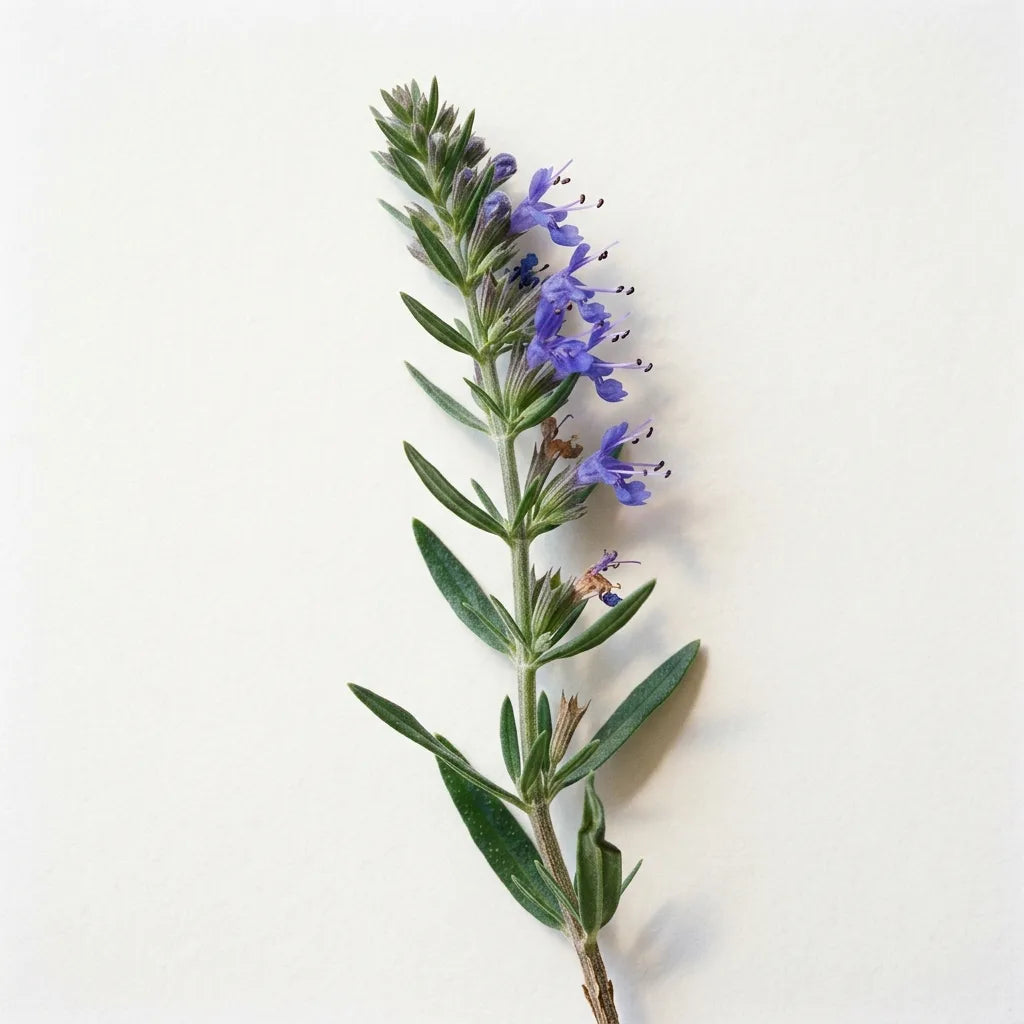
Hyssop, sacred herb, herb of joy: cultivated in monastery gardens since the Middle Ages, it is one of the plants listed by Charlemagne in his capitulary De Villis. Its intense blue-violet flower spikes and narrow, aromatic foliage make it one of the finest decorative herbs for a dry garden.
Characteristics:
-
Deep blue spikes: flowering from July to September, with upright spikes in a bright blue-violet.
-
Fine, aromatic foliage: semi-evergreen, releasing a camphoraceous, slightly bitter fragrance when crushed.
-
Compact subshrub: about 50 cm tall, forming a dense clump that becomes woody at the base.
Sowing advice:
-
Exposure: full sun, in a warm location.
-
Soil: poor, dry, alkaline and, above all, very well drained — this is a plant of Mediterranean scrubland. It fears stagnant winter moisture far more than the cold. Do not amend the soil: poor soil concentrates its aromas and strengthens its compact habit.
-
Method: cold stratification improves germination. Then sow in spring, on the surface because the seeds need light, in pots and then transplant.
Planting advice:
- Transplant into a rock garden, flower bed, border or herb garden, spacing plants 40 cm apart. Excellent as a low clipped border, in the style of medieval physic gardens.
Care advice:
- Prune lightly each spring without cutting into the old wood: this prevents it from becoming sparse and extends its lifespan.
- Almost no watering once established.
Harvesting advice:
- Harvest the flowering tops at the beginning of flowering, in the morning after the dew has evaporated, when the fragrance is at its strongest. Dry in bunches hung in the shade.
Beneficial companion planting:
Benefits for biodiversity:
- It is one of the most nectar-rich plants there is: its spikes literally buzz with bees and butterflies all summer, and it produces highly regarded honey.
- Its semi-evergreen foliage provides winter shelter for beneficial insects.
- Its drought tolerance makes it an excellent choice for water-wise gardens.
Uses:
- In cooking, its strongly flavored, slightly bitter leaves should be used sparingly in stuffings, stews and legume soups. Its flowers make an attractive garnish for salads.
- A historic medicinal plant of monastery gardens. See our medicinal plants to sow.
Symbolism:
Mentioned in the Bible as a purification plant, hyssop symbolizes cleanliness and spiritual renewal. It was cultivated in all medieval physic gardens.
Harvesting your own seeds:
Leave a few spikes to brown and dry completely on the plant, then shake them over a container: the small black seeds settle at the bottom of the calyces. Hyssop also readily self-seeds. See saving your seeds.
Commitment to Quality: at SemiSauvage - Permaculture, we grow and select our seeds with respect for all living things as our guiding principle. Based near the Auvergne Volcanoes, we choose open-pollinated, non-hybrid varieties, tested for their germination rate, carefully sorted and packaged, with no chemical treatments. Our conviction: to give gardeners back the ability to resow, year after year, seeds that truly belong to them.
Plant a little history and tradition in your garden with these hyssop seeds.