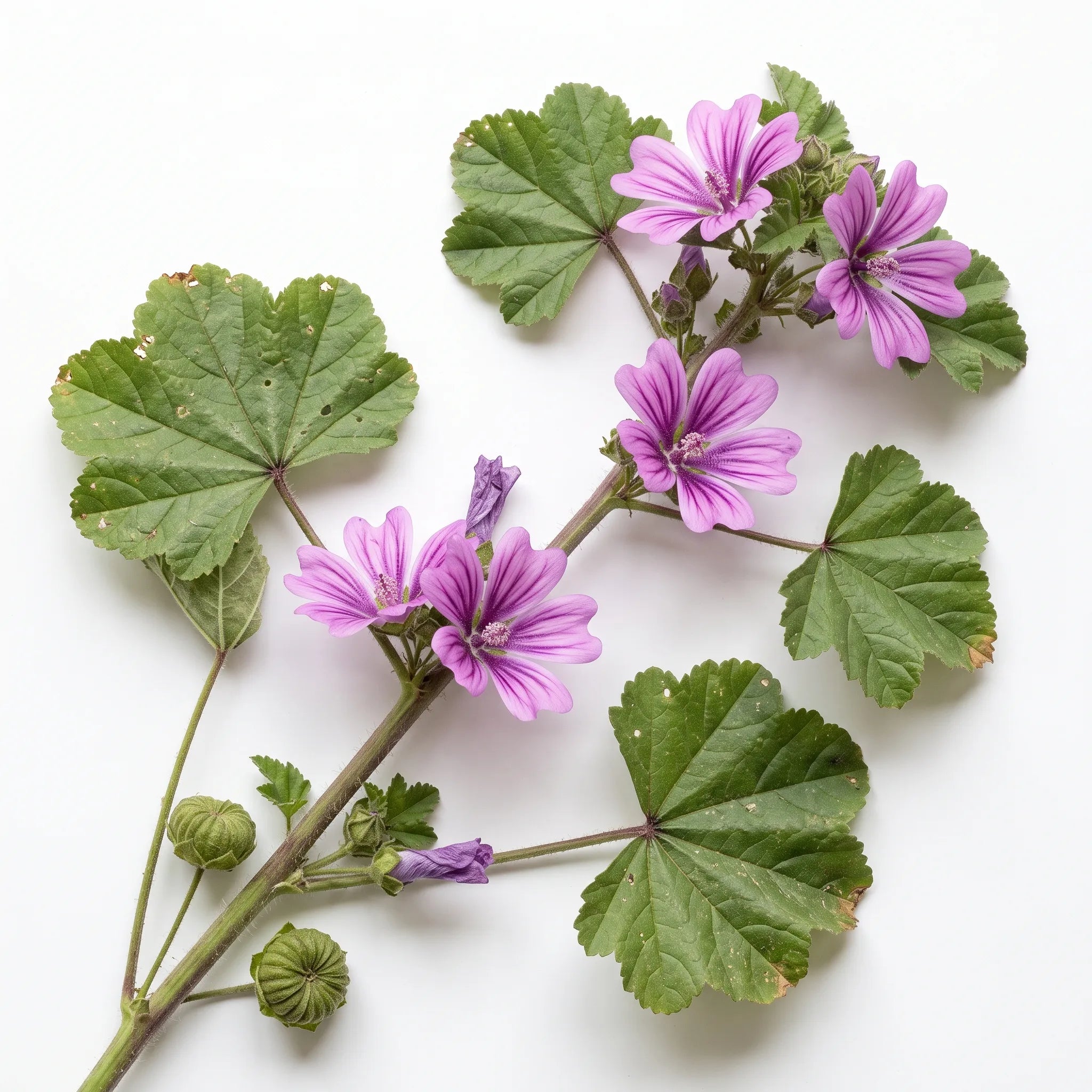
Malva sylvestris
Common mallow, wild mallow, woodland mallow, sylvan mallow: this plant of banks and roadsides is one of the oldest cultivated plants in Europe. Pliny the Elder already recommended it, and the Romans commonly ate it as a leafy vegetable long before it became ornamental. Today, it is returning to gardens for what it truly is: an all-purpose plant—beautiful, edible, and loved by pollinators.
Characteristics:
-
Long flowering period: purplish-mauve flowers veined with dark markings, from June to September and sometimes beyond if the weather remains mild.
-
Generous habit: up to 1.20 m depending on conditions, with a natural, countryside feel.
-
Flexible life cycle: naturally perennial, it is often grown as a biennial or annual depending on the climate, and self-seeds.
Sowing advice:
-
Exposure: full sun to partial shade—it readily tolerates light shade, unlike many summer flowers.
-
Soil: light and well drained, including chalky or poor soil. It flowers better in lean soil than in rich soil, where it mainly produces foliage and becomes more susceptible to rust. No fertilization needed.
-
Method: no stratification required. Sow directly in place from March to June, or in pots under cover from February onward. As its taproot does not tolerate late transplanting well, sowing in place is preferable. See how to sow seeds.
Care advice:
- Little maintenance is required. Keep the plants well ventilated to limit rust, their only real weakness, and avoid wetting the foliage when watering.
- Allow a few plants to go to seed: they will return on their own year after year.
Harvesting advice:
- Pick the young leaves in spring, before flowering, when they are at their most tender. Harvest the flowers as they open, in dry weather.
Beneficial combinations:
Benefits for biodiversity:
- Highly attractive to pollinators, it feeds bees and bumblebees throughout the long summer season, often until autumn.
- Like all plants in the mallow family, it is a host plant for butterfly caterpillars, particularly the Painted Lady, a migratory species that crosses the Mediterranean every year.
- Its seeds feed small granivorous birds in autumn.
Uses:
- The flowers and young leaves are edible: the leaves can be prepared like spinach or naturally thicken soups, while the colourful petals decorate salads and desserts. See our edible flowers.
- A plant traditionally used in infusions since antiquity. See our medicinal plants to sow.
Symbolism:
Mallow symbolises gentleness and protection. It was once planted near homes to soothe tensions within the household, and its colour eventually gave its name to an entire shade in our language.
Harvesting your own seeds:
Wait until the small, round wheel-shaped fruits turn brown and dry on the plant, then detach them: each one separates into segments containing a seed. Mallow also self-seeds so generously that it returns on its own every year. See how to store your seeds.
Commitment to Quality: at SemiSauvage - Permaculture, we grow and select our seeds with respect for living things as our guiding principle. Based near the Auvergne Volcanoes, we choose open-pollinated, non-hybrid varieties, tested for their germination rate, carefully sorted and packaged, with no chemical treatment. Our conviction: to give gardeners back the ability to resow, year after year, seeds that truly belong to them.
An all-purpose plant, beautiful in the garden and precious in the kitchen, worth sowing without hesitation.