Borago officinalis
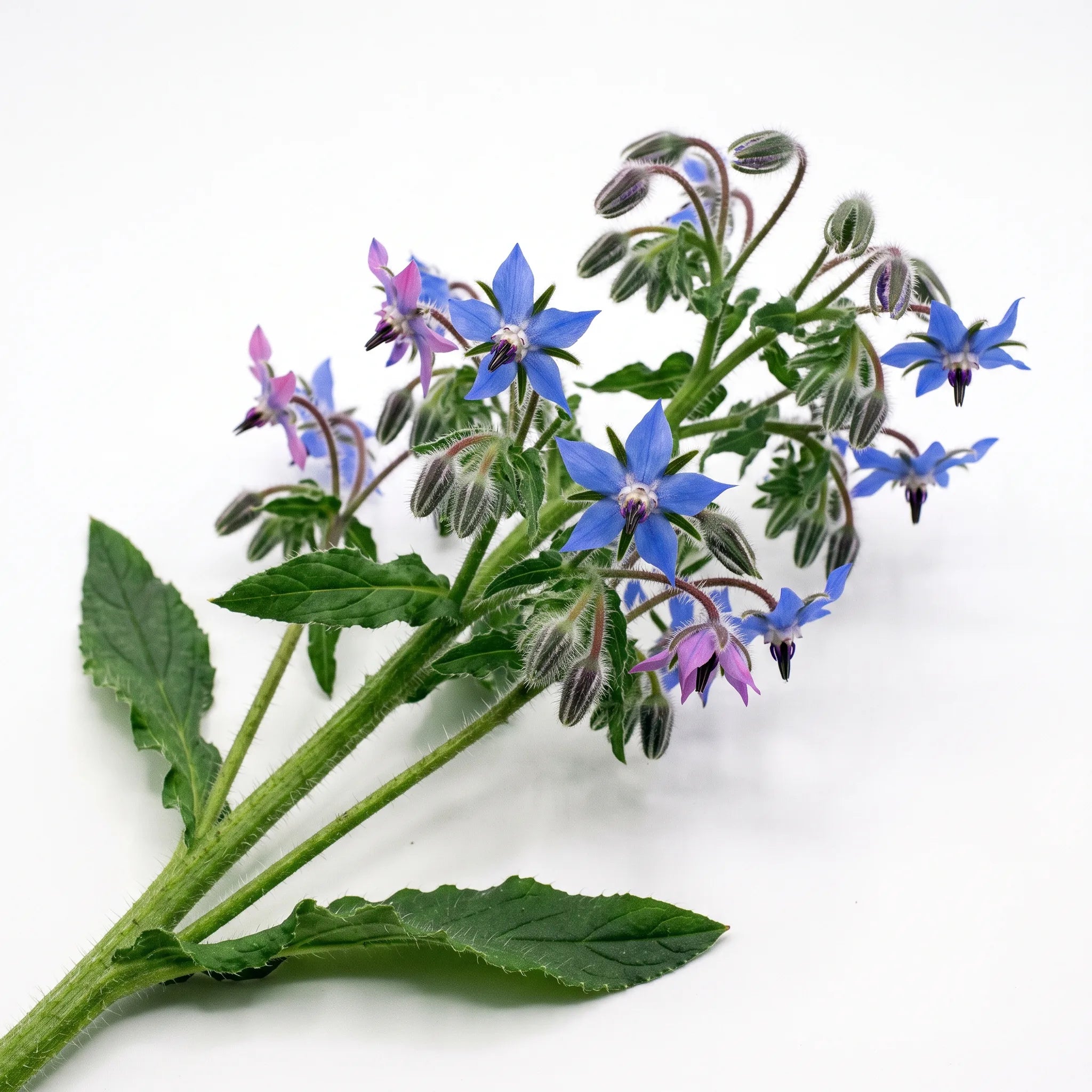
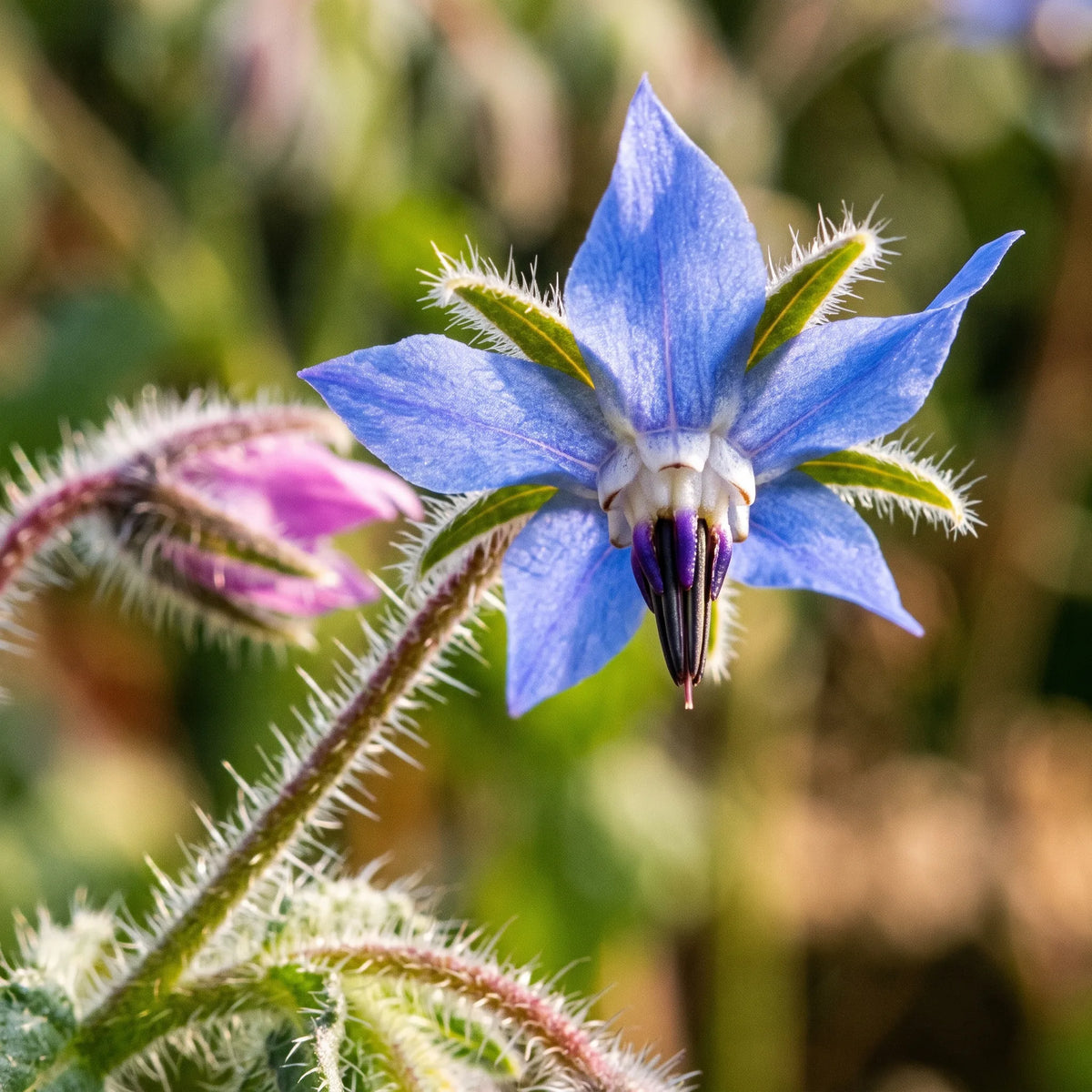
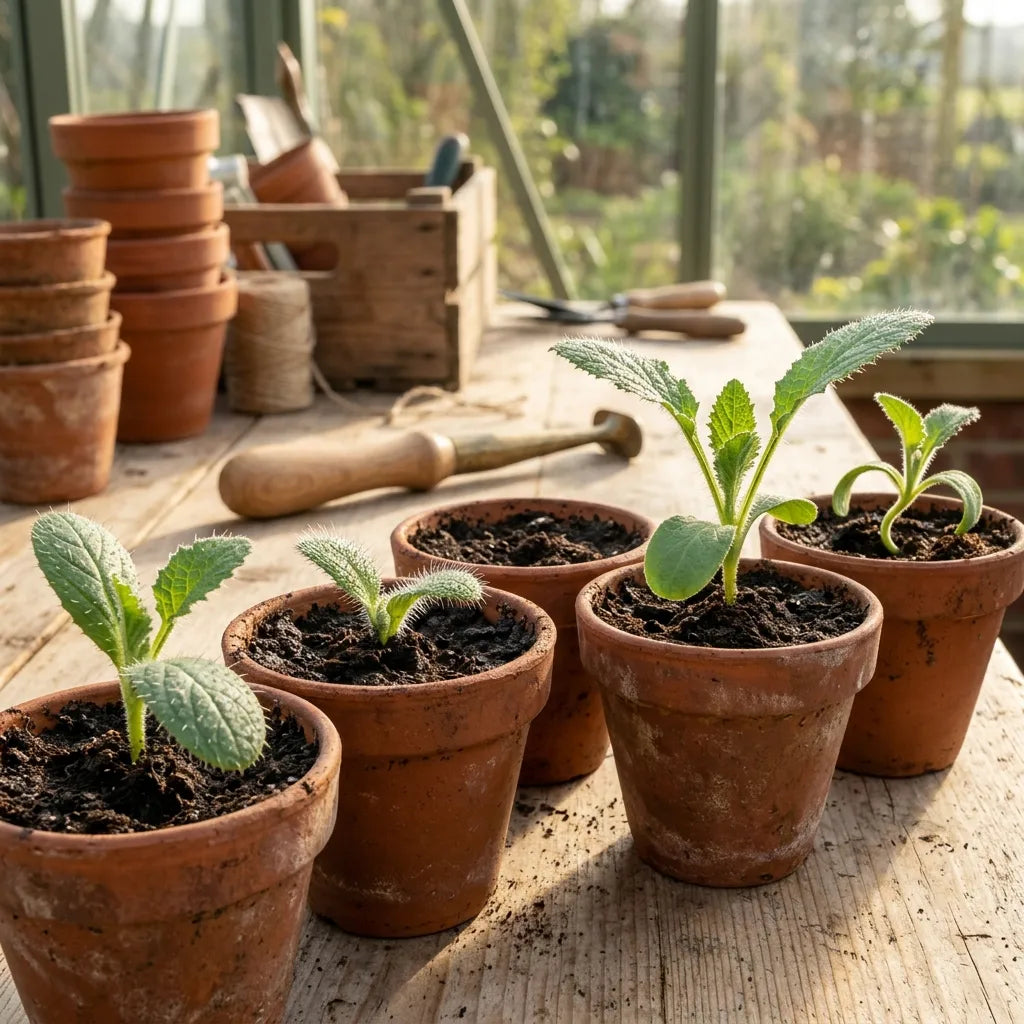
Common borage, cucumber herb, ox-tongue: its rough leaves and iodine-like flavor reminiscent of cucumber have earned it these vivid nicknames. Its bright blue, star-shaped flowers change color as they age, shifting from pink to blue—a signal for pollinators, which can tell which flowers still contain nectar.
Characteristics:
-
Blue star-shaped flowers: highly decorative and abundant, they bloom successively from May until the first frosts.
-
Very easy: an annual that self-seeds so readily that it produces two to three generations in the same year.
-
Versatile: vegetable, culinary herb, ornamental and nectar-rich all at once.
Precautions:
- The leaves are covered with rough hairs that may irritate sensitive skin: wear gloves when harvesting if needed.
- It is traditionally consumed occasionally and in moderation, as an accompaniment rather than as part of prolonged daily use.
Sowing advice:
-
Exposure: sunny, essential for abundant flowering; it tolerates light partial shade.
-
Soil: deep, fresh, humus-rich and light. It thrives in cultivated soil rich in organic matter, unlike many annual flowers—a supply of compost benefits it. Avoid compact, waterlogged soils.
-
Method: sow directly in place from April to June, burying the seeds about 1 cm deep: they germinate better in darkness. Its taproot does not tolerate transplanting well, so avoid sowing in pots. Thin to 40 cm apart, as the plant becomes large. See how to sow your seeds.
Care advice:
- Water regularly during dry periods. Stake or pinch back the plant if its brittle stems collapse under their own weight.
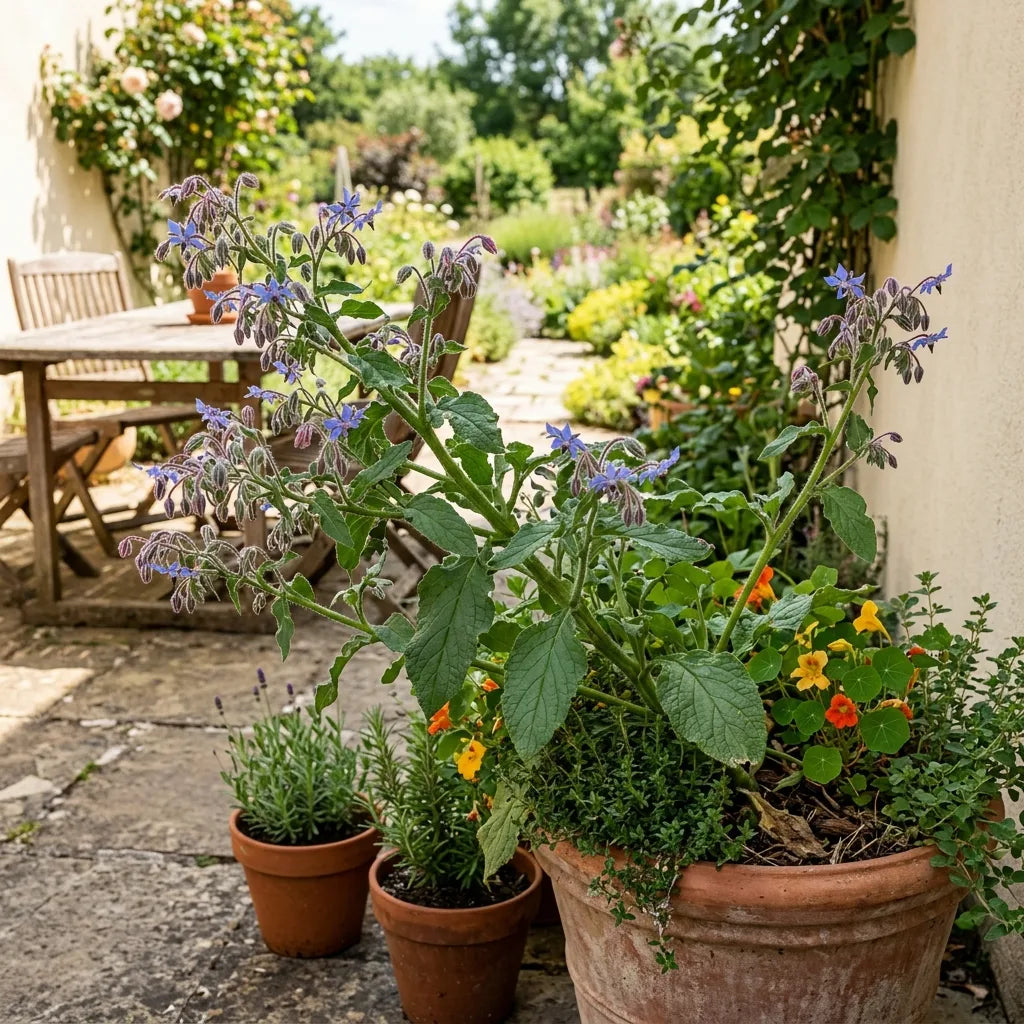
- Can be grown in pots, containers or deep planters on balconies and terraces.
Beneficial pairings:
Benefits for biodiversity:
- It is one of the most nectar-rich plants there is: its flowers replenish their nectar within just a few minutes after each visit, making them a tireless food source for bees and bumblebees.
- Its long flowering period, from May until the first frosts, makes it a reliable resource for almost the entire season.
Uses:
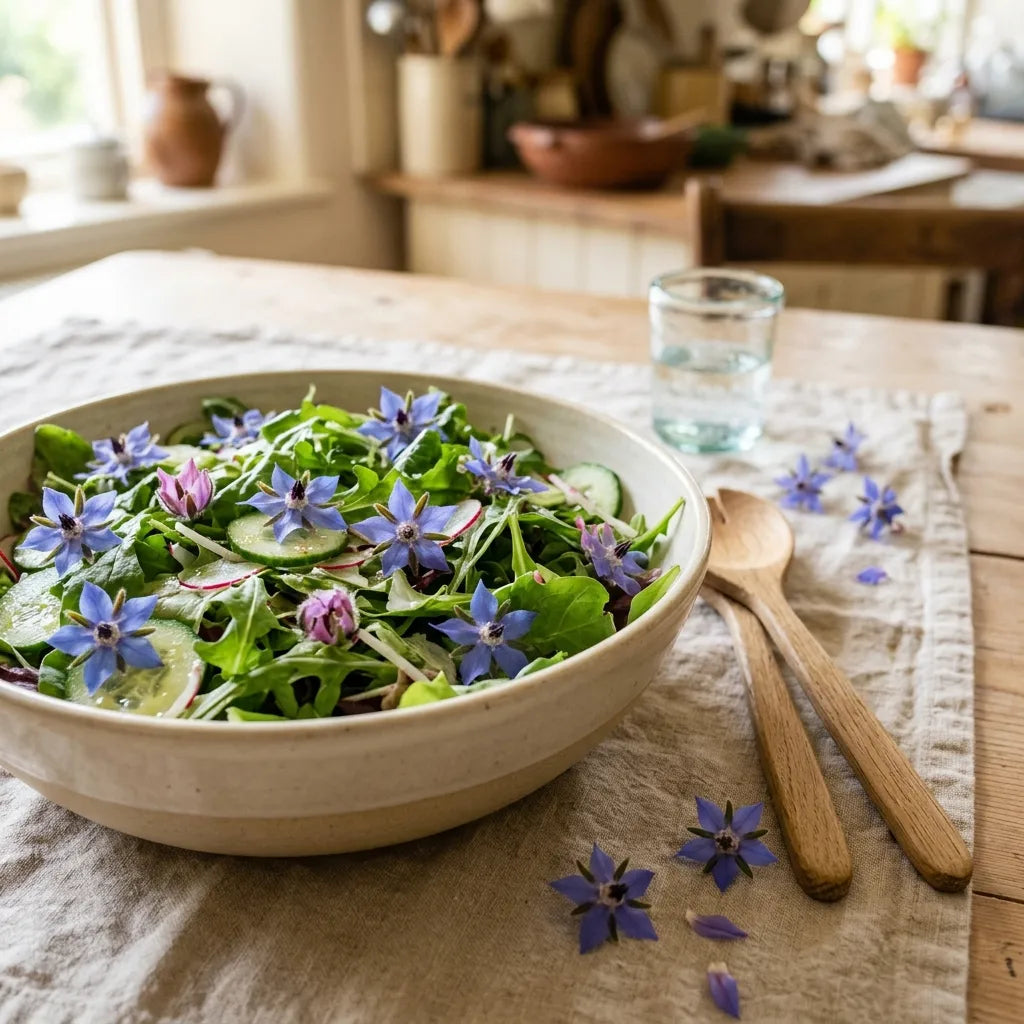
- The flowers, with a fresh, slightly sweet flavor, decorate salads, drinks and desserts—they are especially attractive when frozen in ice cubes. The young leaves, with a cucumber flavor, are eaten cooked. See our edible flowers.
Harvesting your own seeds:
The black seeds fall very quickly once ripe: keep an eye on the faded flowers and shake the stems over a bag, or simply let nature take its course, as borage generously self-seeds from one season to the next. See how to store your seeds.
Commitment to Quality: at SemiSauvage - Permaculture, we grow and select our seeds with respect for living things as our guiding principle. Based near the Auvergne Volcanoes, we choose open-pollinated, non-hybrid varieties, test them for germination rates, and carefully sort and package them without any chemical treatment. Our conviction: to give gardeners back the ability to resow, year after year, seeds that truly belong to them.
Enrich your garden with the beauty and versatility of common borage.