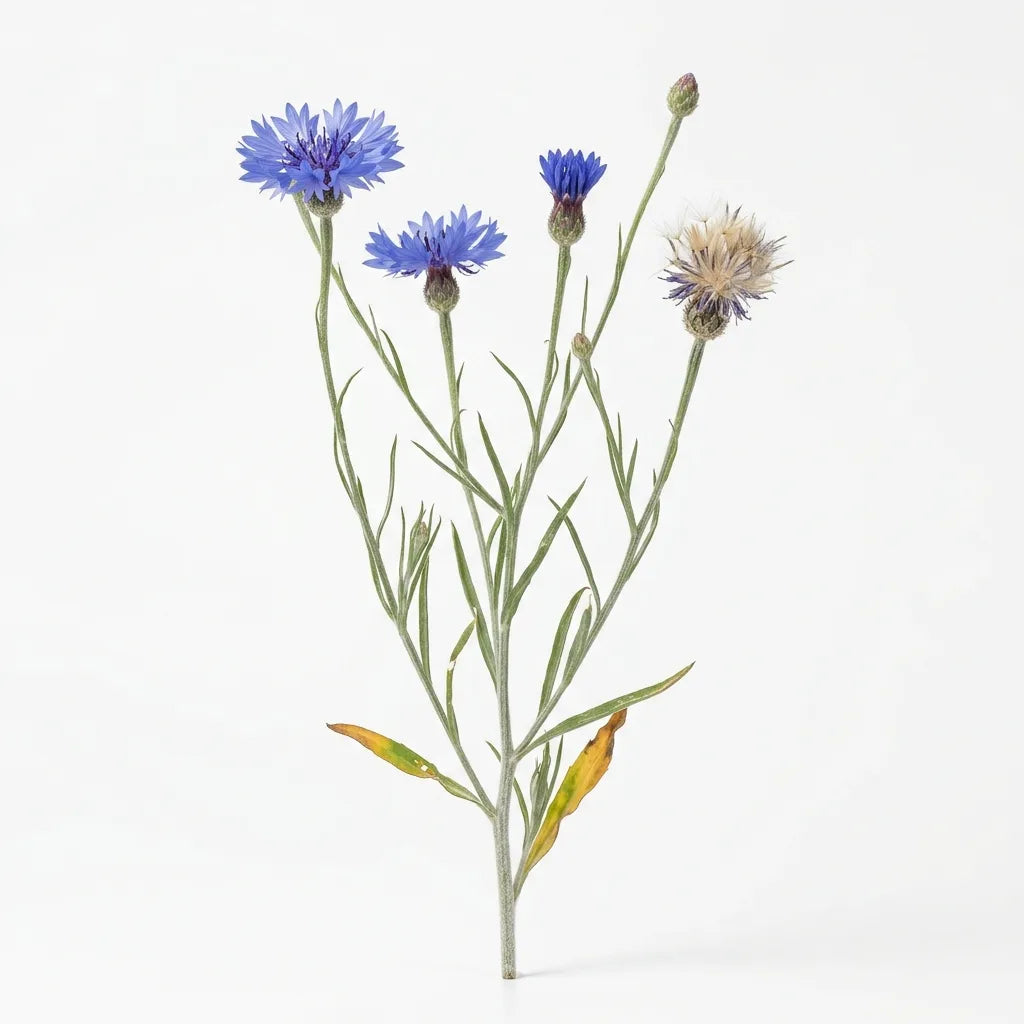
Centaurea cyanus
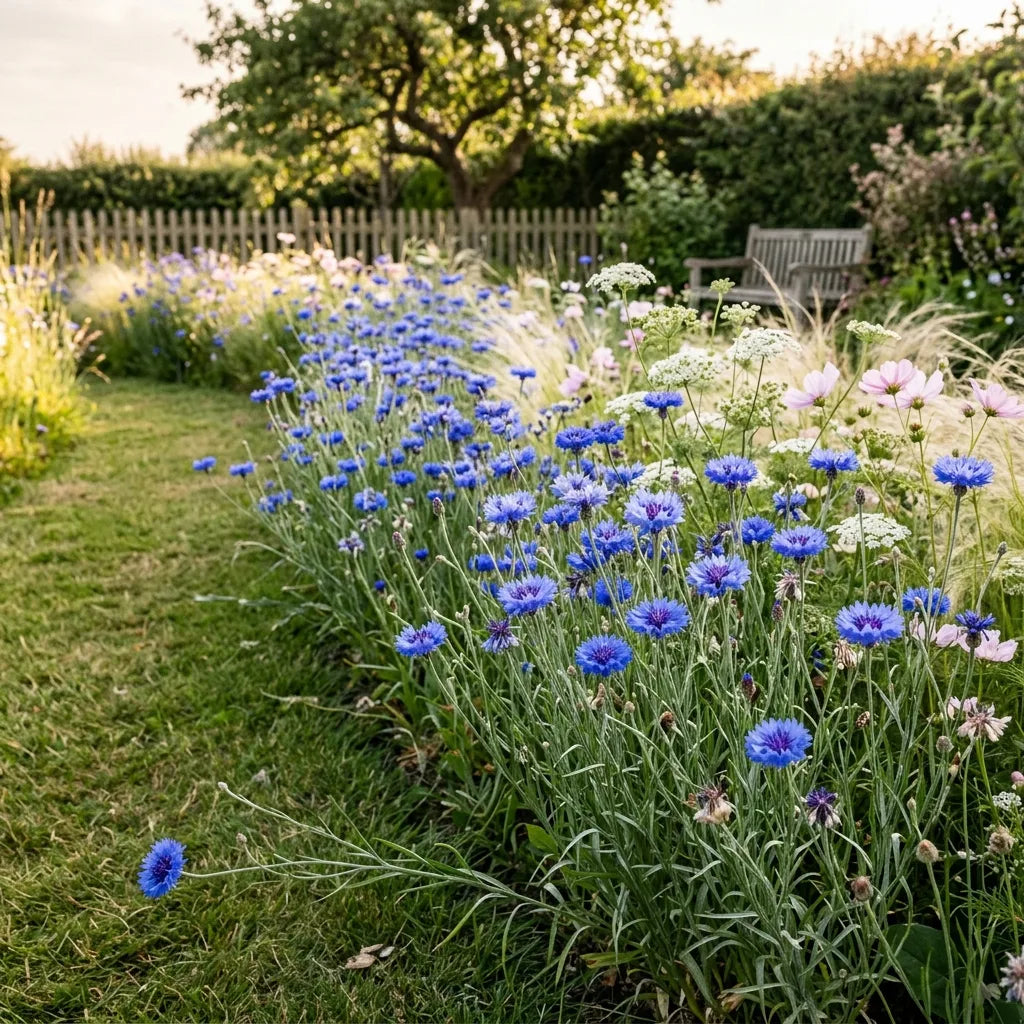
Sometimes called cornflower, bluebottle, or boutonniere flower, the cornflower goes by several names depending on the region, but has just one unmistakable blue—a color that long brightened French grain fields before herbicides caused it to nearly disappear from cultivated fields. Today, it is blooming again in gardens.
Characteristics:
-
Spectacular flowering: Branched stems reaching up to 1 metre tall, bearing deep violet-blue flowers from June to September.
-
Easy annual: Vigorous and undemanding, it self-seeds from one year to the next.
Sowing advice:
-
Exposure: Full sun, essential for dense flowering and sturdy stems.
-
Soil: Ordinary, preferably light and well-drained, even alkaline or poor. It dislikes heavy, waterlogged soil in winter. No fertilisation: excess nitrogen produces soft stems that flop.
-
Method: Sow directly in place by broadcasting in spring, or in autumn in mild regions for earlier flowering. No pots or pre-soaking are necessary. Thin to 20–25 cm apart. Our complete guide: how to sow your seeds.
Care advice:
- Water only during prolonged drought and weed around the young plants while they become established.
- Light staking can help the tallest plants exposed to wind.
Beneficial combinations:
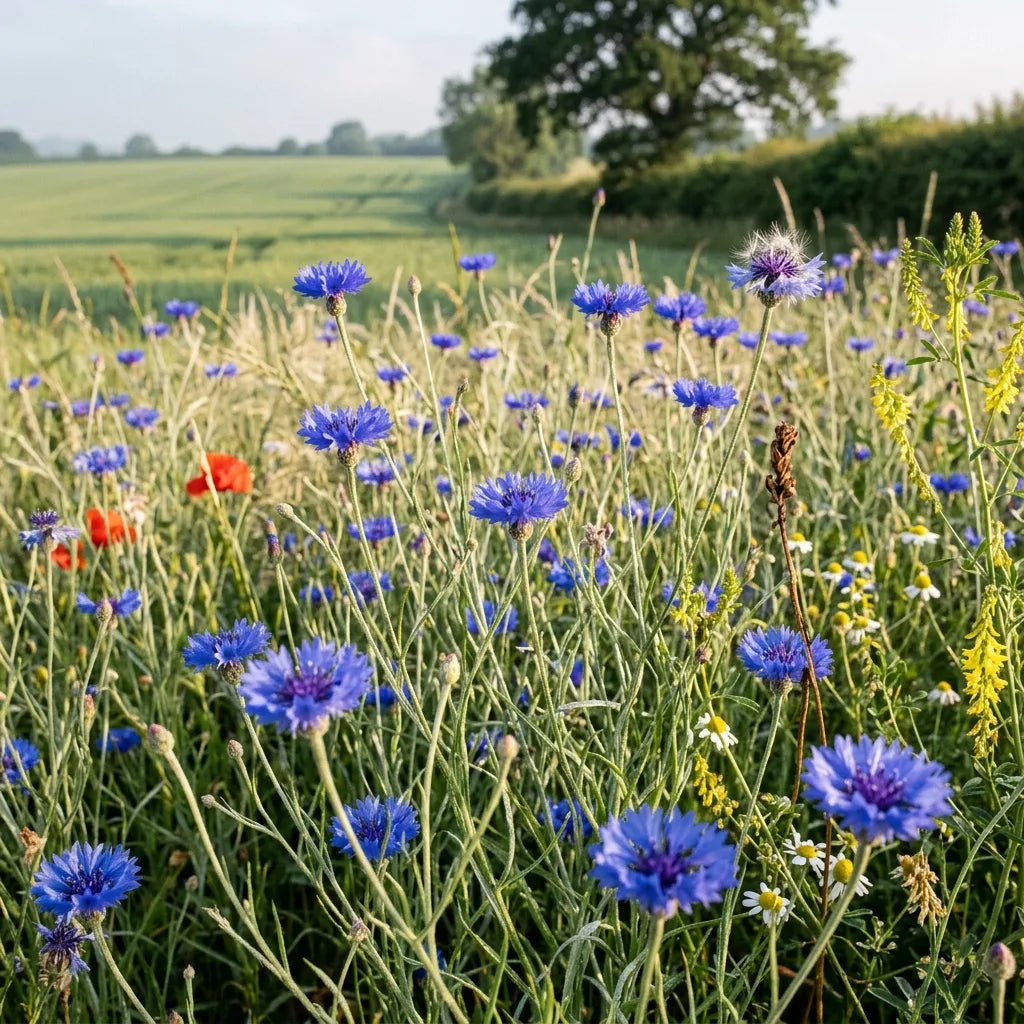
- The classic wildflower meadow trio: cornflower, wild poppy, and California poppy, which share the same need for well-drained soil and plenty of sunlight.
Benefits for biodiversity:
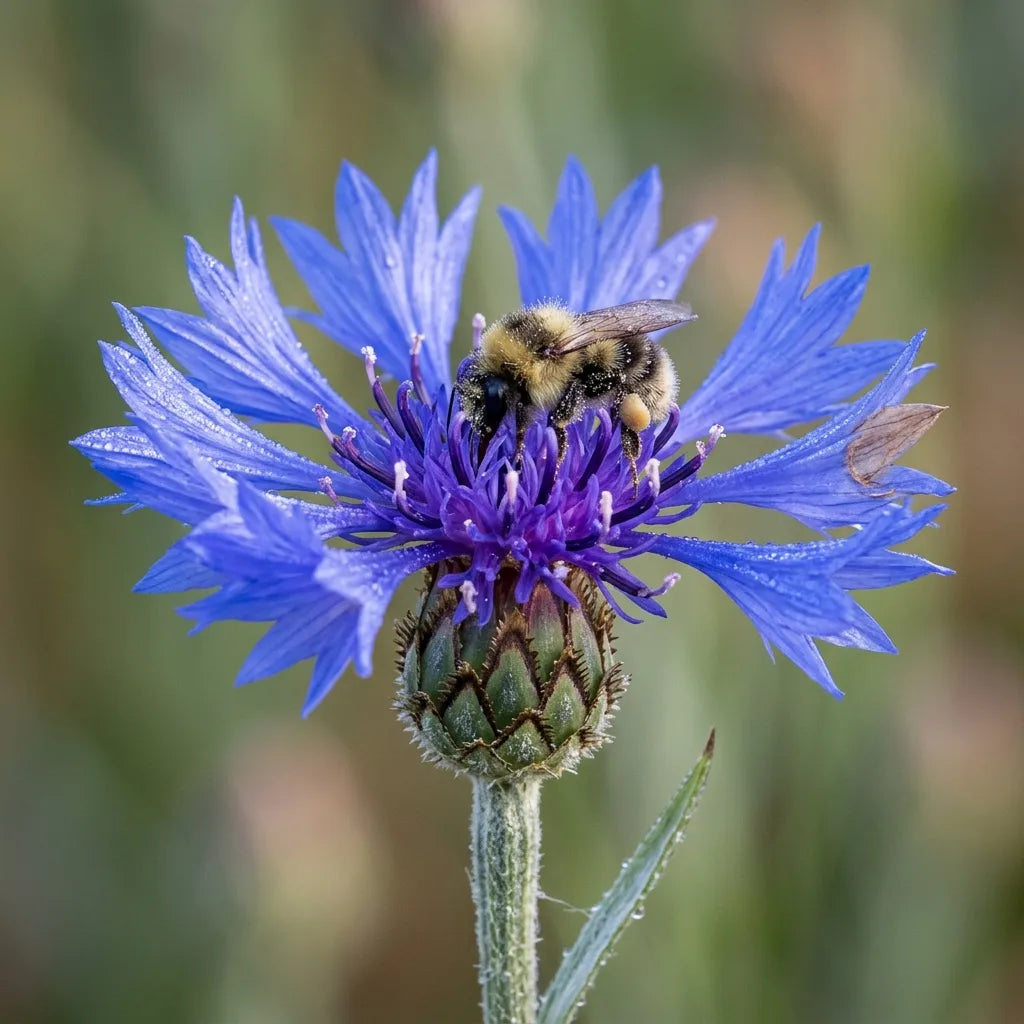
- A highly valuable nectar plant, frequently visited by bees, bumblebees, and butterflies.
- The cornflower is one of the traditional arable wildflowers now under threat: growing it helps preserve them. See also combining flowers with the vegetable garden.
Uses:
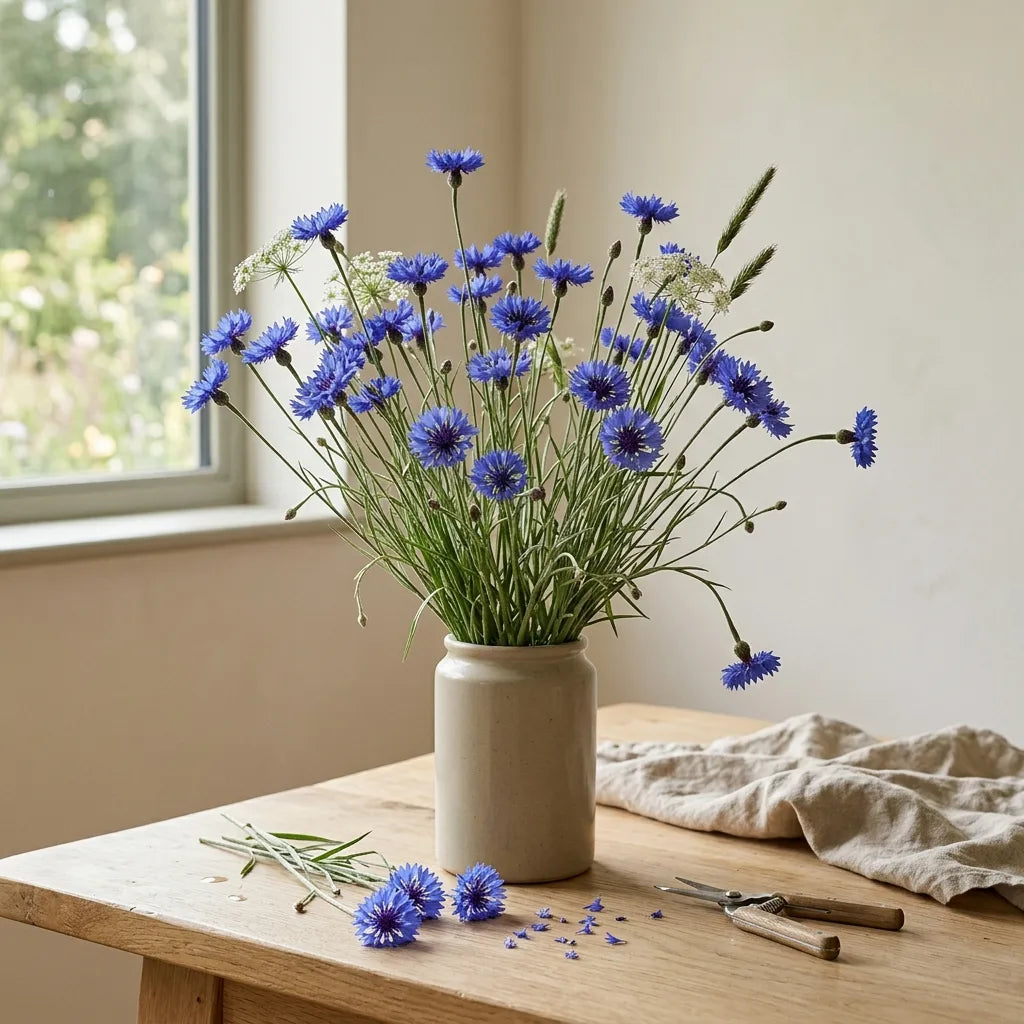
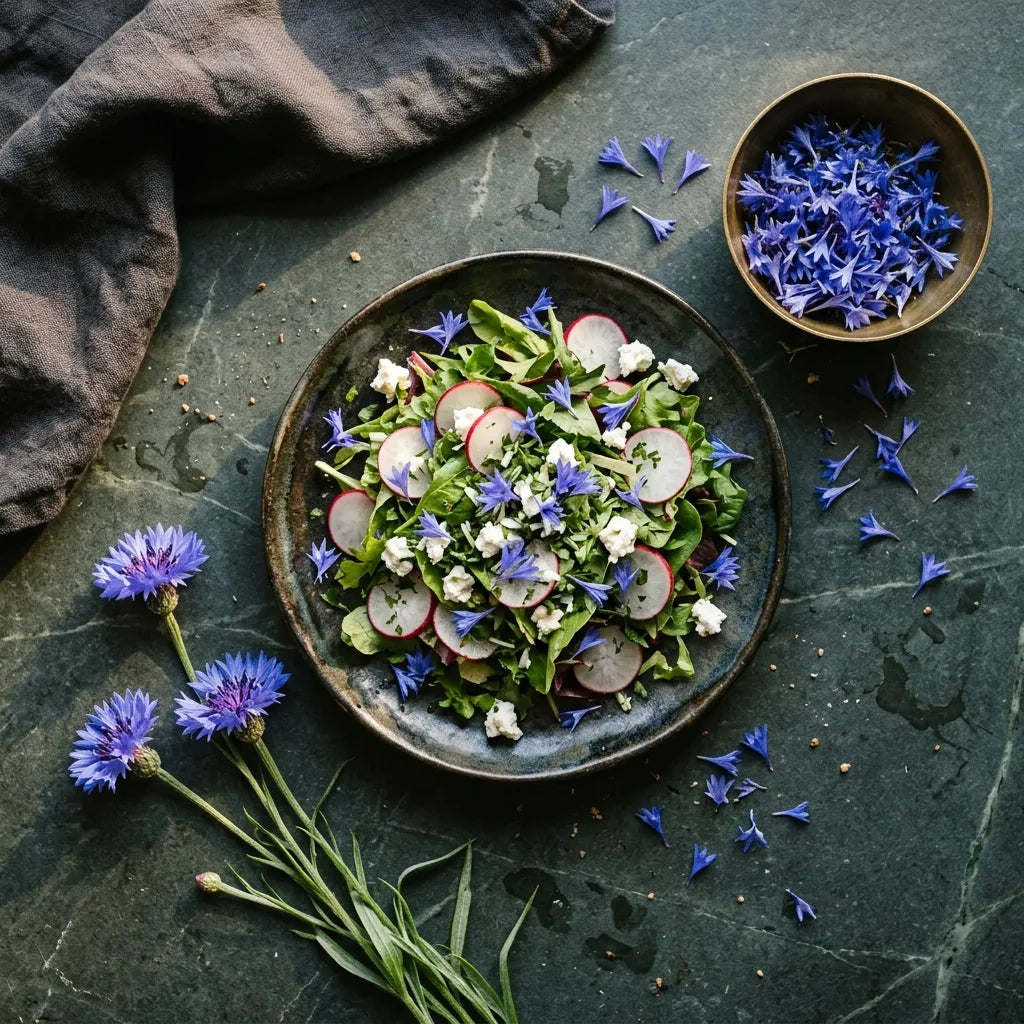
- Cornflower petals are edible and used as a colourful garnish for salads or pastries. Find more ideas in our article on edible flowers.
Symbolism:
In France, the cornflower symbolises remembrance of soldiers who died for their country: the “Bleuet de France” is sold every 11 November and 8 May in tribute to veterans.
Harvesting your own seeds:
Leave the faded flower heads to dry on the plant until they open, then rub out the seeds by hand over a container. Cornflowers readily self-seed. Detailed storage information here: storing your seeds from one year to the next.
Commitment to Quality: at SemiSauvage - Permaculture, we grow and select our seeds with respect for living things as our guiding principle. Based near the Auvergne Volcanoes, we choose open-pollinated, non-hybrid varieties, tested for their germination rate, carefully sorted and packaged, with no chemical treatment. Our belief: to restore gardeners’ ability to resow, year after year, seeds that truly belong to them.
Sale reserved for home gardeners seeking quality and authenticity.