Artemisia dracunculus
Tarragon, dragon herb, serpentine, fargon: its name comes from the Latin dracunculus, “little dragon,” referring to its roots tangled like snakes. An aromatic herb with a distinct aniseed flavor, essential for béarnaise sauce and tarragon chicken.
Characteristics:
-
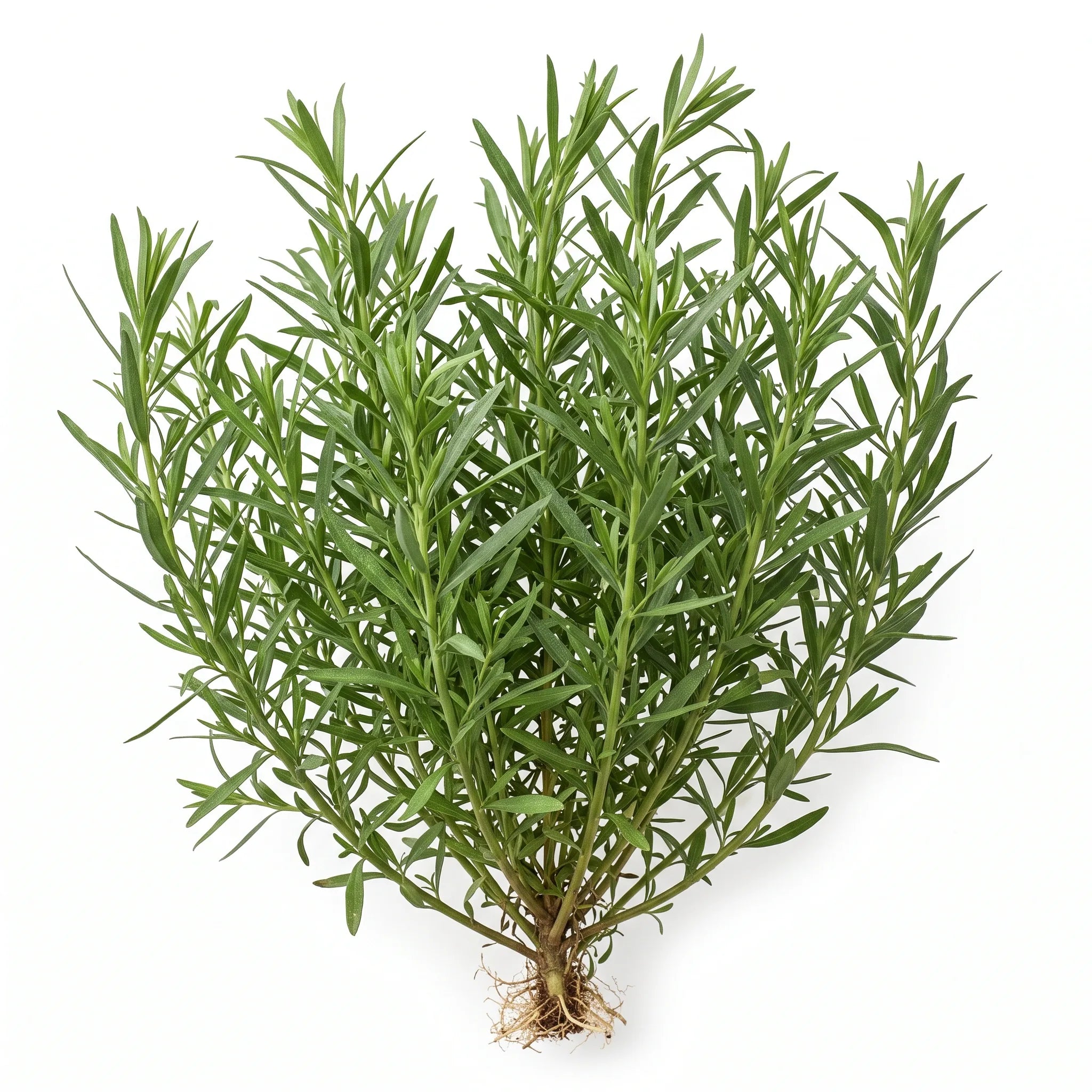
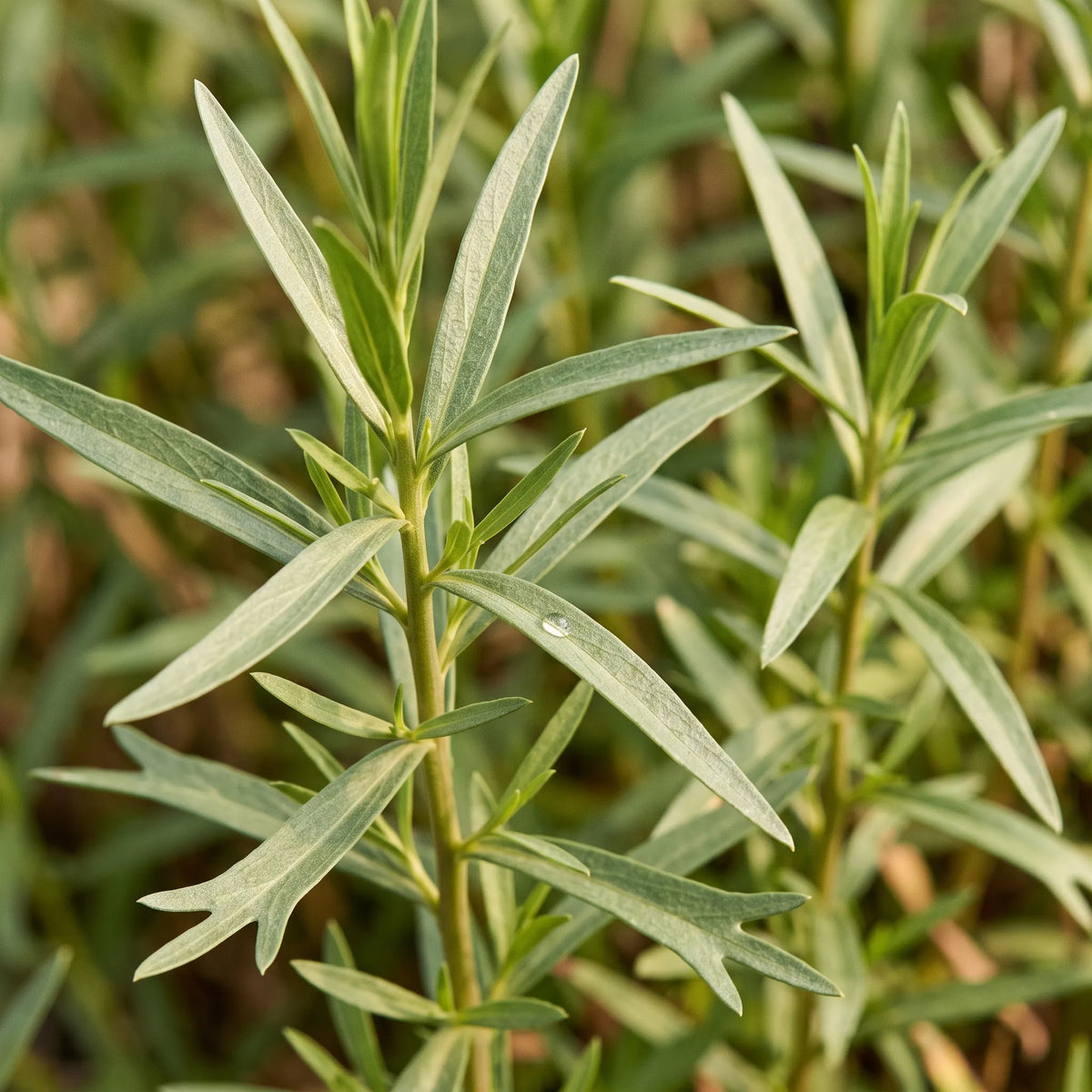
Aniseed flavor: light green, narrow and highly aromatic leaves.
-
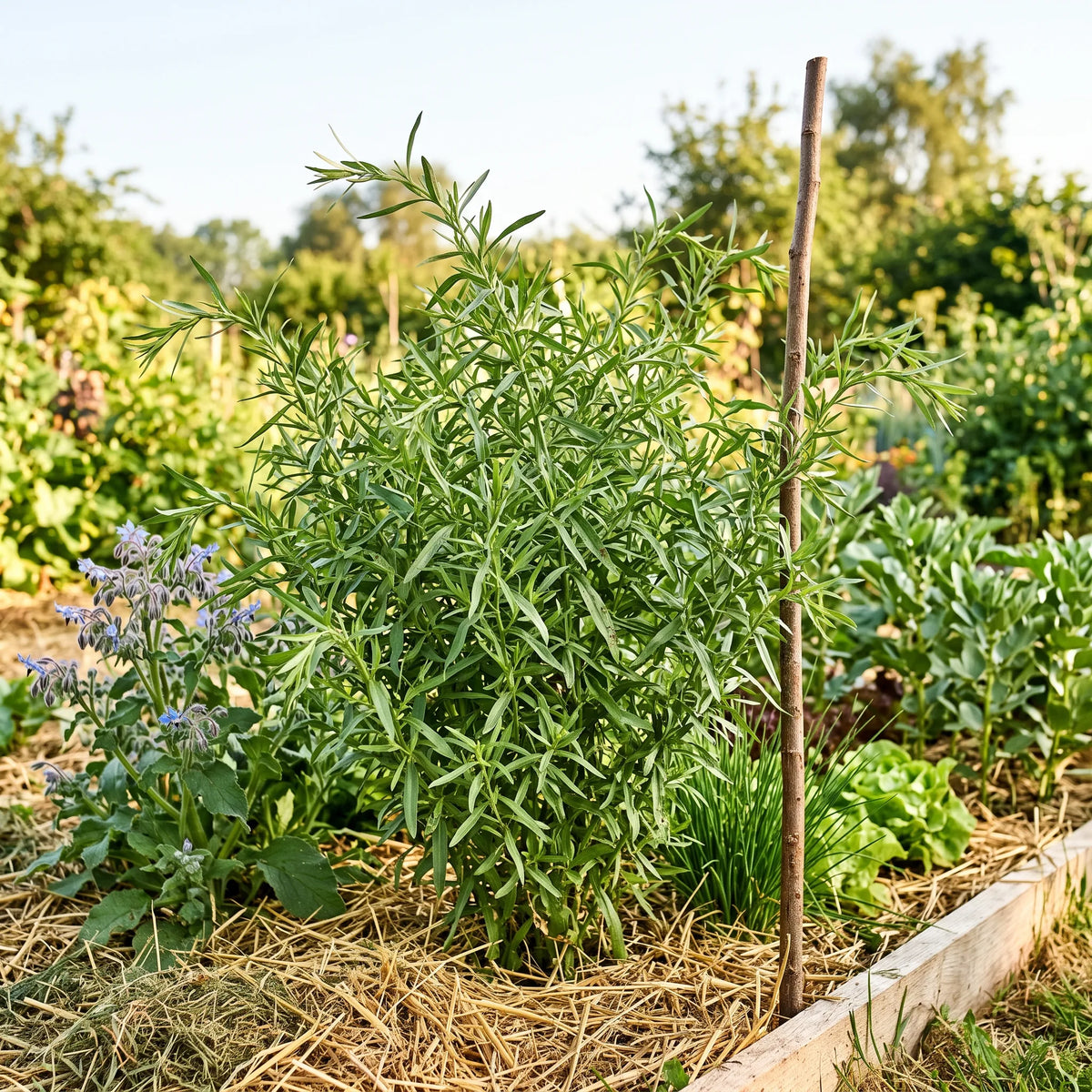
Bushy perennial: it returns every spring and flowers from July to October.
-
Can be grown in pots: perfect for balconies and terraces.
-
Hardy and vigorous: tarragon grown from seed is more cold-resistant than plants sold for transplanting.
Good to know before sowing:
- French tarragon, the kind sold by garden centers, is sterile: it never produces seeds and can only be propagated by cuttings or division. Therefore, all tarragon seeds sold commercially, here and elsewhere, produce Russian tarragon, the fertile form of the same species.
- Its advantages: considerably hardier, more vigorous, more productive, and it self-seeds. Its aniseed flavor is slightly milder than that of French tarragon, and it becomes more pronounced as the plant matures—the youngest plants are the least aromatic.
- Tip: grow it in poor, dry soil. As with thyme, frugality concentrates its aroma, whereas rich soil dilutes it.
Sowing advice:
-
Position: sunny and warm.
-
Soil: light, rather poor and perfectly drained. This is the decisive point: tarragon dies far more often from stagnant winter moisture than from cold. In heavy soil, plant it on a mound or in a pot. Do not amend the soil.
-
Method: sow in spring, on the surface or barely covered—the seeds are tiny and need light. Sow in pots at 18–20°C, then transplant after the frosts. See how to sow your seeds.
Planting advice:
- Transplant with 40 cm spacing. In regions with a continental climate, protect the base with a thick mulch before winter.
Care advice:
- Water moderately; it prefers drought to excess water. No fertilizer is needed.
- Cut back the dry stems at the end of winter. Divide the clump every 3 to 4 years to rejuvenate it.
Harvesting advice:
- Pick the leaves as needed from May to September. They freeze well and keep very well in vinegar, but lose much of their aroma when dried.
Beneficial combinations:
Benefits for biodiversity:
- Its late flowering, from July to October, provides pollen for small pollinators at a time when resources are becoming scarce.
- Like other wormwoods, its strong scent disrupts several pests affecting nearby crops.
Uses:
- A staple ingredient in béarnaise sauce, tarragon chicken, flavored vinegars and pickles. It also enhances fish, eggs and creamy sauces. Add at the end of cooking.
- A traditional medicinal plant, used in herbal medicine since the Middle Ages. See our medicinal plants to sow.
Harvesting your own seeds:
Unlike sterile French tarragon, this one flowers and produces seeds: leave a few flower stalks to dry completely on the plant, then rub them over a container. Dividing the clump in spring is still the fastest method. See how to store your seeds.
Commitment to Quality: at SemiSauvage - Permaculture, we grow and select our seeds with respect for living things as our guiding principle. Based near the Auvergne Volcanoes, we choose reproducible, non-hybrid varieties, tested for their germination rate, carefully sorted and packaged, with no chemical treatment. Our belief: to give gardeners back the ability to sow, year after year, seeds that truly belong to them.
The only tarragon that can truly be sown, and the hardiest.