Linum usitatissimum
Textile flax, cultivated flax, oilseed flax: its species name, usitatissimum, literally means “the most useful of all.” A deserved superlative for one of humanity’s oldest domesticated plants, cultivated for millennia as much for its fibers as for its seeds.
Characteristics:
-
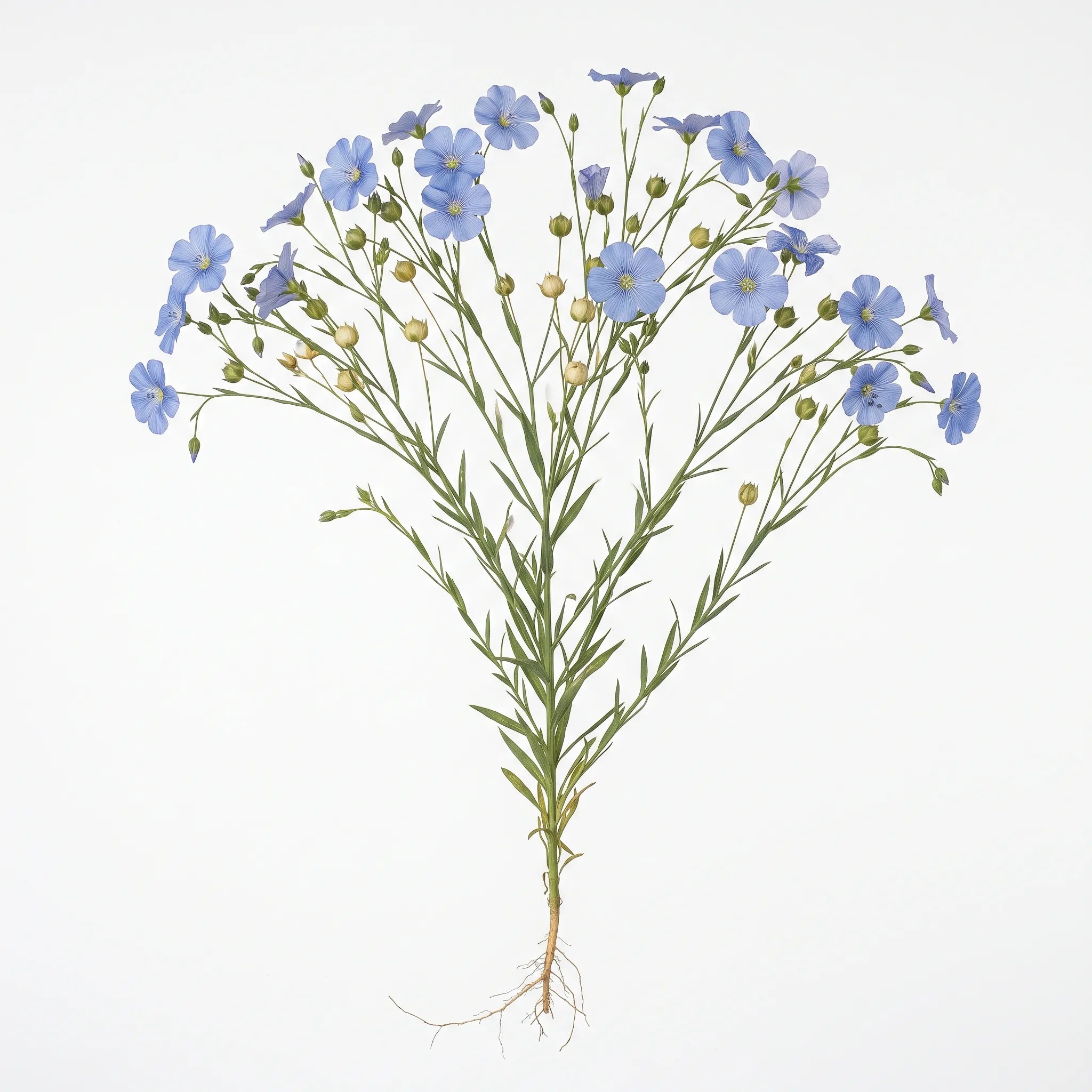
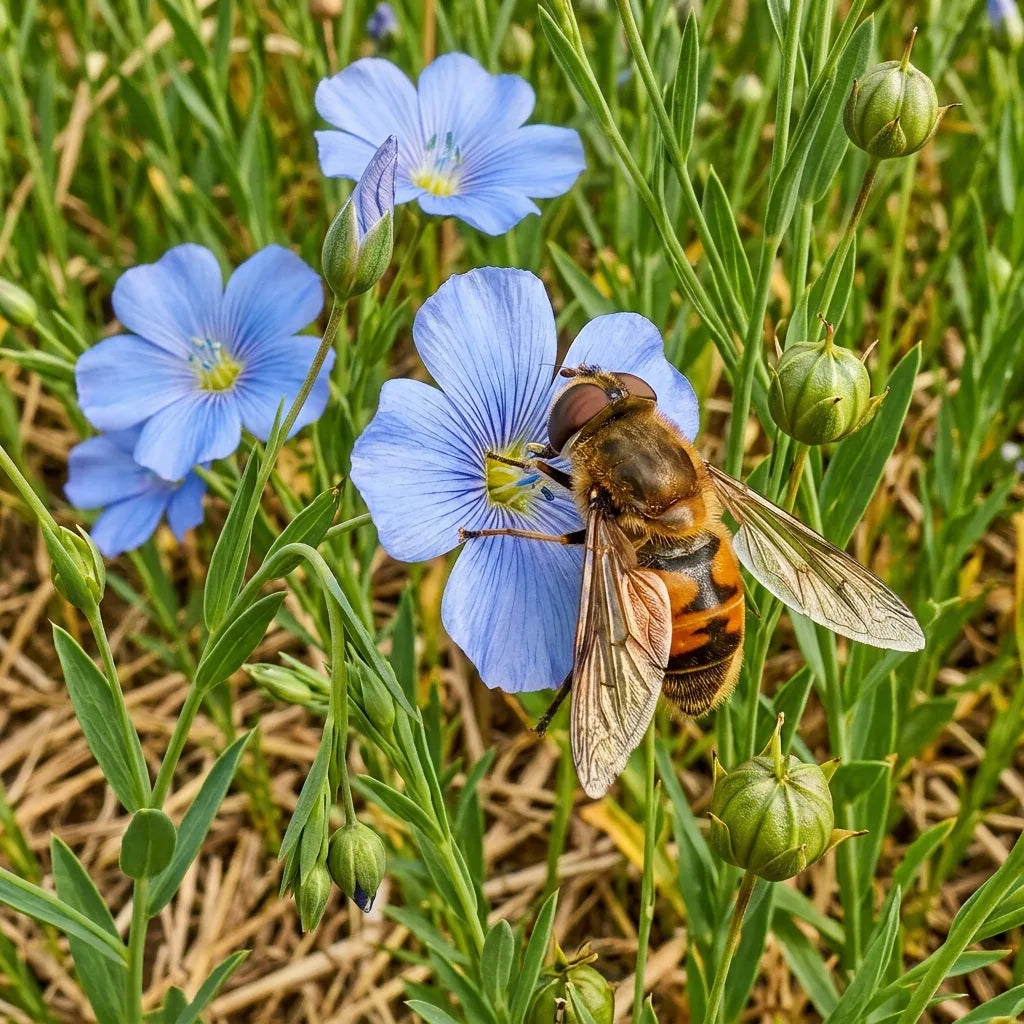
Light, airy silhouette: slender, fibrous stems measuring 60 cm to 1 m, with narrow, glaucous blue-green leaves.
-
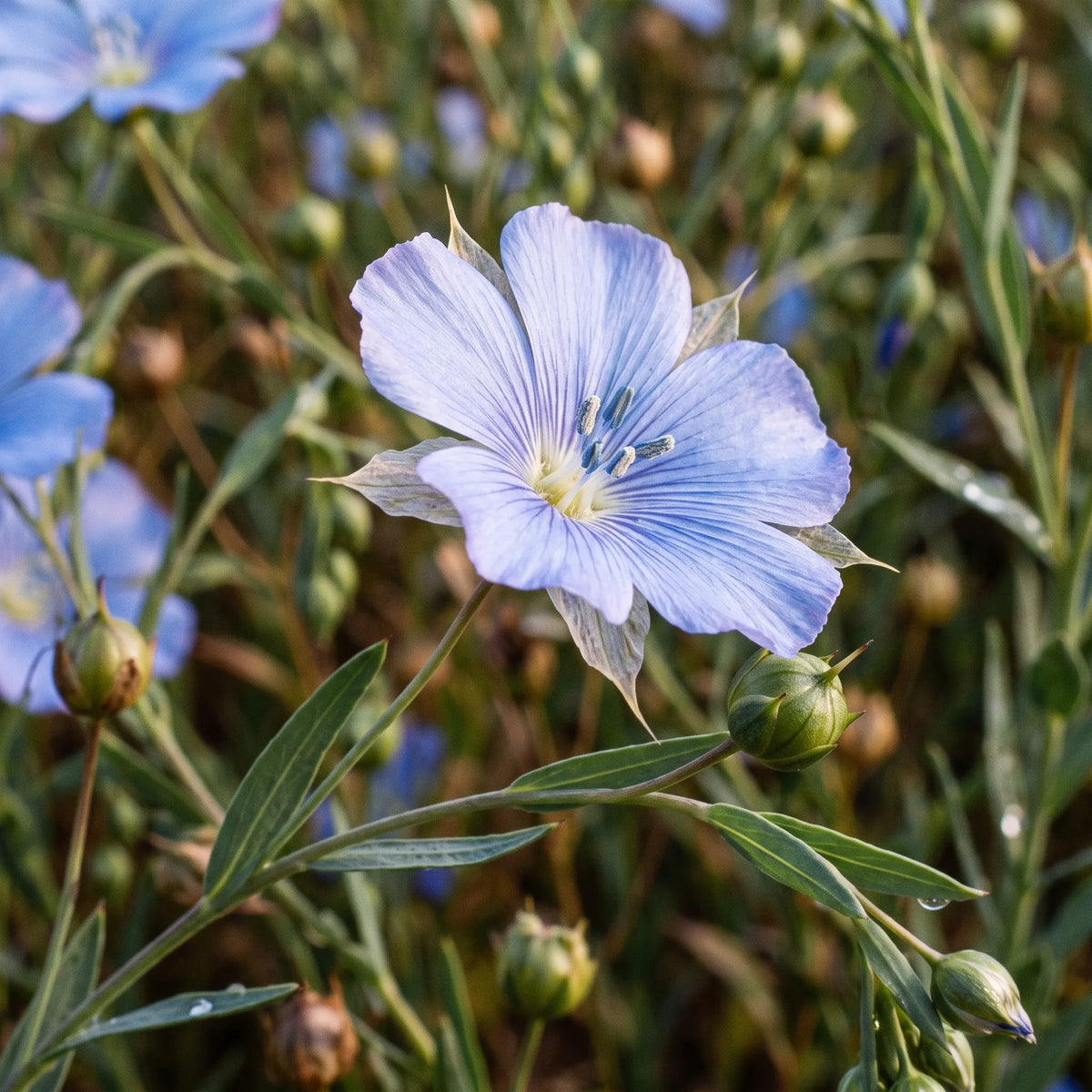
Shimmering bloom: light blue, funnel-shaped flowers, 2 to 3 cm across, dancing in the slightest breeze all summer long.
-
Ephemeral and continuously renewed: each flower lasts only one morning, but the blooms follow one another without interruption.
Sowing advice:
-
Position: full sun to partial shade, with a preference for gentle light.
-
Soil: light, deep, cool and well-drained, preferably loamy. It dislikes heavy, compacted soil and stagnant water. Soil that is too rich in nitrogen causes the stems to flop: do not over-fertilize.
-
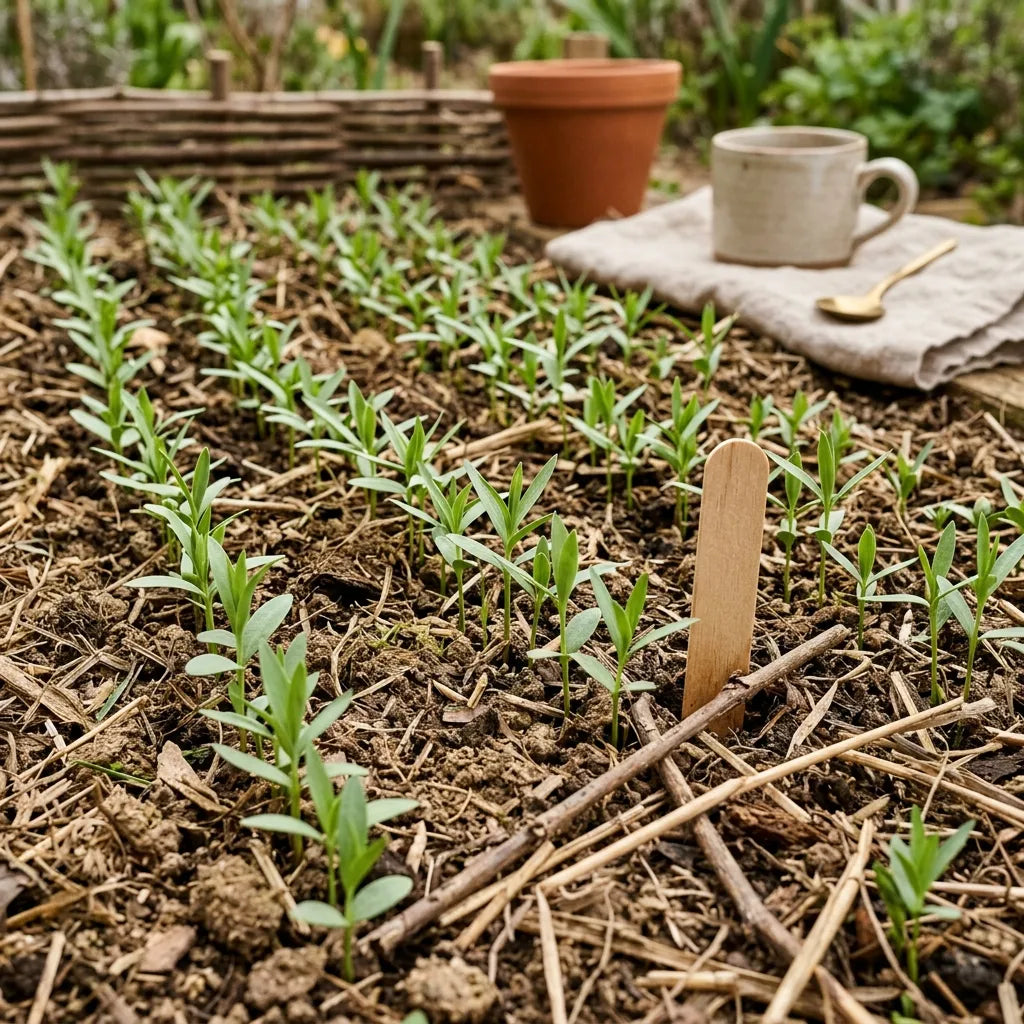
Method: sow directly in place or in pots from April to July, lightly covering the seeds. No soaking or stratification is necessary; germination is simple and fast. See how to sow your seeds.
Planting advice:
- Transplant seedlings with 4 to 5 leaves, spacing them 10 cm apart.
- Protect young plants from frost before winter, then plant them in their final position the following spring, spacing them 30 cm apart.
Care advice:
- Water moderately during dry periods. No staking is necessary if the soil is not too rich.
Beneficial pairings:
Benefits for biodiversity:
- A nectar-rich plant, flax attracts bees every morning throughout its long summer flowering period.
- Its seeds, left standing in autumn, feed seed-eating garden birds.
Uses:
- Historically, its fibers have been used to make linen textiles and its seeds to produce oil—two traditional uses that remain relevant today. Normandy is still one of the world’s largest producing regions.
Harvesting your own seeds:
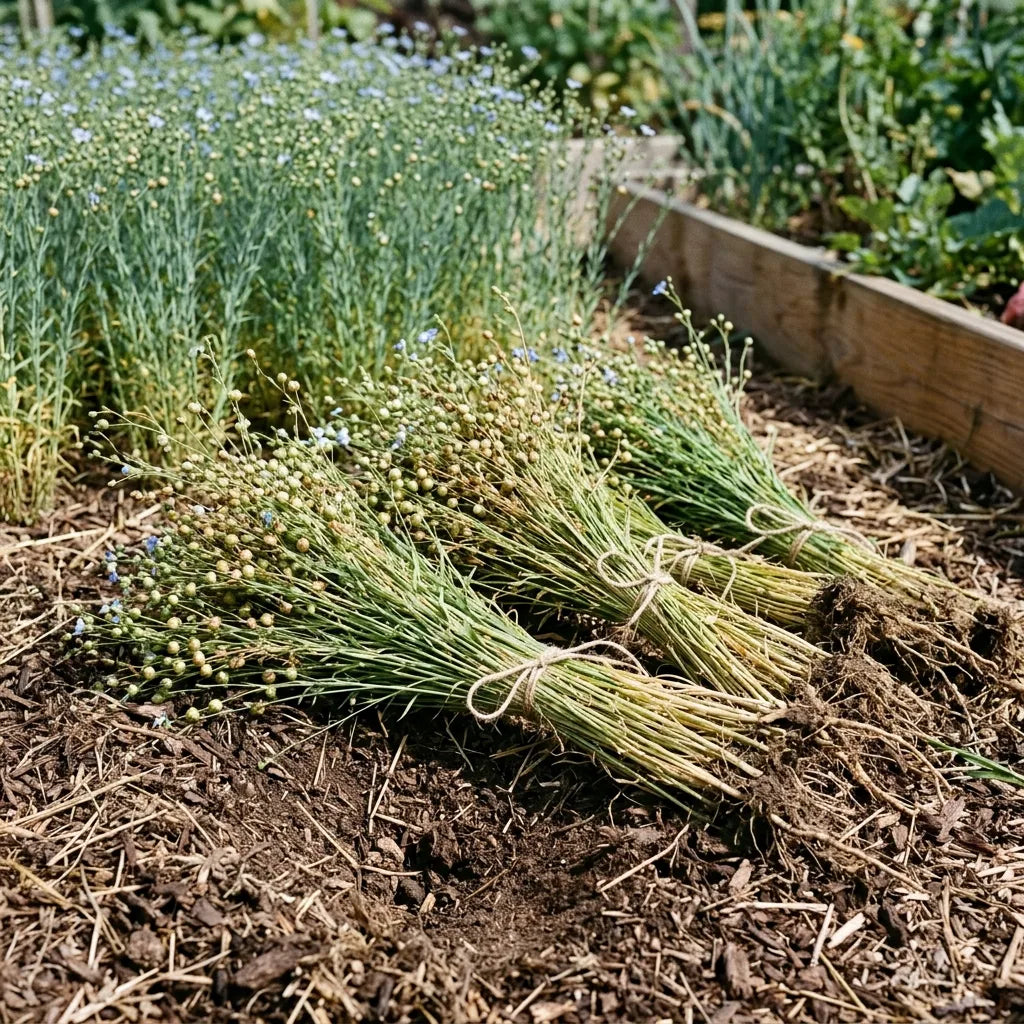
Leave the small round capsules to turn brown and dry completely on the plant, then gently crush them between your fingers over a container to release the shiny seeds. Once established, flax naturally self-seeds from one year to the next. See storing your seeds.
Commitment to Quality: at SemiSauvage - Permaculture, we grow and select our seeds with respect for all living things as our guiding principle. Based near the Auvergne Volcanoes, we choose open-pollinated, non-hybrid varieties, tested for their germination rate, carefully sorted and packaged, with no chemical treatment. Our belief: to give gardeners back the ability to sow, year after year, seeds that truly belong to them.
Add these flax seeds to your garden for a touch of delicate movement all summer long.