Lagenaria siceraria
Bottle gourd, calabash, pilgrim’s gourd: few cultivated plants have such an ancient history. The calabash is among the very first plants domesticated by humanity, more than 10,000 years ago, and its hollowed-out, dried fruits have served as containers, musical instruments, or ritual objects on almost every continent.
Characteristics:
-
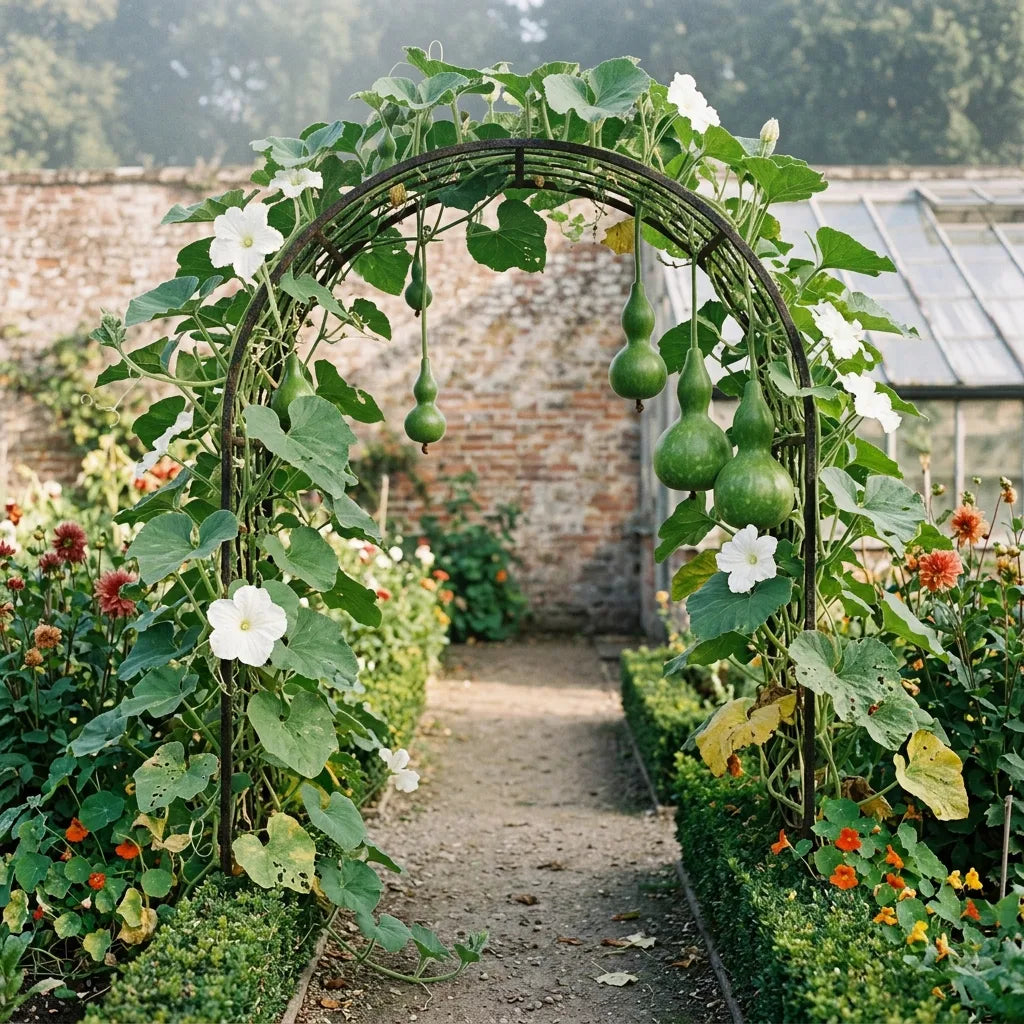
Vigorous annual climber: its stems can exceed 4 metres and cover fences, pergolas, and trellises in a single season.
-
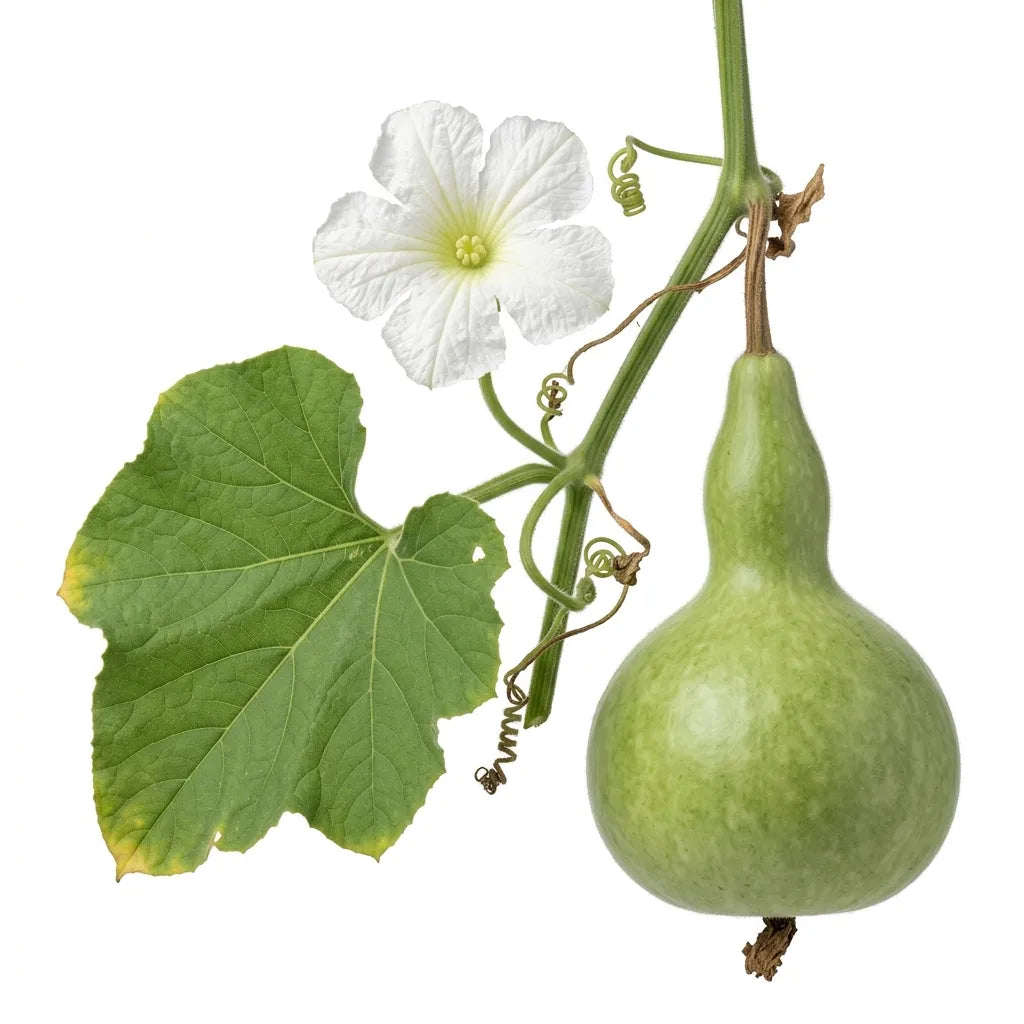
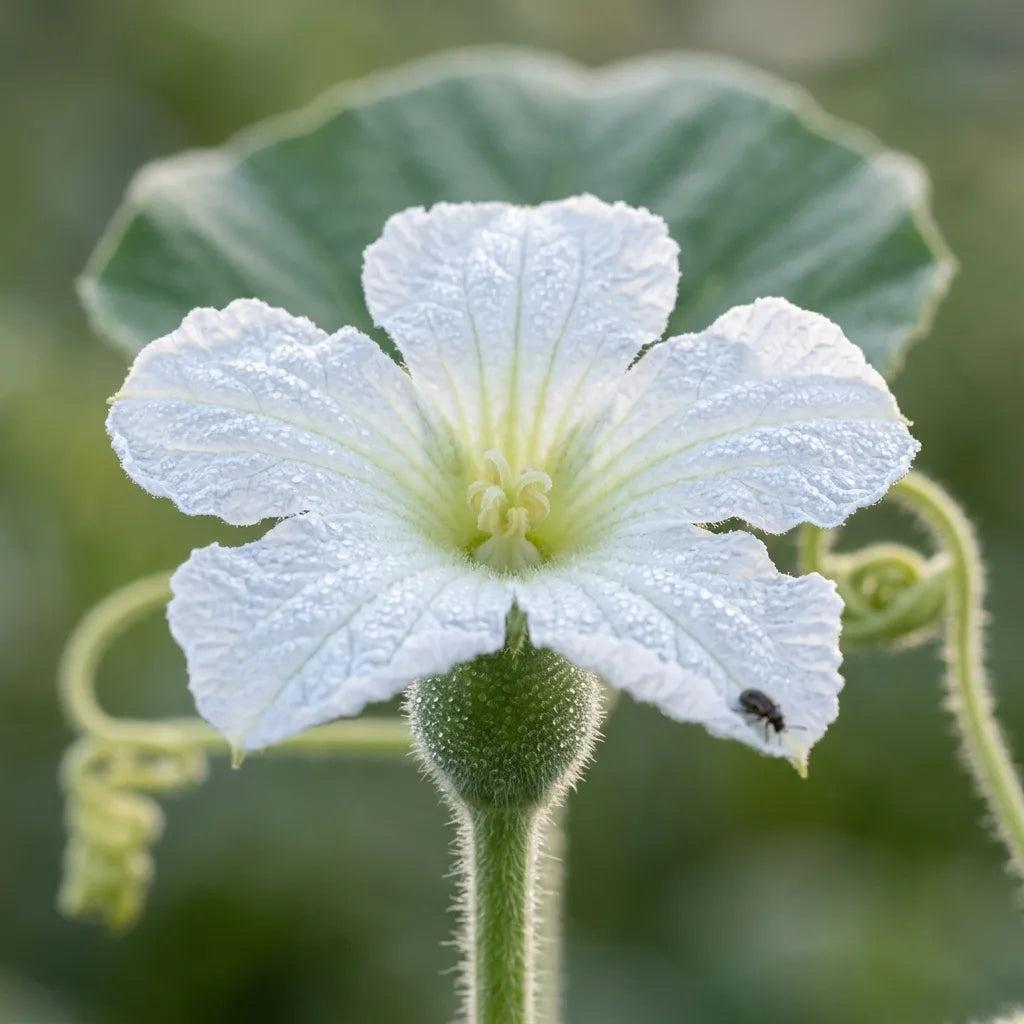
Nocturnal flowers: a rare characteristic, its large white flowers open at dusk and fade by morning.
-
Decorative fruits: round or bottle-shaped, they are grown for decoration and handicrafts rather than for cooking.
Precautions:
- As with other cucurbits, a very bitter-tasting fruit may contain high concentrations of natural compounds that irritate the digestive system: never eat a calabash or gourd that tastes bitter.
Sowing advice:
-
Position: full sun and warmth; it is sensitive to cold and demanding in terms of light.
-
Soil: rich, deep, moist, and well drained. This is a very hungry plant: soil amended with mature compost is a real advantage, and planting beside a compost pile produces spectacular results.
-
Method: sow in pots indoors (at least 20 °C) 3 to 4 weeks before the last frosts. Soaking the seeds in lukewarm water for 12 to 24 hours softens their thick coating and significantly speeds up germination. See how to sow your seeds.
Planting advice:
- Transplant after the last frosts, spacing plants at least 1 metre apart, at the foot of a sturdy support: mature fruits are heavy.
Care advice:
- Water regularly and generously throughout the growing season, at the base of the plant without wetting the foliage. A thick mulch helps keep the soil cool.
Harvesting advice:
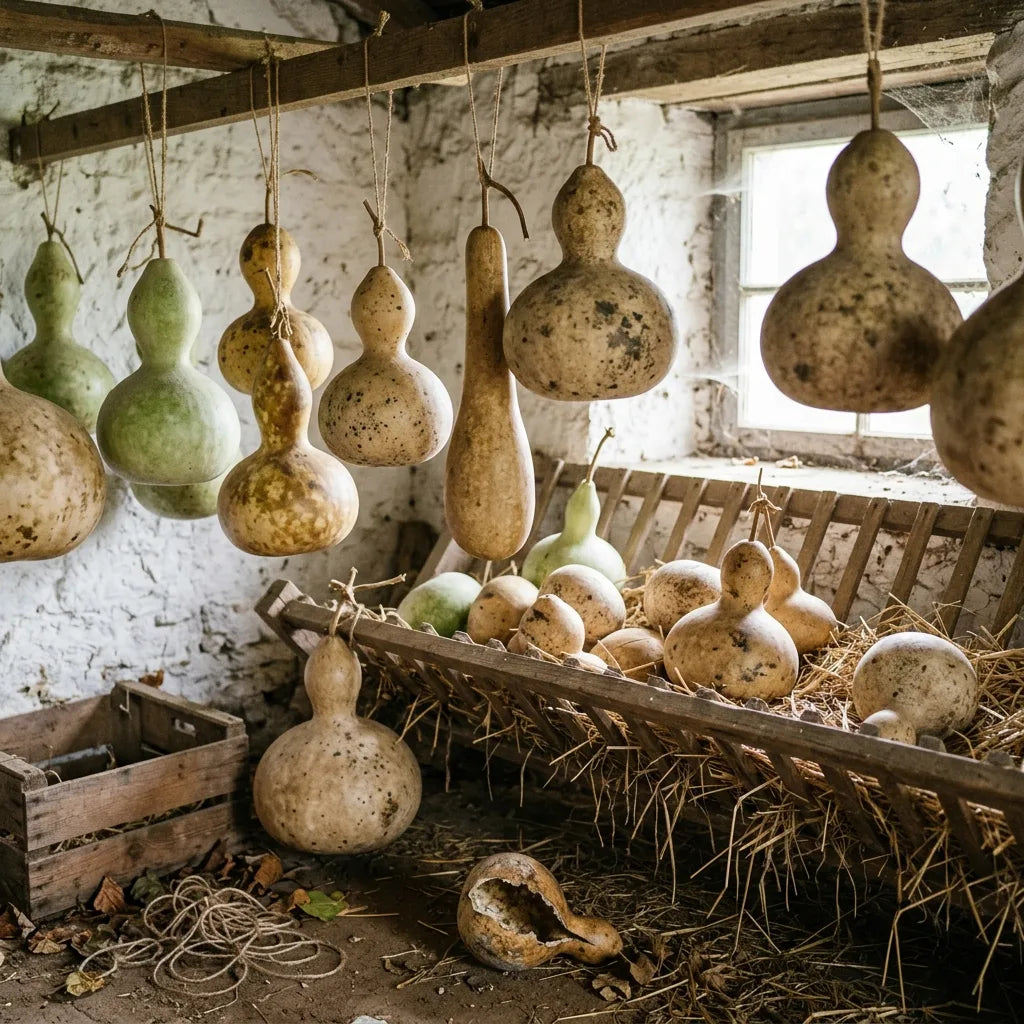
- For decorative use, leave the fruits on the plant until the first frosts, then hang them in a dry place for several months: they will empty and harden naturally.
Benefits for biodiversity:
- Its large white flowers, which open at nightfall, are pollinated by moths, providing a valuable resource for wildlife that is often overlooked in the garden.
Uses:
- Once dried (4 to 5 months after sowing), the hollowed-out fruits can be used to make containers, decorative objects, or handcrafted musical instruments.
Harvesting your own seeds:
Let the fruits dry completely until the shell hardens and the seeds rattle inside when the fruit is shaken. Then open it to collect the flat seeds and store them thoroughly dry. Caution: cucurbits cross-pollinate easily, so isolate your seed plants. See storing your seeds.
Commitment to Quality: at SemiSauvage - Permaculture, we grow and select our seeds with respect for all living things as our guiding principle. Based near the Auvergne Volcanoes, we choose open-pollinated, non-hybrid varieties, tested for their germination rate, carefully sorted and packaged, with no chemical treatment. Our belief: to give gardeners back the ability to resow, year after year, seeds that truly belong to them.
Sales reserved for amateur gardeners seeking quality and authenticity.