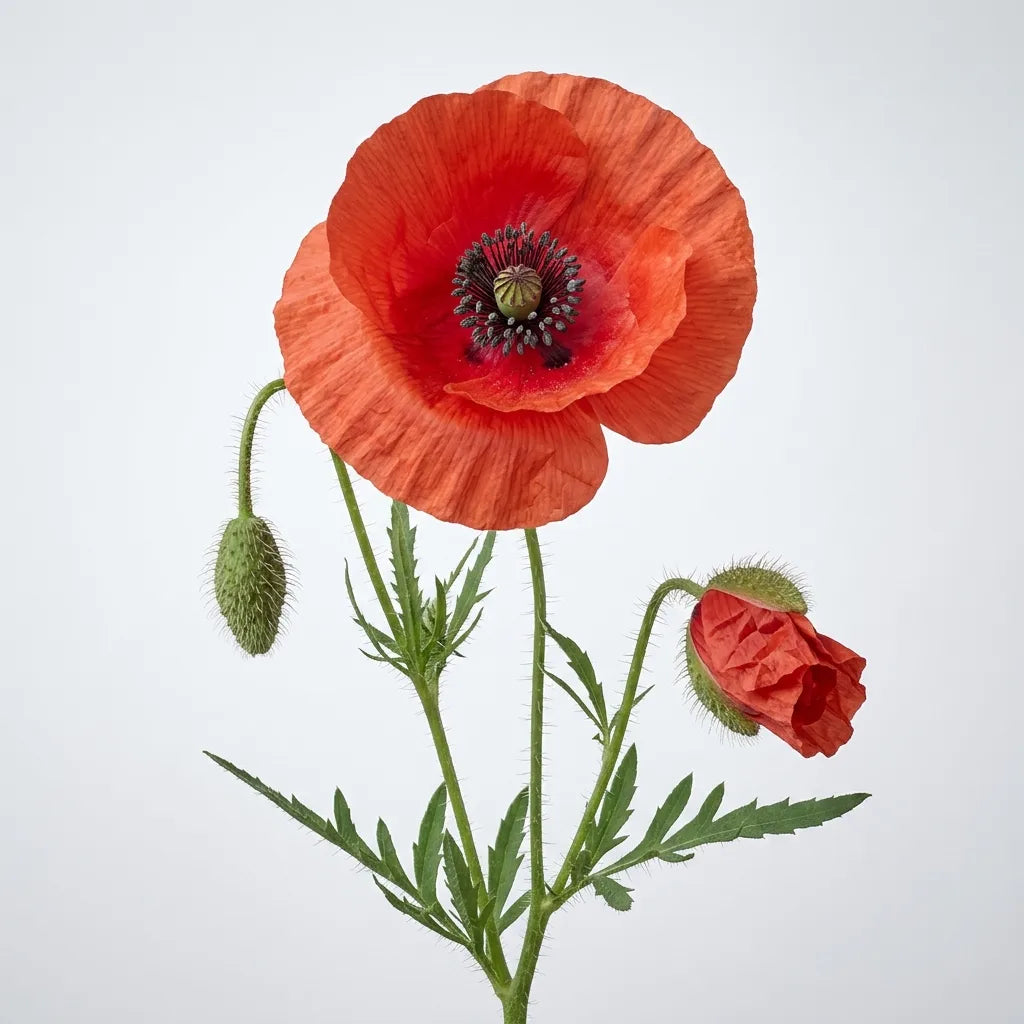
Papaver rhoeas
Few wildflowers have inspired artists and poets as much as the poppy. Its brilliant red color and fragility—each flower lasts only a day or two—have made it, particularly since the First World War, a universal symbol of remembrance in many countries.
Characteristics:
-
Easy annual: it quickly covers poor ground and reseeds itself year after year.
-
Short-lived flowering: each flower lasts only a day or two, but new buds appear successively from May to July.
Precautions:
- Like other poppies, the corn poppy contains small amounts of alkaloids: avoid ingestion, especially by young children and pets.
Sowing advice:
-
Exposure: full sun, in a dry, open location.
-
Soil: ordinary to poor, above all well drained, even stony or calcareous. It dislikes heavy, waterlogged soils and needs no fertilization: soil that is too rich encourages leaf growth at the expense of flowers.
-
Method: sow directly in place by broadcasting, in spring or autumn. Its taproot does not tolerate transplanting: avoid sowing in pots. Barely cover the very fine seeds and press down lightly. No soaking is necessary. See our guide: how to sow seeds in cotton, pots, or directly in the ground.
Care advice:
- No watering is needed once established. Thin to 20 cm apart if the seedlings are too dense.
Beneficial combinations:
Benefits for biodiversity:
- A nectarless but pollen-rich plant, the corn poppy provides abundant pollen sought by bees and hoverflies.
- It was once part of the community of flowers found in cereal fields, now increasingly rare: sowing it provides a refuge for declining wild flora. Combine it with the vegetable garden as explained in combining flowers with the vegetable garden.
Symbolism:
Since the First World War, the corn poppy has been a symbol of remembrance for soldiers who fell in combat in Commonwealth countries, worn every November 11 on Remembrance Day.
Harvesting your own seeds:
Leave the seed capsules to turn brown and dry on the plant until they open through small slits at the top, then shake them over a bag like a salt shaker. The corn poppy reseeds itself very easily. To keep them until the next sowing: how to store your seeds from one year to the next.
Commitment to Quality: at SemiSauvage - Permaculture, we grow and select our seeds with respect for all living things as our guiding principle. Based near the Volcanoes of Auvergne, we choose reproducible, non-hybrid varieties, tested for their germination rate, carefully sorted and packaged, with no chemical treatment. Our belief: to give gardeners back the ability to resow, year after year, seeds that truly belong to them.
Add these wild poppy seeds to your garden to evoke the fleeting beauty of the wild.