Capsicum chinense “Habanero Lemon”
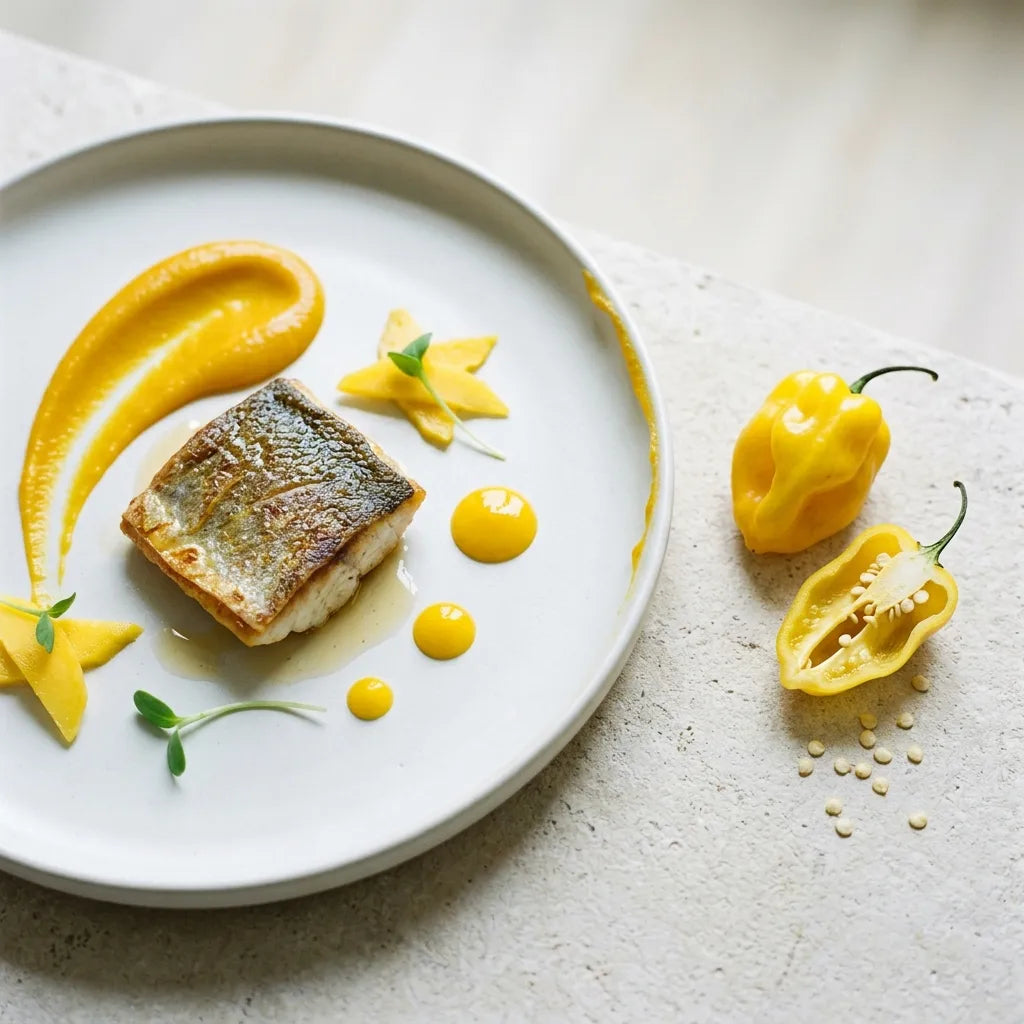
Lemon Habanero Pepper, yellow habanero, Lemon Habanero: behind its citrus fragrance lies one of the most formidable peppers in the garden. Between 100,000 and 350,000 units on the Scoville scale—fifty times hotter than a cayenne pepper. Its fruity, lemony flavor is real, but it comes before a heat that shows no mercy.
Characteristics:
-
Citrus aroma: intense lemon fragrance, highly distinctive.
-
Extreme heat: 100,000 to 350,000 Scoville units.
-
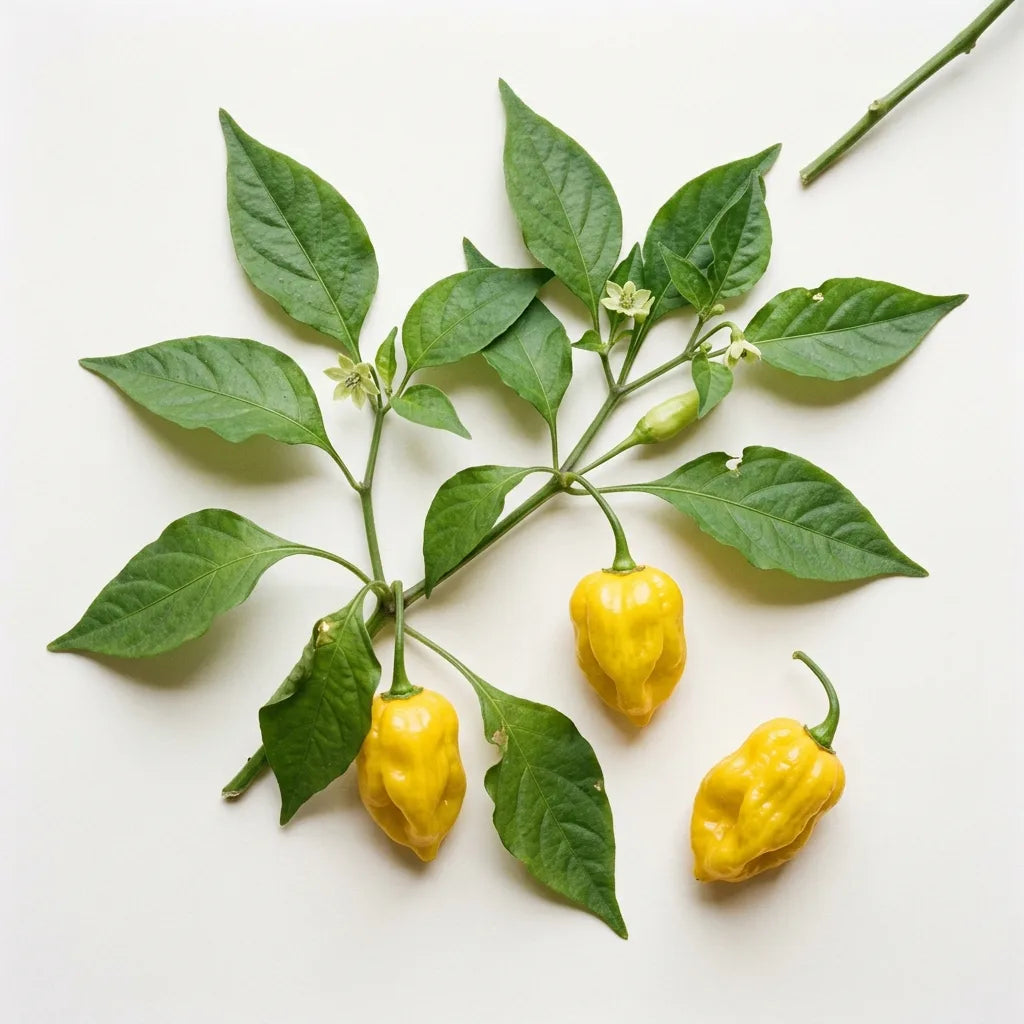
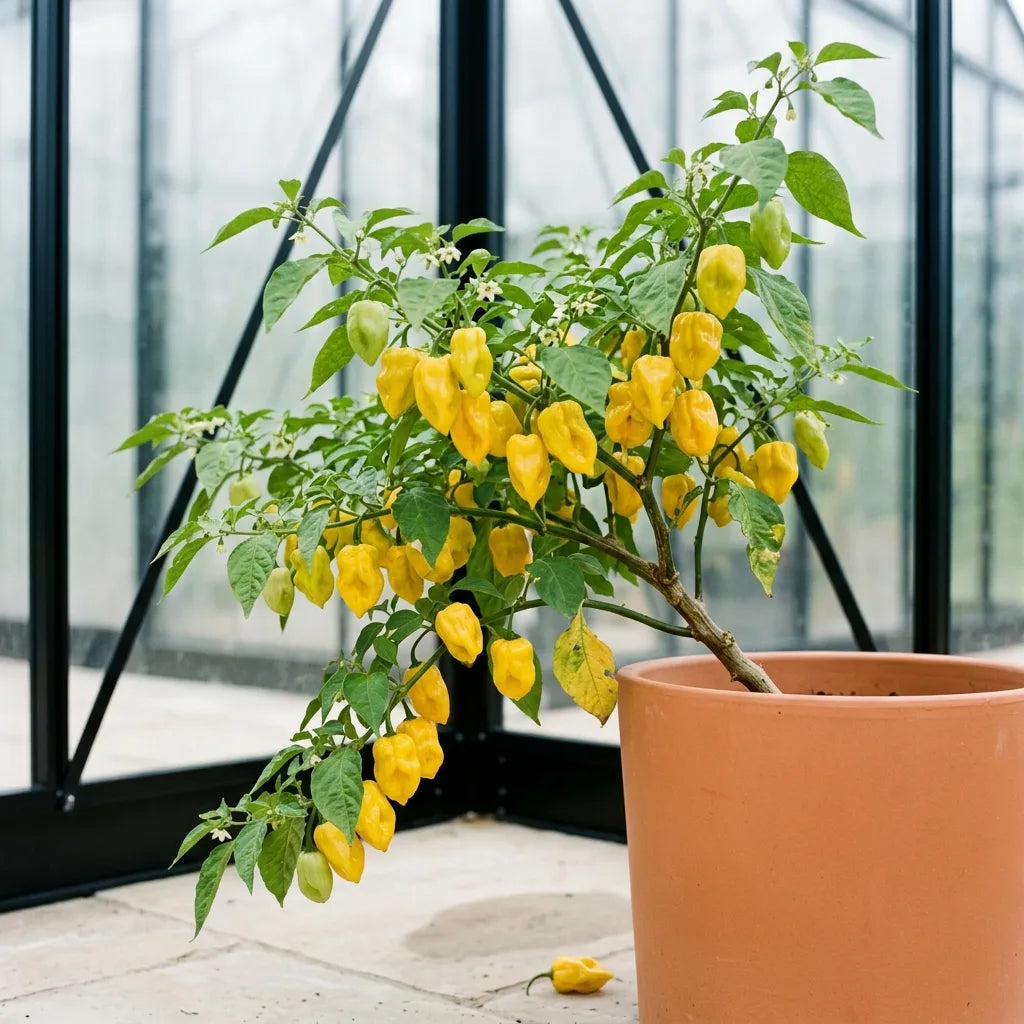
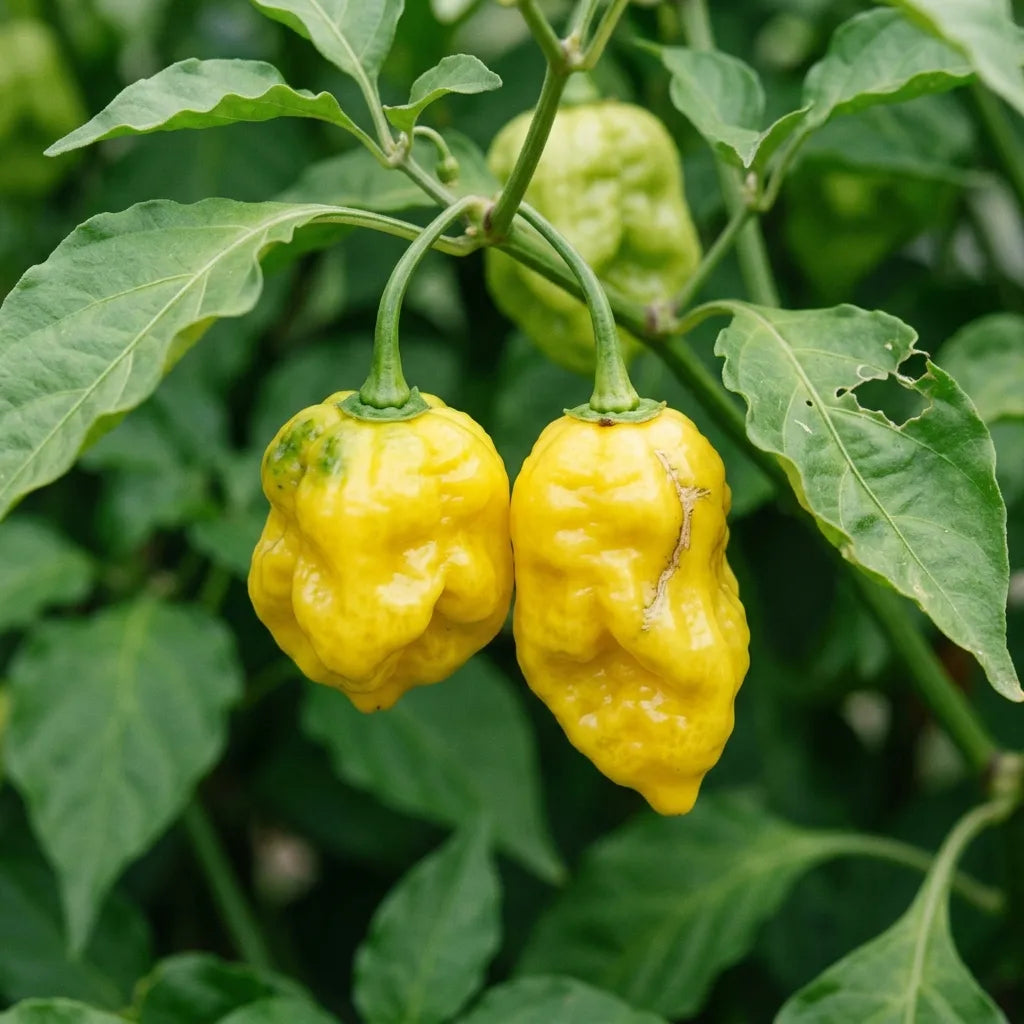
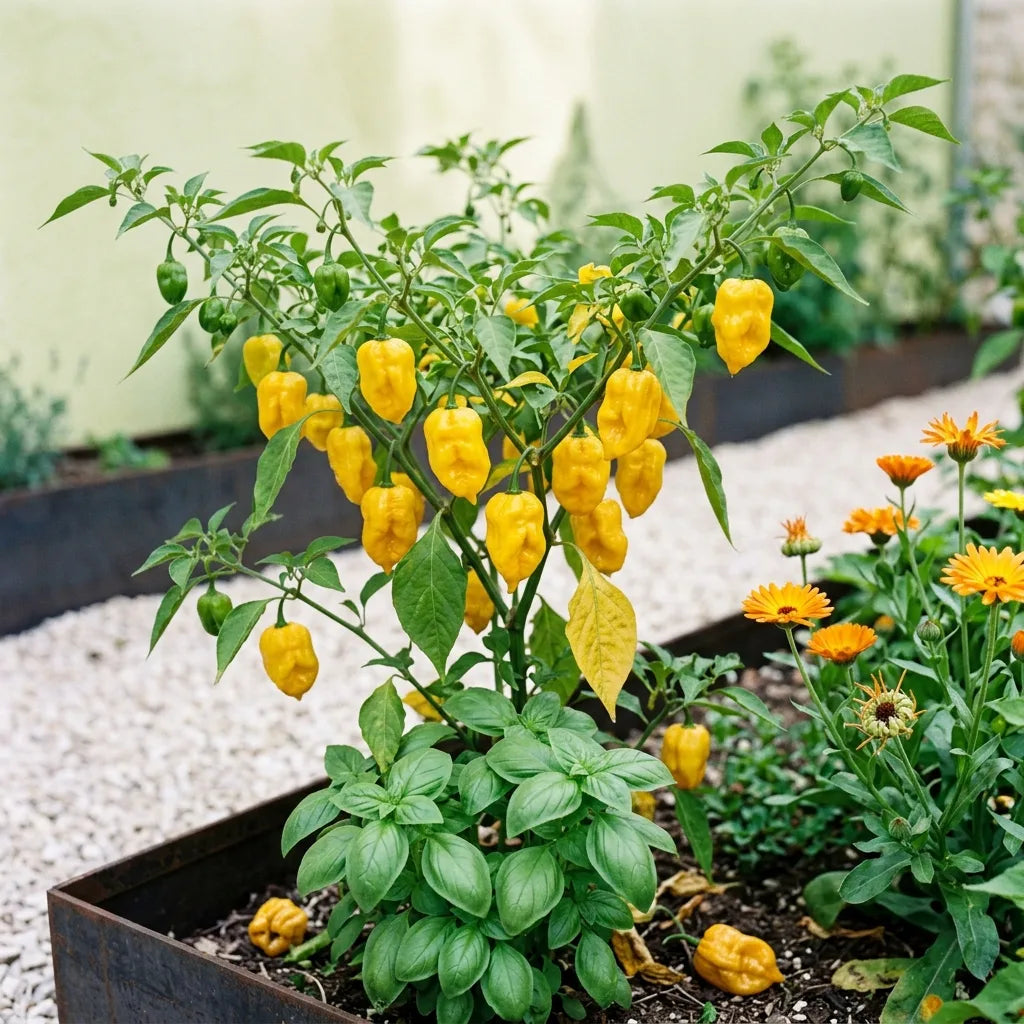
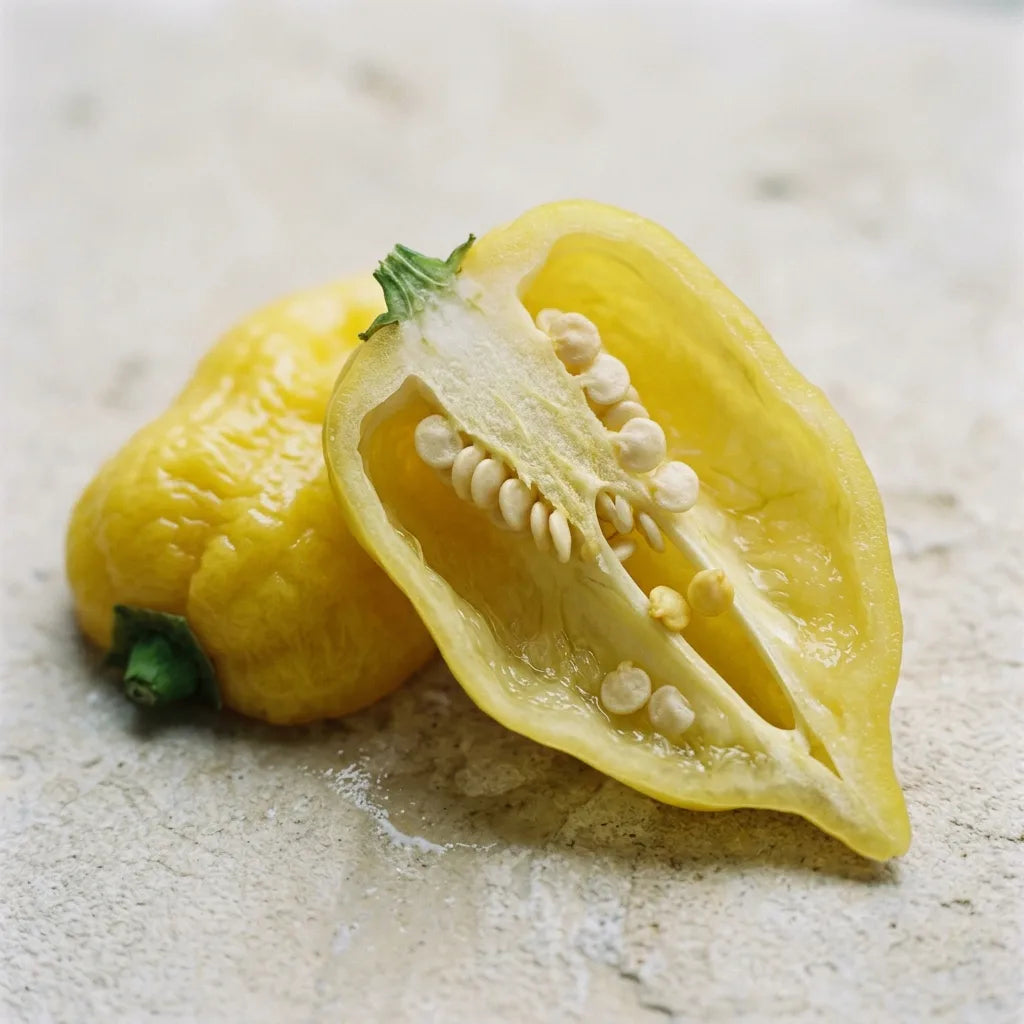
Beautiful bush: 60 to 90 cm tall, covered with lemon-yellow fruits in an elongated, heavily wrinkled lantern shape, hanging down and with very thin walls.
-
Long cycle: allow 100 to 120 days from sowing to harvest.
Precautions — read carefully:
-
Wear gloves when handling the fruits, seeds, and placentas. Capsaicin remains on the skin for a long time and can transfer to the eyes several hours later, even after washing.
- Never cut these peppers near your face: the vapors irritate the respiratory tract, with effects comparable to those of tear gas. Ventilate the room.
- Keep fruits and plants out of the reach of children.
- In case of mouth burn, water is ineffective: choose a full-fat dairy product, bread, or oil instead.
Sowing advice:
-
Exposure: full sun, in a warm and sheltered spot.
-
Soil: rich, loose, and well-drained, with an addition of mature compost. It is sensitive to standing water.
-
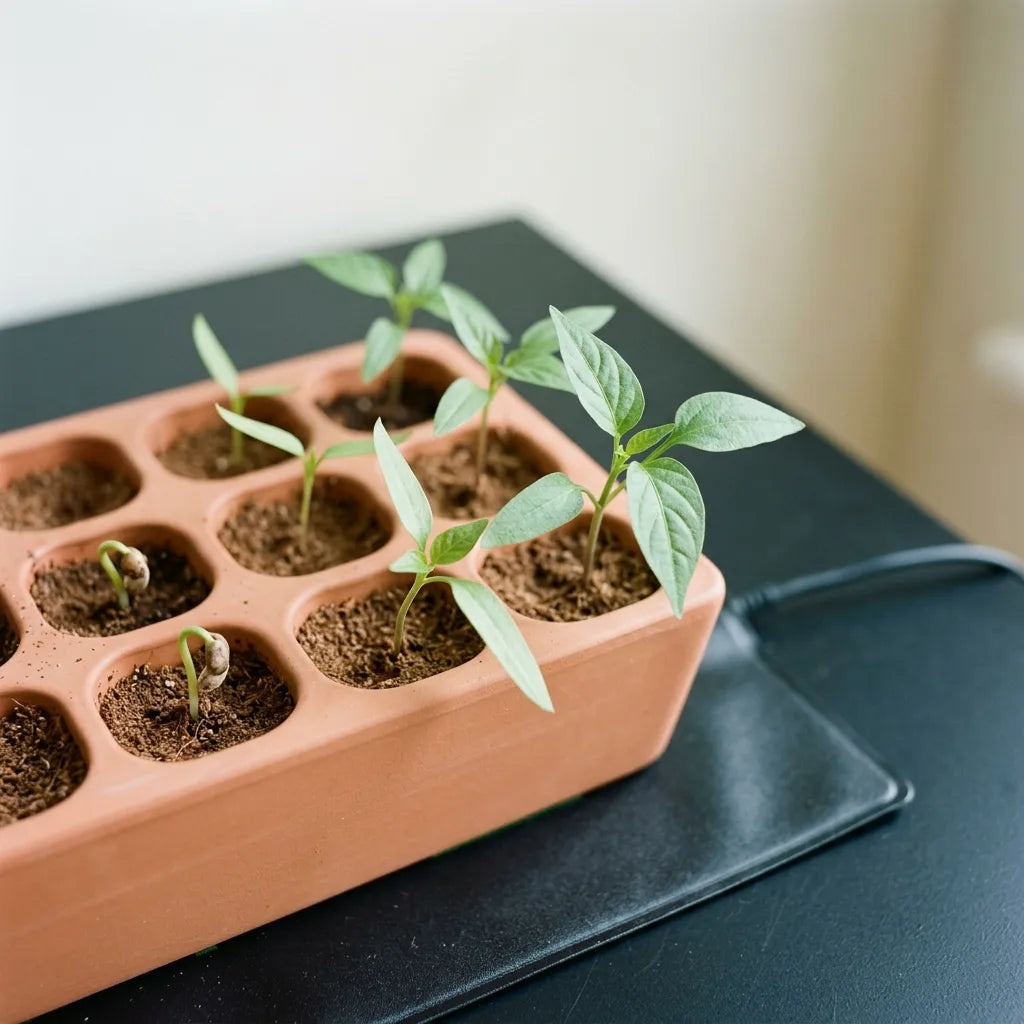
Method: sow indoors from February to March, in a seed tray or pots, at 25-30 °C. This is the critical point: Capsicum chinense germinates very slowly and poorly at lower temperatures; it can sometimes take three weeks. A heating mat makes all the difference. Transplant at the 4-5-leaf stage. See how to sow your seeds.
Planting advice:
- Plant after the last frosts, in pots or in the ground, spacing plants 50 cm apart. In cool climates, growing it in a pot allows you to bring it indoors and extend the season.
Care advice:
- Water regularly at the base without overwatering. Mulch.
- Slight water stress at the end of the cycle concentrates the capsaicin—if you are looking for maximum heat, reduce watering when the fruits begin to color.
Harvesting advice:
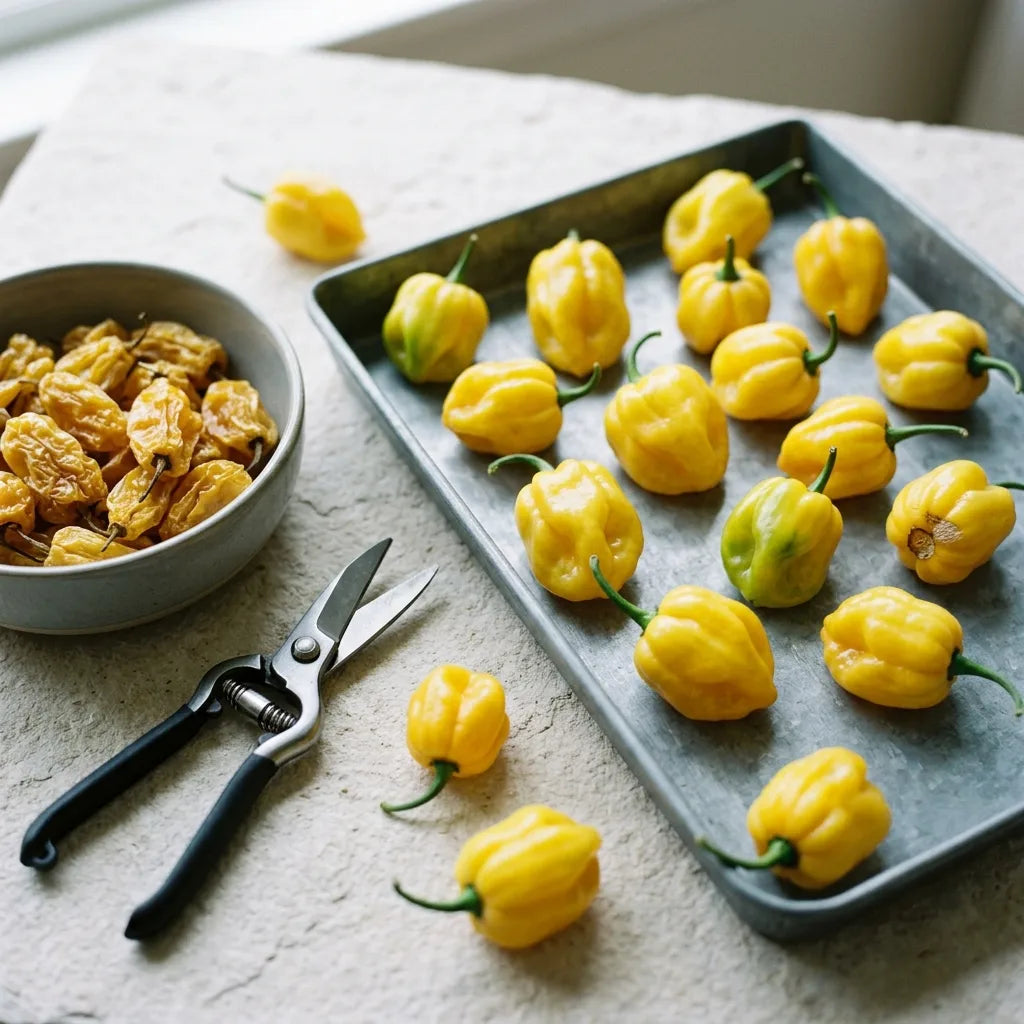
- Harvest with gloves and pruning shears when the fruits are bright lemon-yellow and glossy. They can be dried, frozen, or made into sauce.
Beneficial companions:
Benefits for biodiversity:
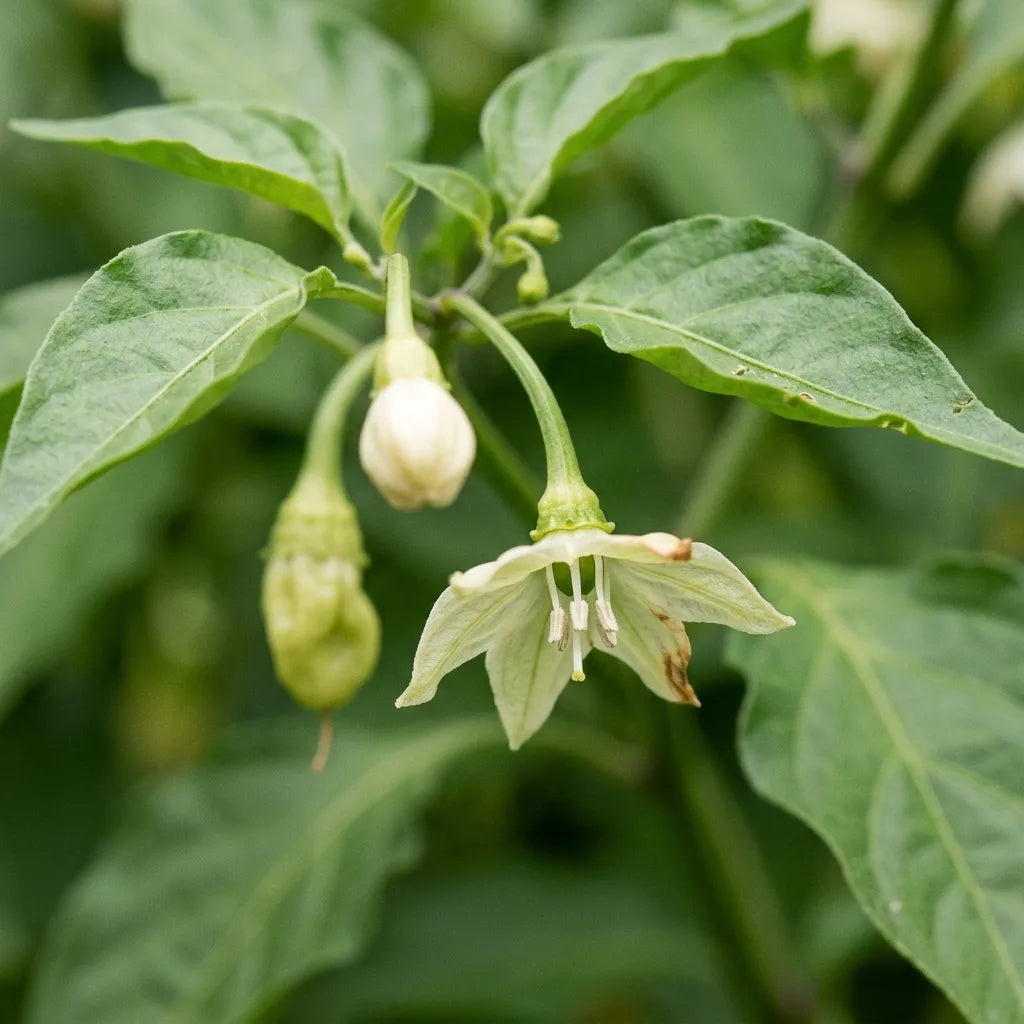
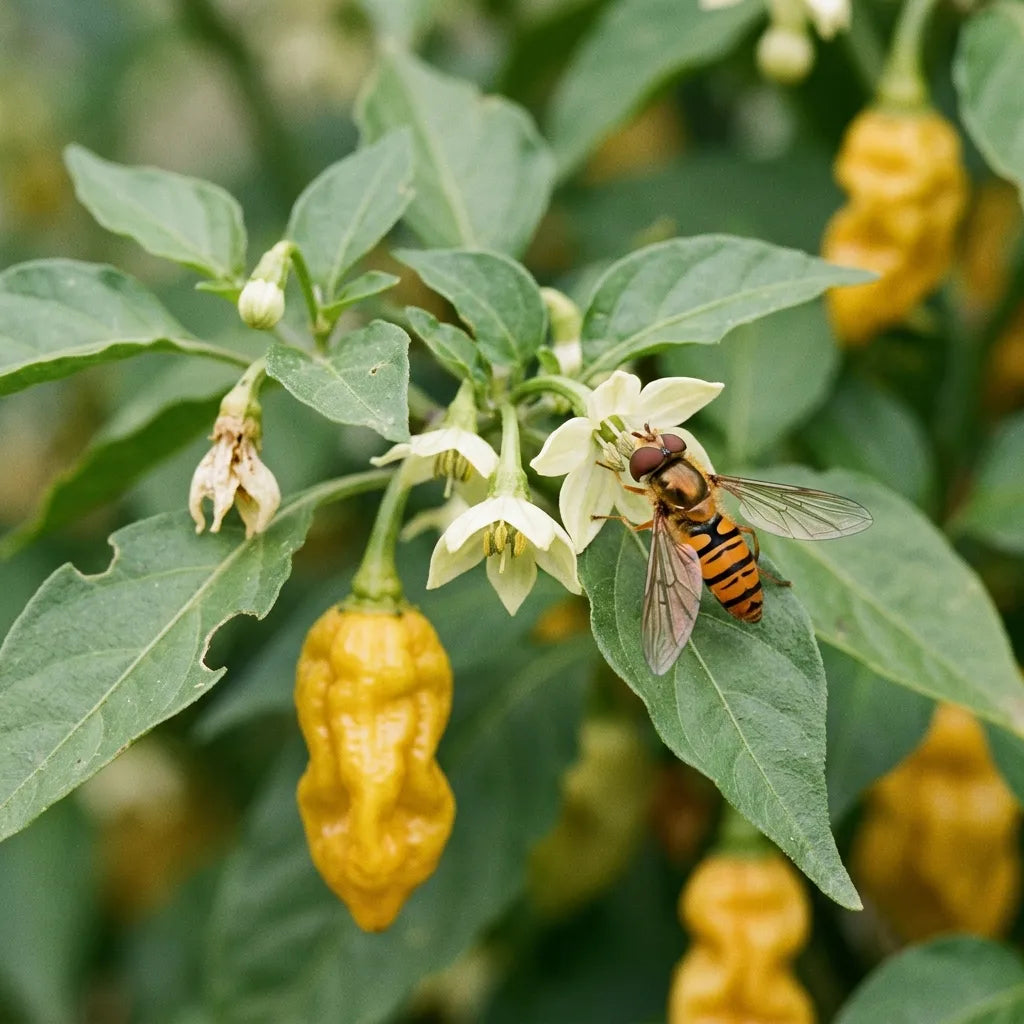
- Its small white flowers are visited by bees and hoverflies throughout the summer.
- A true-to-type variety that is still not widely grown in France: cultivating it and sowing its seeds again helps expand the diversity of the vegetable garden. See our rare and unusual seeds.
Uses:
- Homemade hot sauces, pickles, exotic marinades, chutneys, and chili oils. Its fruity flavor makes it perfect for sweet-and-savory combinations and Creole recipes. Use it in portions of the fruit, never the whole fruit.
Symbolism:
The pepper is often a symbol of strength, passion, and vitality. In several cultures, it also serves as a good-luck charm believed to ward off negative energies.
Harvesting your own seeds:
Wearing gloves, open a fully ripe fruit, remove the seeds, and dry them flat for several days. Be careful: peppers cross-pollinate easily between varieties, so isolate your seed plant. See how to save your seeds.
Commitment to Quality: at SemiSauvage - Permaculture, we grow and select our seeds with respect for all living things as our guiding principle. Based near the Volcanoes of Auvergne, we choose open-pollinated, non-hybrid varieties, test them for germination rates, and carefully sort and package them without any chemical treatment. Our belief is that gardeners should regain the ability to sow, year after year, seeds that truly belong to them.
The fragrance of a lemon, the power of a habanero.