

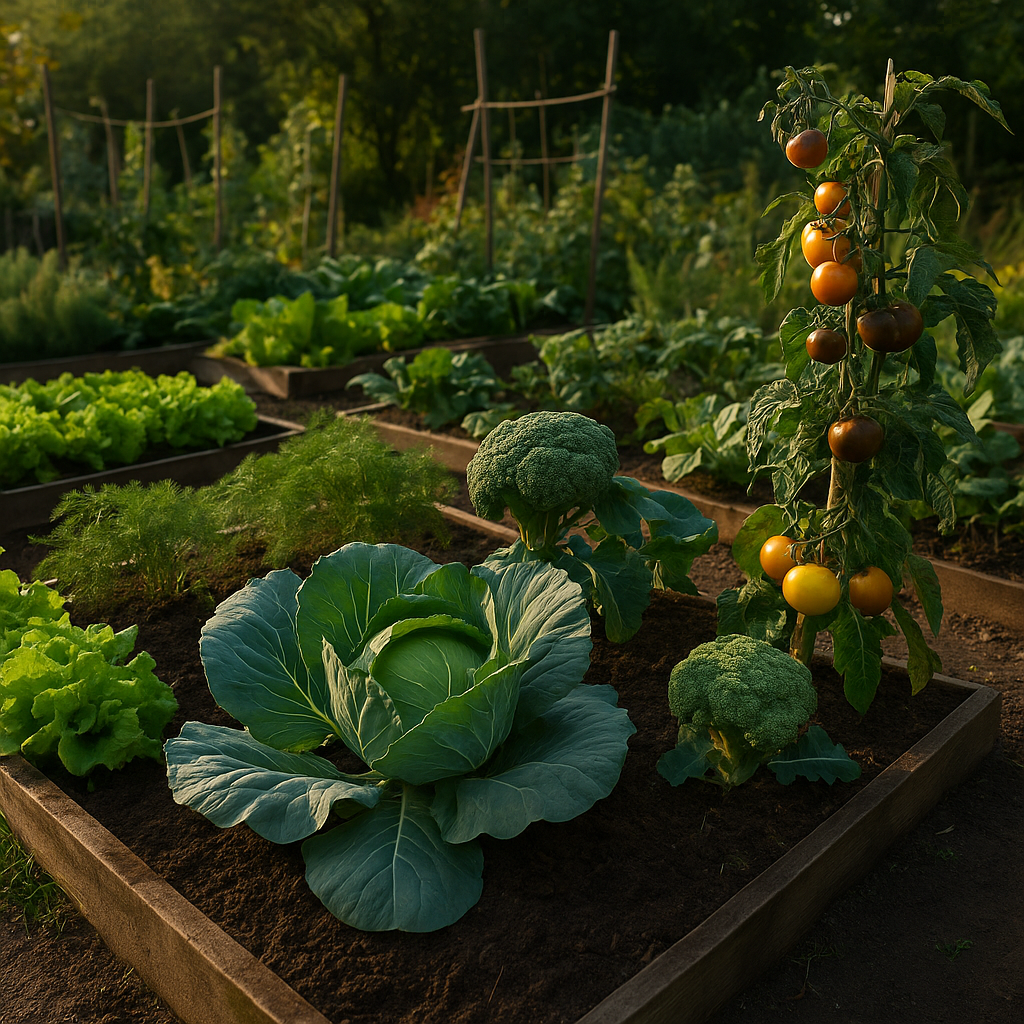
After gardening for a few seasons, there comes a point when tomatoes and zucchini are no longer enough. You want to grow something you have never seen growing, harvest a fruit whose name no one knows, and try a species that has no business growing at our latitudes.
It is a legitimate pleasure — and it is also how we improve: an unusual species forces you to understand its requirements instead of following a routine. Here is a selection ranked by difficulty level, with what you need to know before getting started.
Level 1 — unusual but easy
They are grown like ordinary vegetables and produce in the very first year. Start with these.
- Physalis (Physalis peruviana) — the Peruvian groundcherry. Small orange berries inside a papery husk, with a tangy flavor somewhere between tomato and pineapple. It is grown just like tomatoes and is remarkably productive. The fruits keep for weeks in their husks.
- Green Tomatillo and purple tomatillo (Physalis ixocarpa) — the foundation of Mexican green salsa. Important point: you need at least two plants, as the species is self-sterile. A solitary plant flowers abundantly but produces nothing — the classic disappointment.
- Loofah Gourd (Luffa aegyptiaca) — the only plant on this list grown for an object rather than food. Harvested young, it can be eaten like a zucchini; left to mature, then dried and peeled, it produces a natural vegetable sponge. Long growing cycle: early sowing under cover is essential.
- Chinese Lantern (Physalis alkekengi) — an ornamental perennial with bright orange calyces, superb in dried bouquets. Warning: unlike its cousins, its fruits are not edible. It also spreads by runners: keep it contained.
- Banana Legs Tomato — elongated yellow fruits with firm, low-juice flesh. Excellent dried or in sauces, and fascinating to watch grow.
Level 2 — it needs warmth and a little know-how
- Aji Charapita chili pepper (Capsicum chinense) — tiny, highly aromatic yellow berries, reputed to be among the most expensive chili peppers in the world. Capsicum chinense varieties germinate slowly and erratically: allow two to four weeks at a constant 25–28 °C. Sowing at 20 °C often fails. Long growing cycle; sow in February.
- Stevia (Stevia rebaudiana) — leaves with intense sweetening power, without sugar. Fine seeds to sow on the surface, without covering them, at 25 °C. Naturally low germination rate: sow generously. Tender, and should be brought indoors for winter.
- Indian ginseng (Withania somnifera) — shrub from warm regions, grown in pots at our latitudes. Red berries in a papery calyx, with grayish foliage.
- Holy basil Tulsi — a fragrance somewhere between cloves and pepper, very different from ordinary basil. Hardier than ordinary basil, and perennial in a conservatory.
- Thornless perennial caper bush (Capparis spinosa) — for dry, rocky, south-facing ground. Difficult germination that benefits from cold stratification, followed by slow growth. Once established, it lives for decades.
Level 3 — the real challenges
These are attempted for the pleasure of the experience, not for the harvest. Accept failure as a normal possibility.
- Sacred lotus (Nelumbo nucifera) — undoubtedly the catalogue’s most spectacular germination. The seed coat is so hard that the seed remains viable for centuries: it must be scarified — file one side until the white interior becomes visible, without damaging the embryo — then immerse it in water at 25–30 °C, changing the water every day. Germination can be seen with the naked eye within a few days. Grow in a pond afterward.
- Blue jacaranda (Jacaranda mimosifolia) — mauve-flowering tree, not hardy in most of our climates. Grown in pots as an ornamental plant, and can be trained as a bonsai. Soak for 24 hours before sowing and provide constant warmth.
- Neem (Azadirachta indica) — tropical tree. Its seeds have a very short shelf life: sow them as soon as you receive them, without delay. Grow indoors in a warm, bright location.
- Bay laurel — not exotic, but remarkably slow: germination takes several months and is irregular. It's more an exercise in patience than technique.
The three techniques that solve most problems
Rare species rarely fail because of a lack of care, but because their specific requirements are overlooked. Three steps cover most cases.
Scarification
For seeds with an impermeable seed coat—lotus, caper bushes, tropical legumes. File or nick the coating on one side, opposite the hilum, until the pale tissue appears. Or soak for 24 hours in lukewarm water. Without this, water never gets in and the seed remains dormant for years.
Bottom heat
This is the number-one limiting factor for tropical species. A heat mat, the top of a refrigerator, or a mini-greenhouse can make all the difference: for Capsicum chinense, the difference between 20 and 26 °C can raise the germination rate from 10% to 80%.
Light during germination
Many very fine seeds—stevia, physalis, herbs—need light to sprout. Don't bury them: simply press them against a moist growing medium. See How to sow your seeds.
For species with long or uncertain germination, first test them on cotton: place ten seeds in a container, and within two weeks you'll know whether the batch is viable before filling an entire seed tray.
How to approach an unknown species
- Find out where it comes from geographically. This is the most useful information of all: it tells you the temperature, light, humidity, and sowing season. An Andean plant, a tropical Asian plant, and a Mediterranean plant do not need to be treated the same way.
- Look at the seed size. Large and hard → probably requires scarification and deep sowing. Fine → sow on the surface; light is necessary.
- Sow in batches. Never use the whole packet at once: sow three batches two weeks apart, varying one parameter each time. You learn instead of losing everything.
- Write down what you do. Date, temperature, treatment, result. Without this, a successful result cannot be reproduced.
- Don't give up too soon. Some species sprout after several months, or even in their second spring.
A word about expectations
Let's be frank: some of these plants will never produce a usable harvest in our climate. A jacaranda will probably never flower in a pot in Auvergne, while a neem will remain a houseplant.
It isn't a failure if the goal is clearly defined. We grow these species to see how they grow, to understand germination, and to show children that a lotus can emerge from a seed as hard as a pebble. Level 1 and 2 species really do produce crops — and physalis or tomatillo can become regular crops in your vegetable garden.
The real benefit lies elsewhere: by growing an unusual species, you learn to think like a plant instead of following a routine. This skill then helps with everything else in the vegetable garden.
Frequently asked questions
Are these seeds true to type?
Yes, like the rest of our catalog. Physalis and peppers are self-pollinating and reseed easily; tomatillo is self-sterile and requires several plants, but produces true-to-type seeds. See How to store your seeds.
Is a greenhouse necessary?
For level 1, no. For long-cycle tropical plants — luffa, charapita, stevia — a greenhouse or conservatory makes a real difference, especially north of the Loire. A simple cold frame and early sowing under cover are often enough.
Why isn't my tomatillo producing anything?
Almost always because there is only one plant. The species is self-sterile: at least two plants, grown close together, are needed for cross-pollination to occur.
How long does a rare seed remain viable?
It varies greatly. Lotus seeds can be stored for centuries, while neem seeds last a few weeks. As a general rule, the oilier or fleshier a seed is, the less well it stores. When in doubt, sow it as soon as you receive it.
Can these species be grown in an apartment?
Some are: stevia, holy basil, Indian ginseng, and neem. Light is much more limiting than temperature — a south-facing window or supplemental lighting is essential.
Key takeaways
Start with physalis and tomatillo — unusual, easy to grow, and productive from the first year. Save lotus and jacaranda for the enjoyment of experimentation. And remember the three keys that unlock almost everything: scarify hard seeds, warm seeds from the tropics, and don't bury fine seeds.
Going further
- How to sow your seeds in cotton, pots, or directly in the ground
- Cold stratification: why and how to germinate seeds
- Heirloom seeds: what are they? Why grow them?
- Growing a bonsai from a seed
Discover our new arrivals, our useful seeds, and our fruit seeds — all true to type.

Leave a comment
This site is protected by hCaptcha and the hCaptcha Privacy Policy and Terms of Service apply.