Brassica oleracea var. botrytis
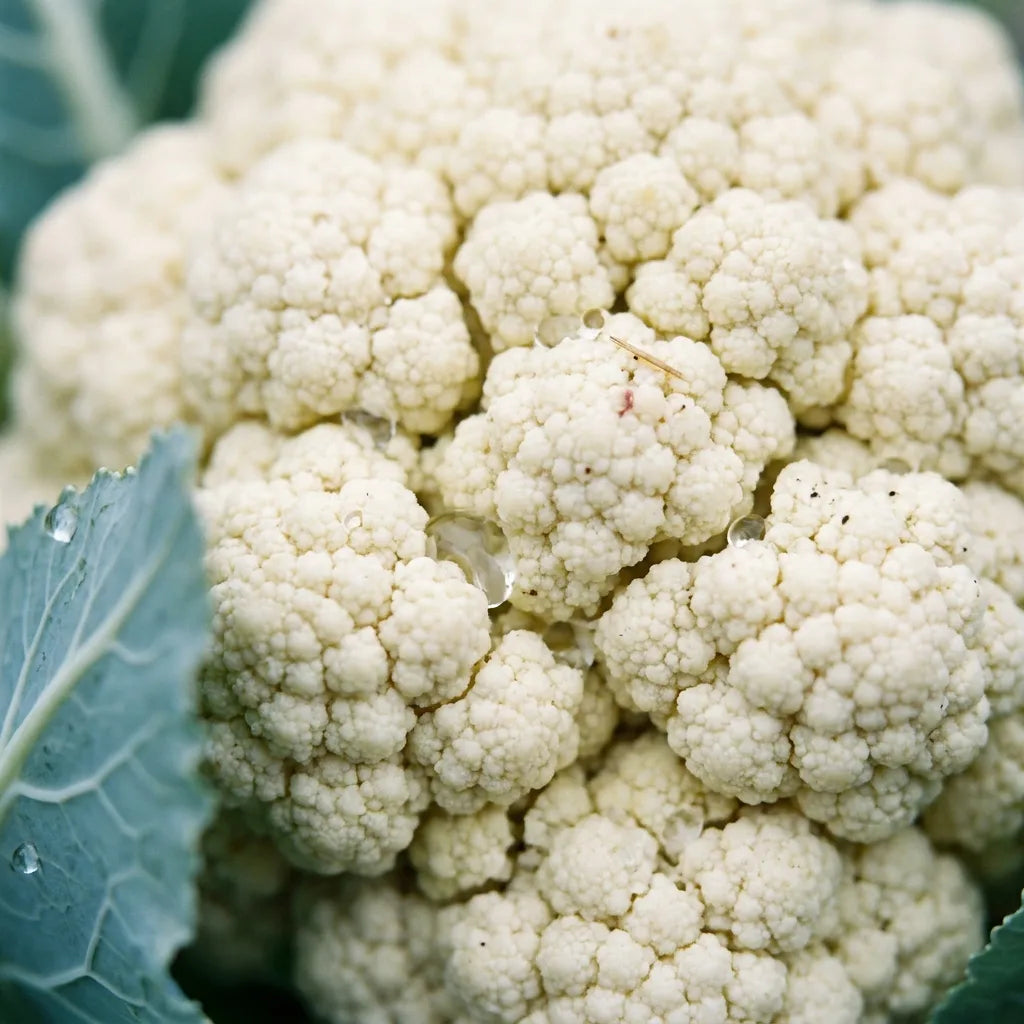
Cauliflower, white-headed cabbage: what we eat is neither a flower nor a leaf, but an inflorescence halted before flowering — thousands of aborted flower buds clustered into a compact mass. The most widely consumed cabbage in France, and also the most demanding to grow successfully, because producing a perfect head requires consistent conditions.
Characteristics:
-
White, compact head: mild in flavor and the most popular of the cabbages.
-
Demanding crop: it requires consistency but rewards you generously.
-
Dislikes heat: it prefers gentle sunlight and dislikes summer drought.
Sowing advice:
-
Exposure: sunny, but partial shade in hot regions — excessive heat causes the head to split.
-
Soil: deep, cool, humus-rich, and slightly clayey. It is the hungriest of the cabbages: a generous supply of well-rotted compost is essential. Avoid growing it where a brassica has been grown during the previous three years, because of clubroot.
-
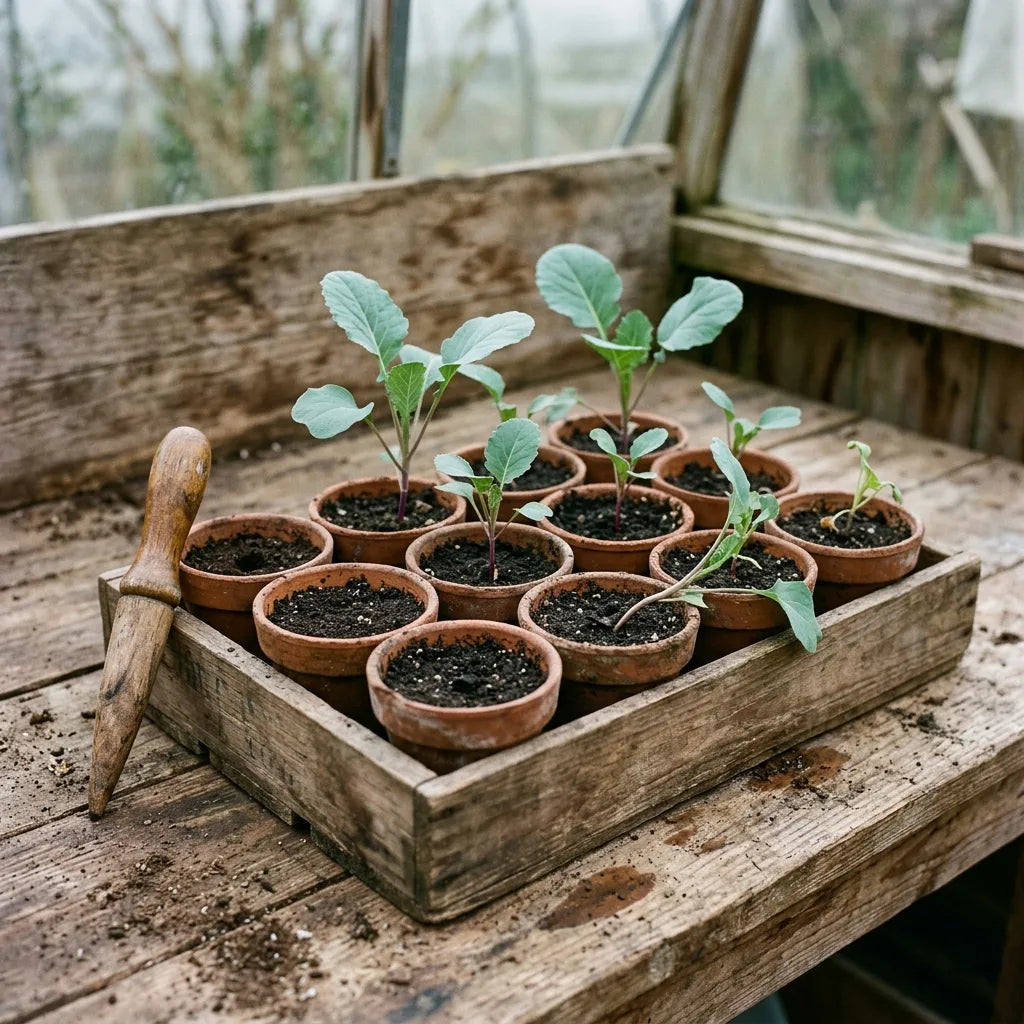
Method: sow in a nursery from March to April, 1 cm deep. See how to sow your seeds.
Planting advice:
- Transplant when the plants reach 10 to 15 cm, spacing them 50 to 70 cm apart. Plant up to the first leaves and earth up around the base.
- Transplant in cloudy weather and water generously: difficult establishment permanently prevents the head from forming.
Care advice:
-
The critical point: keep the soil consistently moist. Cauliflower tolerates no fluctuations — water stress results in a tiny head or causes it to flower immediately. Mulch thickly and water regularly without waterlogging the soil.
-
Blanching tip: as soon as the head appears, fold two or three large leaves over it, breaking them at the base. It will remain immaculately white instead of turning yellow in the sun.
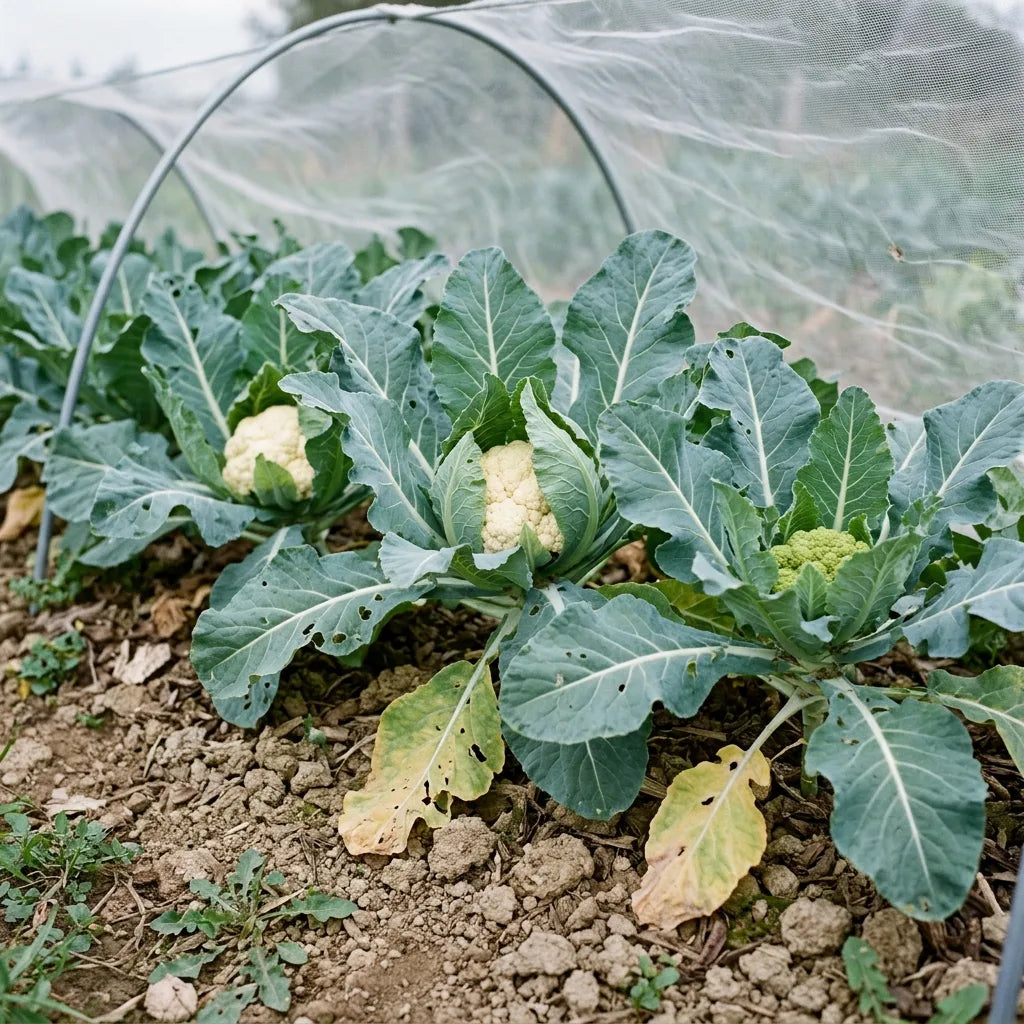
- An insect-proof mesh installed as soon as the plants are planted prevents cabbage white butterflies and cabbage flies.
Harvesting advice:
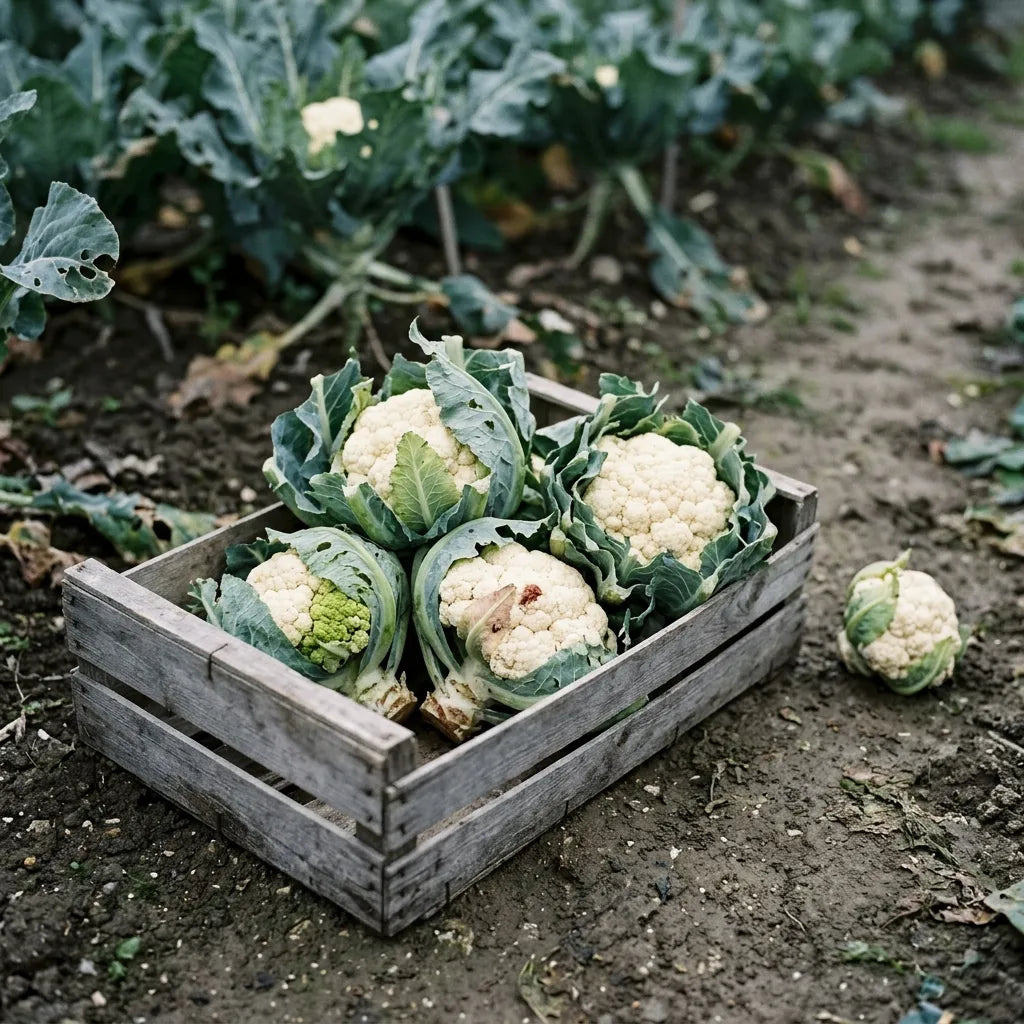
- Harvest as soon as the head is full and still tight. Do not wait: once the florets begin to separate and go to seed, the texture and flavor deteriorate very quickly.
- The leaves and peeled stalk can also be cooked — do not throw away half the plant.
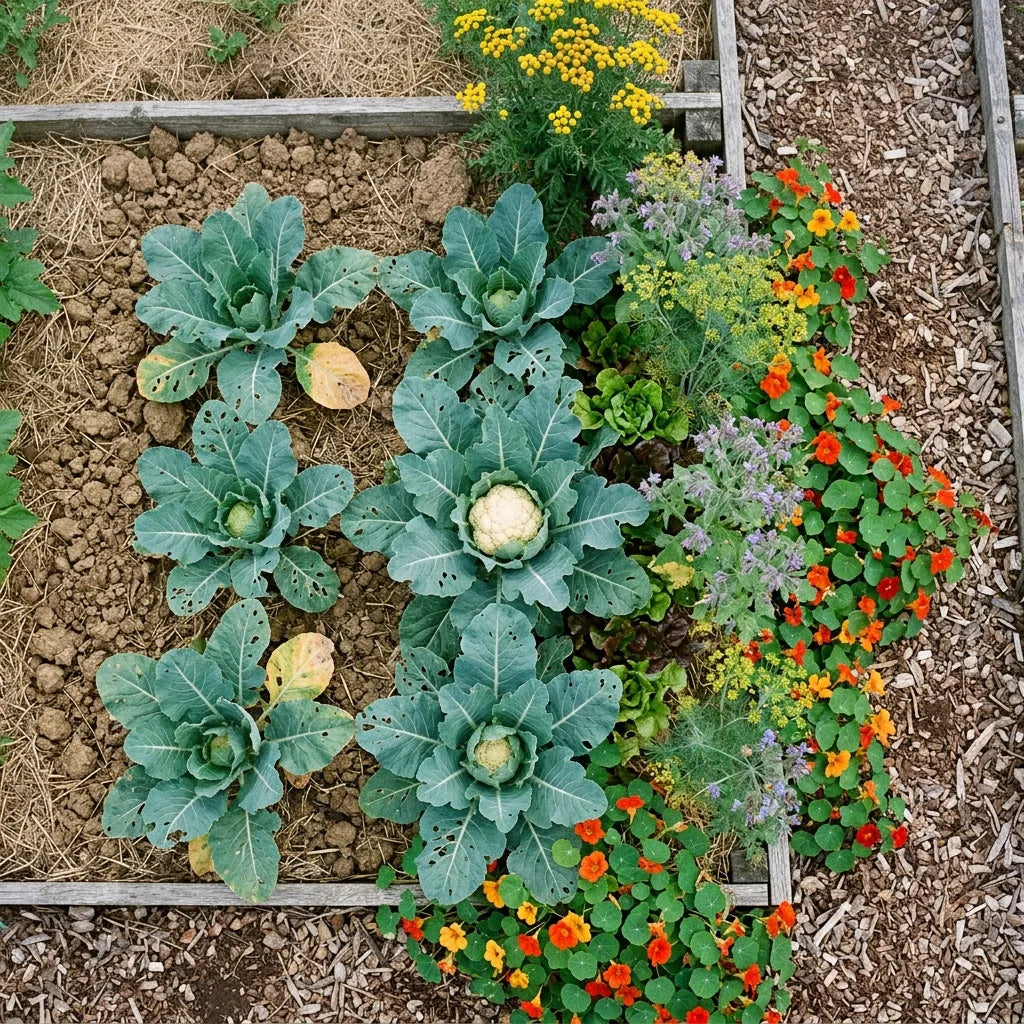
Beneficial associations:
Benefits for biodiversity:
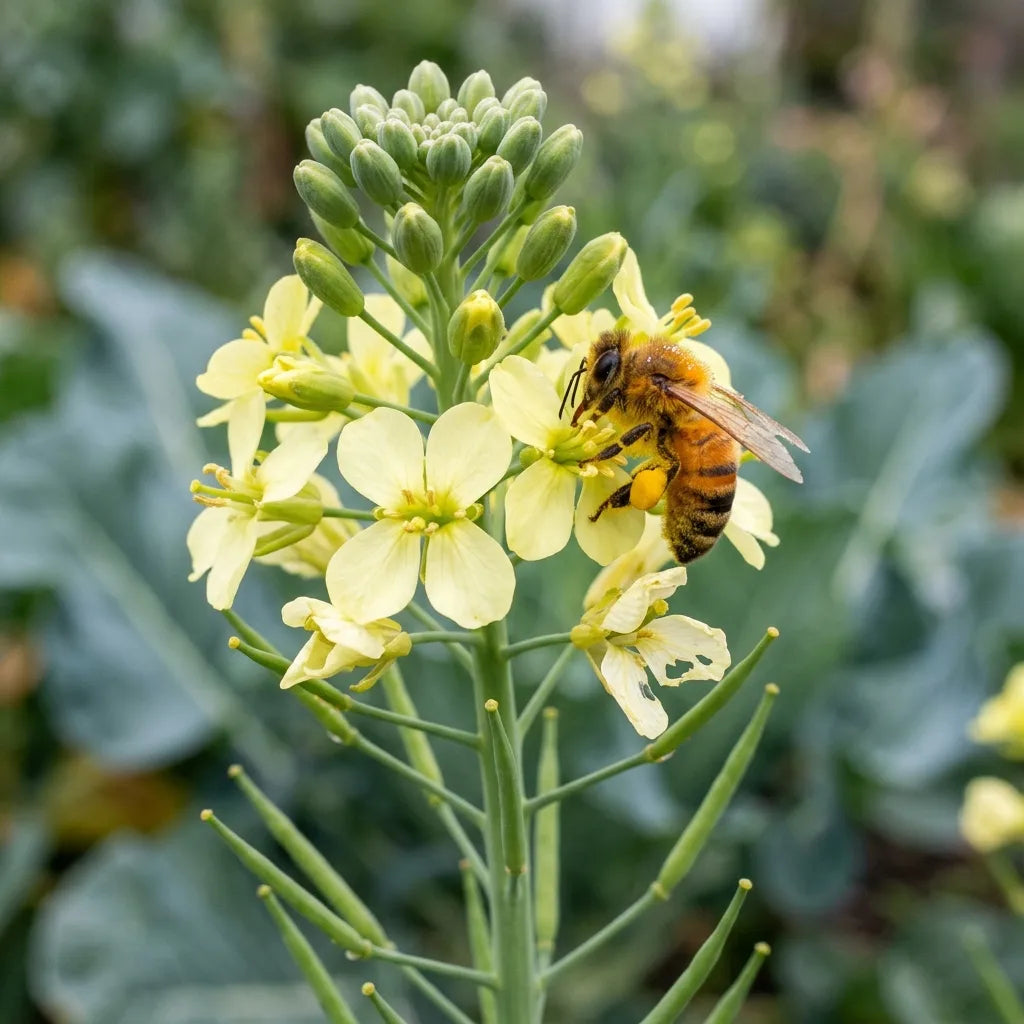
- A cauliflower allowed to flower produces a huge yellow inflorescence that is extremely attractive to bees — if a head gets past its prime, let it bloom rather than pulling it out.
- Its large foliage covers the soil and shelters ground beetles and beneficial insects.
Uses:
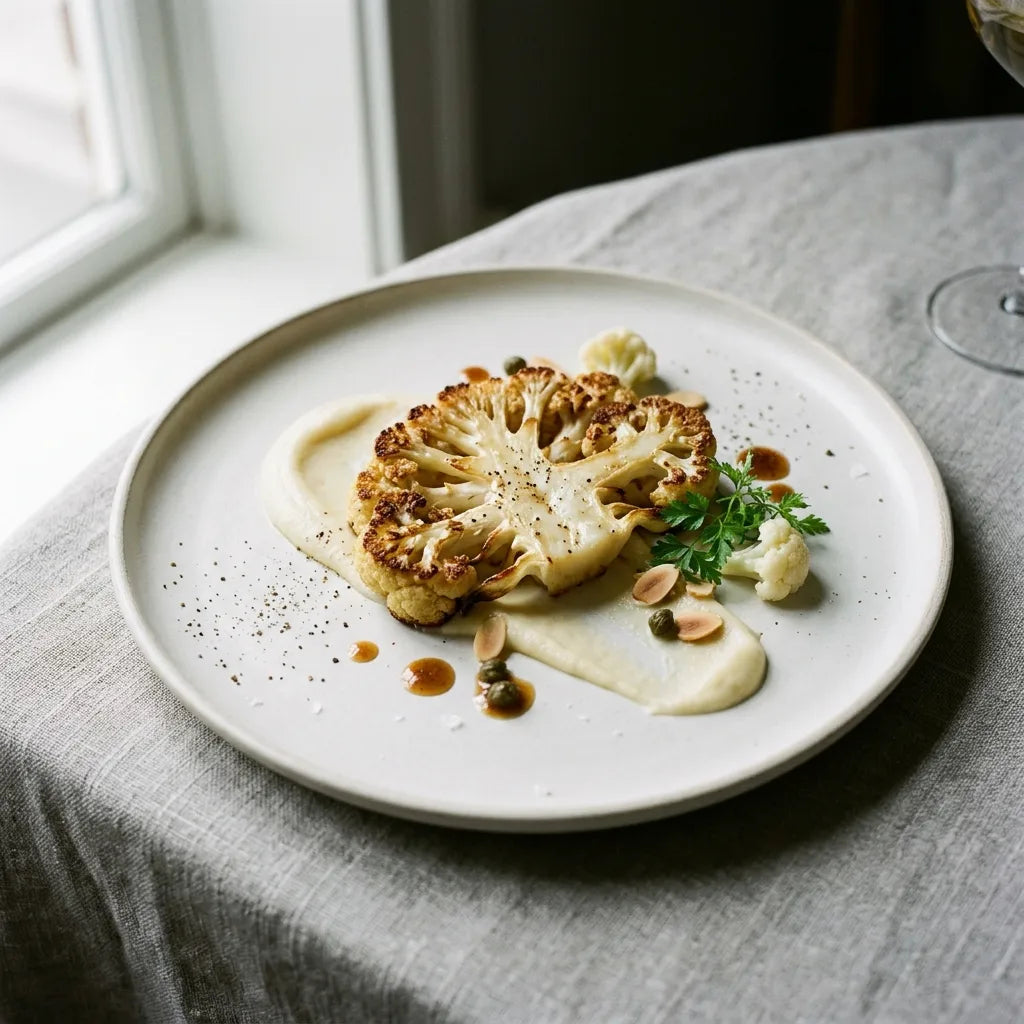
- Steamed, in a gratin, roasted whole in the oven, in a velouté, as couscous-style grains, or raw in a salad. The leaves can be cooked like chard.
Harvesting your own seeds:
Let one head flower and then produce siliques, which should be harvested when brown and dry. Beware: Brassica oleracea varieties cross very easily with one another (cabbages, broccoli, and cauliflower): isolate your seed plant. See saving your seeds.
Commitment to Quality: at SemiSauvage - Permaculture, we grow and select our seeds with respect for all living things as our guiding principle. Based near the Auvergne volcanoes, we choose open-pollinated, non-hybrid varieties, tested for their germination rate, carefully sorted and packaged, without any chemical treatment. Our conviction: to give gardeners back the ability to resow, year after year, seeds that truly belong to them.
The French favorite cabbage, to grow from open-pollinated seeds.