Tagetes patula
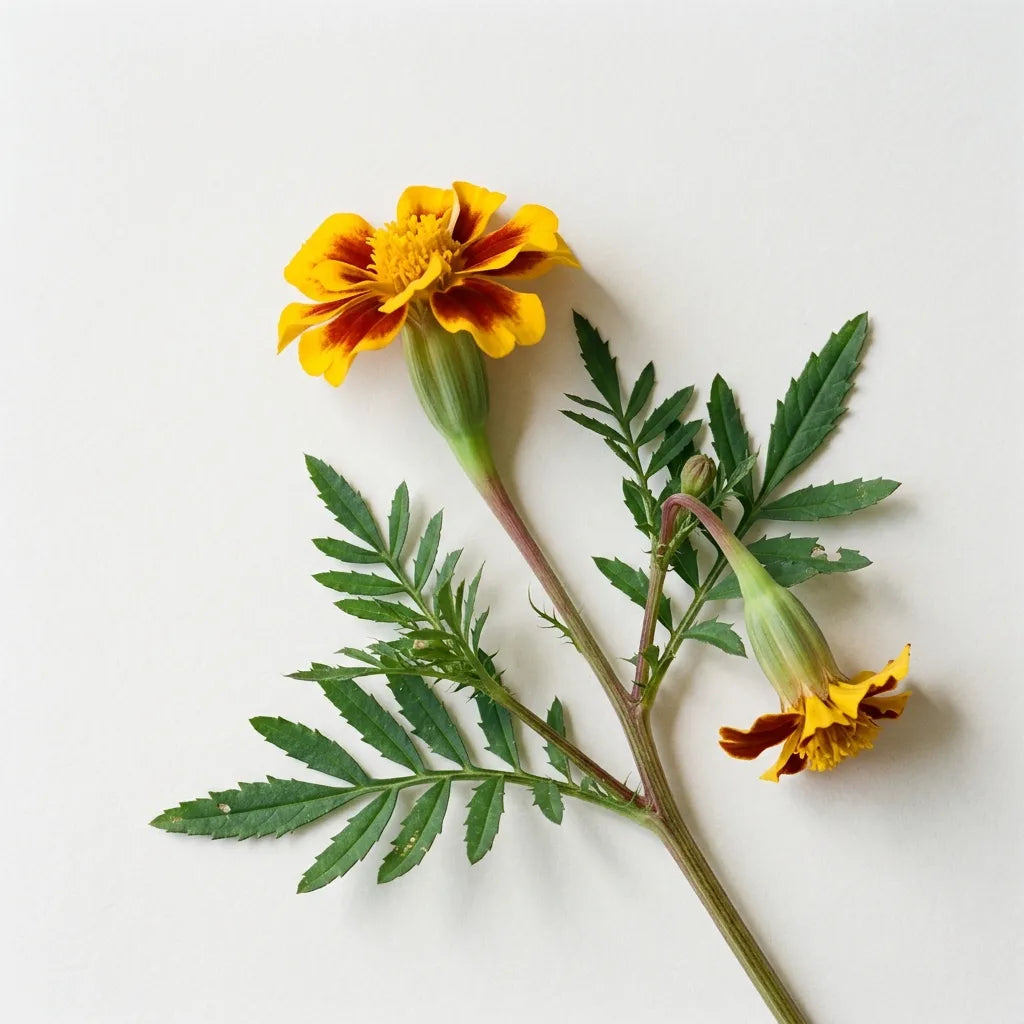
French marigold, marigold, small African marigold: despite its name, this flower does not come from India but from Mexico—a confusion inherited from the Spanish navigators who brought it back to Europe in the 16th century. Today, it is one of the most renowned companions in the vegetable garden, both for its vivid colors and its effectiveness.
Characteristics:
-
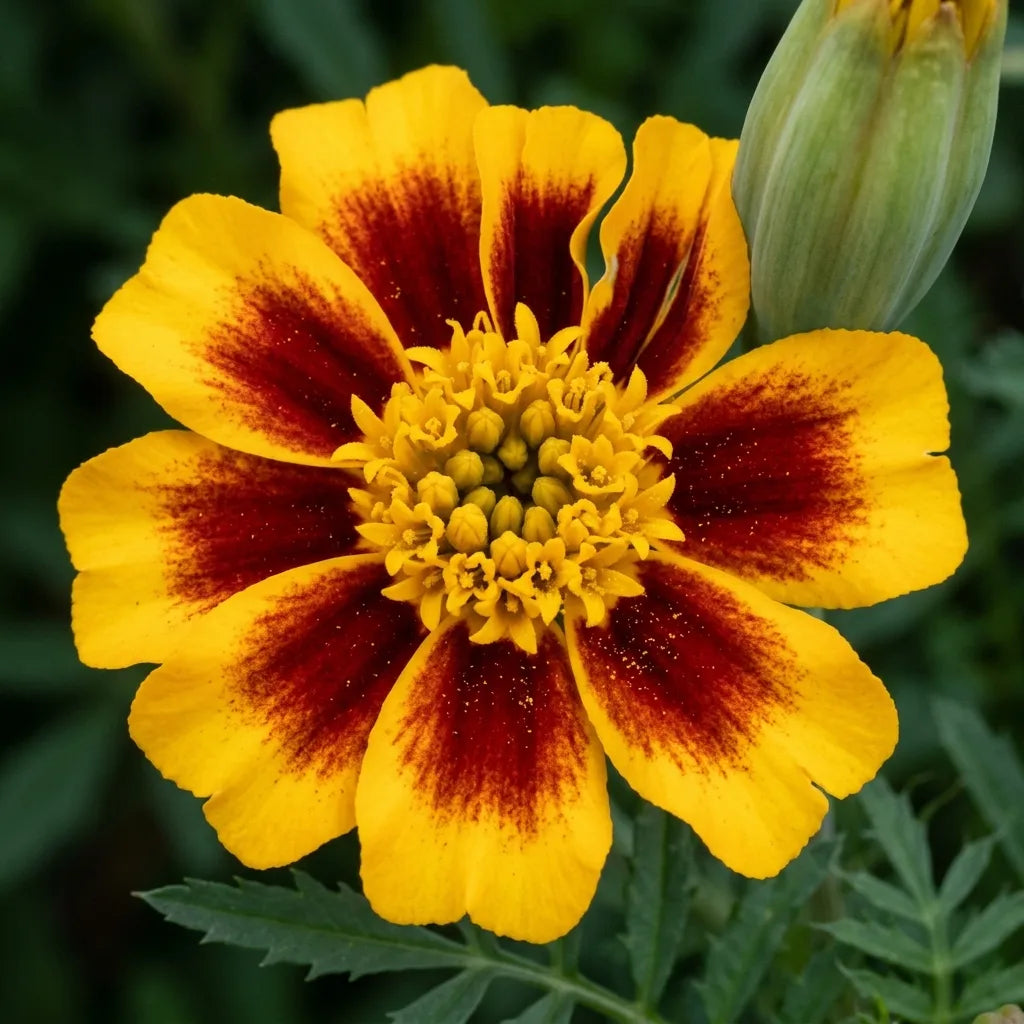
Abundant flowering: yellow, orange, or red shades, often bicolored, from spring until the first frosts.
-
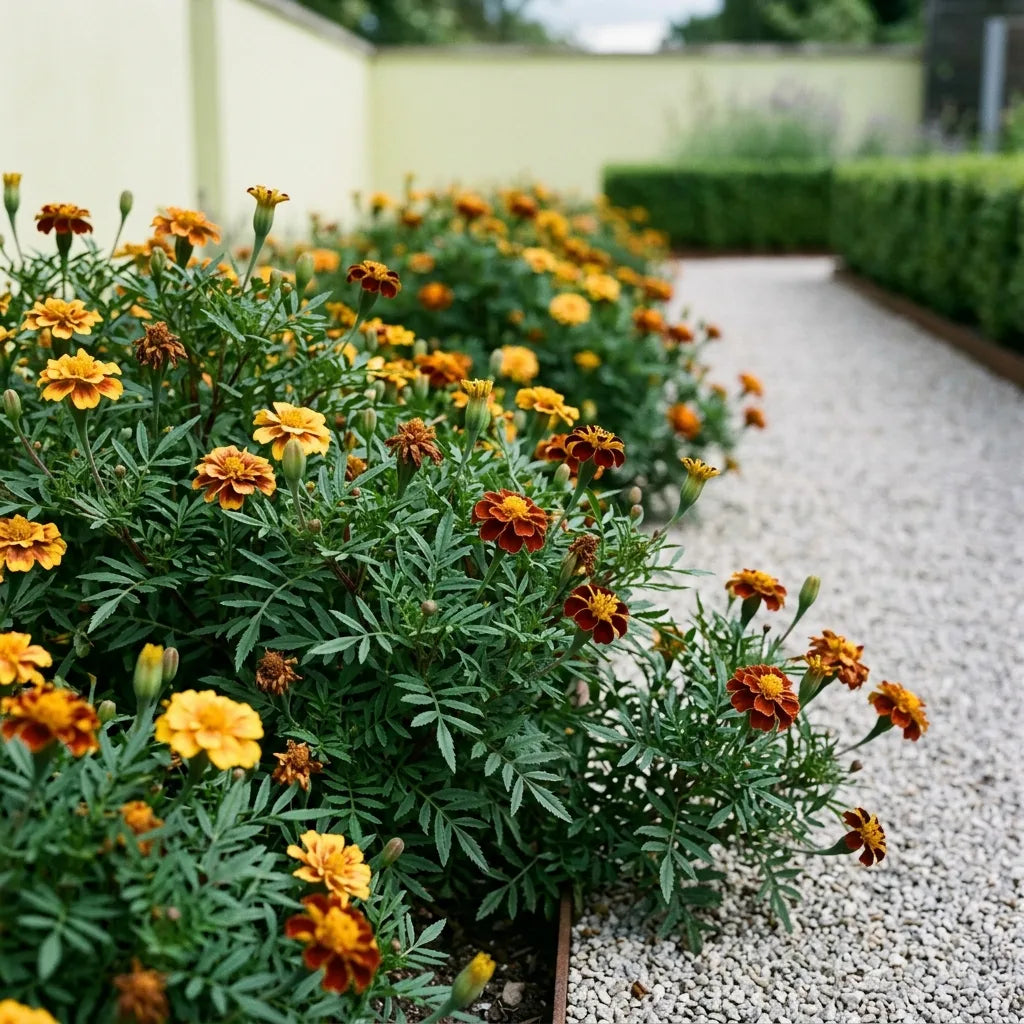
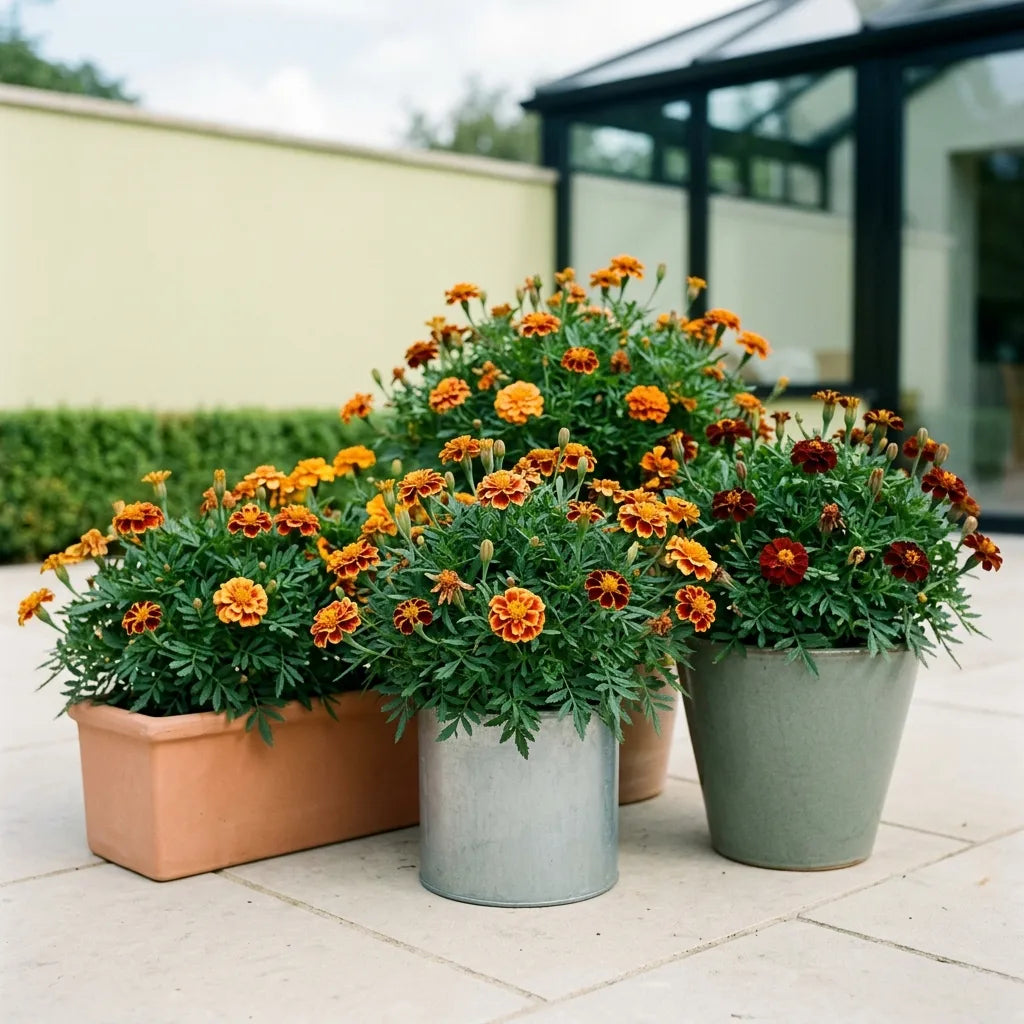
Compact growth: low, dense clumps, perfect for borders, pots, or between rows of vegetables.
-
Very easy: one of the easiest annuals to grow successfully, ideal for beginners.
Sowing advice:
-
Exposure: sunny; it flowers even better when it is warm.
-
Soil: ordinary, well-drained, even poor—it is really not demanding. Soil that is too rich encourages foliage at the expense of flowers: there is no need to fertilize.
-
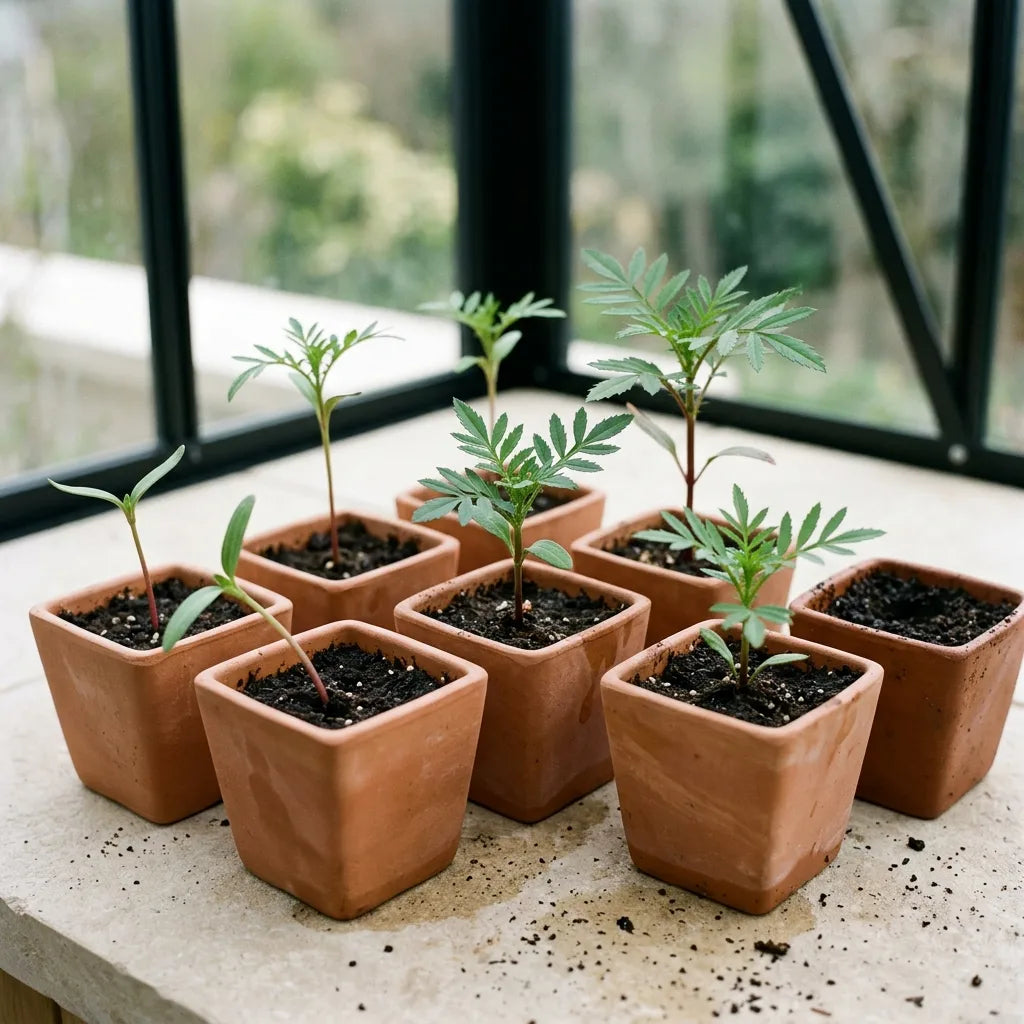
Method: sow in spring, in pots under cover from March for transplanting after the frosts, or directly in place in May. No soaking or stratification is needed; germination is quick and very reliable. See how to sow your seeds.
Planting advice:
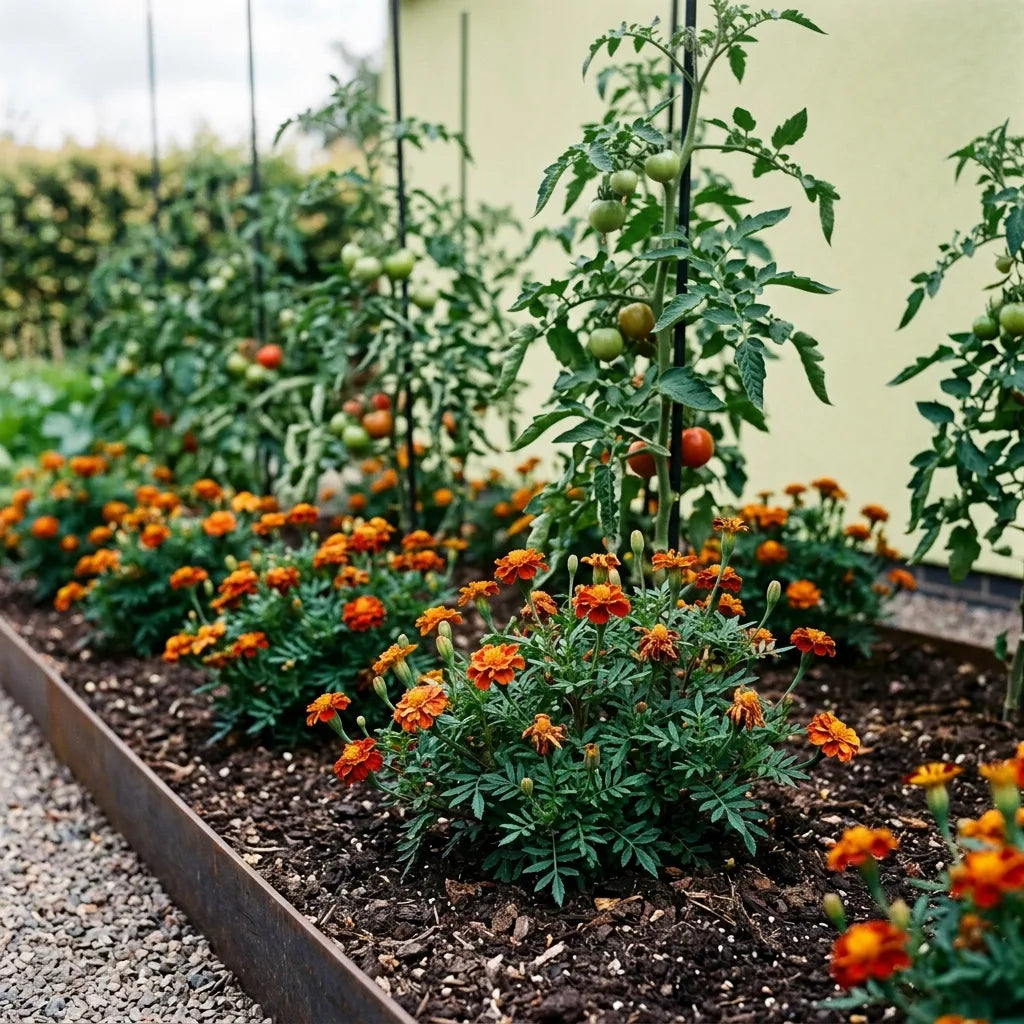
- Transplant after the last frosts, spacing plants 25 to 30 cm apart, along the edge of a vegetable bed or between rows.
Care advice:
- Remove faded flowers to encourage continuous flowering. Water moderately, at the base of the plant.
Beneficial combinations:
- It is one of the best companion plants for the vegetable garden: its roots release substances that disrupt soil nematodes, microscopic worms that attack the roots of tomatoes and other vegetables. Plant it along borders or between rows.
- It is traditionally paired with tomatoes and dwarf nasturtiums for a better-protected vegetable garden. See our vegetable garden companion planting combinations.
Benefits for biodiversity:
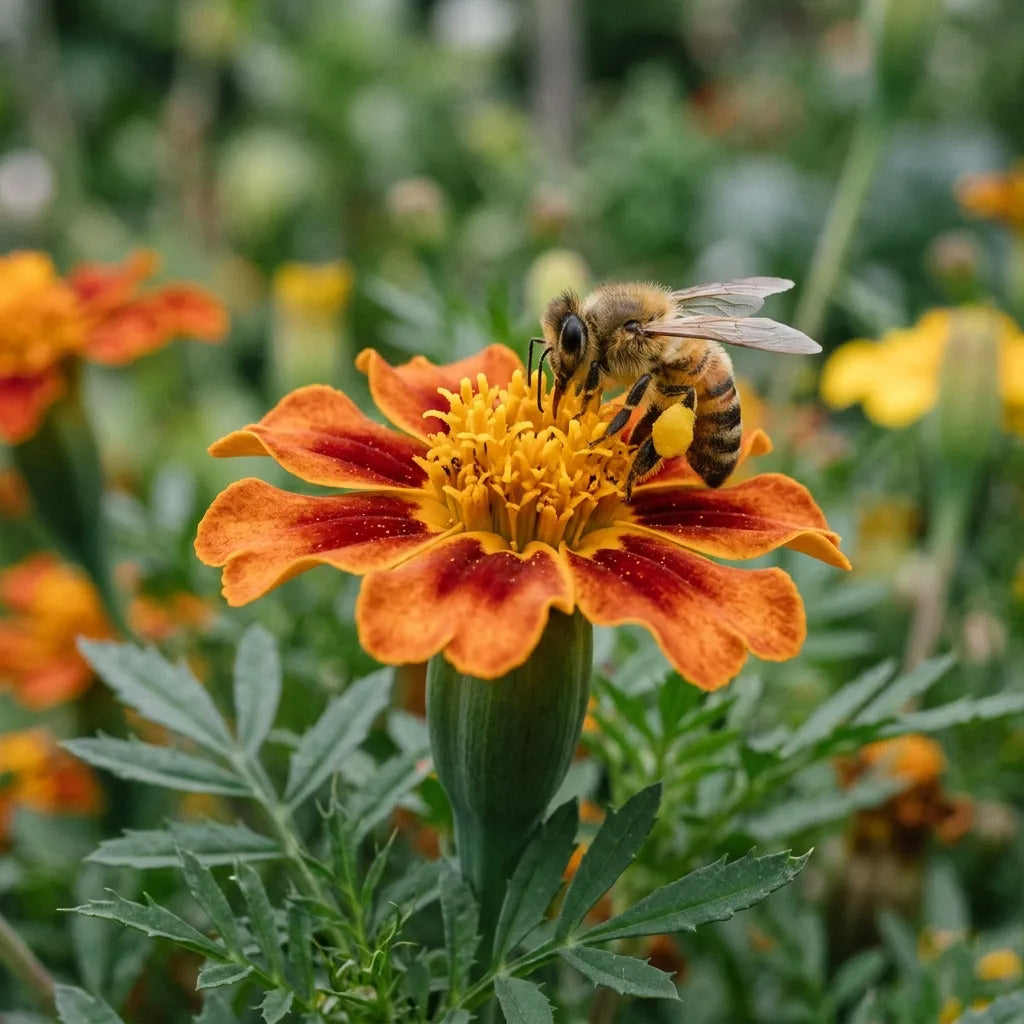
- Its single flowers are visited by bees and butterflies; open-centered varieties are the most accessible to pollinators.
- Its effect on nematodes helps reduce the need for treatments, benefiting all soil life—see the basics of living soil.
Uses:
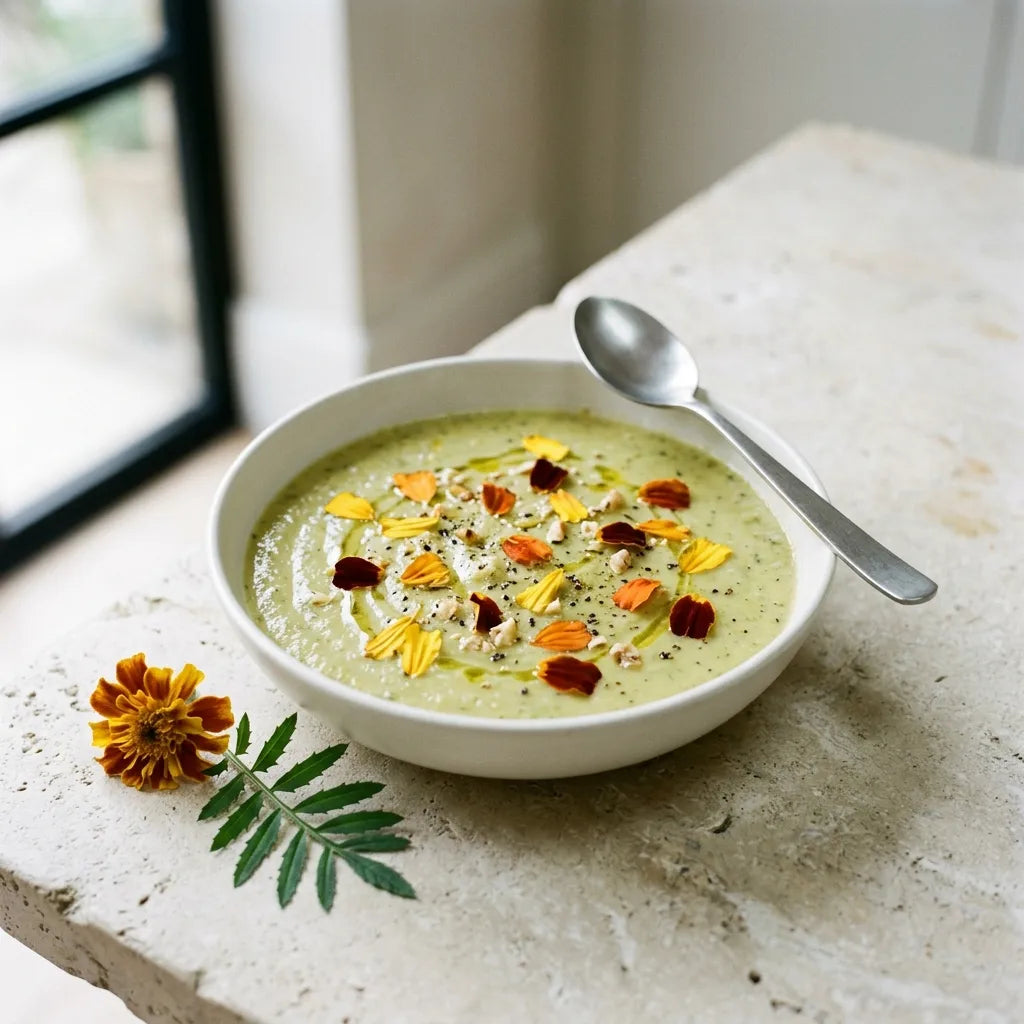
- The petals are edible and decorate salads, soups, and desserts with their warm shades. See our edible flowers.
- A plant traditionally used in several traditional medicine systems, particularly in Africa and Central America.
Symbolism:
In Mexico, the marigold is the emblematic flower of the Day of the Dead: called cempasúchil, it is arranged in paths of orange petals believed to guide the deceased toward family altars.
Harvesting your own seeds:
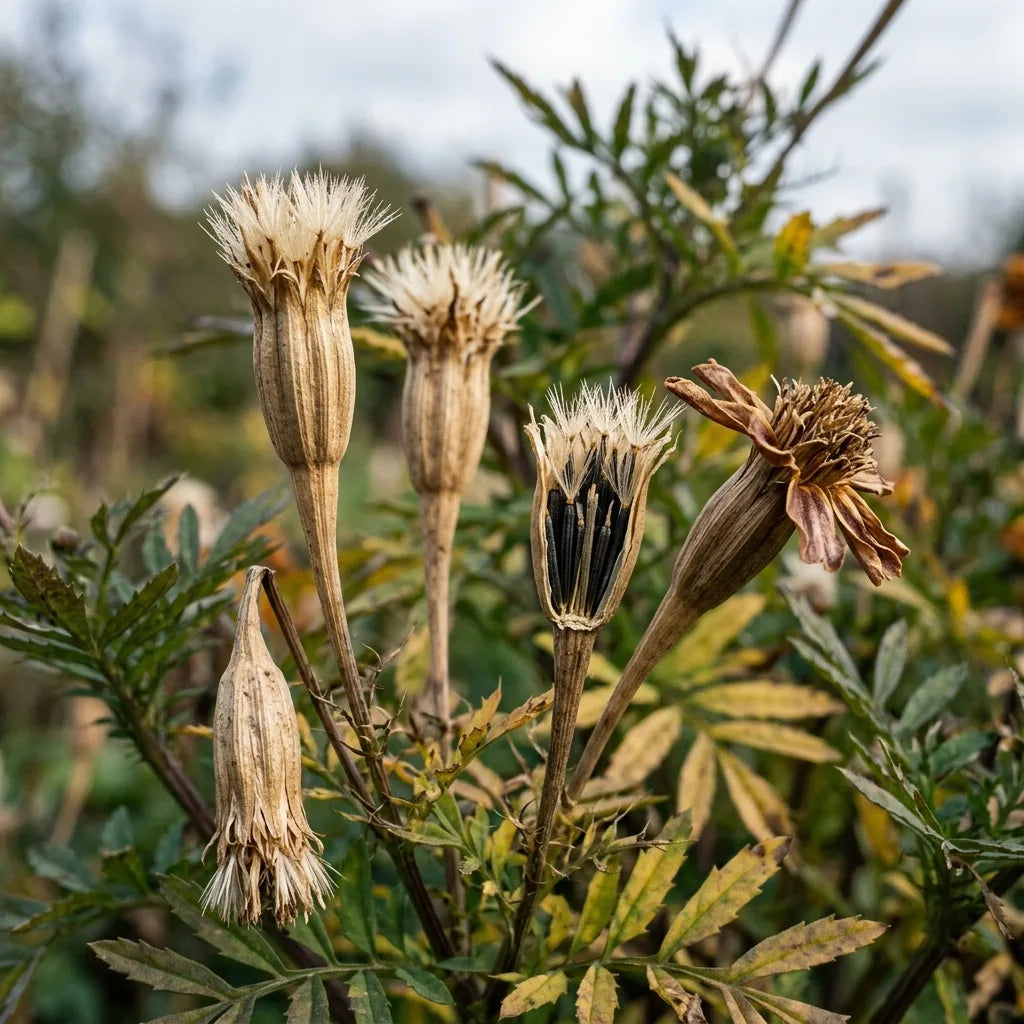
Leave a few faded flowers to dry completely on the plant: the black seeds with white tufts can then be easily removed from the brown flower head. They can be stored for several years. See how to store your seeds.
Commitment to Quality: at SemiSauvage - Permaculture, we grow and select our seeds with respect for living things as our guiding principle. Based near the Auvergne Volcanoes, we choose open-pollinated, non-hybrid varieties, test them for germination rates, and carefully sort and package them, without any chemical treatment. Our belief: to give gardeners back the ability to resow, year after year, seeds that truly belong to them.
Beautify your garden while protecting your crops with these French marigold seeds.