Pinus halepensis
Aleppo pine, Provence white pine, Jerusalem pine, Calabrian pine, Eastern pine: emblematic of Mediterranean landscapes, it has a fascinating survival strategy in the face of wildfires. Its cones, known as serotinous cones, remain closed on the tree for years and open only under the intense heat of fire, releasing their seeds onto soil finally cleared and fertilized by the ashes.
Characteristics:
-
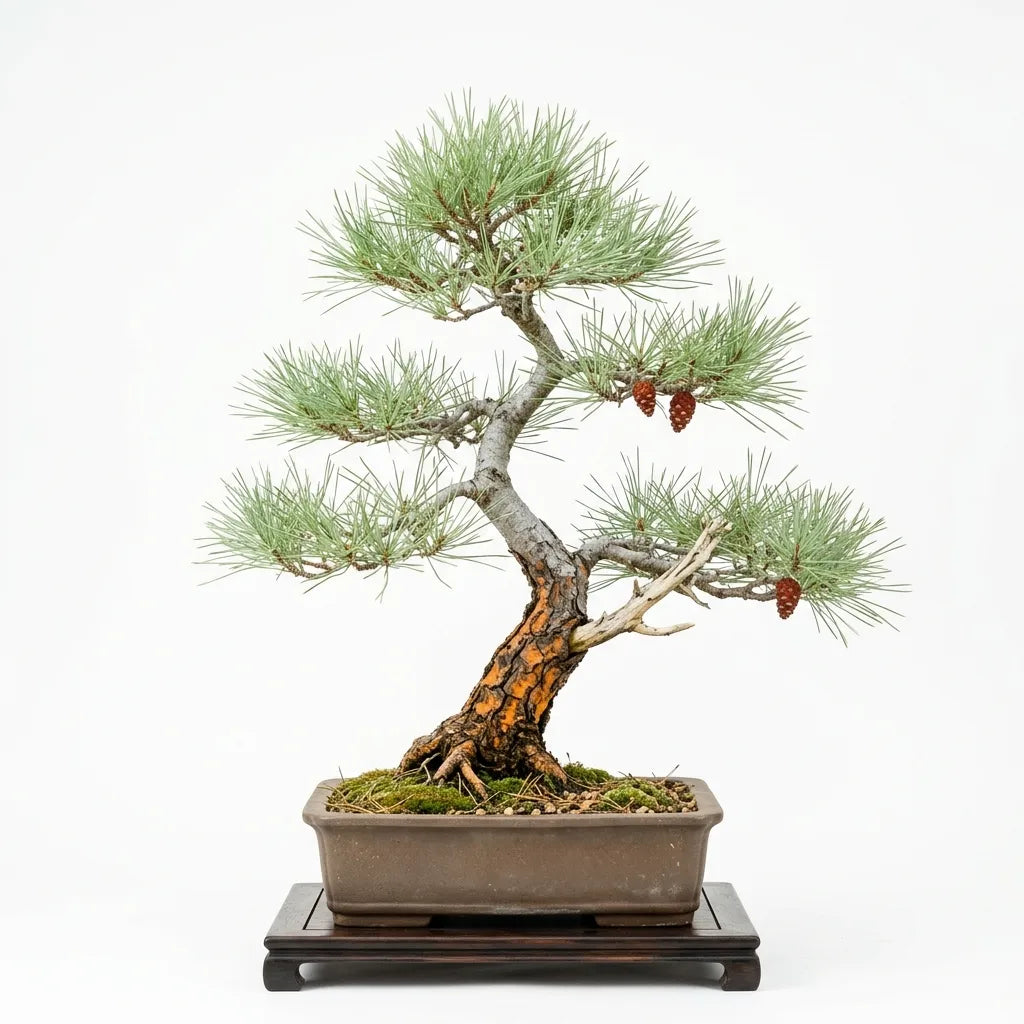
Distinctive silhouette: slender and irregular growth habit, often wind-bent, reaching up to 20 meters.
-
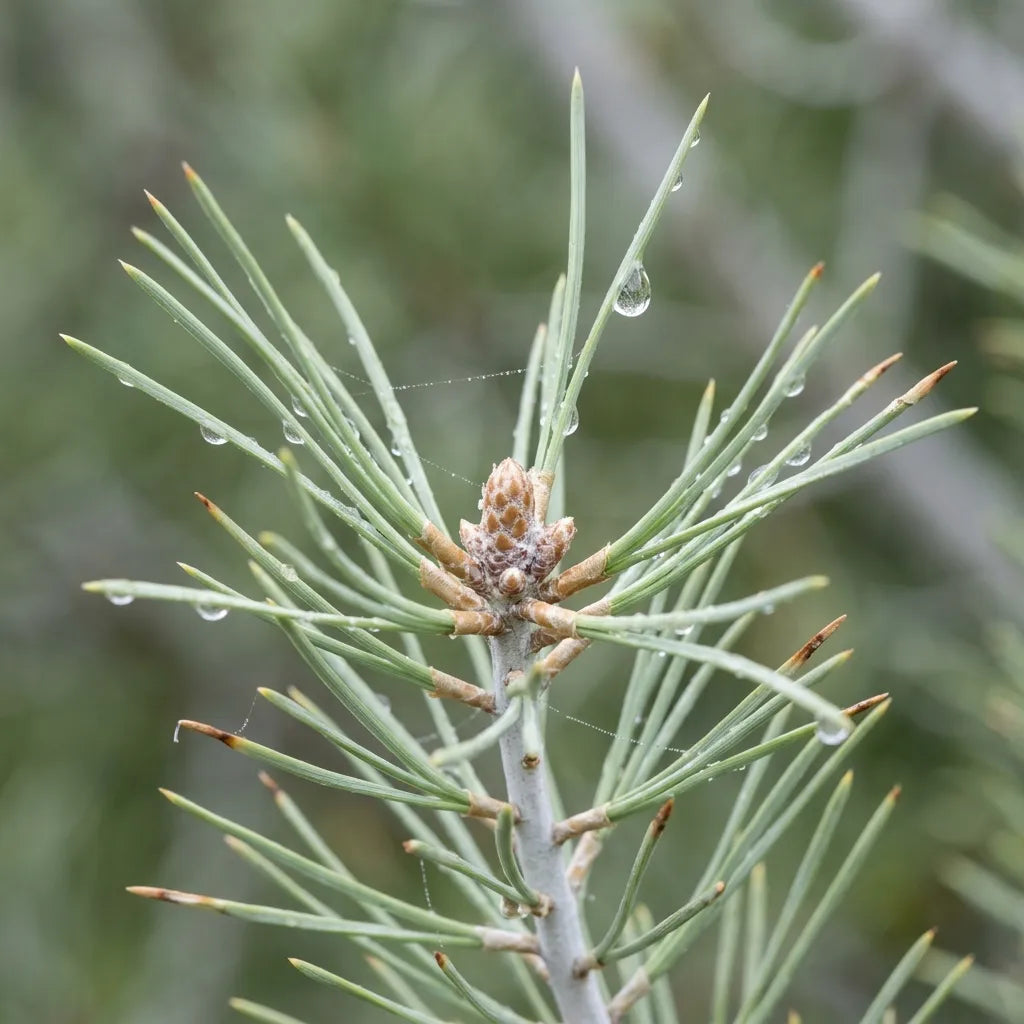
Light foliage: soft, pale needles that let light through, allowing plants to be grown beneath it.
-
Highly drought-resistant: once established, it requires no watering at all.
Sowing advice:
-
Exposure: full sun, without compromise.
-
Soil: poor, calcareous, or sandy, but above all perfectly drained — it is a scrubland tree that thrives where the soil is sparse. Above all, it dislikes heavy, damp soils. Never amend the soil.
-
Method: sow in spring after cold stratification for 30 to 45 days in the refrigerator. Place the seeds on the surface or 0.5 cm deep, in a light, well-draining mixture. Water lightly and maintain a constant temperature of 20–25 °C until germination.
Planting advice:
- Transplant into the ground in full sun after a few months, preferably from a deep pot: conifers quickly develop a taproot.
- It is very well suited to being trained as a Mediterranean bonsai — see our guide creating a bonsai from a seed.
Care advice:
- Water only during the first two years. After that, it becomes completely self-sufficient and requires very little care.
Beneficial combinations:
Benefits for biodiversity:
- Its winged seeds feed squirrels and birds, especially crossbills and tits.
- It provides an important refuge for Mediterranean wildlife and effectively stabilizes eroded soils, making it a key species for reforesting degraded land.
- Its light shade allows a scrubland understory to develop beneath it, unlike conifers with dense canopies.
Uses:
- Windbreak hedges, dry woodlands, Mediterranean gardens, and bonsai. Its highly aromatic resin was traditionally harvested.
Symbolism:
The Aleppo pine symbolizes resilience and regeneration: its ability to recolonize burned land makes it a botanical emblem of rebirth after wildfire.
Harvesting your own seeds:
Harvest cones that are still closed on the tree, then let them dry in a warm, dry place: they will open on their own within a few days and release the winged seeds. See storing your seeds.
Commitment to Quality: at SemiSauvage - Permaculture, we grow and select our seeds with respect for all living things as our guiding principle. Based near the Auvergne Volcanoes, we choose reproducible, non-hybrid varieties, tested for their germination rate, carefully sorted and packaged, with no chemical treatment. Our conviction: to give gardeners back the ability to resow, year after year, seeds that truly belong to them.
Sales reserved for home gardeners seeking quality and authenticity.