Cucurbita pepo
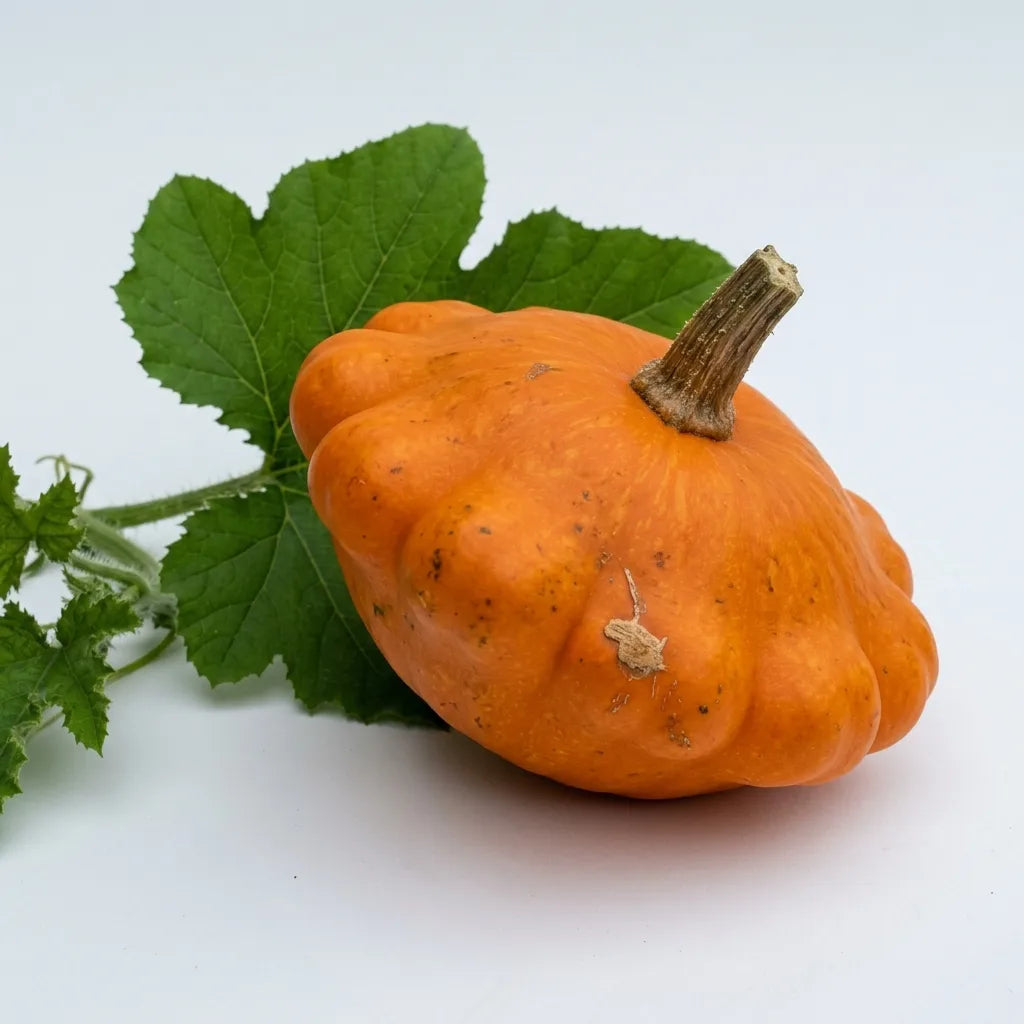
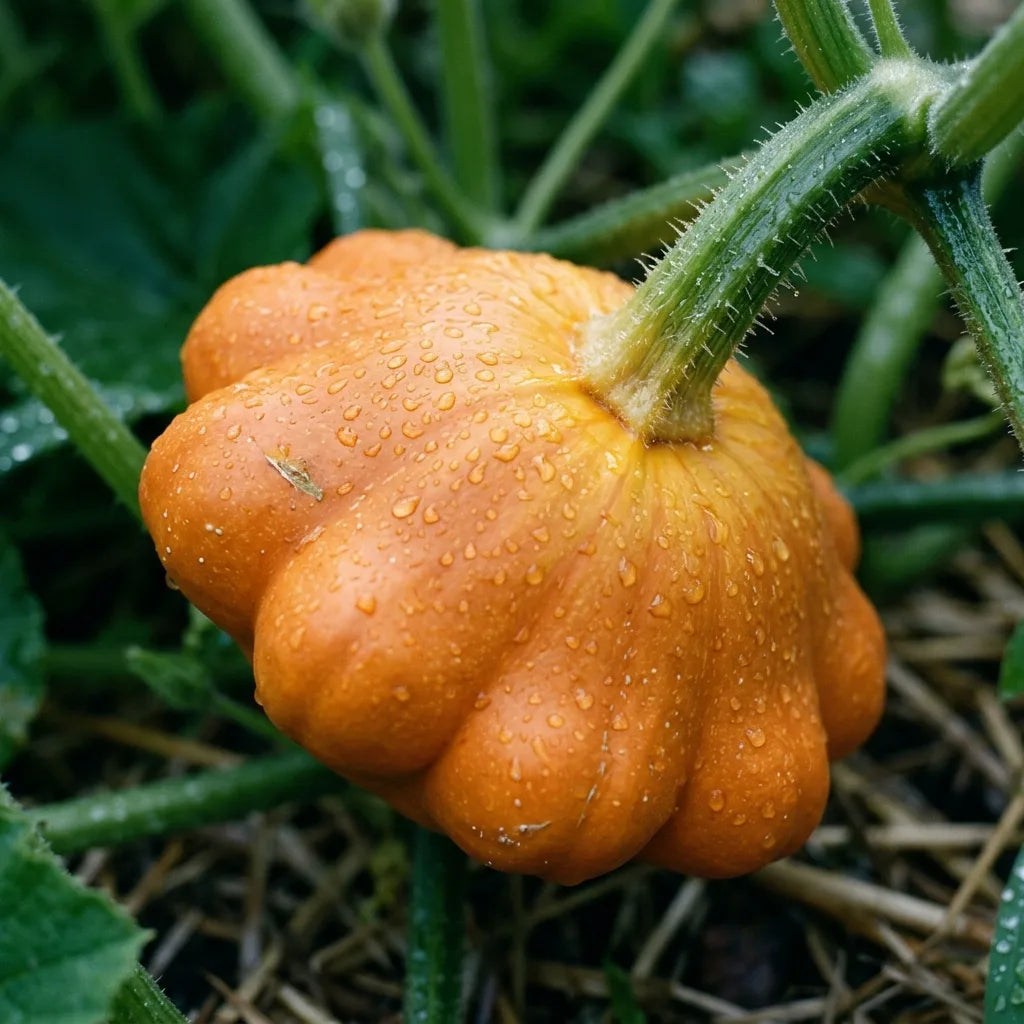
Orange pattypan squash, imperial crown, elector's hat squash, turban pattypan, priest's hat: its saucer-shaped silhouette with scalloped edges, highlighted by a vivid orange color, makes it one of the most ornamental squashes in the vegetable garden. An old variety, it is as good to cook as it is to look at.
Characteristics:
-
Saucer shape: scalloped edges and vivid orange color, highly decorative.
-
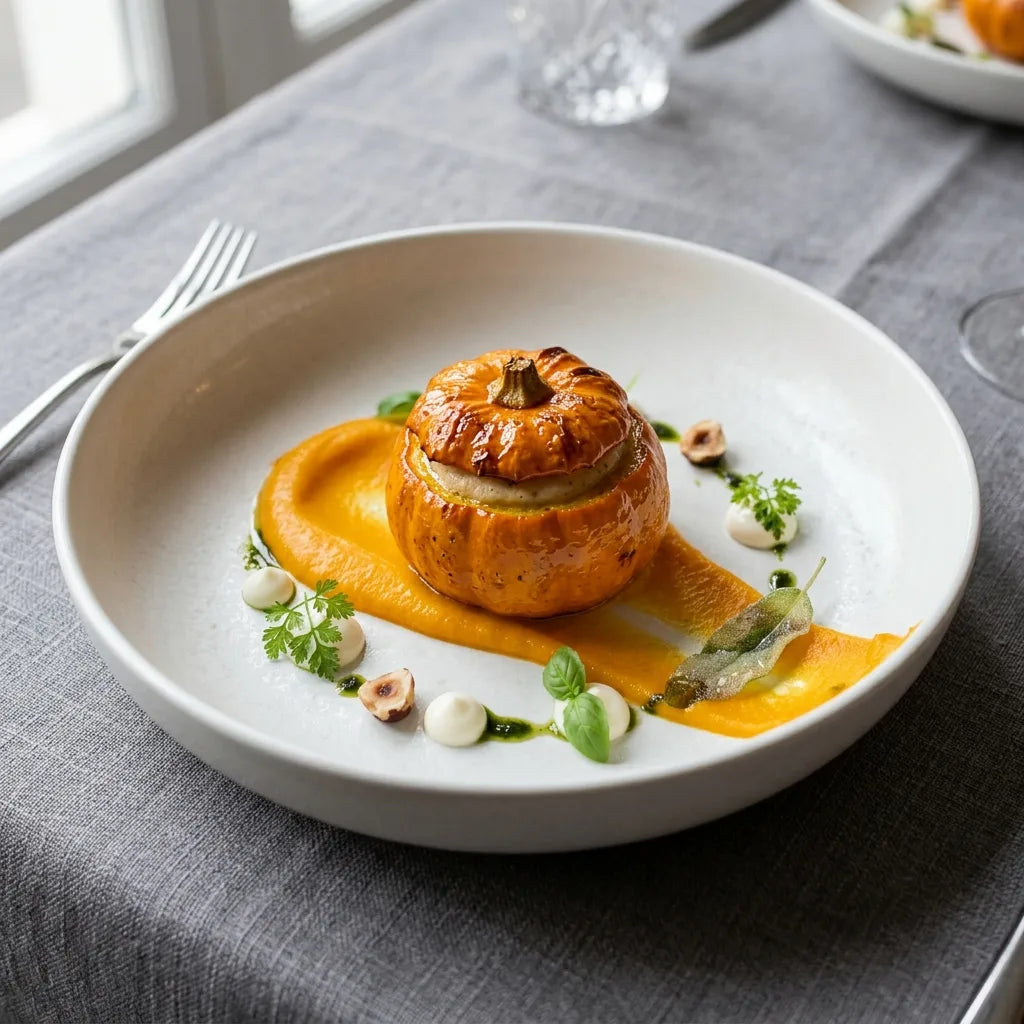
Firm, slightly sweet flesh: excellent stuffed, roasted, or mashed.
-
Two harvesting stages: young like a zucchini, or mature for storage.
-
Old, seed-saving variety, annual and not perennial.
Precautions:
- As with all cucurbits, a fruit with a very bitter taste may contain cucurbitacins, which can irritate the digestive system. Always taste a small piece: if the bitterness is pronounced, discard the entire fruit.
Sowing advice:
-
Exposure: full sun.
-
Soil: rich, moist, well-drained, and enriched with compost — this is a very hungry plant. It dislikes stagnant water around the crown.
-
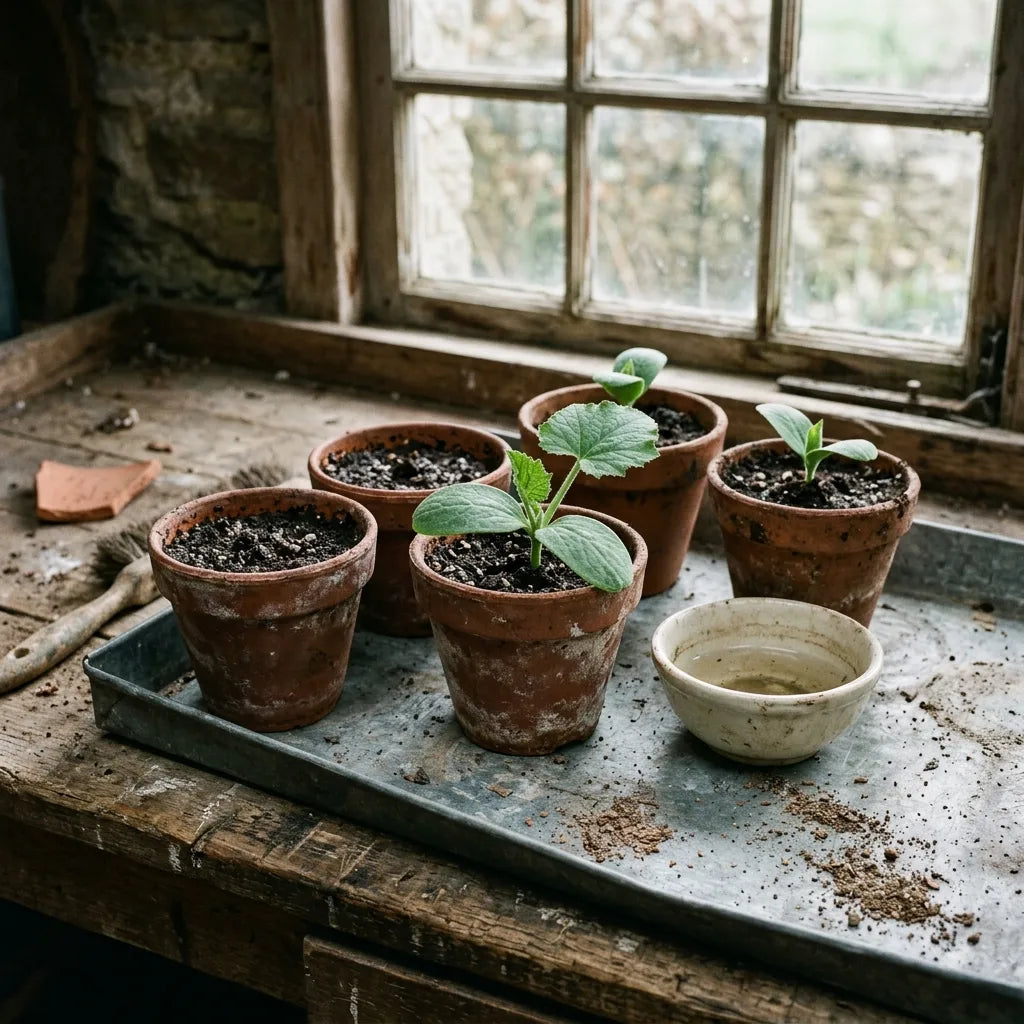
Method: no stratification required. Soaking the seeds for 12 to 24 hours in lukewarm water speeds up germination. Sow from March to May in pots in a warm place (20-25 °C), or directly in the ground after the last frosts. See how to sow your seeds.
Planting advice:
- Transplant when the plants have 3 to 4 leaves and the soil has warmed well, spacing them 1 meter apart. Apply a thick mulch.
Care advice:
- Water generously at the base, without wetting the foliage, to help limit powdery mildew.
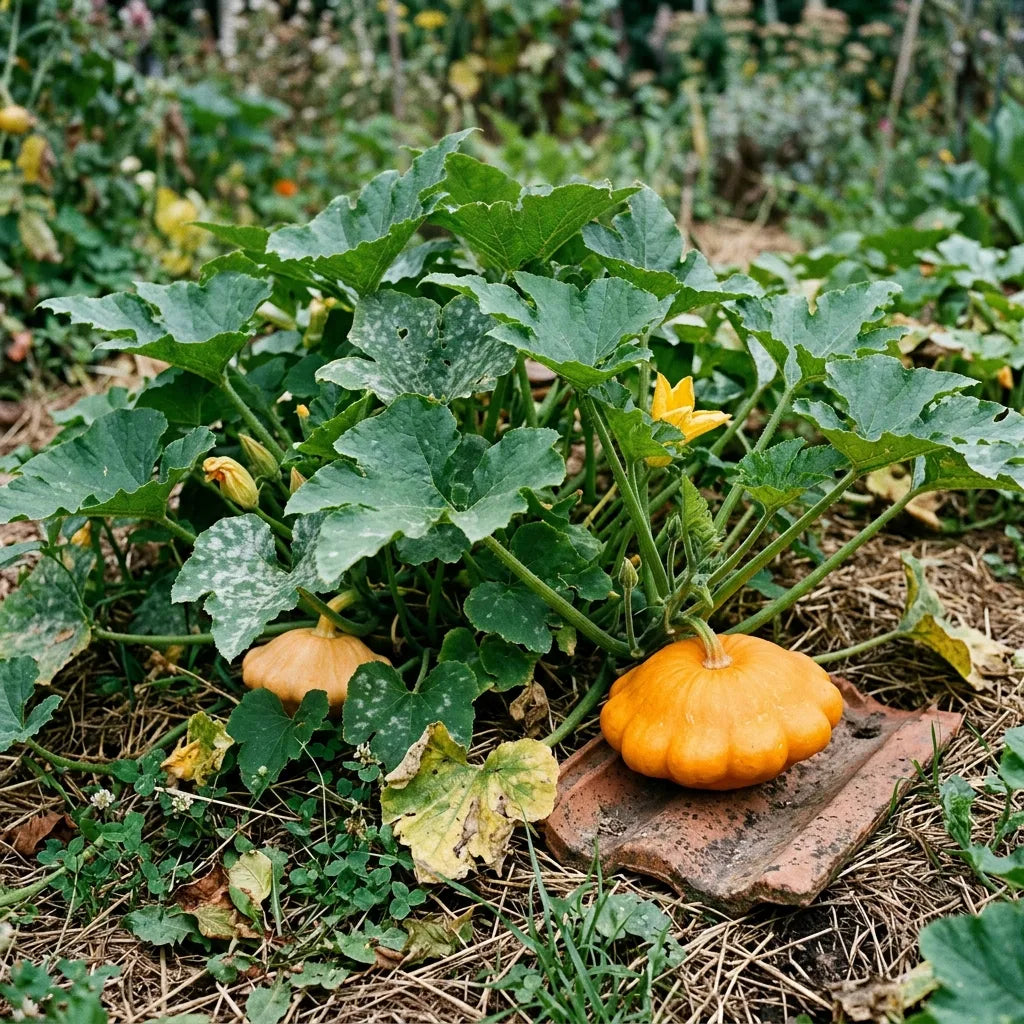
- Place a tile or board beneath fruits that you are leaving to ripen.
Harvesting advice:
-
For tender eating: harvest very young, between 8 and 10 cm, when the skin can still be scratched with a fingernail. It can then be cooked whole, skin included.
-
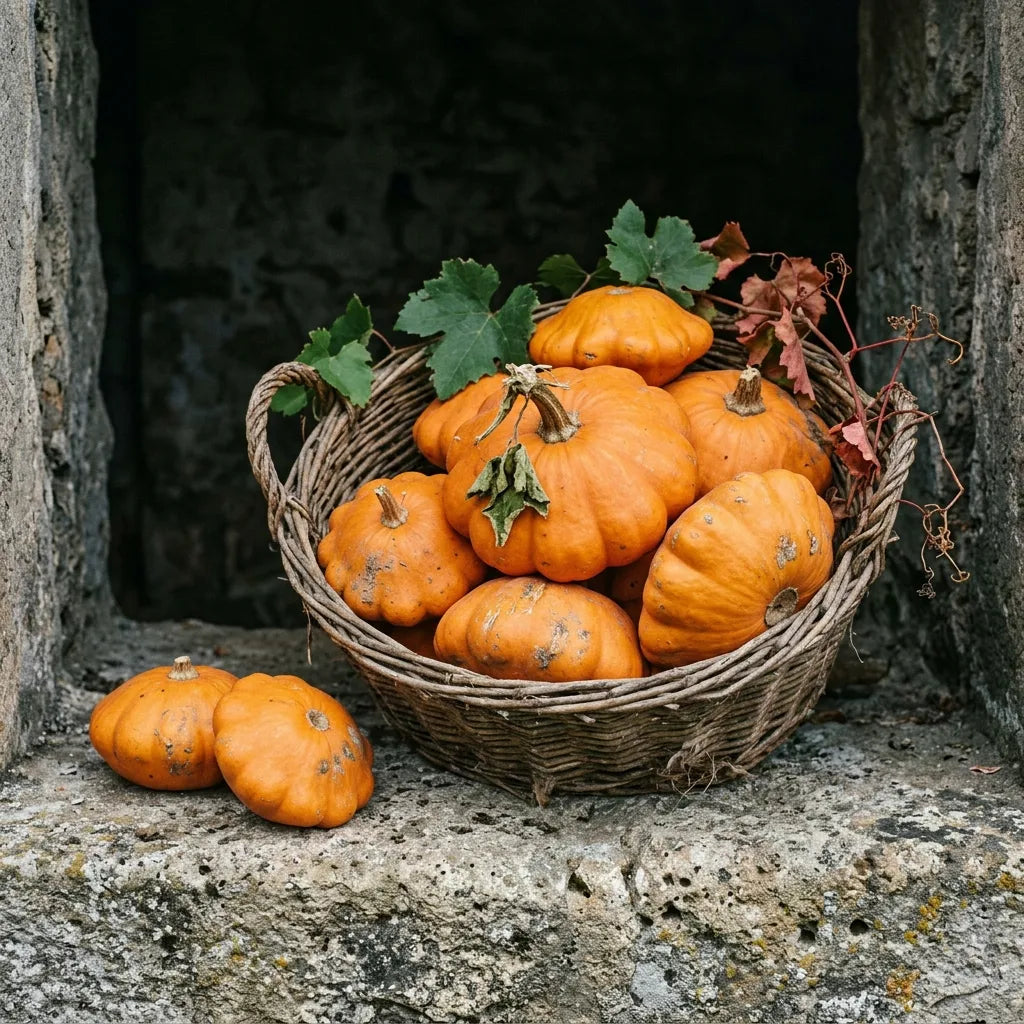
For storage: let it ripen fully, harvest it with 5 cm of stem, and allow it to dry in the sun before storing.
- Harvest young fruits regularly: this encourages continued production.
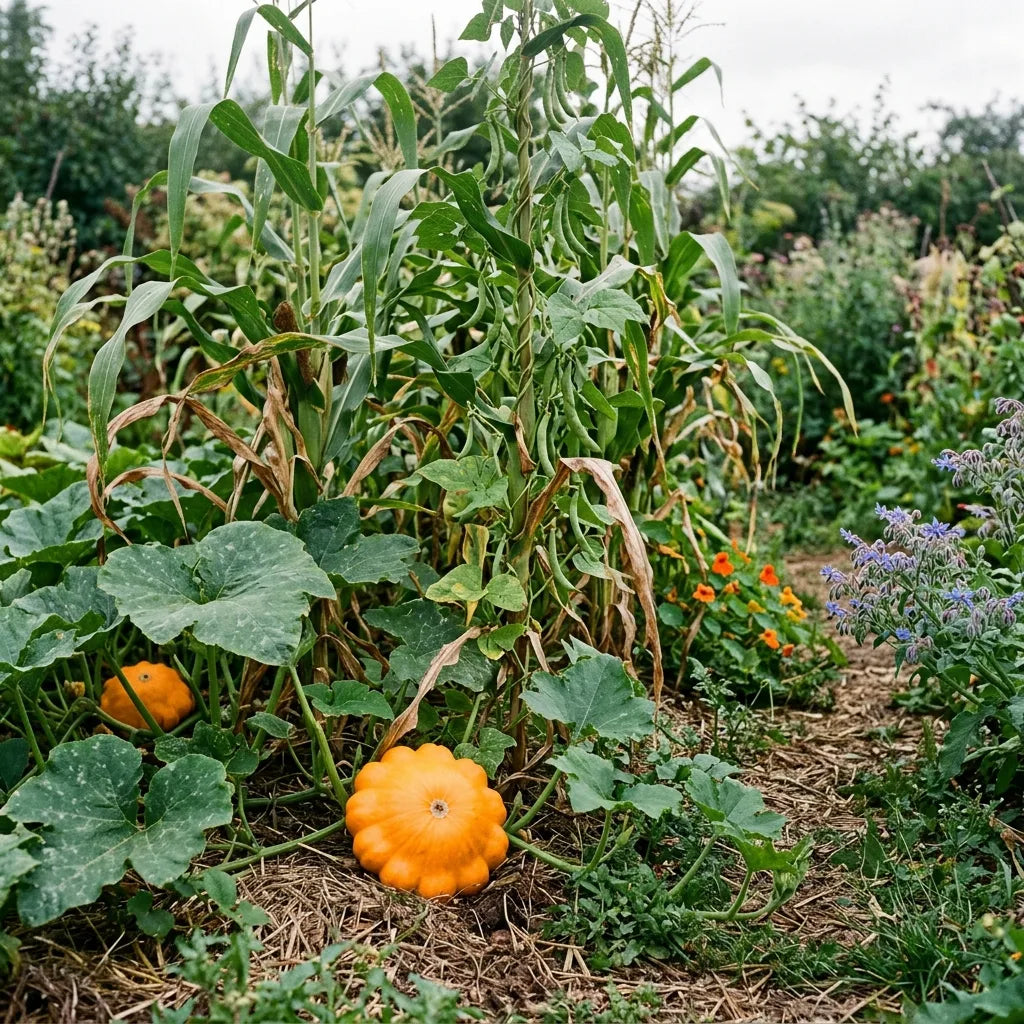
Beneficial companions:
Benefits for biodiversity:
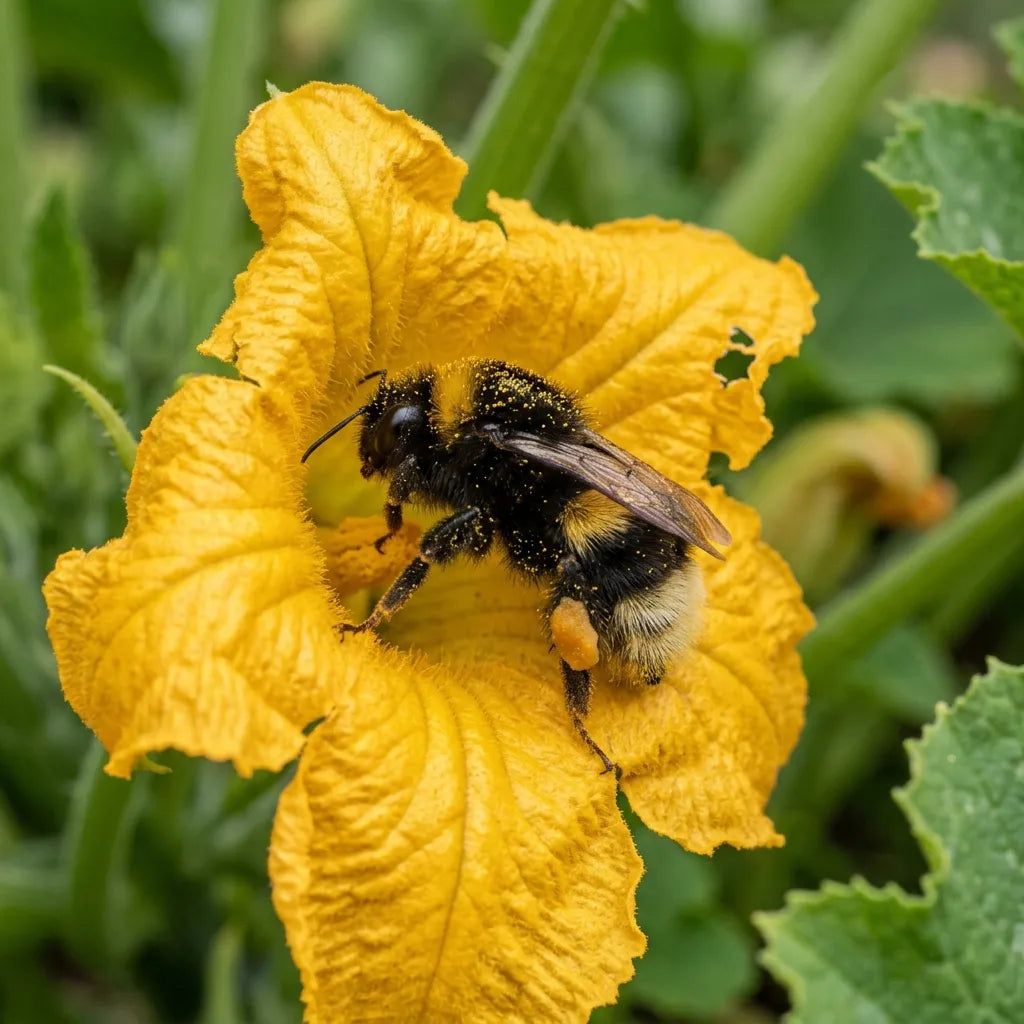
- Its large yellow flowers, which open early in the morning, provide abundant pollen and nectar for bees and bumblebees.
- Its broad foliage covers the soil, protects it from drying out, and shelters beneficial microfauna.
Uses:
- Stuffed and baked, in a gratin, mashed, or simply roasted. When harvested young, it can also be eaten raw and grated, like a zucchini. Its shape makes it a natural container for stuffed dishes.
Symbolism:
With its star-shaped form and warm color, the pattypan squash evokes prosperity and protection of the home. It often appears in traditional autumn decorations.
Saving your own seeds:
Let one fruit ripen fully until the skin hardens, then remove the seeds, rinse them, and dry them flat. Caution: Cucurbita pepo cross-pollinate very easily with one another — isolate your seed plant. See saving your seeds.
Commitment to Quality: at SemiSauvage - Permaculture, we grow and select our seeds with respect for living things as our guiding principle. Based near the Auvergne Volcanoes, we choose open-pollinated, non-hybrid varieties, tested for their germination rate, sorted and carefully packaged, with no chemical treatment. Our conviction: to give gardeners back the ability to resow, year after year, seeds that truly belong to them.
An orange saucer in the vegetable garden, as decorative as it is delicious.