Cucurbita pepo
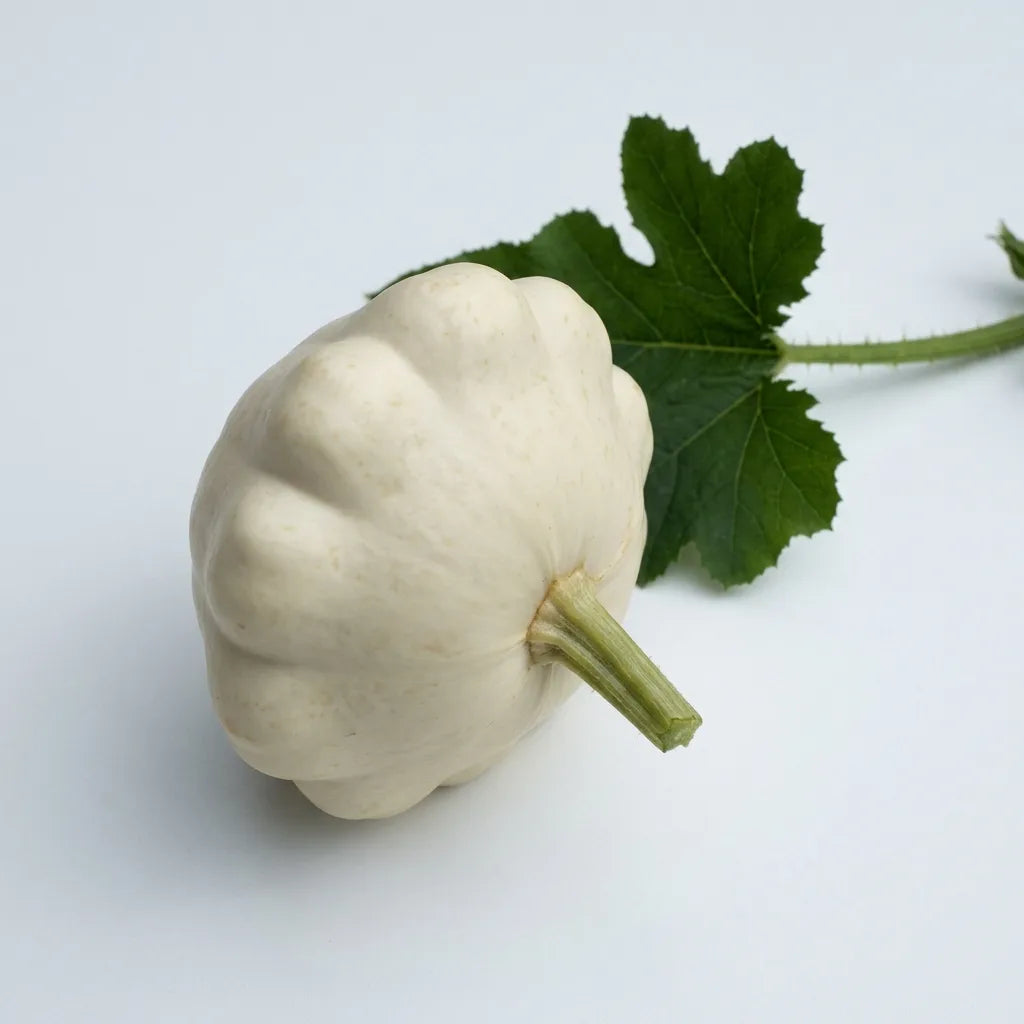
White pattypan squash, Spanish artichoke, priest’s bonnet, imperial crown: its flying-saucer shape with scalloped edges makes it the most recognizable squash in the vegetable garden. Picked young, it can be cooked like a zucchini; left to ripen, its skin hardens and it keeps for several months.
Characteristics:
-
Unique shape: flat and scalloped, highly decorative in the garden and on the table.
-
Two harvesting stages: young and tender like a zucchini, or mature and suitable for long-term storage.
-
Mild flavor: firm, fine flesh with a slight hazelnut flavor.
-
Non-running plant: it forms a compact bush, easier to manage than a trailing squash.
Precautions:
- As with all cucurbits, a fruit with a very bitter taste may contain cucurbitacins, which can irritate the digestive system. Always taste a small piece: if the bitterness is pronounced, discard the entire fruit.
Sowing advice:
-
Exposure: warm and sunny.
-
Soil: light, well-drained, and very rich in humus. Like all Cucurbita pepo, it is extremely hungry: plant it on a pile of mature compost or add plenty of organic matter.
-
Method: sow from mid-March to May, in pots under cover at 20 °C or directly in the ground after the last frosts, 2–3 cm deep, with the seed placed on its edge. See how to sow your seeds.
Planting advice:
- Transplant after the frosts, spacing plants 1 metre apart. Apply a thick mulch to retain moisture and keep the fruits clean.
Care advice:
- Water generously at the base, never wetting the foliage: this is how powdery mildew spreads.
- Place a tile or board beneath the fruits you are leaving to ripen.
Harvesting advice:
-
For tender eating: pick very young, when 8–10 cm in diameter, while the skin can still be scratched with a fingernail. This is when it tastes best, and it can be cooked whole, skin included.
-
For storage: let it grow until fully mature, harvest with 5 cm of stem attached, and allow it to dry in the sun before storing.
- Harvest young fruits regularly: this encourages continued production.
Beneficial companions:
Benefits for biodiversity:
- Its large yellow flowers, which open early in the morning, provide abundant pollen and nectar for bees and bumblebees.
- Its broad foliage covers the soil, protects it from drying out, and shelters beneficial soil life.
Uses:
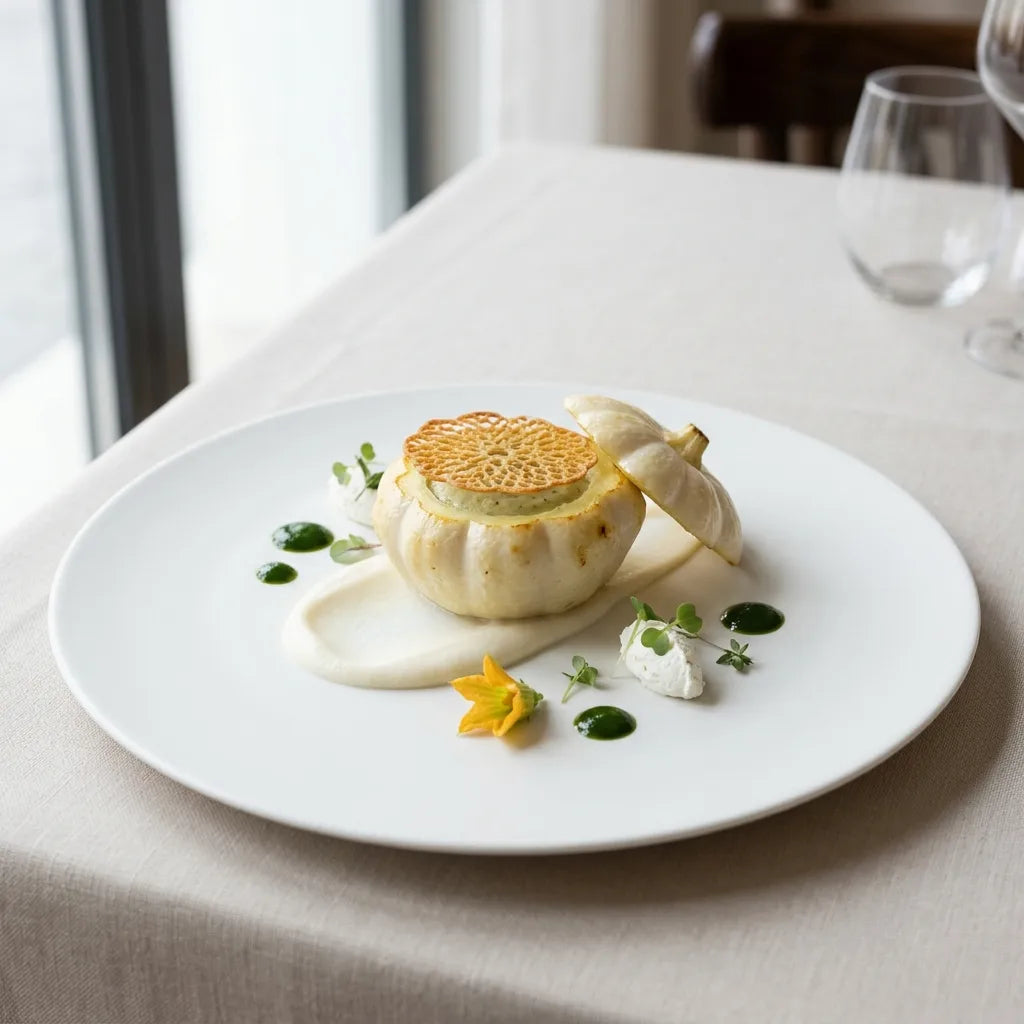
- Young: sautéed, baked in a gratin, stuffed, or steamed with its skin. Its shape makes it ideal for serving whole and stuffed, like a small vegetable casserole. Mature: in soup or purée.
Harvesting your own seeds:
Leave one fruit to ripen fully until the skin hardens, then remove the seeds, rinse them, and dry them flat. Caution: Cucurbita pepo cross-pollinate very easily with one another (zucchini, pattypan squash, and ornamental squash)—isolate your seed plant. See saving your seeds.
Commitment to Quality: at SemiSauvage - Permaculture, we grow and select our seeds with respect for living things as our guiding principle. Based near the Volcanoes of Auvergne, we choose open-pollinated, non-hybrid varieties, tested for their germination rate, sorted and carefully packaged, without any chemical treatment. Our belief: to give gardeners back the ability to resow, year after year, seeds that truly belong to them.
The flying saucer of the vegetable garden, as beautiful as it is delicious.