Zea mays
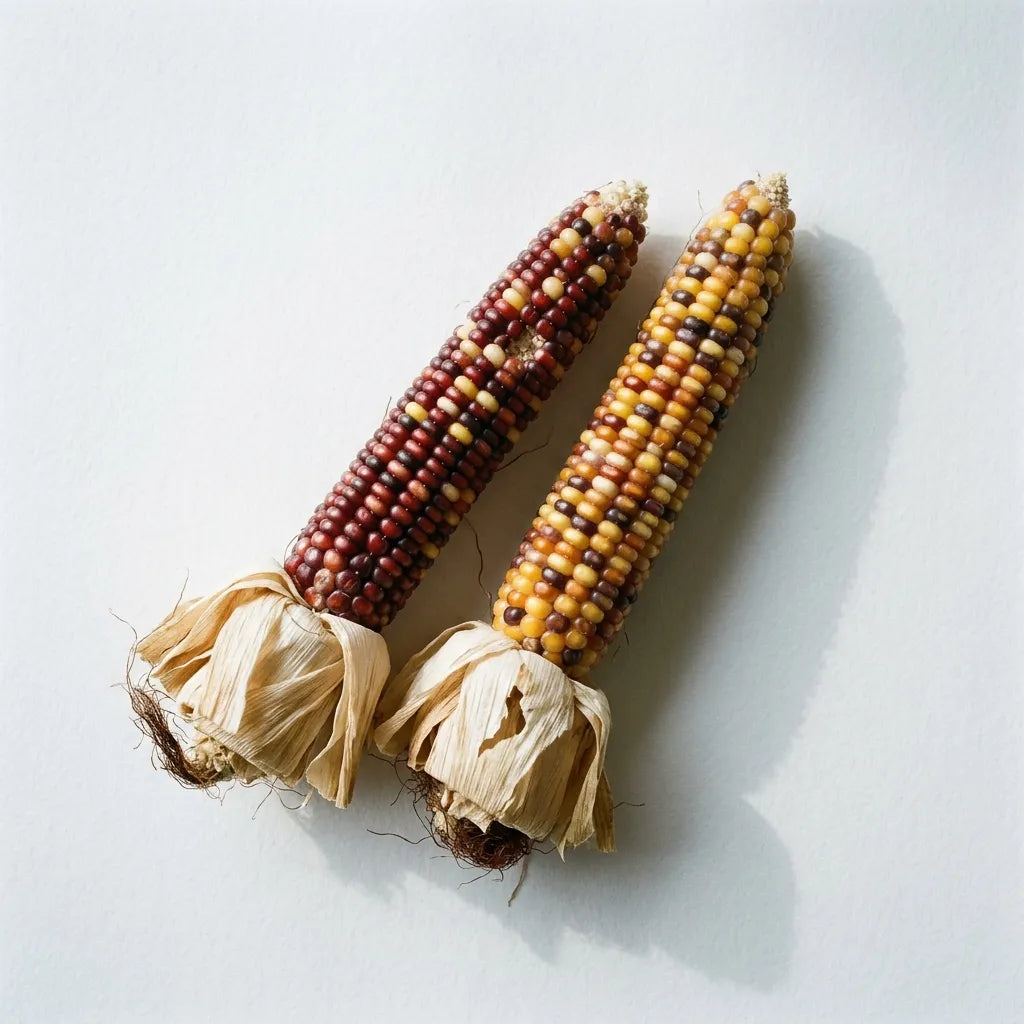
Amero ornamental corn, decorative corn, jewel corn: every cob is a surprise. Since pollen from one plant fertilizes the silks of another, a single cob bears kernels of different colors—red, yellow, purple, sometimes pearlescent or marbled. No two are quite alike, and that is what gives them their decorative charm.
Characteristics:
-
Multicolored cobs: red, yellow, and purple kernels on the same cob, with shades that are always different.
-
Graphic form: tall stalks that structure a bed or create a summer plant screen.
-
Long-lasting: once dried, the cobs retain their colors for years.
Sowing advice:
-
Exposure: full sun, with plenty of warmth.
-
Soil: rich, loose, moist, and well-drained. Corn is a very nitrogen-hungry plant: a generous addition of compost genuinely benefits it. Wait until the soil has warmed to at least 15°C; sowing in cold soil causes the seeds to rot.
-
Method: no stratification. Sow directly in the ground after the last frosts, 3 cm deep. Important: sow in a block of several closely spaced rows rather than in a single line—corn is wind-pollinated, and an isolated row produces half-empty cobs. See how to sow your seeds.
Care advice:
- Water regularly, especially during flowering and cob formation, when a lack of water directly results in missing kernels.
- Earth up the base of the plants to stabilize them: their adventitious roots will anchor themselves there.
Harvest advice:
- Harvest late, when the husks are thoroughly dry and papery and the kernels are hard. Peel back the leaves to form a pretty collar, then hang the cobs to dry in an airy place.
Beneficial associations:
Benefits for biodiversity:
- Its tall stalks create shelter and shade appreciated by beneficial insects in the vegetable garden during midsummer.
- Its kernels, left on the stalks or placed outdoors in winter, feed seed-eating birds.
Uses:
- Autumn decorations, arrangements, wreaths, and dried bouquets. Whole cobs can be hung or arranged in a basket for a seasonal table.
Harvesting your own seeds:
Shell a thoroughly dry cob by hand. Caution: corn crosses very easily with all other corn growing several hundred meters away, as it is wind-pollinated. To keep the variety pure, isolate your seed plants or stagger the flowering dates. See how to save your seeds.
Commitment to Quality: at SemiSauvage - Permaculture, we grow and select our seeds with respect for living things as our guiding principle. Based near the Auvergne Volcanoes, we choose open-pollinated, non-hybrid varieties, tested for their germination rate, carefully sorted and packaged, with no chemical treatment. Our conviction: to give gardeners back the ability to sow, year after year, seeds that truly belong to them.
Sales reserved for home gardeners seeking quality and authenticity.