Agastache foeniculum
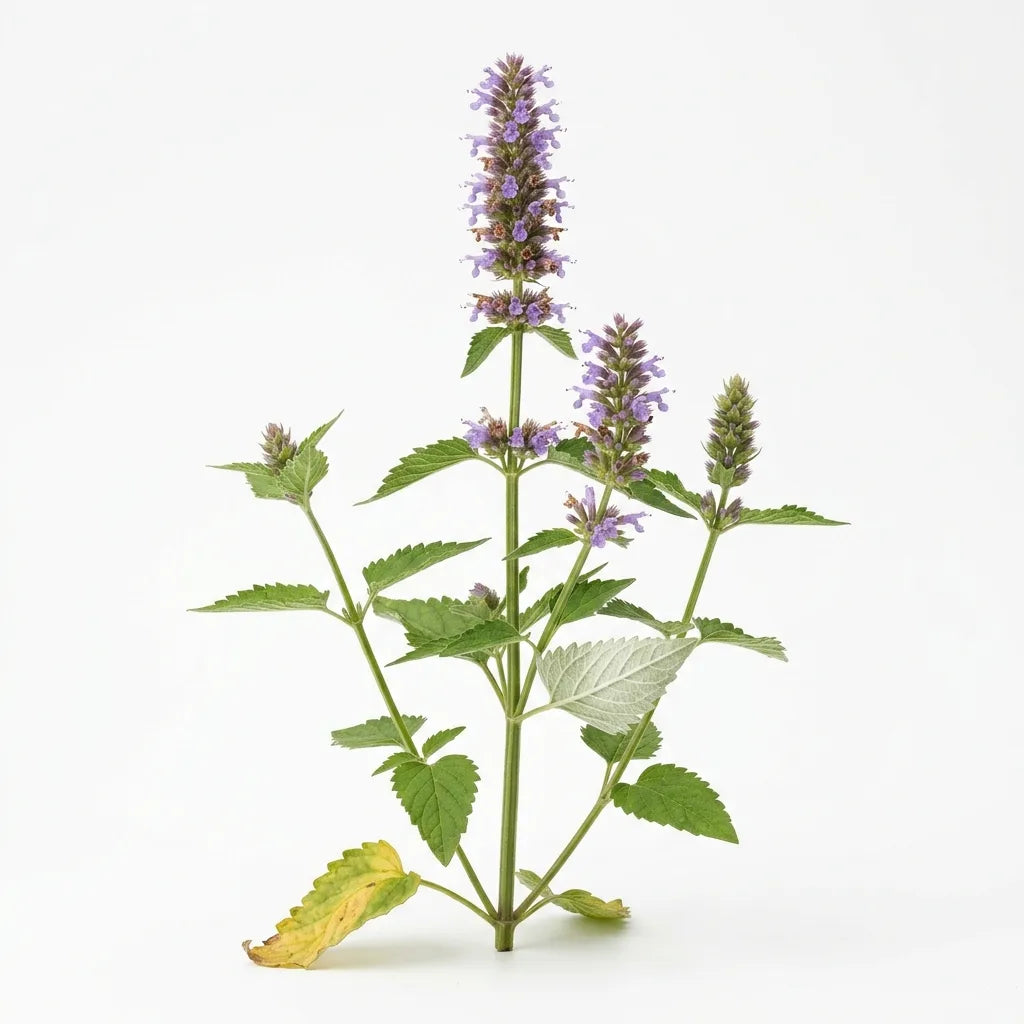
Anise hyssop, fennel-leaved agastache, anise mint, blue giant hyssop: not to be confused with true hyssop, with which it is not even closely related. Native to the prairies of North America, its crinkled foliage gives off a surprisingly intense anise and licorice scent, and its blue-violet flower spikes are a magnet for bees.
Characteristics:
-
Powerful anise fragrance: highly aromatic foliage, somewhere between anise and licorice.
-
Blue-violet flower spikes: long, upright flowering stems from July to September, reaching approximately 80 cm.
-
Hardy perennial: it returns every year and readily self-seeds.
Sowing advice:
-
Exposure: full sun.
-
Soil: ordinary, light, and well-drained. It tolerates poor soil and drought once established, but strongly dislikes stagnant moisture in winter, its main cause of loss. No fertilization needed.
-
Method: sow in spring, on the surface or barely covered, as the seeds need light, in pots, then transplant. A short period of cold improves the uniformity of germination but is not essential. See how to sow your seeds.
Planting advice:
- Transplant into a bed, border, or herb garden, spacing plants 40 cm apart. In heavy soil, plant on a slight mound.
Care advice:
- Water moderately, avoiding excess moisture. Cut back the clump at the end of winter.
- Let a few flower spikes go to seed: it self-seeds and establishes itself for the long term.
Harvesting advice:
- Pick the leaves before flowering, when their aroma is at its strongest. Harvest the flowers as they open; they dry very well.
Beneficial pairings:
Benefits for biodiversity:
- It is one of the most attractive plants for bees and bumblebees in the entire summer garden: its flower spikes literally buzz from morning to evening throughout two months of flowering.
- Its seeds feed goldfinches in autumn if the flower stems are left in place.
- Its drought tolerance makes it a good candidate for water-saving gardens.
Uses:
- Its leaves flavor salads, desserts, drinks, and infusions; its edible flowers make a lovely garnish for plates. See our edible flowers.
- A plant traditionally used for a long time by the peoples of the Great Plains. See our medicinal plants to sow.
Harvesting your own seeds:
Let a few flower spikes turn brown and dry completely on the plant, then rub them over a container: the tiny black seeds will come loose from the calyxes. See how to store your seeds.
Commitment to Quality: at SemiSauvage - Permaculture, we grow and select our seeds with respect for all living things as our guiding principle. Based near the Volcanoes of Auvergne, we choose open-pollinated, non-hybrid varieties, test them for germination rates, and carefully sort and package them without any chemical treatment. Our conviction: to give gardeners back the ability to resow, year after year, seeds that truly belong to them.
Give your bees one of their favorite plants with these anise hyssop seeds.