Rosa canina
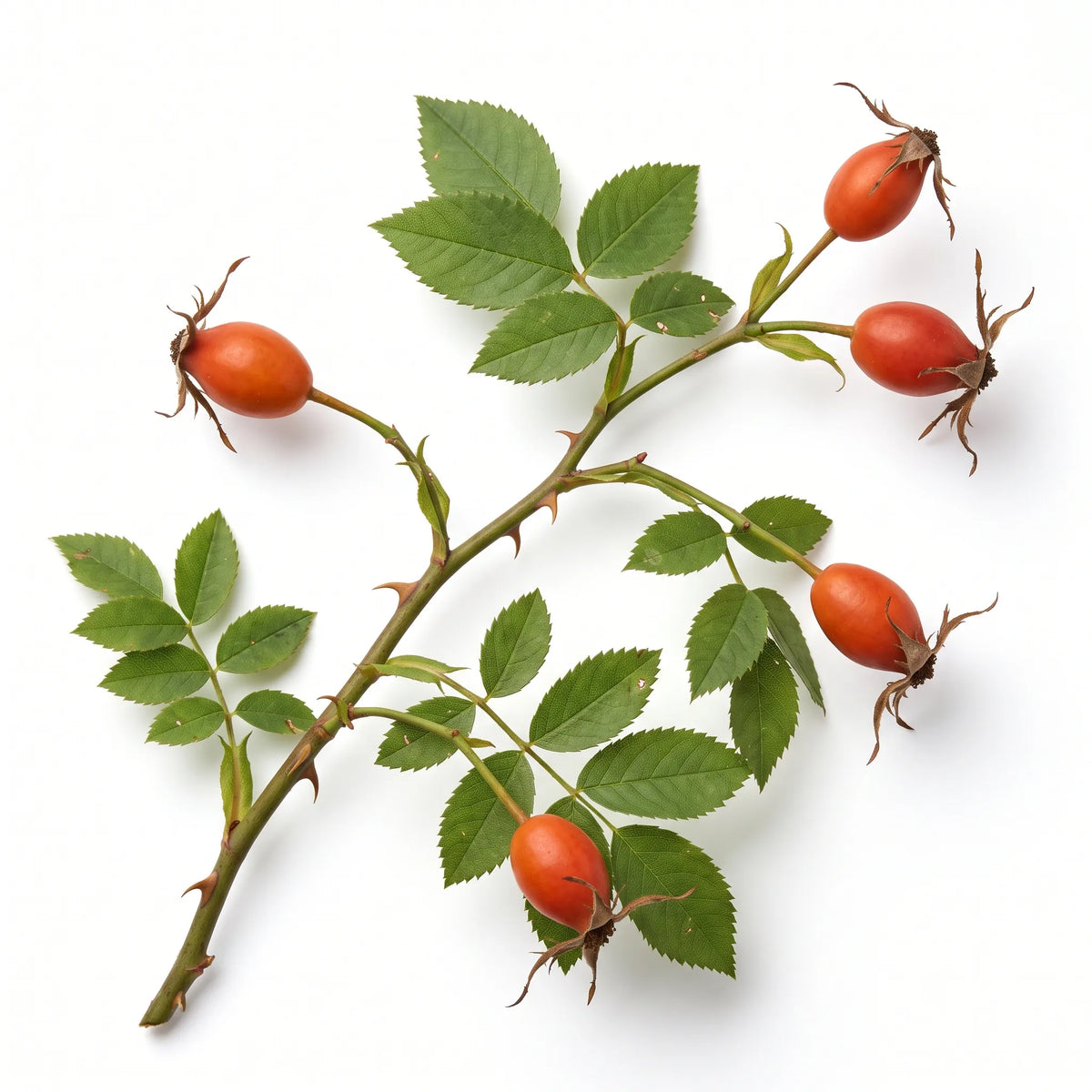
Dog rose, hedge rose, canine rose, wild rose, “scratch-bum rose”: this last, rather inelegant nickname comes from the irritating hairs lining the inside of the rose hip. It is the wild ancestor of all our garden roses, and it remains to this day the standard rootstock for cultivated roses—a modest shrub on which the entire modern rose garden rests.
Characteristics:
-
Simple, fragrant blooms: pale pink to white flowers in May–June, with an unmistakably rustic elegance.
-
Red rose hips: these scarlet false fruits persist throughout the winter and are exceptionally rich in vitamin C.
-
Thorny bush: 2 to 3 metres tall, very hardy down to -25 °C.
Precautions:
- Its branches bear vigorous hooked thorns: wear thick gloves and long sleeves when pruning or harvesting.
- The inside of the rose hip contains achenes surrounded by highly irritating hairs: carefully remove the seeds and hairs from the fruits or strain your preparations before consumption.
Sowing advice:
-
Position: full sun or partial shade.
-
Soil: ordinary soil, even poor or calcareous, provided it is well drained. This hedge and woodland-edge shrub is remarkably undemanding and tolerates drought well once established. No fertilisation is necessary.
-
Method: sow in autumn to let natural cold work, or apply cold stratification for 6 to 8 weeks before spring sowing. Sow in pots or directly in the ground, 1 cm deep. Patience: germination is slow and may occur over several months, sometimes not until the second spring.
Care advice:
- Water lightly only during the first few years. After that, the shrub takes care of itself.
- Prune in late winter to thicken the hedge; it regrows very easily, even after severe cutting.
Harvesting advice:
- Harvest the rose hips after the first frosts: the cold softens them and concentrates their sugars, making them much better. Picked too early, they remain hard and acidic.
Beneficial combinations:
Benefits for biodiversity:
- Its simple flowers, rich in accessible pollen, are far more useful to pollinators than double-flowered ornamental roses.
- Its rose hips feed blackbirds, thrushes and robins throughout the winter, during the most critical season.
- Its thorny thicket provides an impenetrable nesting refuge for small songbirds, and it effectively stabilises embankments.
Uses:
- Rose hips for jams, syrups and infusions. In permaculture: defensive hedges, embankment stabilisation and biodiversity refuges. It is also used as a rootstock for ornamental roses.
Symbolism:
The dog rose symbolises wild beauty, protection and resilience. Its name, “dog rose”, is said to come from an ancient belief that its root had the power to heal bites.
Harvesting your own seeds:
Open fully ripe rose hips—with gloves—extract the achenes, rinse them carefully to remove the irritating hairs, then dry them before winter stratification. See how to store your seeds.
Commitment to Quality: at SemiSauvage - Permaculture, we grow and select our seeds with respect for all living things as our guiding principle. Based near the Auvergne Volcanoes, we choose open-pollinated, non-hybrid varieties, tested for their germination rate, carefully sorted and packaged, with no chemical treatment. Our conviction: to give gardeners back the ability to resow, year after year, seeds that truly belong to them.
Plant the ultimate nourishing and sheltering hedge with these wild dog rose seeds.