Sambucus nigra
Black elder, elder, common elder, European elder: few shrubs have fed the popular imagination so richly. It was once said that one should never cut it without asking its permission, and its soft pith was used by children to make blowpipes and whistles. In the garden, it is a cornerstone of productive hedgerows.
Characteristics:
-
Generous shrub: deciduous, it reaches 4 to 6 metres with a spreading shape and rapid growth.
-
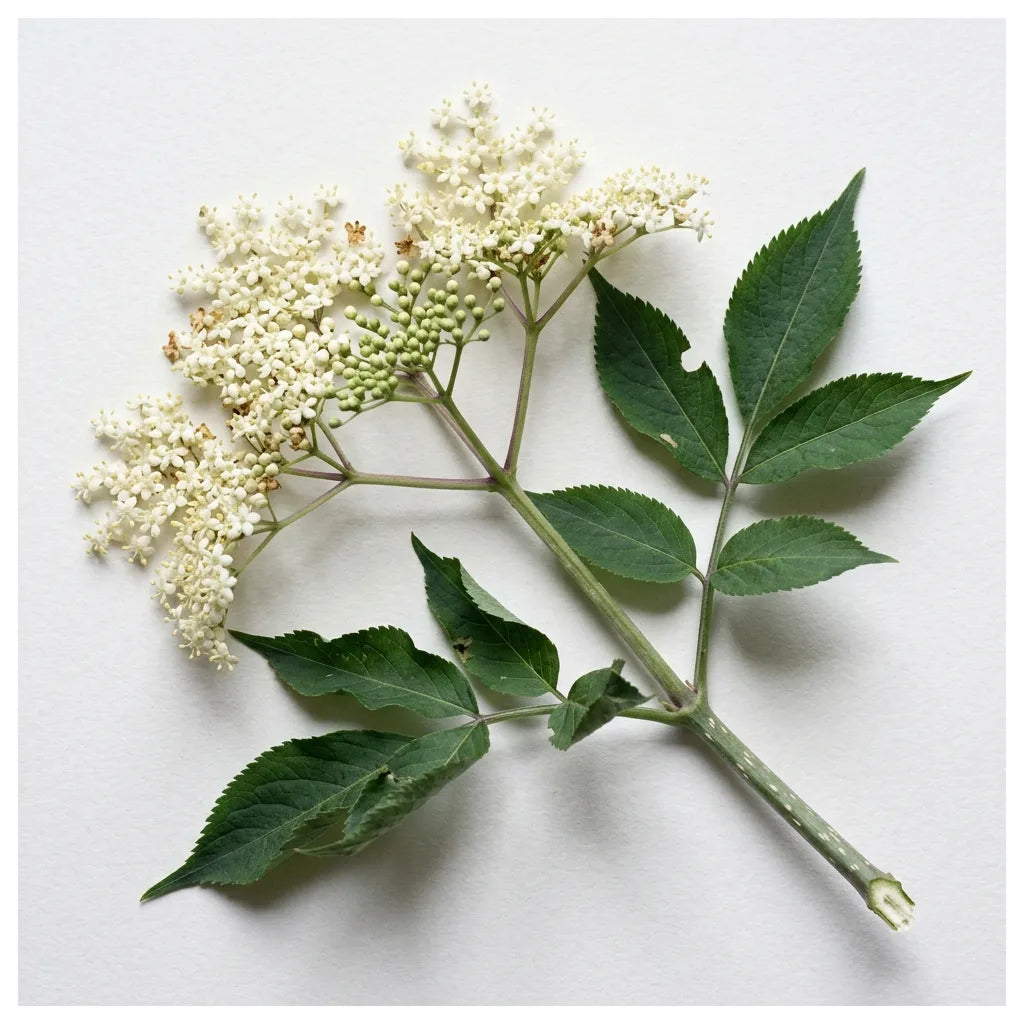
Highly fragrant flowers: large creamy-white flower heads with a characteristic musky fragrance, in May and June.
-
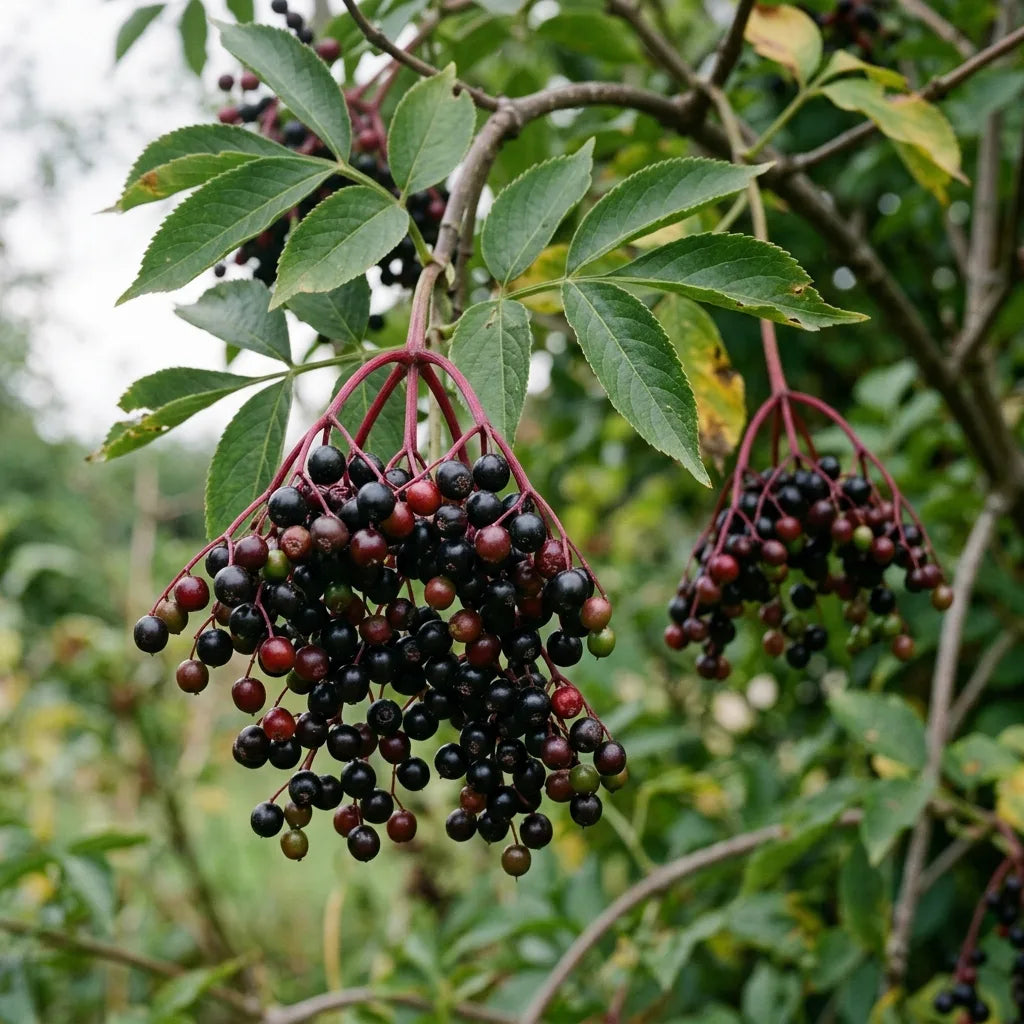
Abundant fruiting: clusters of glossy black berries at the end of summer.
Precautions:
-
Raw berries must not be eaten: they must always be cooked before use. Raw, they cause digestive problems.
- The leaves, bark and stems must not be eaten either. Only the flowers and cooked berries are used.
- Do not confuse black elder with dwarf elder (Sambucus ebulus), a low herbaceous plant with upright berries that is genuinely toxic: black elder is a woody shrub whose clusters droop when ripe.
Sowing advice:
-
Position: sun or partial shade; it is not demanding.
-
Soil: rich, cool to moist and well drained. It particularly favours nitrogen-rich, deep soils—which is why it is often found near old farms and manure heaps. Adding compost benefits it.
-
Method: 8 to 12 weeks of cold stratification is necessary (seeds mixed with damp sand in the refrigerator). Then sow in spring, in pots or directly in the ground.
Care advice:
- Water regularly during the first two years; afterwards, the shrub becomes self-sufficient.
- Prune at the end of winter to rejuvenate it: it regrows very easily, even after severe pruning.
Harvesting advice:
- Pick the flower heads in dry, sunny weather, when their fragrance is at its strongest.
- Harvest the berries when they are fully black and soft, in whole clusters, then strip them from the stems with a fork.
Beneficial combinations:
- Planted near the vegetable garden, it attracts beneficial birds that regulate pests. It combines well with ferns, comfrey or soft fruit in a productive hedgerow. See vegetable combinations for the garden.
Benefits for biodiversity:
- It is one of the most nourishing shrubs for wildlife: its berries feed more than twenty bird species at the end of summer, when they are building up their migratory reserves.
- Its broad, flat flower heads are highly accessible to short-tongued insects: hoverflies, beetles and small solitary bees.
- Its rapid growth makes it an ideal pioneer species for establishing a living country hedgerow.
Uses:
- Flowers in syrup, sparkling lemonade or fritters; berries cooked only in jellies, syrups and wines.
- A major traditional medicinal plant of the European countryside. See our medicinal plants to sow.
Symbolism:
A protective tree in European traditions, elder was planted near houses to ward off bad luck. In Scandinavian folklore, it sheltered the “Elder Mother”, whose permission had to be obtained before pruning a branch.
Harvesting your own seeds:
Crush the ripe berries in a little water, leave them to ferment for two days, then rinse them: the healthy seeds sink to the bottom. Dry them before winter stratification. Birds also do a remarkably effective job of spreading it on their own. See storing your seeds.
Commitment to Quality: at SemiSauvage - Permaculture, we grow and select our seeds with respect for living systems as our guiding principle. Based near the Volcanoes of Auvergne, we choose reproducible, non-hybrid varieties, tested for their germination rate, carefully sorted and packaged, without any chemical treatment. Our conviction: to give gardeners back the ability to resow, year after year, seeds that truly belong to them.
Plant a cornerstone of a productive hedgerow with these black elder seeds.