Buxus sempervirens
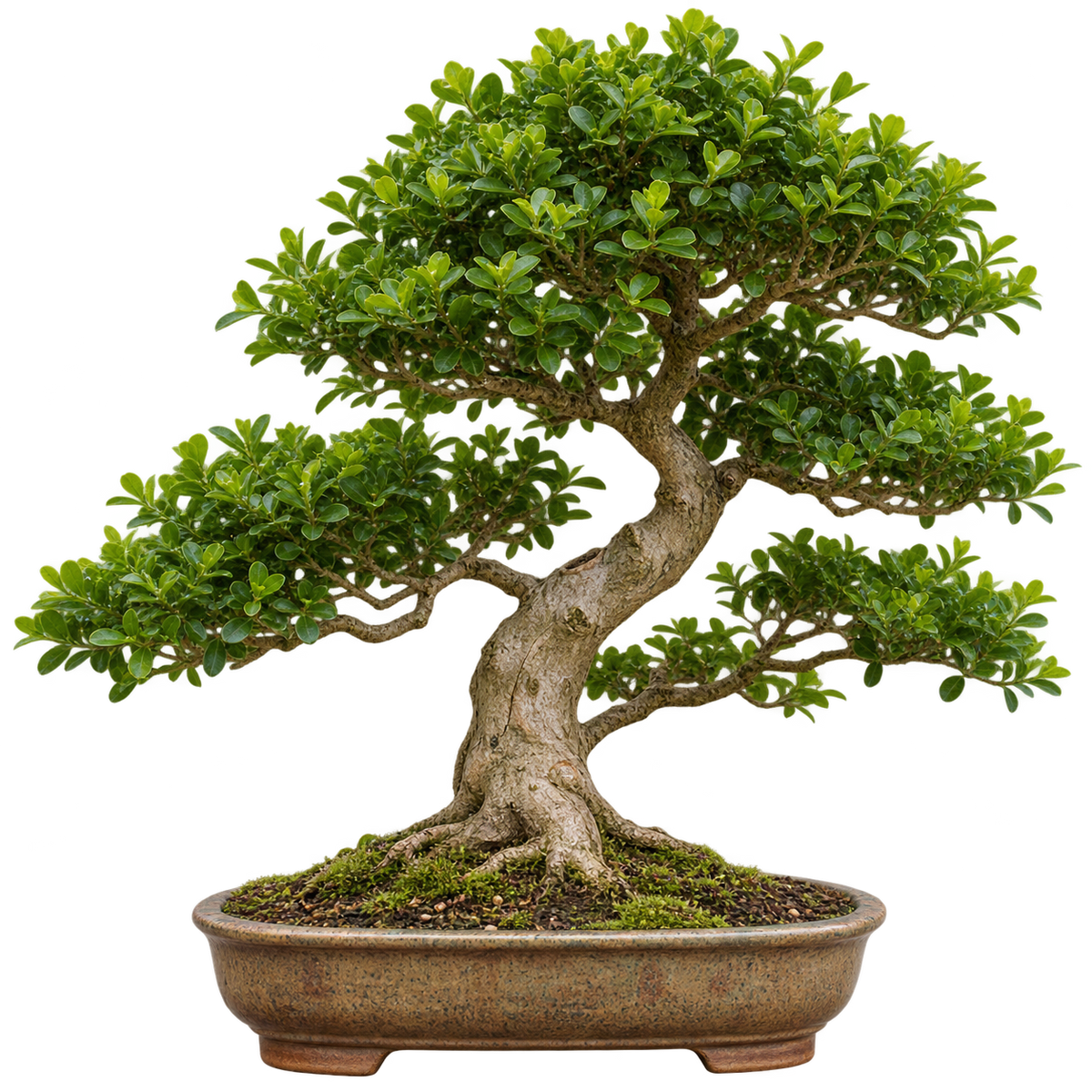
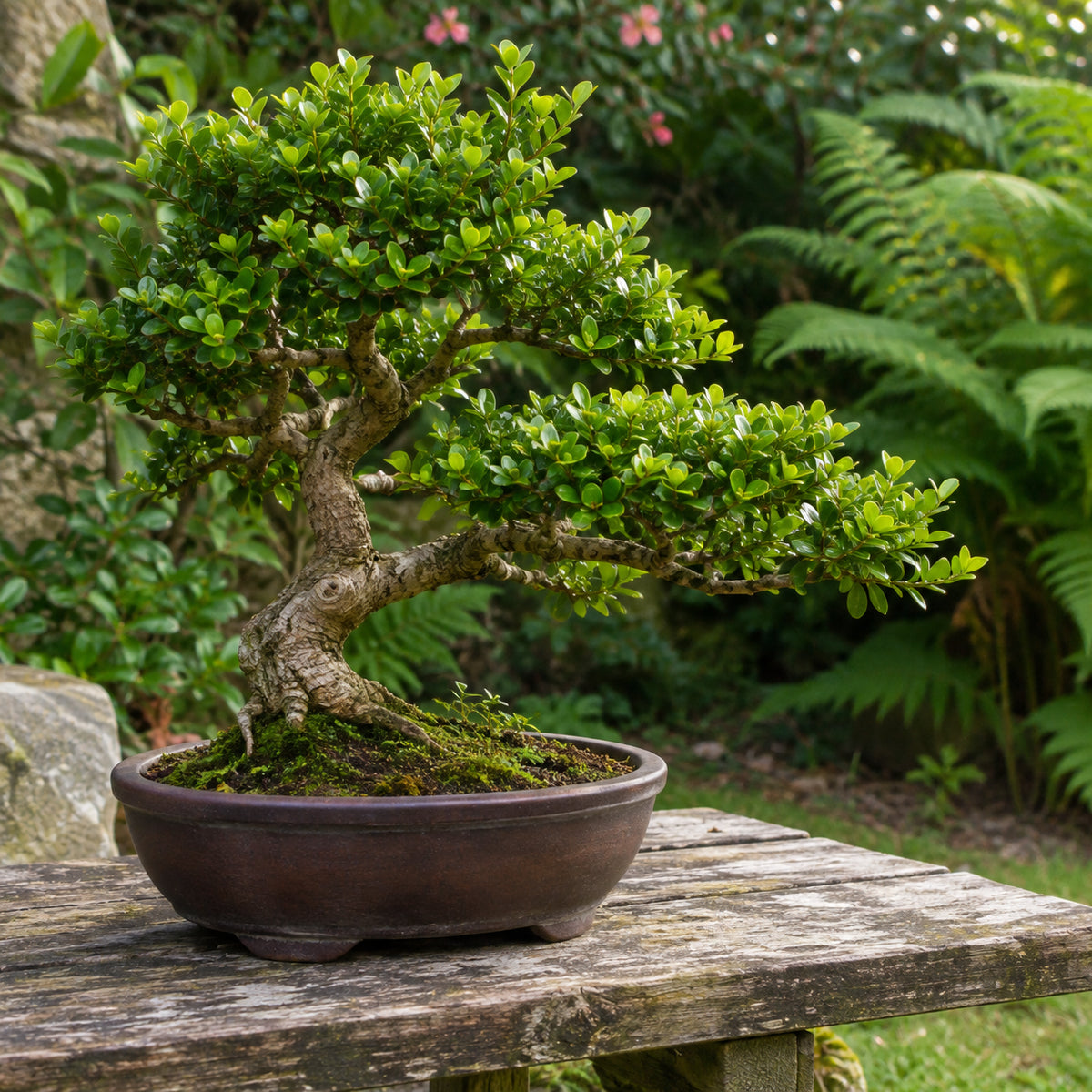
Common boxwood gives the garden structure that stays green in winter. Its small opposite leaves, dense branching, and slow growth make it suitable for clipped borders and outdoor bonsai. Its Latin name, sempervirens, refers precisely to this evergreen foliage. Growing it from seed lets you shape the plant gradually: first allow the roots and framework to establish before working toward a carefully shaped silhouette.
Characteristics:
- Evergreen shrub with small green leaves and a dense branching structure that responds well to formative pruning.
- Uses: borders, hedges, container plants, and outdoor bonsai.
- Slow-growing: allow it to establish gradually, without expecting a mature hedge in its first season.
- Reproducible seeds; packet of at least 40 seeds.
Sowing tips:
-
Preparation: Sow from March to May, after soaking the seeds for 24 hours.
-
Growing medium and temperature: Use a fine, well-draining growing medium, then place the seeds in a cool spot, between 5 and 15 °C.
-
Monitoring: Keep the soil evenly moist without waterlogging it. Germination can vary: keep your seed trays labeled and monitor them over time.
Planting tips:
Plant young boxwoods in partial shade in soil that stays moist while draining well. Preserve the root ball when transplanting and keep the root collar at soil level. Water at planting, then monitor how the plant establishes, especially while the roots still occupy only a small volume of soil. Our guide to sowing methods helps you choose a container and prepare for this first step.
Care tips:
Prune moderately and regularly to achieve the desired shape. Inspect the inside of the foliage, not just its silhouette: box tree moth and dieback call for close monitoring. In pots, check the moisture more often than in the ground and make sure water can drain away.
In the garden and for bonsai:
In the ground, boxwood edges a path or forms a small hedge. In a pot, its branches can be shaped into a bonsai: first let the young plant gain strength, then prune it gradually to shape it. The limited volume of growing medium requires regular watering and monitoring of the roots. Boxwood remains an outdoor tree, even when grown as a miniature.
Caution:
Boxwood is toxic if ingested. Do not eat any part of the plant, and choose its location with children and pets in mind.
Harvesting your own seeds:
In spring, cream to yellow-green flowers appear in small clusters in the leaf axils. Inconspicuous and without petals, they are followed by three-pointed capsules that are green at first, then turn brown. Harvest the ripe capsules before they disperse their seeds; let them open in a dry, airy place, inside a container or paper bag. Collect the shiny black seeds, remove any debris, and label the harvest. This applies to plants mature enough to flower. Find our tips for storing your seeds.
Symbolism and traditions:
In some Catholic traditions, boxwood is among the branches blessed on Palm Sunday, alongside olive or palm branches, depending on the region. Its evergreen foliage is thus part of a rite associated with Easter.
Commitment to Quality:
At SemiSauvage, we offer reproducible seeds for growing plants and discovering their diversity. This packet contains at least 40 seeds, packaged in France. Our advice will guide you from sowing through cultivation; adapt it to your climate and garden conditions.
For an evergreen border or an outdoor bonsai, boxwood offers dense foliage that can be shaped over the years.