Withania somnifera
Indian ginseng, ashwagandha, withania, winter cherry: its Sanskrit name, ashwagandha, means “smell of a horse,” referring to the very distinctive scent of its fresh root. Cultivated in India for more than three thousand years, it is one of the most emblematic plants in Ayurvedic pharmacopoeia. It has no botanical connection with true ginseng: it is a nightshade, related to the tomato.
Characteristics:
-
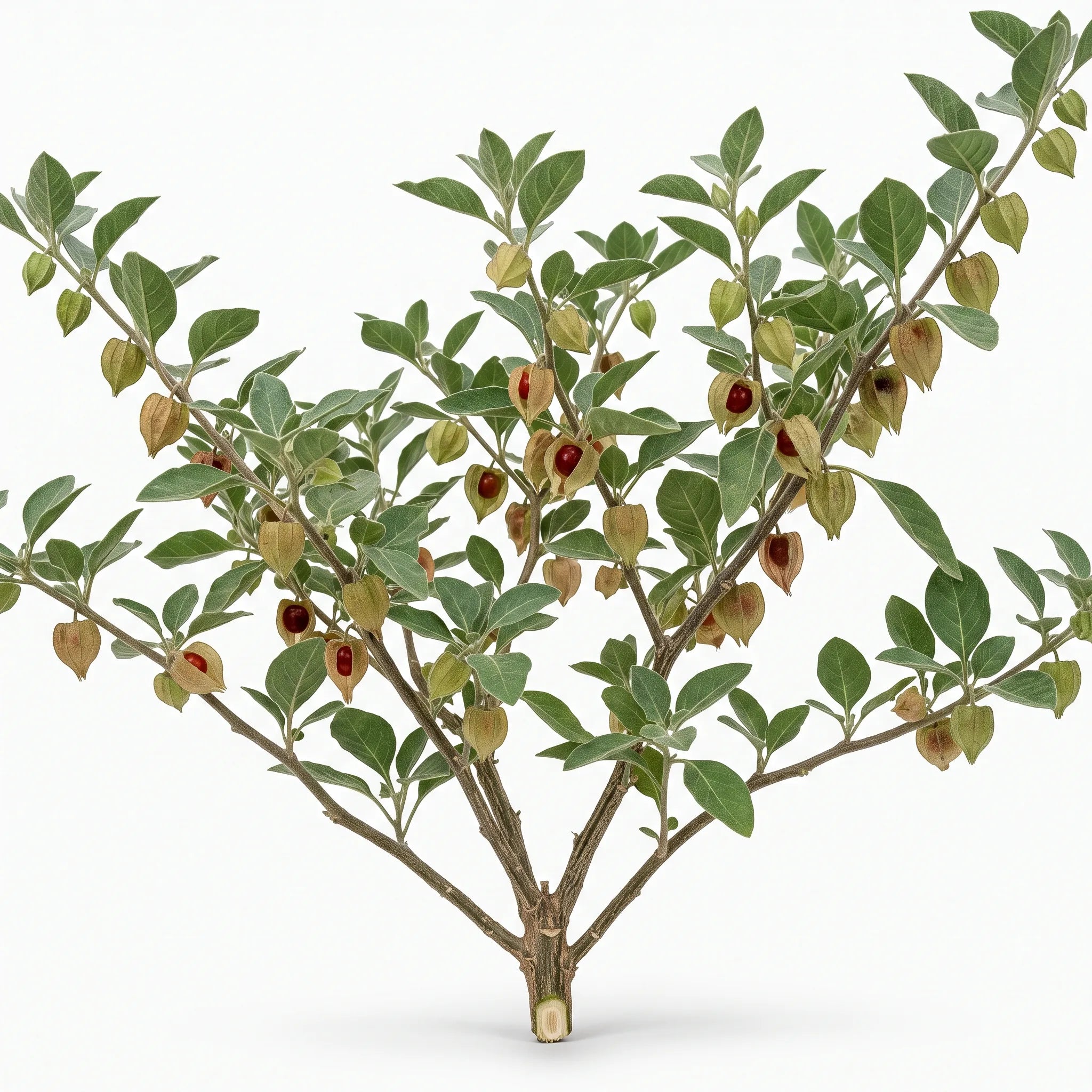
Perennial shrub: 1 to 1.5 m tall, with a bushy habit and downy grayish-green foliage.
-
Decorative red berries: enclosed in a papery calyx, like those of its relative, physalis.
-
Fleshy root: this is the part traditionally harvested, after one or two years of cultivation.
-
Drought-resistant: as a plant of arid regions, it requires little water once established.
Precautions:
- Like all nightshades, its foliage and berries should not be eaten. Only the root is traditionally used, in standardized preparations that should not be improvised—reserve this use for professional supervision.
- Frost-tender in our climates: grow it as an annual, or in a pot to overwinter frost-free.
- Keep the berries out of reach of young children.
Sowing advice:
-
Exposure: full sun and warmth.
-
Soil: light, sandy, and above all very well drained. It tolerates poor, dry soils, but stagnant moisture is fatal. Do not amend the soil: soil that is too rich produces foliage at the expense of the root.
-
Method: these seeds do not require cold stratification—native to the warm regions of India, the species instead requires warmth. Sow indoors or under cover at the end of winter, at 22–25 °C, barely covering the seeds, then transplant after the last frosts. See how to sow your seeds.
Planting advice:
- Transplant in full sun, spacing plants 50 cm apart. Growing it in a large pot works very well and allows you to bring it indoors over winter to obtain a more developed root in the second year.
Care advice:
- Water moderately, allowing the soil to dry out between waterings. No fertilizer.
- Pinch out the tips to encourage a bushy habit.
Harvest advice:
- Harvest the root in autumn, after a full growing season, when the foliage begins to turn yellow. Dig it up carefully, brush it clean, and dry it in sections.
Beneficial combinations:
- It shares the warmth and drainage requirements of Mediterranean herbs such as thyme and common sage. Avoid growing it after tomatoes or potatoes, as they belong to the same family and share the same diseases.
Benefits for biodiversity:
- Its small, discreet but numerous yellow-green flowers are visited by bees and small pollinators throughout the summer.
- Its drought tolerance makes it an interesting candidate for water-efficient gardens.
Uses:
- A major medicinal plant in Ayurvedic medicine, used in India for thousands of years. See our medicinal plants to sow.
- Also grown as a botanical curiosity for its downy foliage and lantern-like berries.
Harvesting your own seeds:
Let a few berries ripen to bright red in their calyxes, then crush them in a little water and rinse to separate the seeds from the pulp. Dry them flat before storage. See storing your seeds.
Commitment to Quality: at SemiSauvage - Permaculture, we grow and select our seeds with respect for all living things as our guiding principle. Based near the Volcanoes of Auvergne, we choose open-pollinated, non-hybrid varieties, tested for their germination rate, sorted and carefully packaged, with no chemical treatment. Our conviction: to give gardeners back the ability to resow, year after year, seeds that truly belong to them.
An emblematic plant of Ayurveda, to grow in the warmest corner of the garden.