Punica granatum
Pomegranate, balaustier, Carthage apple: its species name granatum means “seeded,” and its fruit—the pomegranate—gave its name both to the city of Granada and to the explosive device. Cultivated for more than five thousand years, it is one of the oldest domesticated fruit trees and one of the most spectacular when in flower.
Characteristics:
-
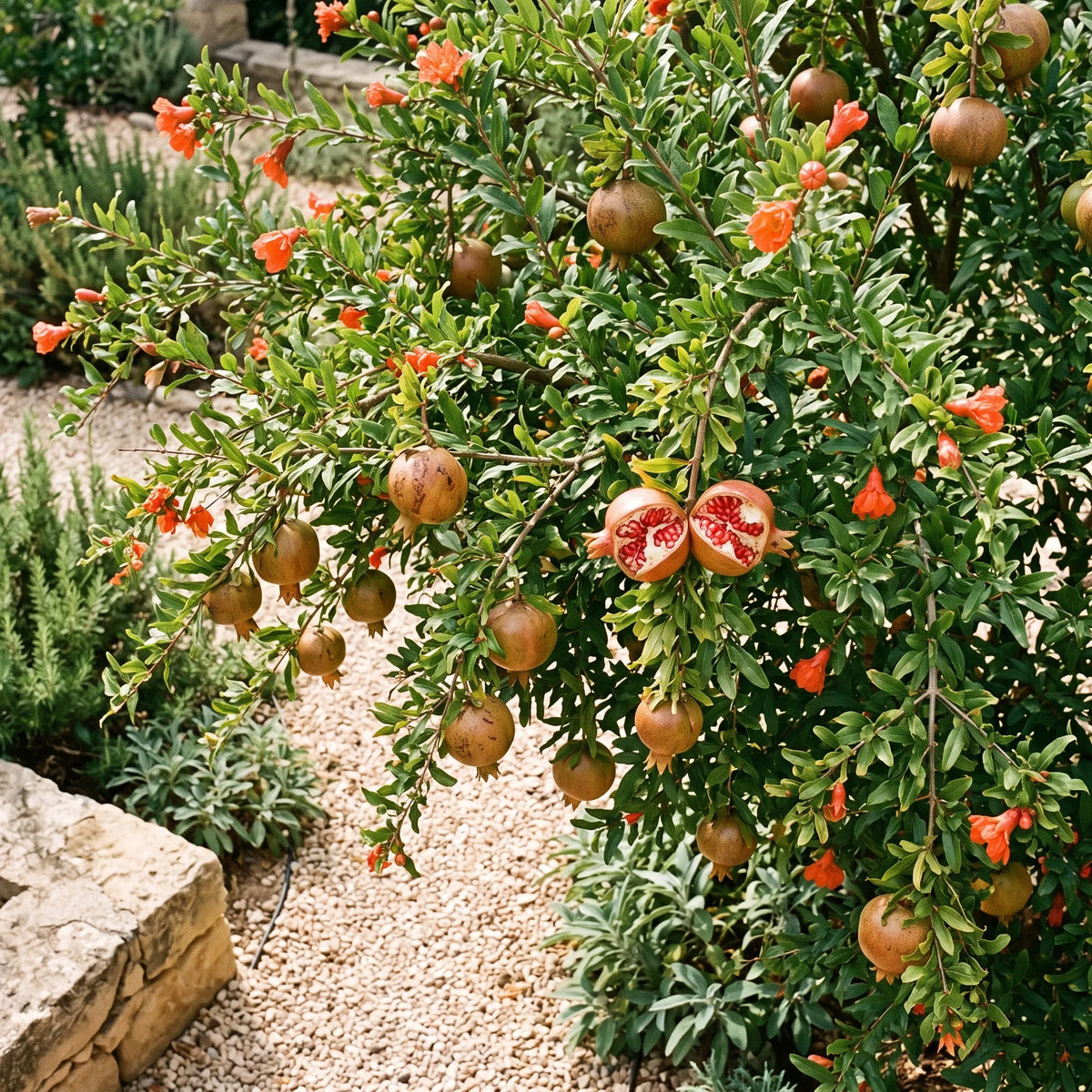
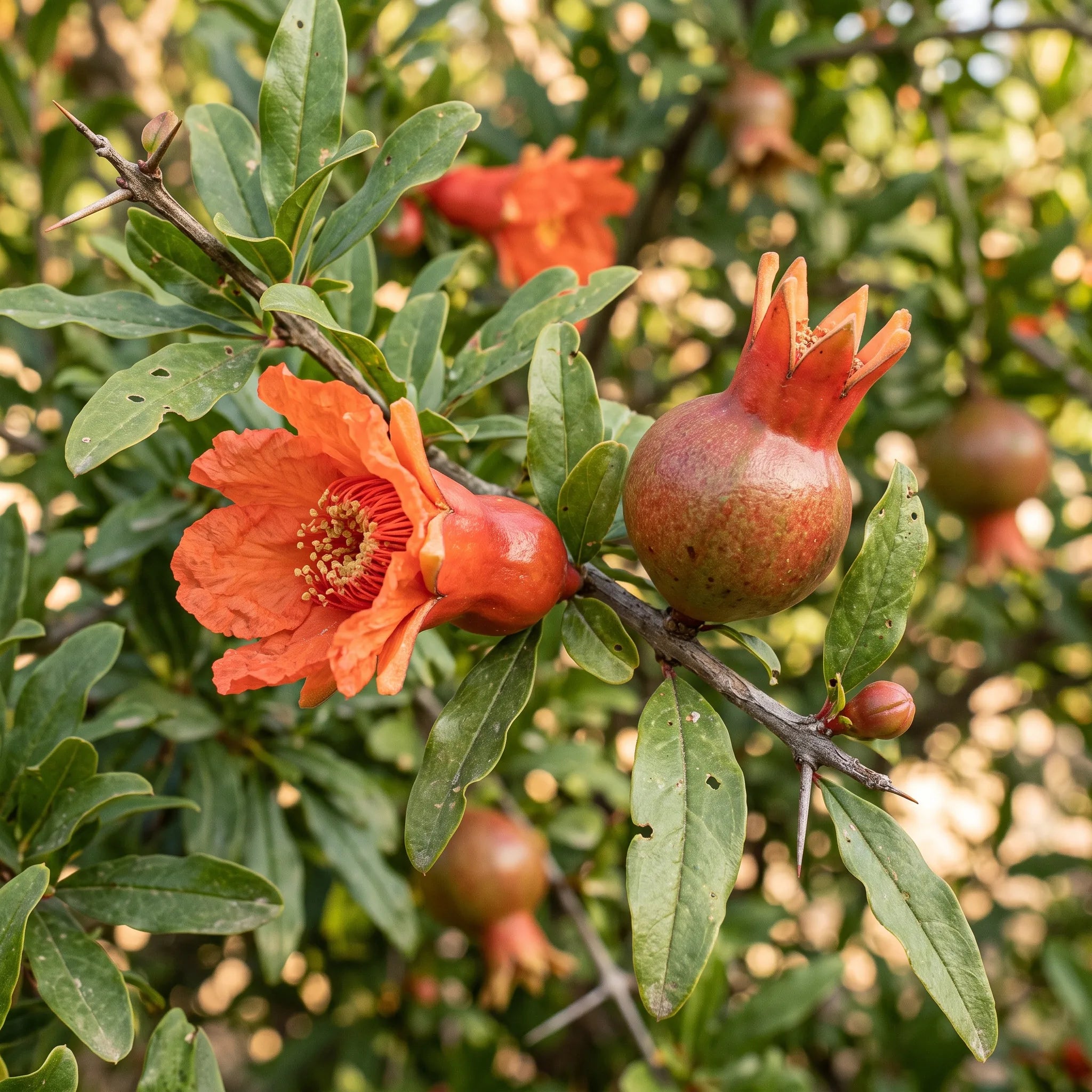
Brilliant flowering: bright orange trumpet-shaped flowers from June to September, spectacular even without fruit production.
-
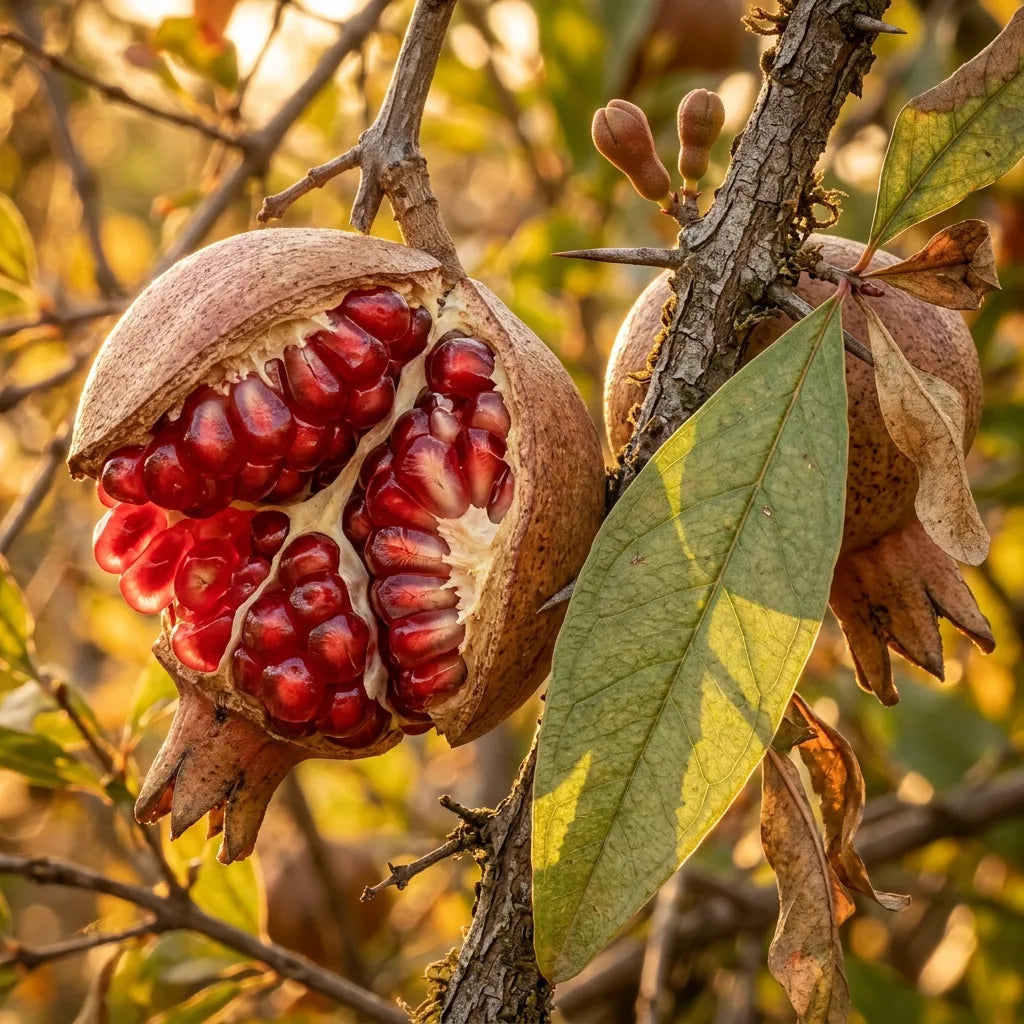
Decorative fruit: orange-red pomegranates in autumn, packed with juicy seeds.
-
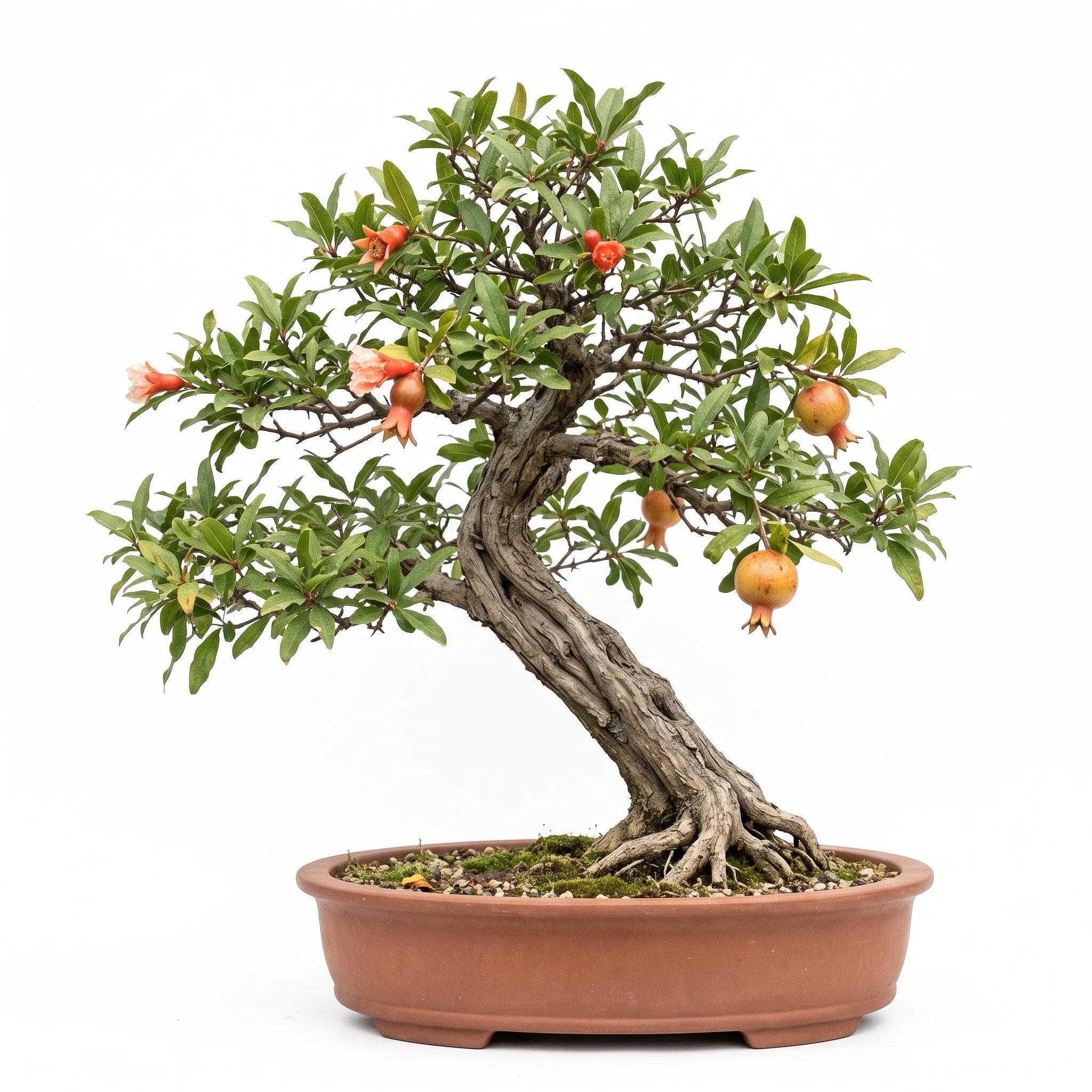
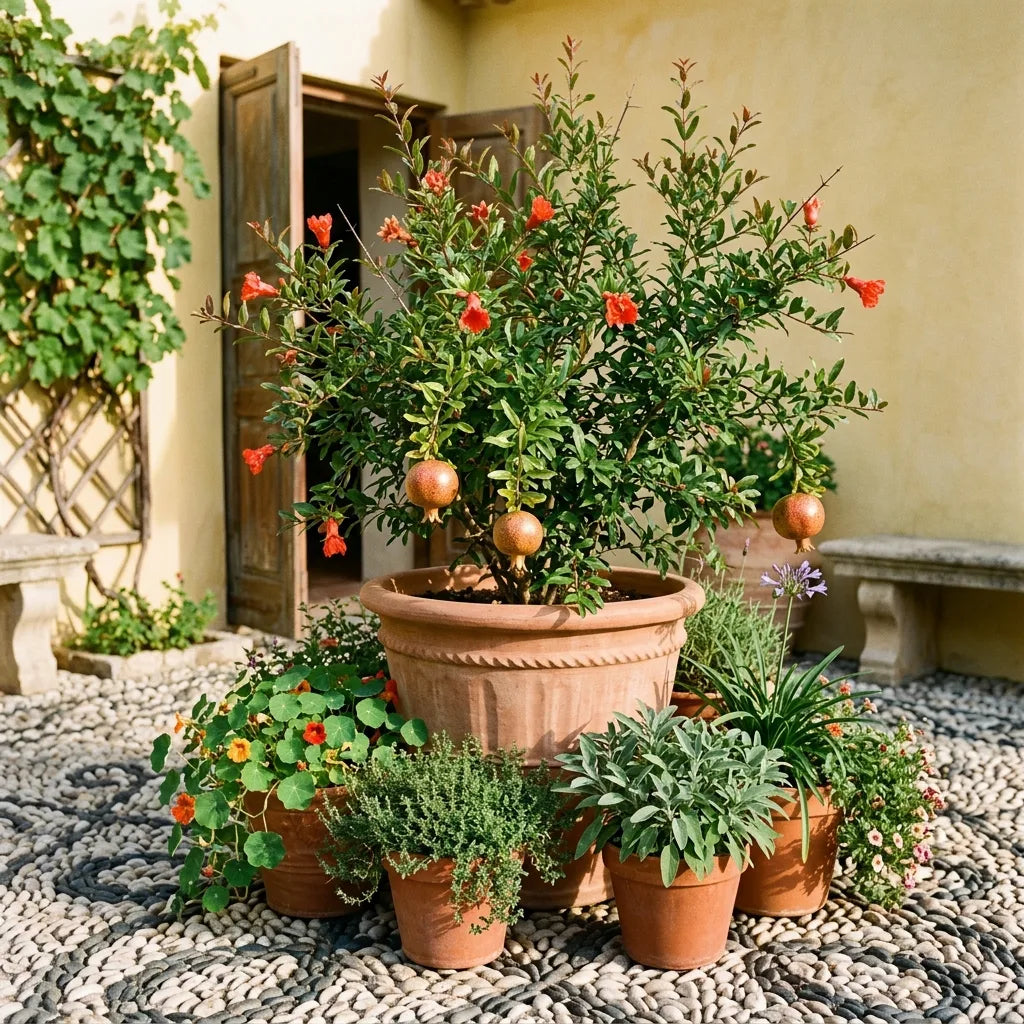
Adaptable shrub: 2 to 5 metres tall, it can be grown as a specimen, in an informal hedge, trained against a support, or in a large pot.
-
Glossy foliage: shiny green in summer, turning golden yellow in autumn.
Good to know:
- It needs a long, hot and dry summer to ripen its fruit. In cooler climates, it will flower magnificently but produce little or no fruit—it is already a superb ornamental shrub. Plant it against a south-facing wall, sheltered from northerly winds, to maximise your chances.
- Flower initiation requires a short period of winter cold, so it is not suited to climates without a cool season.
Sowing advice:
-
Position: sunny, warm and sheltered from cold winds.
-
Soil: ordinary soil, even poor or stony, above all well-drained. It tolerates chalky soil and drought once established, but dislikes stagnant winter moisture. Avoid excessive fertilisation: too much nitrogen produces foliage at the expense of flowers.
-
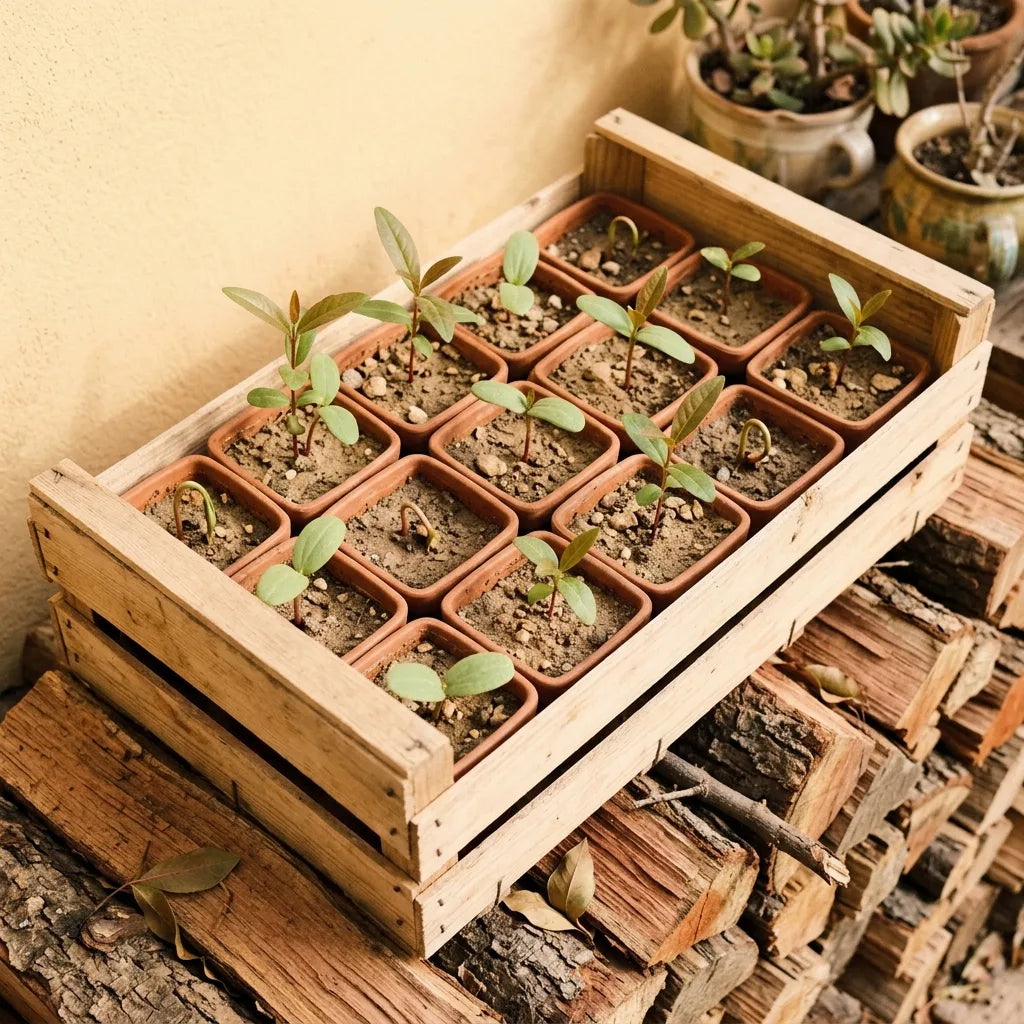
Method: these seeds do not require long stratification—this is a Mediterranean species. Carefully remove all pulp, soak them for 24 hours in lukewarm water, then sow 1 cm deep at 20–25 °C. A short cold period of 2 to 4 weeks improves the uniformity of emergence but is not essential. See how to sow your seeds.
Planting advice:
- Transplant into the ground in mild regions, or into a large pot elsewhere so it can be sheltered over winter. Hardy to approximately -12 °C once well established.
- A seed-grown plant produces variable fruit, sometimes different from the parent—this is the whole adventure of propagation from seed, whereas nurseries take cuttings to reproduce a variety identically.
Care advice:
- Water regularly during the first few years and while fruiting, then very sparingly. Water stress while the fruit is forming causes it to split.
- Prune lightly at the end of winter to open up the centre and remove suckers, which it readily produces.
Harvesting advice:
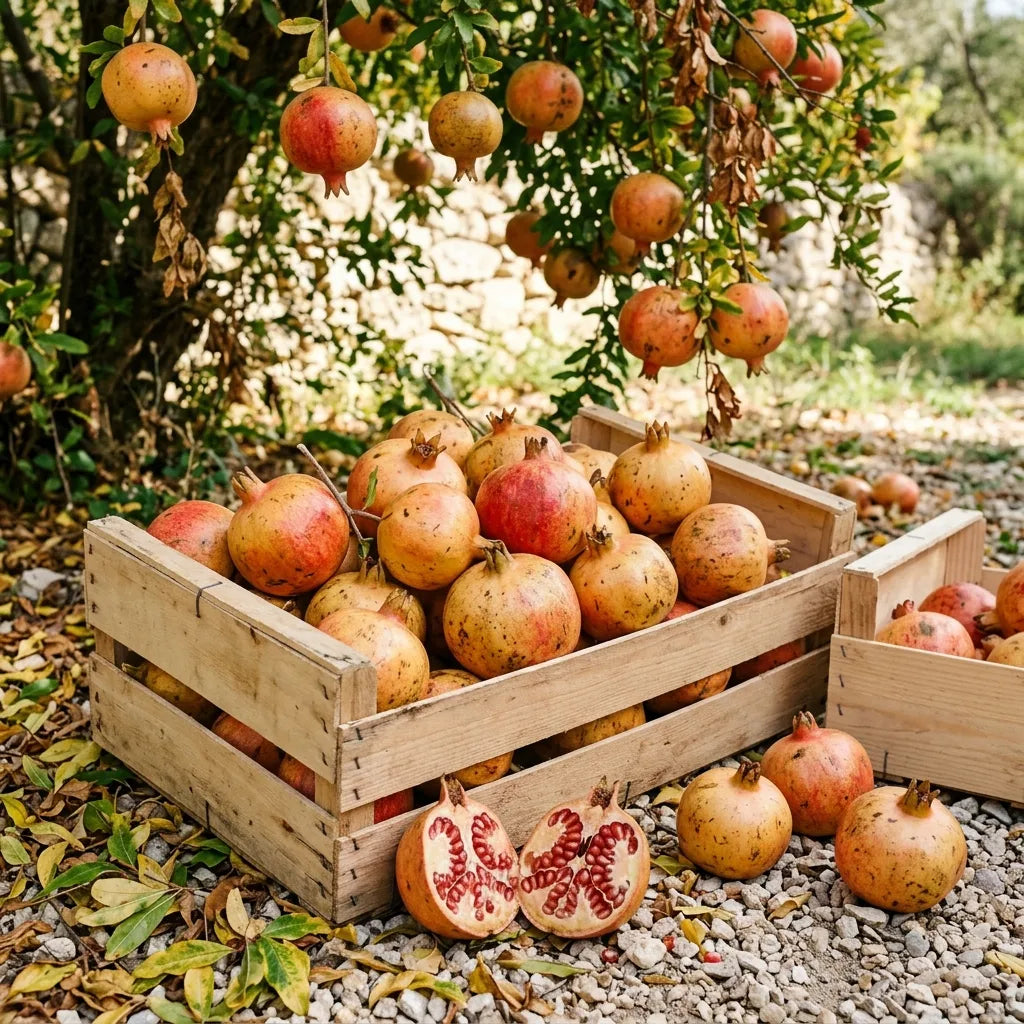
- Harvest pomegranates when their skin is well coloured and slightly angular, before the first autumn rains cause them to split. They keep for several weeks in a cool place.
Beneficial combinations:
Benefits for biodiversity:
- Its large, nectar-rich orange flowers are heavily visited by bees and bumblebees over a long summer period.
- Its split or fallen fruit feeds birds and insects in autumn.
Uses:
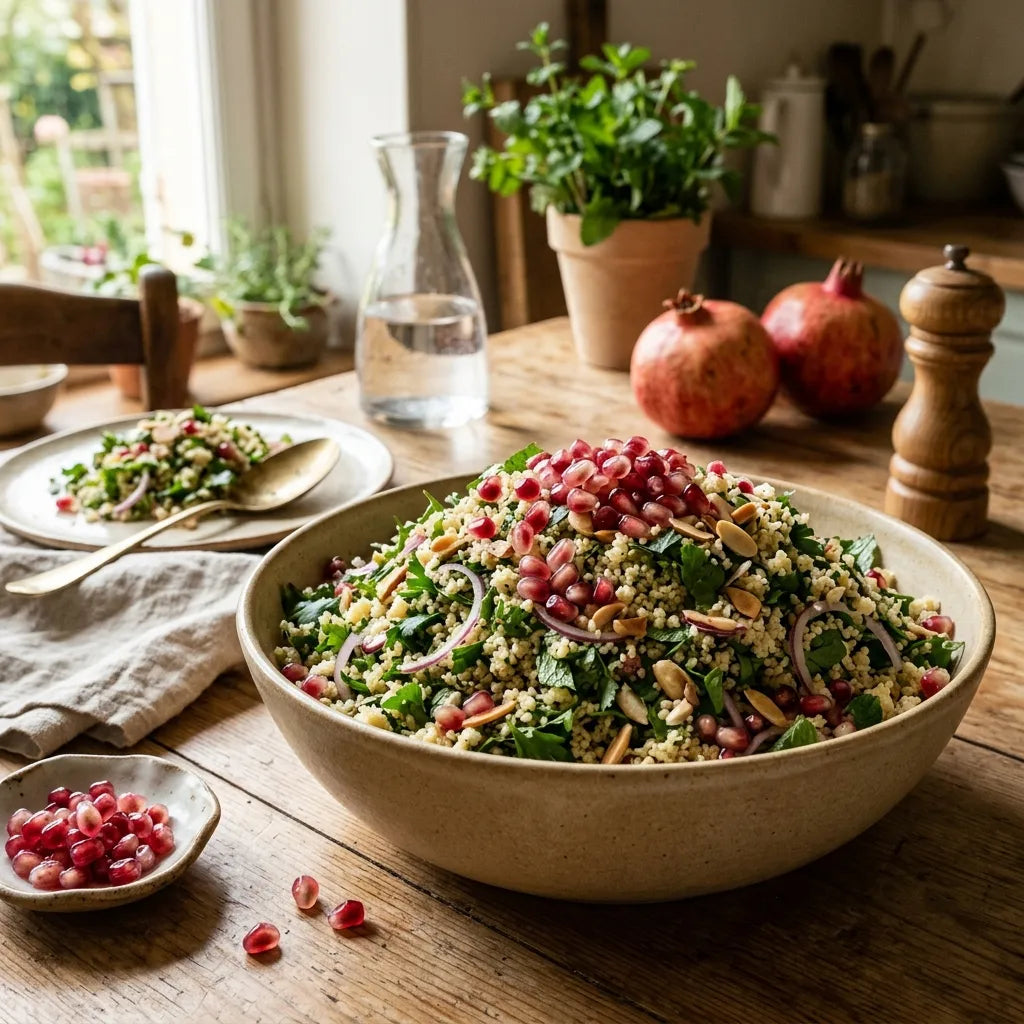
- Fresh seeds in salads, juices, homemade grenadine syrup, or sprinkled over savoury dishes in the Middle Eastern style. A superb ornamental plant thanks to its flowering.
Symbolism:
A symbol of fertility and abundance in almost all Mediterranean cultures, the pomegranate appears in the myth of Persephone, in the Bible and in Persian art. Its countless seeds have made it an emblem of prosperity.
Harvesting your own seeds:
Take seeds from a fully ripe fruit, remove all the juicy pulp by rubbing them in water, then dry them for a few days. Sow them promptly, as their germination capacity declines over time. See how to store your seeds.
Commitment to Quality: at SemiSauvage - Permaculture, we grow and select our seeds with respect for all living things as our guiding principle. Based near the Volcanoes of Auvergne, we choose open-pollinated, non-hybrid varieties, tested for their germination rate, carefully sorted and packaged, with no chemical treatment. Our belief: to give gardeners back the ability to resow, year after year, seeds that truly belong to them.
Brilliant orange flowers, and pomegranates when summer conditions are right.