Saponaria officinalis
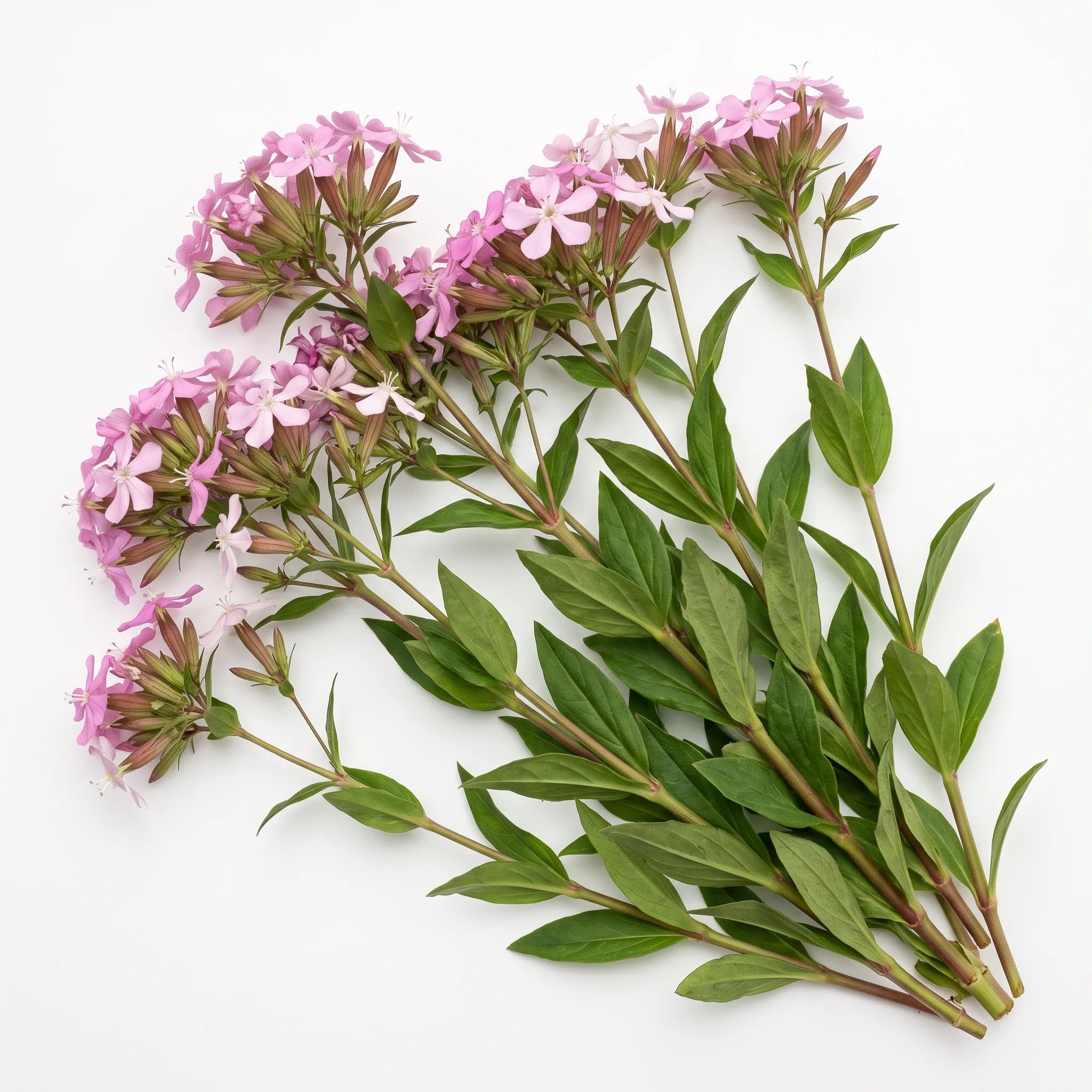
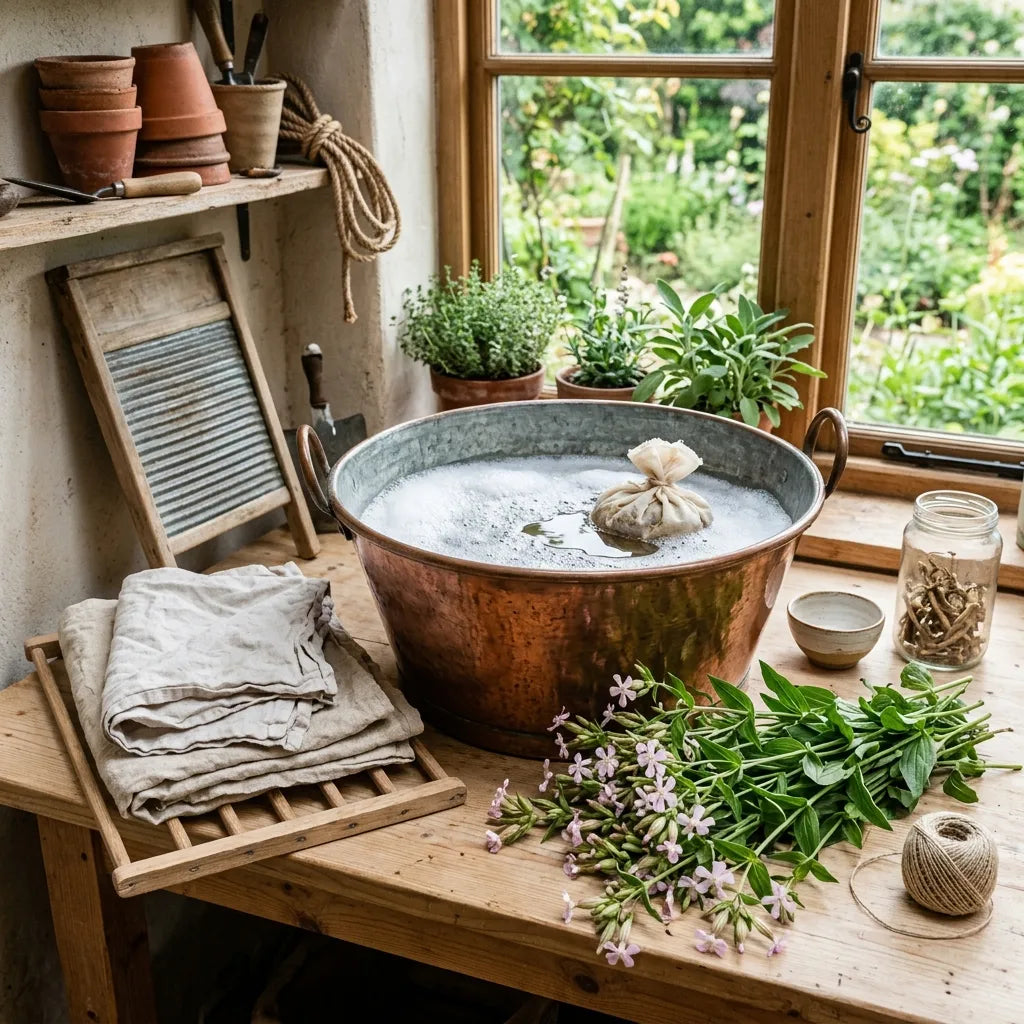
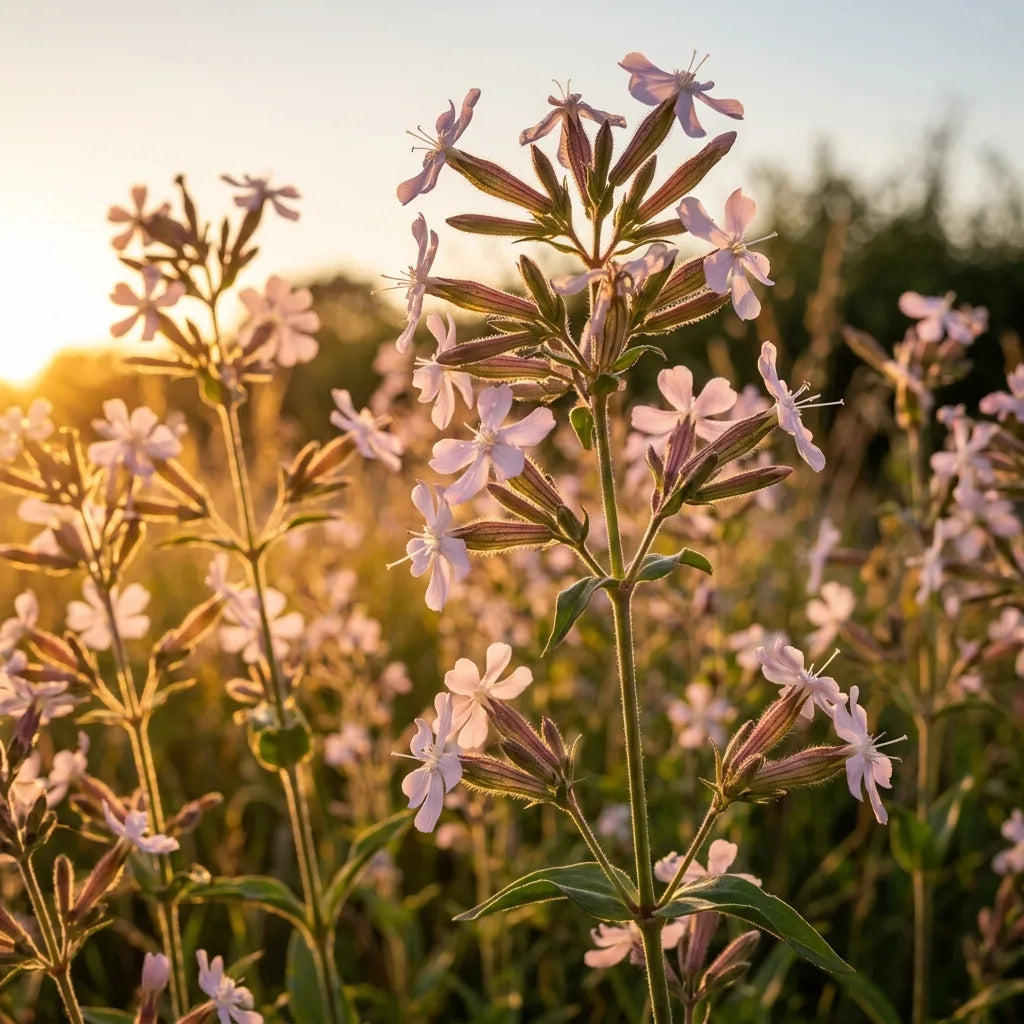
Soapwort, bouncing bet, fuller's herb, soapweed: this plant was genuinely used as soap for centuries. Its roots and leaves, rich in saponins, produce a gentle foam when they come into contact with water, which washed delicate fabrics — textile conservators still use it today to clean tapestries and fragile fabrics.
Characteristics:
-
Fragrant flowering: pale pink flowers grouped in bouquets, from June to September, whose fragrance intensifies at dusk.
-
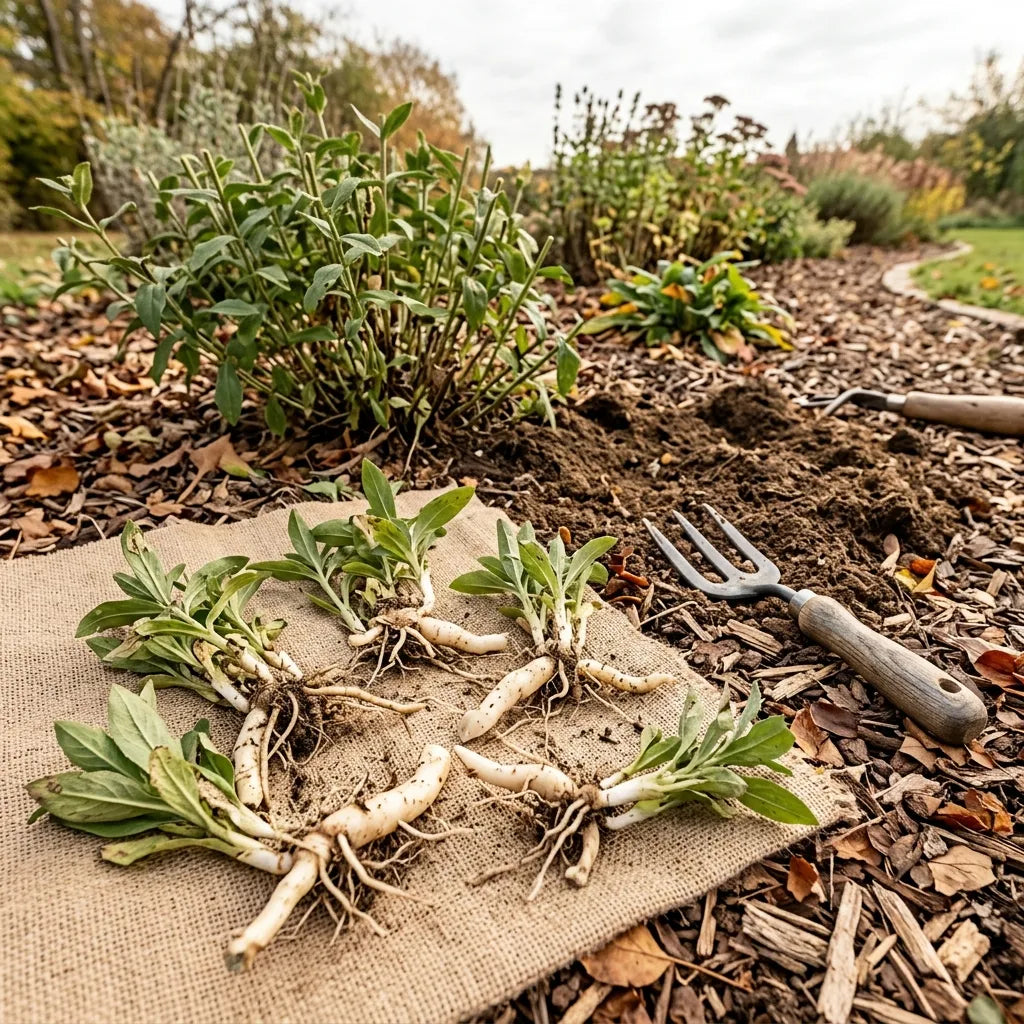
Spreading perennial: it spreads through underground rhizomes and forms long-lasting colonies.
-
Hardy: very resilient, it grows spontaneously on embankments and along paths.
Precautions:
- The saponins it contains make it unfit for consumption: do not use it in cooking or as an infusion. Its uses are domestic (laundry) and ornamental.
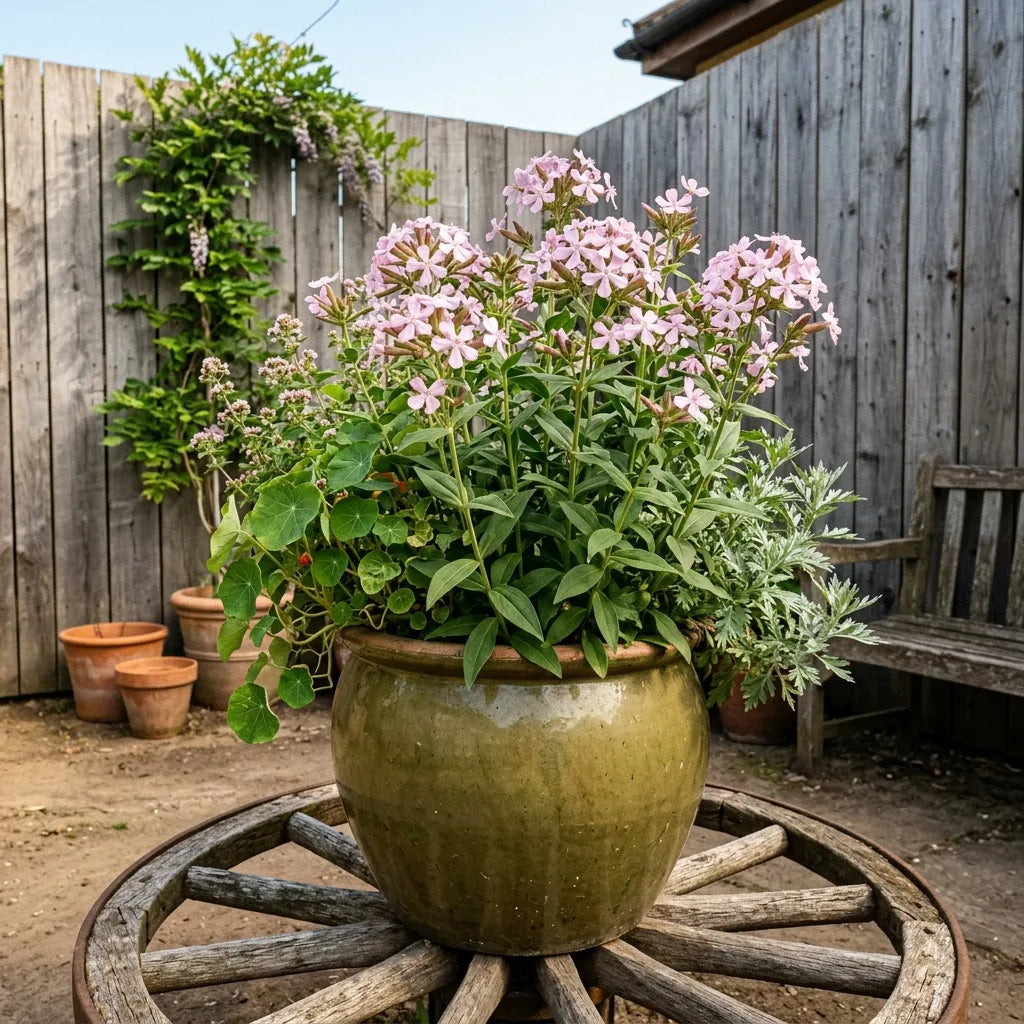
- Its spreading rhizomes can make it invasive: restrict it to a defined area, a contained border, or a large pot if you are concerned about its spread.
Sowing advice:
-
Exposure: full sun to partial shade; it is not demanding.
-
Soil: ordinary soil, even poor, stony, or sandy, provided it is well drained — its natural habitat, embankments and roadsides, says a great deal about its frugality. No fertilization is needed, as it would only accentuate its spreading habit.
-
Method: sow in spring or autumn, directly in the ground or in pots, lightly covering the seeds. Neither soaking nor stratification is essential, although a period of cold improves the uniformity of germination. See how to sow your seeds.
Care advice:
- Almost none. Cut back the stems at the end of winter, and limit the spread of the rhizomes with an underground barrier if necessary.
Harvesting advice:
- For soap-making use, harvest the roots in the autumn of the second year, when they are well developed and richest in saponins. The leaves are picked in summer.
Beneficial combinations:
Benefits for biodiversity:
- Its nocturnal fragrance and long-tubed flowers specifically attract moths and hawk moths, wildlife that is often overlooked in the garden.
- Long-tongued bees and bumblebees visit it during the day, over a long summer period.
- Its dense root system effectively stabilizes embankments and eroded soils.
Uses:
- Soap plant: a decoction of the roots or leaves produces a natural foam, still used to wash wool, silk, and antique textiles.
- Ornamental in country-style beds, borders, or on embankments. Traditional medicinal plant. See our medicinal plants to sow.
Symbolism:
Soapwort is associated with purity, simplicity, and domestic virtues because of its ancestral use for natural laundry. It was once planted near washhouses and farmhouses.
Harvesting your own seeds:
Leave a few capsules to turn brown and dry completely on the plant until they open at the top, then turn them upside down over a container. Soapwort also spreads very effectively on its own through its rhizomes. See how to store your seeds.
Commitment to Quality: at SemiSauvage - Permaculture, we grow and select our seeds with respect for all living things as our guiding principle. Based near the Volcanoes of Auvergne, we choose reproducible, non-hybrid varieties, test them for germination rates, and carefully sort and package them without any chemical treatment. Our conviction: to give gardeners back the ability to resow, year after year, seeds that truly belong to them.
Grow the true soap plant of our countryside with these soapwort seeds.