Origanum vulgare
Oregano, wild marjoram, red tea, pennyroyal: its name comes from the Greek oros ganos, “the joy of the mountain” — it indeed carpets the dry, sunny hillsides around the Mediterranean. Unlike its cousin marjoram, which is milder and more sensitive to cold, oregano is a hardy perennial with a bold fragrance.
Characteristics:
-
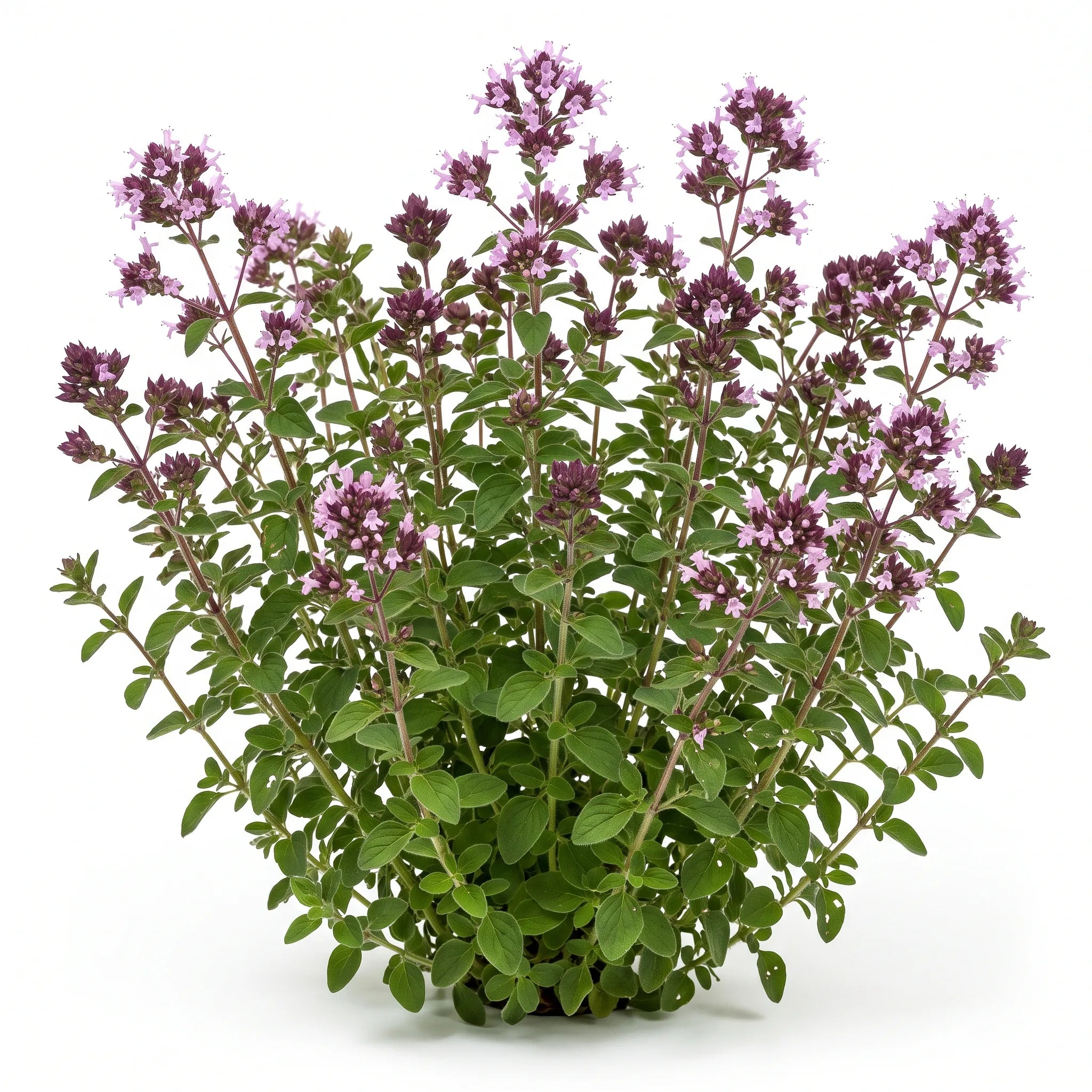
Hardy perennial: upright stems, often reddish, with dark green foliage, sometimes yellow or variegated.
-
Bee-friendly flowering: small white or pink flowers grouped in short spikes at the tips of the branches.
-
Concentrated fragrance: the aromatic herb of Italian cuisine, even better dried than fresh.
-
Very easy: once established, it returns every year without any care.
Sowing advice:
-
Exposure: full sun, absolutely. In the shade, it becomes leggy and loses its fragrance.
-
Soil: poor, dry, rather alkaline and above all well drained. This is the decisive point: like thyme, it is far more likely to die from winter moisture than from cold. Do not amend the soil — rich soil dilutes its aroma and makes it bland.
-
Method: sow in spring or autumn, in a nursery bed or a pot, on the surface or barely covered: its tiny seeds need light to germinate. See how to sow your seeds.
Planting advice:
- Transplant with 30 cm spacing, in a rock garden, dry border, on a low wall or in a large pot. It grows very well in containers, provided that water can drain away freely.
Care advice:
- No watering once established. No fertilizer.
- Cut back the clump after flowering to make it denser, and divide it every 3 to 4 years to rejuvenate it.
Harvesting advice:
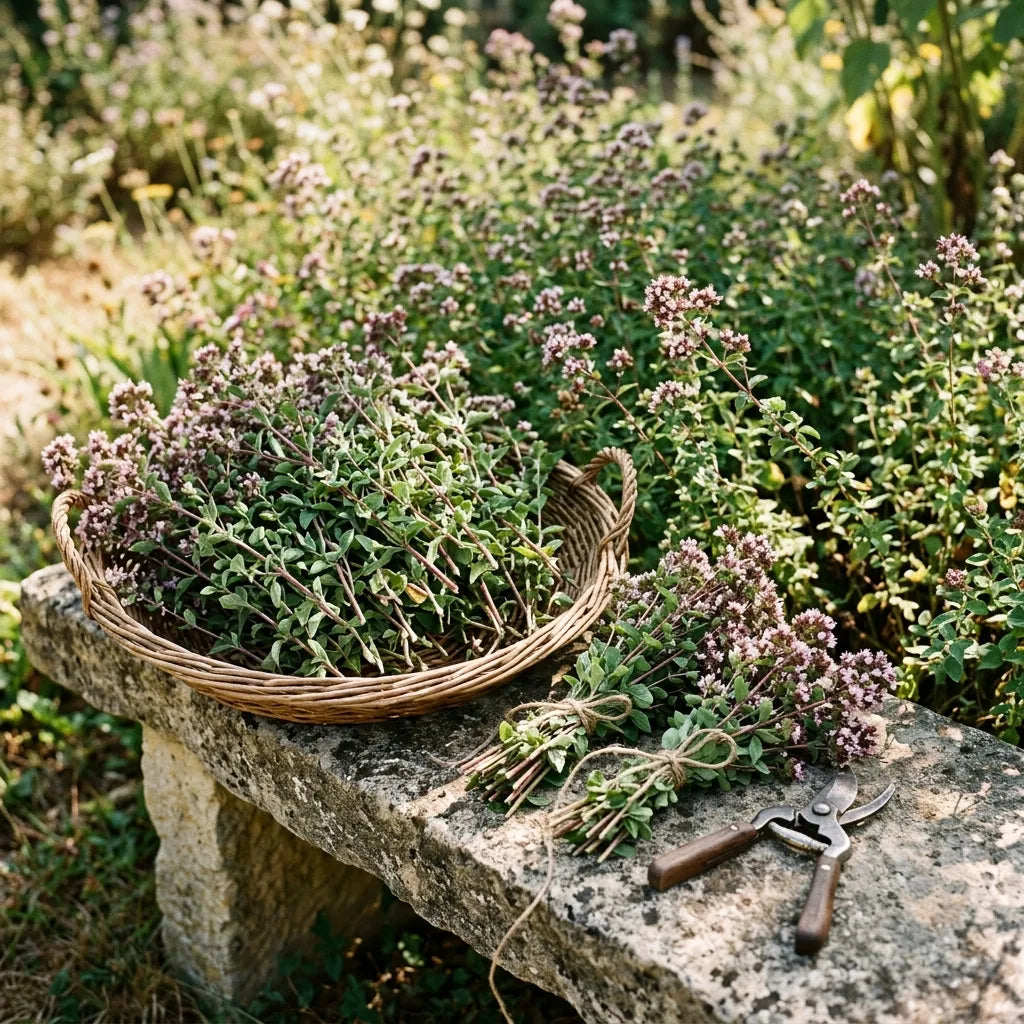
- Harvest the flowering tops right at the beginning of flowering, in dry weather and late morning: this is when the concentration of essential oils is at its highest.
- A rare characteristic among aromatic herbs: dried oregano is more fragrant than fresh oregano. Dry it in bunches, hanging upside down, in the shade with good ventilation.
Beneficial combinations:
Benefits for biodiversity:
- It is one of the most bee-friendly plants in the dry garden: its pink flower spikes literally buzz with bees, bumblebees and butterflies in midsummer. Let it flower rather than harvesting everything.
- Its summer flowering comes at a time when many spring flowers have already finished blooming.
Uses:
- The aromatic herb of pizza, tomato sauces, grilled dishes, soups and stews. It pairs particularly well with tomatoes, olive oil and cheese.
- A traditional medicinal plant, used in herbal medicine since antiquity. See our medicinal plants to sow.
Harvesting your own seeds:
Let a few spikes dry completely on the plant, then rub them over a container and winnow them: the seeds are extremely fine. Oregano also readily self-seeds. See how to store your seeds.
Commitment to Quality: at SemiSauvage - Permaculture, we grow and select our seeds with respect for all living things as our guiding principle. Based near the Volcanoes of Auvergne, we choose reproducible, non-hybrid varieties, tested for their germination rate, carefully sorted and packaged, with no chemical treatment. Our belief: to give gardeners back the ability to resow, year after year, seeds that truly belong to them.
The joy of the mountain, and the indispensable aroma of Italian cuisine.