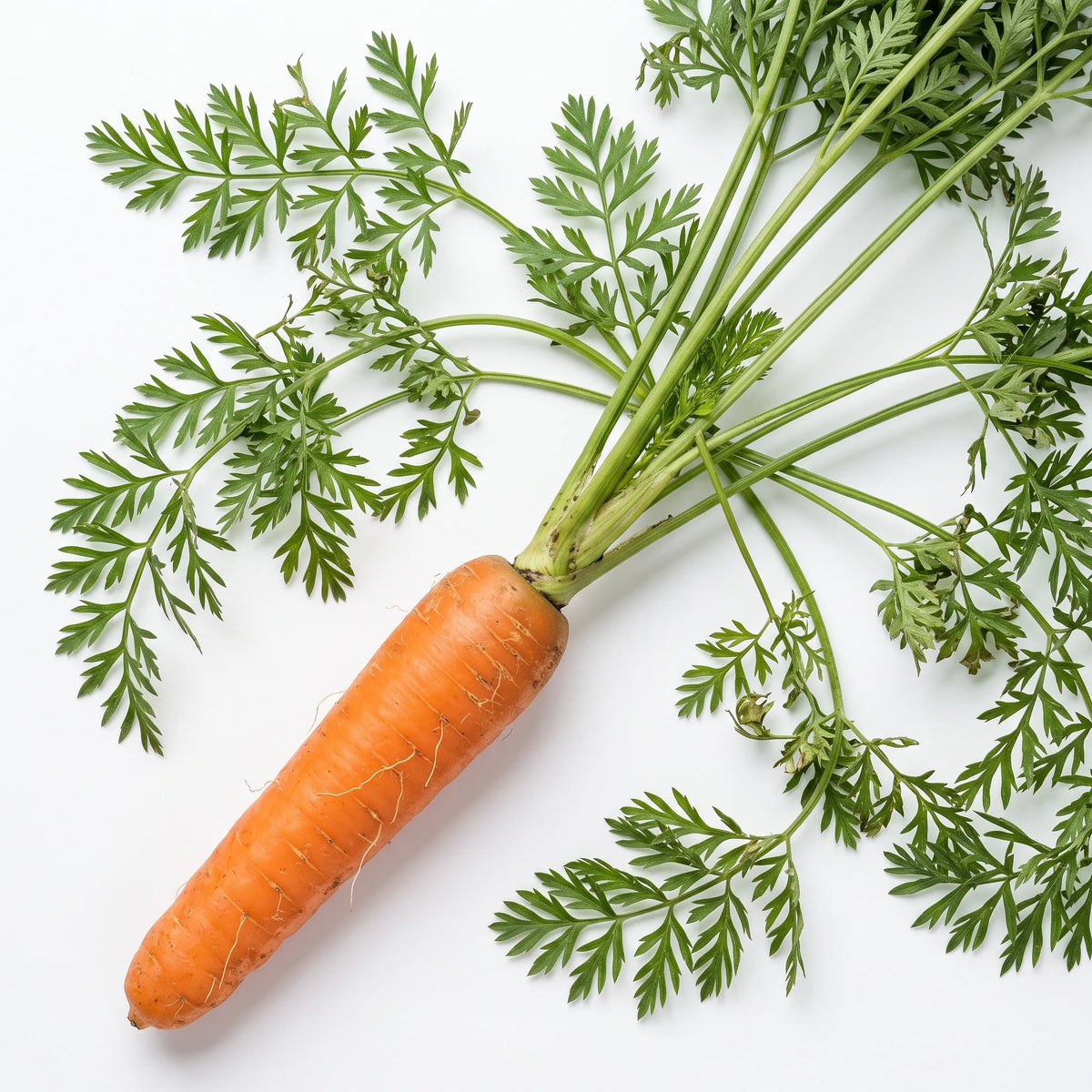
Daucus carota
Nantes Carrot, Nantes half-long carrot: created in the 19th century in the Loire Valley, it has become the benchmark for garden carrots — a cylindrical root with a rounded tip, no hard core, and sweet, melting flesh. An heirloom variety that has never been displaced by modern hybrids.
Characteristics:
-
Sweet, melting flesh: with no fibrous core, it is excellent raw or cooked.
-
Uniform root: cylindrical, half-long, and deep orange.
-
Reproducible heirloom variety: you can save and resow your own seeds.
-
Two harvest seasons: staggered sowings allow harvesting from summer through winter.
Sowing advice:
-
Exposure: sunny.
-
Soil: loose, deep, cool, and rich in humus, without stones — this is the decisive factor. Stony or compacted soil produces forked and misshapen roots. Avoid fresh manure, which causes the same problem: carrots prefer to follow a crop that was manured the previous year.
-
Method: sow directly in place, as carrots do not transplant well. From March to June for a summer harvest, and from May to July for an autumn and winter harvest. Sow thinly in 1 cm-deep furrows, firm the soil, and keep it moist: germination is slow, taking 15 to 20 days. See how to sow your seeds.
Care advice:
- Thin to 5 cm apart when the plants have 3 leaves. Tip: thin in the evening and remove the discarded plants immediately, as their smell attracts carrot flies.
- Water regularly and evenly: alternating drought and watering causes the roots to split.
Harvest advice:
- Harvest as needed. Autumn carrots can be stored throughout the winter in a box of sand, in a cool room.
Beneficial companion plants:
Benefits for biodiversity:
- If you let one plant go to seed in its second year, its large white umbels provide a major food source for hoverflies, beneficial insects whose larvae devour aphids.
- Like all umbellifers, it is a host plant for swallowtail caterpillars.
Uses:
- Raw in grated salads and crudités, or cooked as a side dish, in soups, purées, or cakes. Its tops, often discarded, are excellent in pesto or soup.
Saving your own seeds:
Carrots are biennial: leave a few roots in the ground over winter, and they will produce seeds in their second year. Harvest the umbels when they turn brown and close up into a bird's-nest shape. Be careful: they cross-pollinate with wild carrots, so keep your seed plants away from the edges of paths. See how to save your seeds.
Commitment to Quality: at SemiSauvage - Permaculture, we grow and select our seeds with respect for all living things as our guiding principle. Based near the Auvergne Volcanoes, we choose reproducible, non-hybrid varieties, test them for germination rates, and carefully sort and package them without any chemical treatment. Our conviction: to give gardeners back the ability to resow, year after year, seeds that truly belong to them.
A reliable vegetable garden classic, delicious and easy to grow.