Brassica oleracea convar. acephala var. sabellica
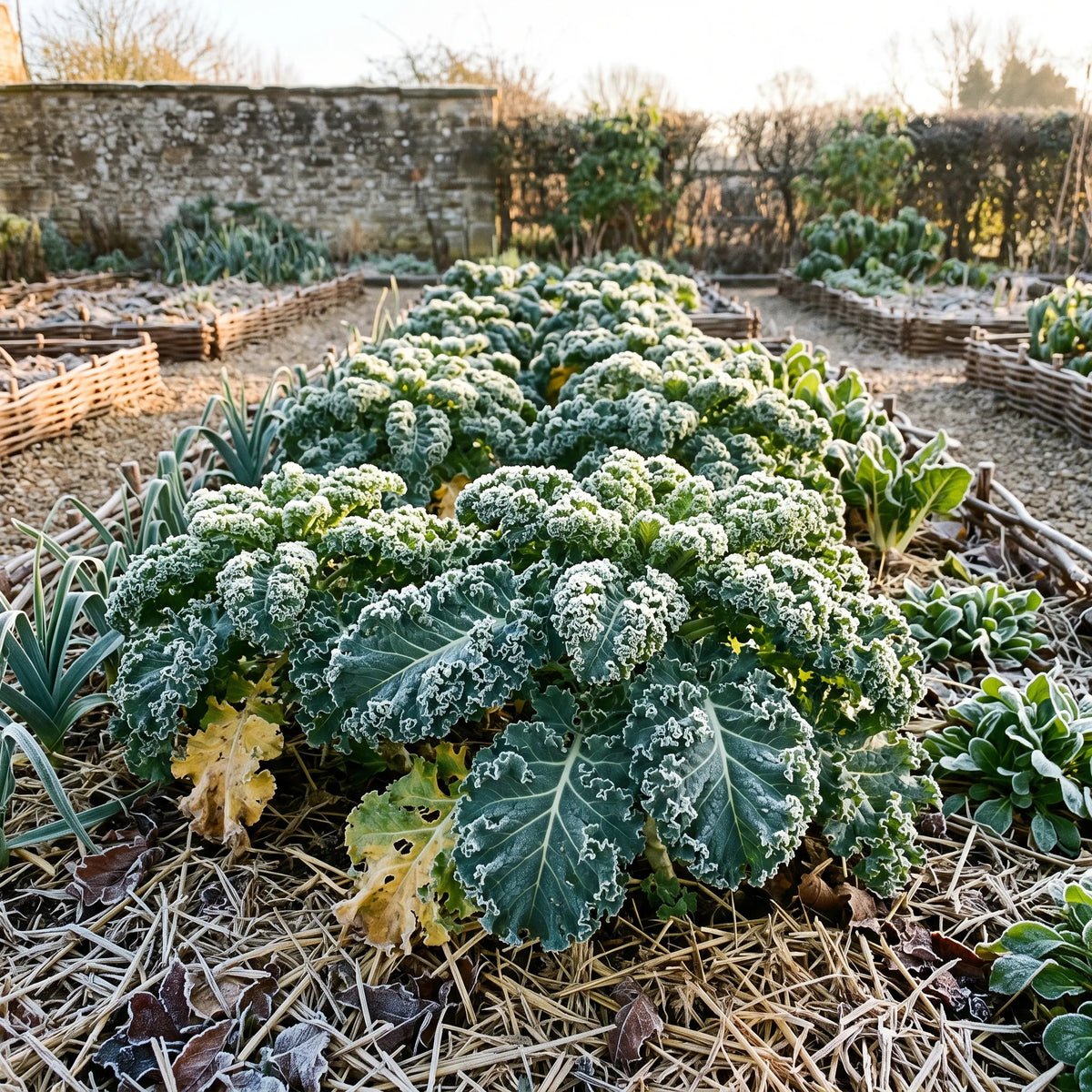
Semi-dwarf kale, curly kale, leaf kale, non-heading kale: this is the form closest to the original wild cabbage, from which all the others derive. Its most useful feature for gardeners: cold weather makes it better. After the first frosts, the plant converts its starch into sugars, and its leaves lose their bitterness.
Characteristics:
-
Better after frost: the cold noticeably softens its leaves—it is a winter vegetable in every sense.
-
Compact growth: the semi-dwarf form rarely exceeds 50 cm, making it ideal for containers or small vegetable gardens.
-
Leaf-by-leaf harvesting: pick as needed throughout autumn and winter.
-
Very hardy: it survives without protection where most vegetables have disappeared.
Sowing advice:
-
Exposure: full sun or partial shade.
-
Soil: rich, moist, deep, and well drained. Like all cabbages, it is a heavy feeder: adding well-rotted compost benefits it. Important: do not grow it where another brassica has grown during the previous three years, because of clubroot.
-
Method: no stratification necessary. Sow from March to June, directly in the ground or in pots for transplanting, at a depth of 1 cm. See how to sow your seeds.
Planting advice:
- Transplant with 40 cm spacing in all directions. Bury the plant up to the first leaves for better anchoring.
Care advice:
- Water regularly without excess. An insect-proof mesh placed at planting time prevents cabbage whites and flea beetles without any treatment.
- Never cut it back completely: this is a plant to harvest, not to cut down.
Harvesting advice:
- From two months after sowing, pick the outer leaves one by one, always leaving the central bud intact: the plant will continue producing for months.
- If possible, wait for the first frosts before the main harvests: the difference in taste is clear.
Beneficial associations:
Benefits for biodiversity:
- Its winter presence in the vegetable garden maintains plant cover where the soil would otherwise be bare, protecting the soil and providing shelter for microfauna.
- If allowed to flower in its second year, it produces clusters of highly nectar-rich yellow flowers, valuable in early spring.
Uses:
- Raw in salads (massage the leaves with a little oil to soften them), sautéed, in soup, or baked into chips. Always remove the central rib, which is too tough.
Symbolism:
Kale symbolizes resilience and generosity: it grows in difficult conditions and continues to provide nourishment when everything else in the vegetable garden has fallen silent.
Harvesting your own seeds:
As a biennial, it produces in the first year and goes to seed in the second. Leave one plant to flower, then harvest the brown, dry seed pods. Beware: Brassica oleracea varieties cross very easily with one another, so isolate your seed plant. See how to store your seeds.
Commitment to Quality: at SemiSauvage - Permaculture, we grow and select our seeds with respect for all living things as our guiding principle. Based near the Auvergne Volcanoes, we choose open-pollinated, non-hybrid varieties, tested for their germination rate, carefully sorted and packaged, with no chemical treatment. Our belief: to give gardeners back the ability to resow, year after year, seeds that truly belong to them.
The vegetable that nourishes you while the garden sleeps.