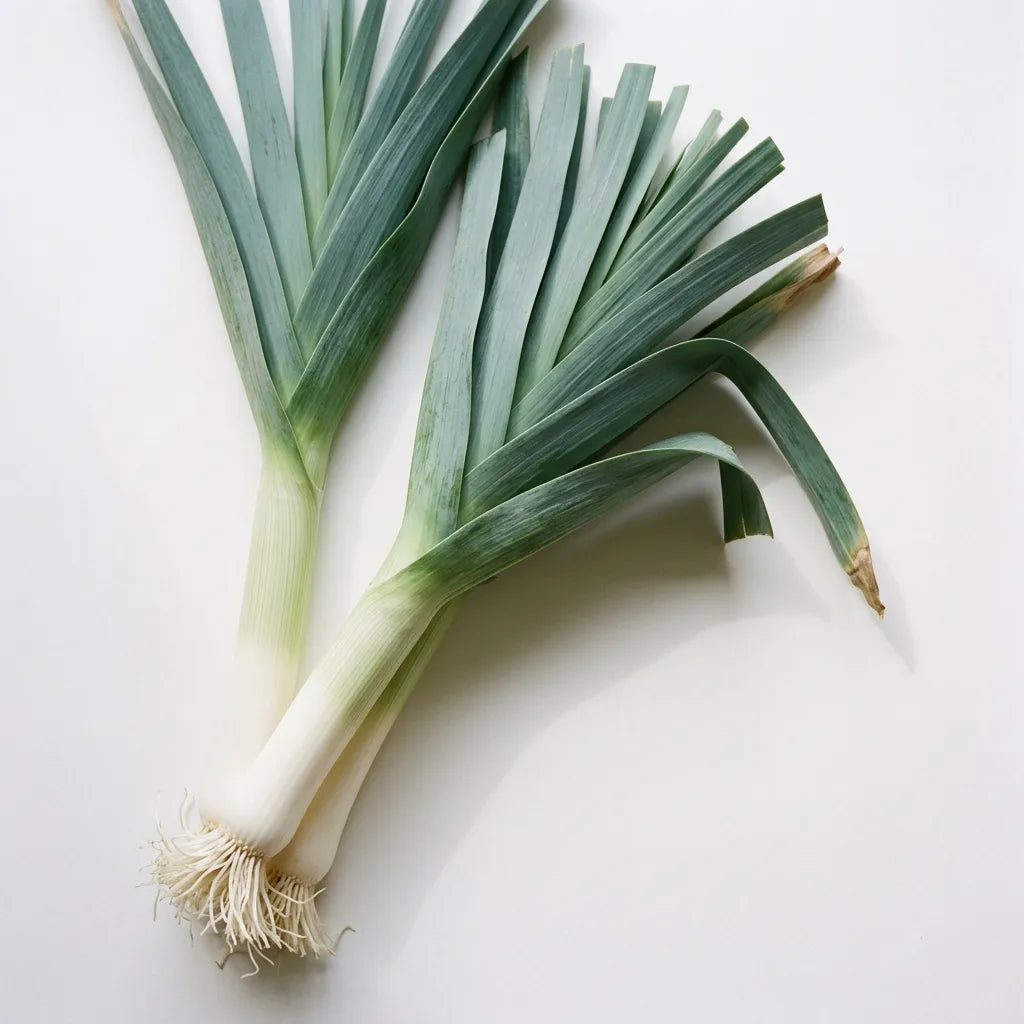
Allium porrum
Nicknamed the poor man's asparagus because of the way its tender white stalk is enjoyed, the leek has been a fixture in kitchen gardens since antiquity: the Egyptians and Romans were already cultivating it, and Emperor Nero was reportedly a great enthusiast. Even today, this iconic winter vegetable remains a mainstay of French kitchen gardens, as hardy as it is generous, and deserves a prime spot in your garden.
Characteristics:
-
Winter hardiness: leeks can remain in the ground throughout winter and be harvested as needed, making them an ideal choice for seasonal gardens.
-
Easy to grow: this vegetable requires little maintenance and is suitable for beginner and experienced gardeners alike.
-
A family-cooking classic: slowly simmered in soups and leek fondues, or simply steamed, it has been one of the most widely used vegetables in French cuisine for generations.
-
Growing conditions: it prefers a mild, temperate and humid climate, and tolerates extreme temperatures well, down to -20 °C. Choose a sunny position and loose, deep, cool, well-drained, humus-rich soil.
Sowing advice:
- Leeks are traditionally sown in pots or a nursery rather than directly in the ground: this provides better protection for young shoots against insects and slugs, and means that only well-developed plants are transplanted at the most favorable time.
- Sow from February to September, indoors or under cover in winter and early spring, or in an outdoor nursery as soon as the weather improves.
- Pre-soaking the seeds is not necessary for leeks: their fine seeds germinate well without soaking, unlike larger seeds or those with a hard coating.
- Prepare the soil by raking it and removing stones to ensure good drainage.
- Stagger sowings to extend the harvest period — see our month-by-month sowing calendar to help you plan.
Planting advice:
- Transplant young plants when they are about the size of a pencil, spacing each plant approximately 10 to 15 cm apart.
- Lightly trim the roots and foliage before transplanting to encourage establishment.
Harvesting advice:
- Harvest as needed, from autumn through the heart of winter, depending on the variety and sowing time.
- Leeks can be stored in the ground: there is no need to harvest them all at once; they will wait patiently in the garden.
Beneficial companion planting:
Uses:
- Both the white and green parts of the leek can be cooked: in a fondue, soup or tart, or simply sautéed or steamed as a side dish.
Symbolism:
The leek is one of the national emblems of Wales, traditionally worn on St David's Day in memory of a Welsh victory in which the soldiers are said to have distinguished one another by wearing a leek.
Harvesting your own seeds:
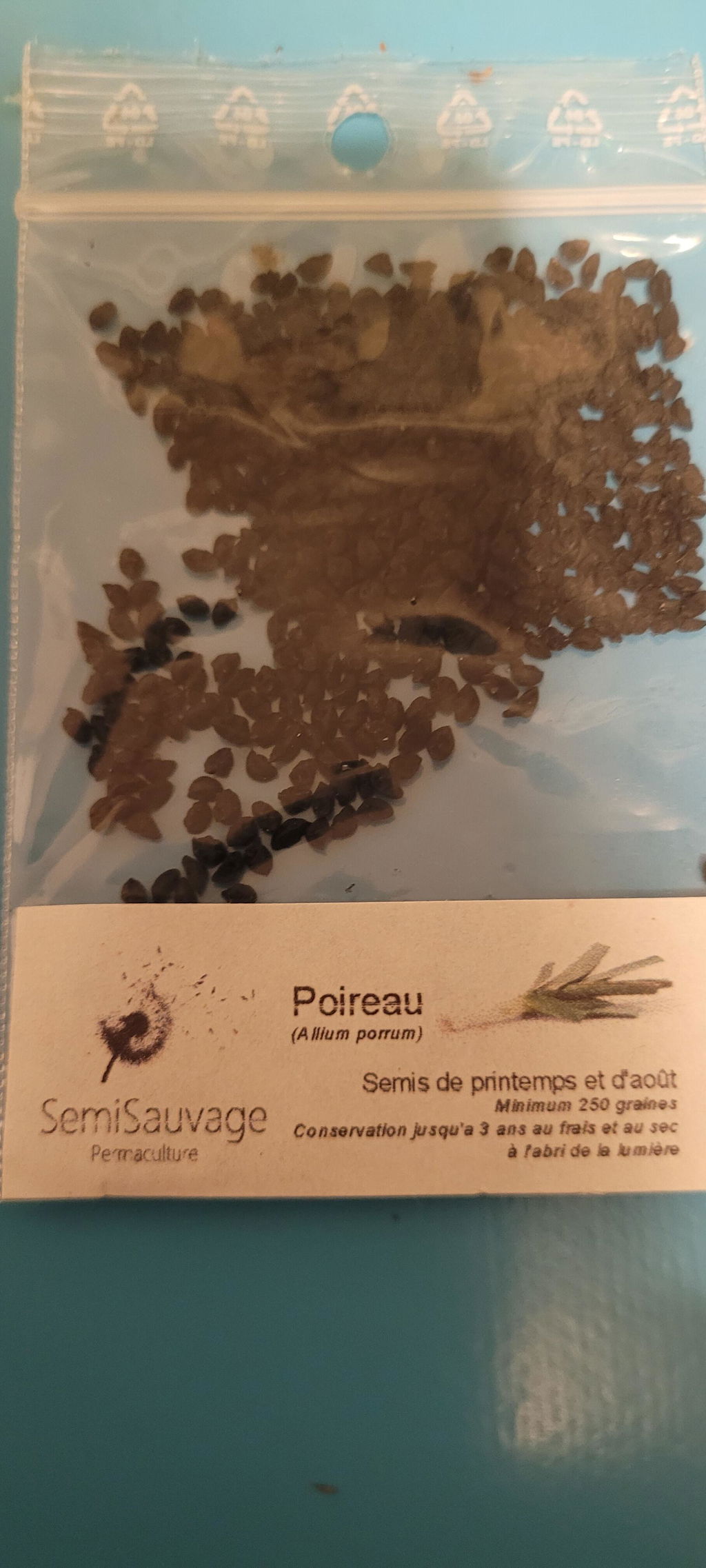
The leek is a biennial plant: seeds sown this year produce leeks ready to harvest from winter onward, but if you leave one or two plants undisturbed in the ground, they will grow for a second year, flower the following spring and produce their own seeds in autumn. Leave the umbels to dry on the plant, then collect the black seeds once they detach easily. This allows you to resow your own leeks year after year, becoming fully self-sufficient — the very essence of open-pollinated seeds.
Commitment to Quality: at SemiSauvage - Permaculture, we grow and select our seeds with respect for all living things as our guiding principle. Based near the Volcanoes of Auvergne, we choose open-pollinated, non-hybrid varieties, tested for their germination rate, carefully sorted and packaged, with no chemical treatment. Our belief: to give gardeners back the ability to resow, year after year, seeds that truly belong to them.
Add a touch of freshness to your kitchen garden with these high-quality leek seeds, for generous harvests throughout the winter.
Did you know?
When should leek seeds be sown? From February to September, ideally in pots or a nursery before transplanting, with staggered sowings to spread out the harvest.