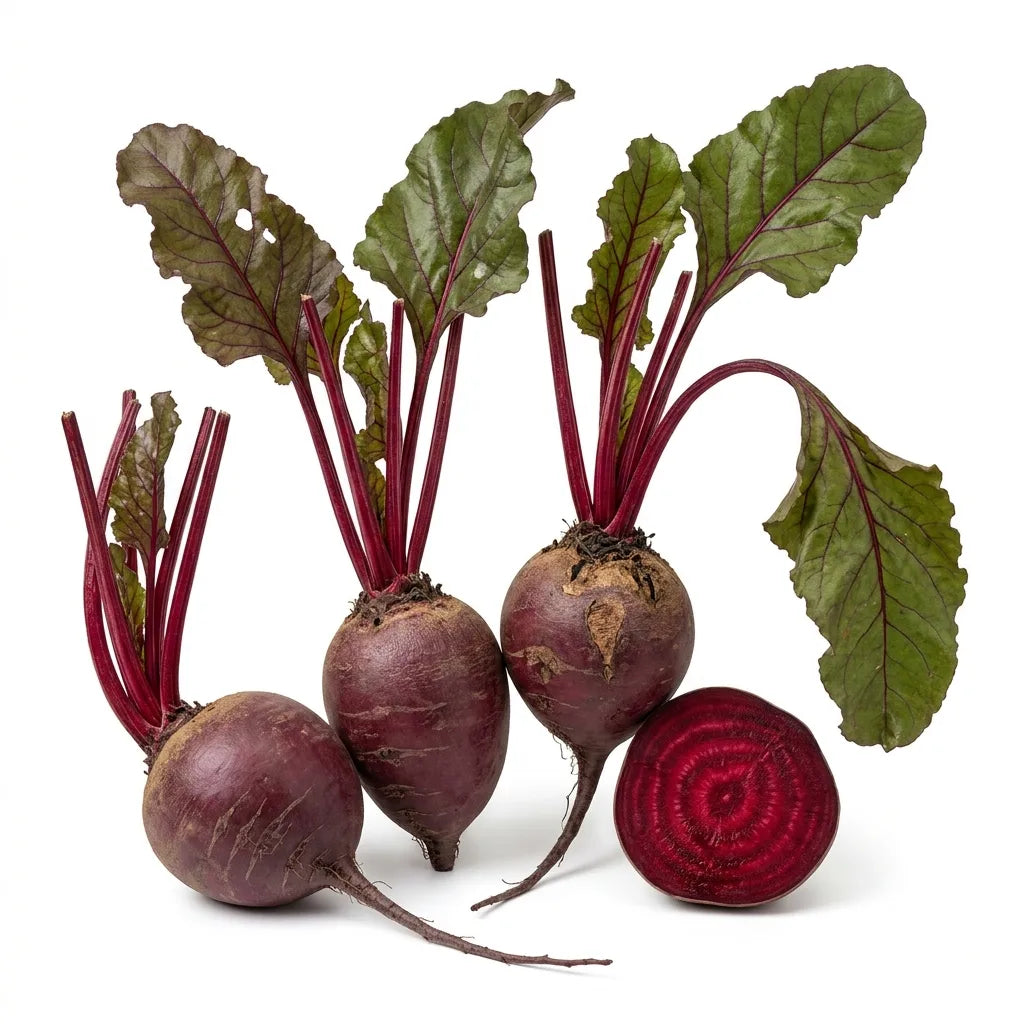
Beta vulgaris
Red beet, garden beet: its seed conceals a feature that few gardeners know about. What is taken for a seed is actually a glomerule, a small cluster containing 3 to 6 fused seeds. Each “seed” sown therefore produces several plants—which explains why thinning is essential here.
Characteristics:
-
Sweet flavor: one of the vegetables richest in natural sugars, delicious both raw and cooked.
-
Excellent storage: harvested in autumn, it keeps all winter in a sand silo.
-
Easy to grow: a generous yield for little effort, ideal for beginners.
Sowing advice:
-
Exposure: sunny.
-
Soil: cool, light, loose, clay-siliceous soil enriched with well-decomposed compost. Avoid stony soils, which deform the roots, and overly chalky soil. Never add fresh manure.
-
Method: loosen the soil and remove stones before sowing. Sow from April to mid-June, directly in the ground, 2 cm deep in rows spaced 30 cm apart. Soaking for 24 hours in lukewarm water significantly speeds up germination. See how to sow your seeds.
Care advice:
-
Thin обязательно to 10 cm as soon as the plants have 3 or 4 leaves: since each glomerule emerges as a cluster, without this operation you will only obtain small, cramped roots. The young plants removed can be transplanted or eaten as shoots.
- Water regularly, especially during dry periods: irregular watering causes the roots to split.
Harvesting advice:
- Harvest before severe frosts, when the roots reach the size of a tennis ball—if larger, they become fibrous. Do not cut the tops flush with the root: leave 3 cm of leaf stalk, otherwise the beet will “bleed” and lose its color during cooking.
Beneficial companion plants:
Benefits for biodiversity:
- Its broad foliage covers the soil and protects it from drying out, while providing shelter for ground beetles and beneficial insects.
- In its second year, when it produces seeds, it develops long flower stalks discreetly visited by small insects.
Uses:
- Grated raw, oven-baked in its skin, in soup, hummus, or lacto-fermented. Its leaves, often discarded, are delicious cooked like chard—it is the same botanical species.
Harvesting your own seeds:
Beetroot is biennial: keep a few roots protected from frost and replant them in spring; they will produce seeds. Harvest the dry flower stalks. Be careful: it crosses with chard and fodder beet, so isolate your seed plant. See how to save your seeds.
Commitment to Quality: at SemiSauvage - Permaculture, we grow and select our seeds with respect for living things as our guiding principle. Based near the Auvergne Volcanoes, we choose reproducible, non-hybrid varieties, test them for germination rates, and carefully sort and package them without any chemical treatment. Our conviction: to give gardeners back the ability to resow, year after year, seeds that truly belong to them.
Sweet, colorful, and generous: beetroot keeps all winter.