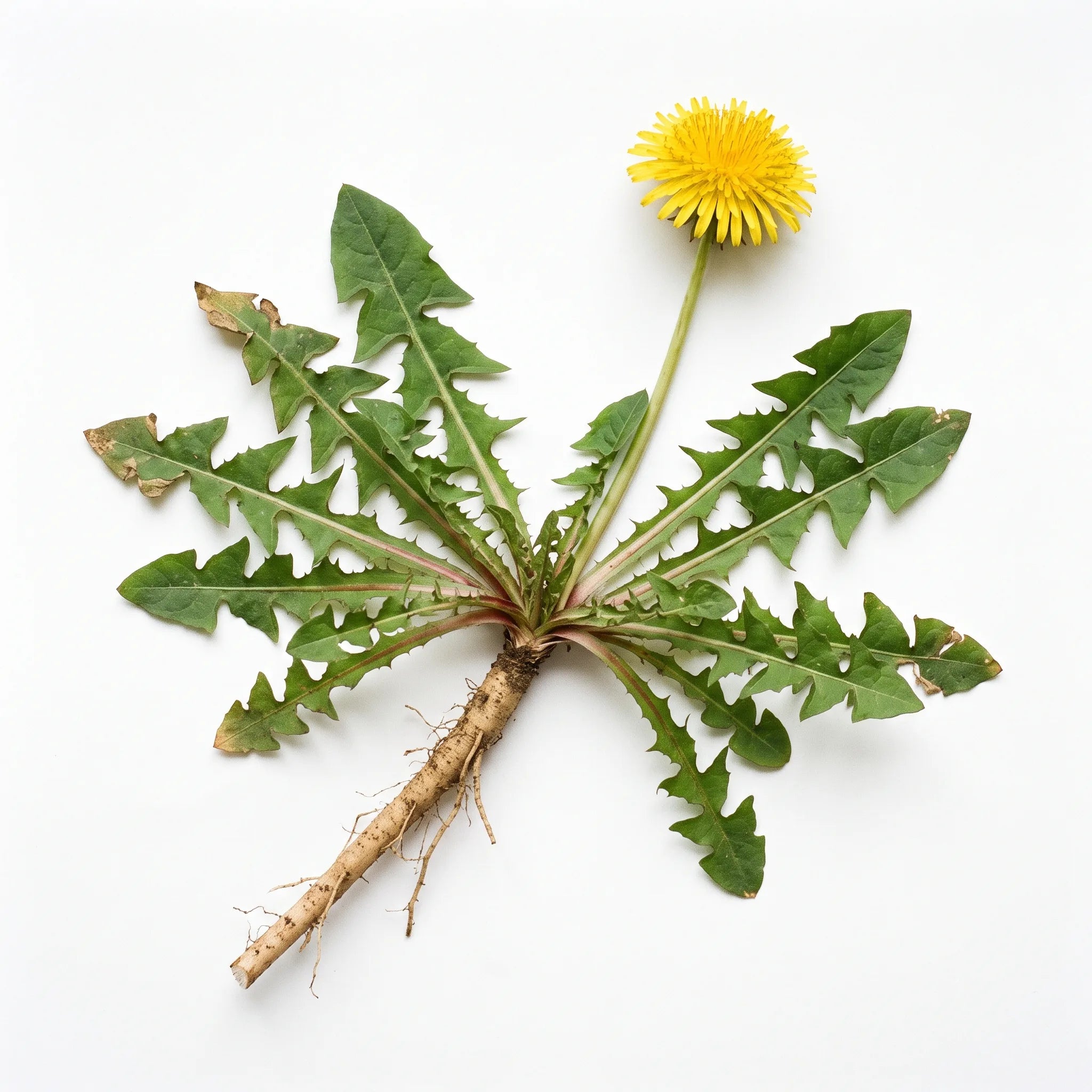
Taraxacum officinale
Dandelion, lion’s tooth, lion’s tooth plant, golden florin, dog lettuce, monk’s crown: the much-maligned lawn weed is one of the garden’s most useful plants. Its taproot descends as far as a metre and brings up minerals inaccessible to other plants — and its flowering, one of the very first of the year, literally saves pollinators as they emerge from winter.
Characteristics:
-
Indestructible perennial: once established, it returns every year without any care.
-
Triple use: leaves in salads, flowers in syrup, and roasted roots as a coffee substitute.
-
Very early flowering: from March onwards, when almost nothing else is in bloom.
-
Drought-resistant: its long taproot allows it to draw water from deep underground.
Precautions:
- It self-seeds very effectively, with its feathery achenes travelling far on the wind. Cut off the faded flowers before they form their “clocks” if you do not want it to spread.
- Its taproot makes it difficult to move once established: choose its location carefully.
Sowing advice:
-
Exposure: full sun to partial shade.
-
Soil: light, fresh, well-drained, even poor soil. It adapts to almost anything, but deep, loose soil produces finer roots if those are what you are aiming for.
-
Method: sow in spring or autumn, directly in place or in pots, barely covering the seeds. Stratification is not required, but a cold period of 2 to 3 weeks improves the germination rate. Emergence in 10 to 20 days depending on the temperature. See how to sow your seeds.
Care advice:
- Water moderately; it withstands drought well once established.
-
The market gardener’s trick: to obtain tender, much less bitter leaves, cover the clump with an opaque upturned pot for two to three weeks before harvesting. The leaves blanch and become considerably milder.
Harvesting advice:
- Pick the young leaves in spring, before flowering: this is when they are at their most tender. Afterwards, the bitterness increases noticeably.
- Harvest the flowers in full sun, when fully open. Dig up the roots in autumn of the second year.
Beneficial associations:
Benefits for biodiversity:
- Its early flowering makes it a vital resource for the first pollinators of spring — bees, bumblebees emerging from hibernation, and early butterflies — at a time when almost nothing else is available. This is the number one reason not to mow in March.
- Its deep root loosens the soil and brings minerals up from the lower layers for the benefit of neighbouring plants.
- Its seeds feed goldfinches and other seed-eating birds.
Uses:
- Young leaves in salads, traditionally with bacon and a poached egg. Flowers in syrup or jelly — the famous cramaillotte, or “dandelion honey”. Roasted roots as a coffee substitute. Flower buds pickled like capers.
- Traditional medicinal plant, listed in the French Pharmacopoeia. See our medicinal plants to sow.
Symbolism:
A symbol of freedom, perseverance and hope, the dandelion evokes the wishes we blow into the wind — a universal childhood gesture that is also, quite literally, its dispersal strategy.
Harvesting your own seeds:
Nothing could be easier: pick the “clocks”, those fluffy spheres, just before they blow away, and detach the achenes from their tufts. See how to store your seeds.
Commitment to Quality: at SemiSauvage - Permaculture, we grow and select our seeds with respect for all living things as our guiding principle. Based near the Auvergne Volcanoes, we choose open-pollinated, non-hybrid varieties, tested for their germination rate, carefully sorted and packaged, with no chemical treatment. Our belief: to give gardeners back the ability to resow, year after year, seeds that truly belong to them.
The much-maligned lawn weed, indispensable to March’s bees.