Matricaria chamomilla
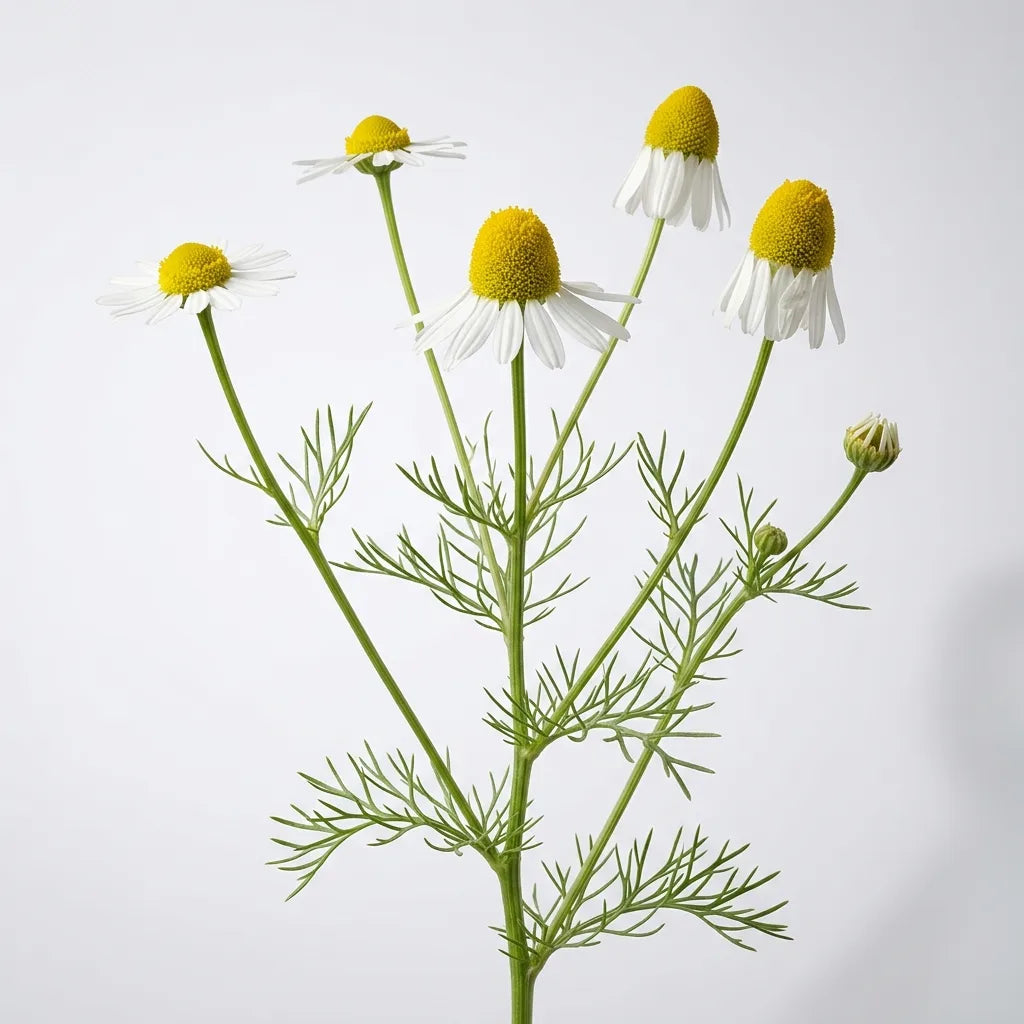
German chamomile, wild chamomile, and mayweed: this small daisy-like flower has been cultivated since Ancient Egypt, where it was dedicated to the sun god Ra because of its golden center. It can be distinguished from other chamomiles by its hollow, domed receptacle, which can easily be checked by cutting it in half.
Characteristics:
-
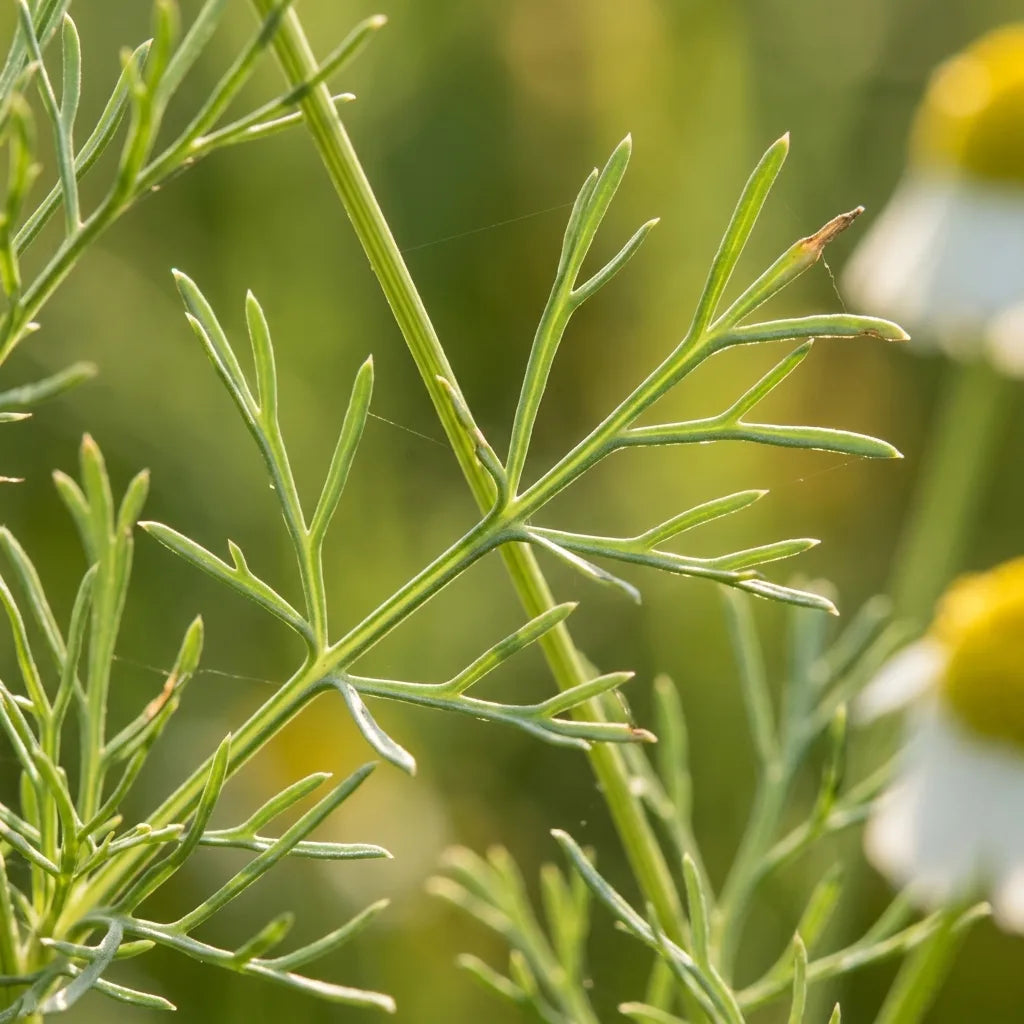
Abundant flowering: from May to October, with small white flower heads and domed yellow centers, above finely divided, airy foliage.
-
Distinctive fragrance: its crushed flowers give off a sweet, fruity scent, more mellow than that of Roman chamomile.
-
Very easy to grow: an undemanding annual that settles into almost any corner of the garden.
Sowing advice:
-
Exposure: sunny; it needs light to flower abundantly.
-
Soil: ordinary, even poor, light, and well-drained. It grows spontaneously in wastelands and along field edges, proof of its frugality: there is no need to fertilize, as soil that is too rich produces weak plants with few flowers.
-
Method: sow in place in autumn or spring (late April outdoors), on the surface without covering: its tiny seeds need light to germinate. Simply firm the soil. Neither waterlogged conditions nor stratification is needed. See how to sow your seeds.
Care advice:
- Almost none. Thin to 20 cm if the seedlings are dense, and water only in the event of marked drought.
Harvesting advice:
- Pick the flower heads when in full bloom, in the morning after the dew has evaporated, when the white petals are still horizontal. Dry them flat, in the shade, in a well-ventilated place.
Beneficial combinations:
Benefits for biodiversity:
- Its flat, open flower heads are highly accessible to small short-tongued pollinators: hoverflies, small solitary bees, and beneficial micro-hymenopterans can easily find nectar and pollen there.
- Long flowering period from May to October, valuable for extending resources throughout the season.
Uses:
- Traditionally used in infusions and cosmetics since Antiquity, it remains one of the most widely cultivated plants in the world for these purposes. See our medicinal plants to sow.
Harvesting your own seeds:
Leave a few faded flower heads to turn completely brown on the plant, then rub them between your fingers over a container: the seeds are extremely fine. Chamomile also readily self-seeds from one year to the next. See storing your seeds.
Commitment to Quality: at SemiSauvage - Permaculture, we grow and select our seeds with respect for living things as our guiding principle. Based near the Auvergne Volcanoes, we choose reproducible, non-hybrid varieties, tested for their germination rate, carefully sorted and packaged, with no chemical treatment. Our belief: to give gardeners back the ability to resow, year after year, seeds that truly belong to them.
Add these mayweed chamomile seeds to your garden for their delicate beauty and distinctive fragrance.