Solanum lycopersicum
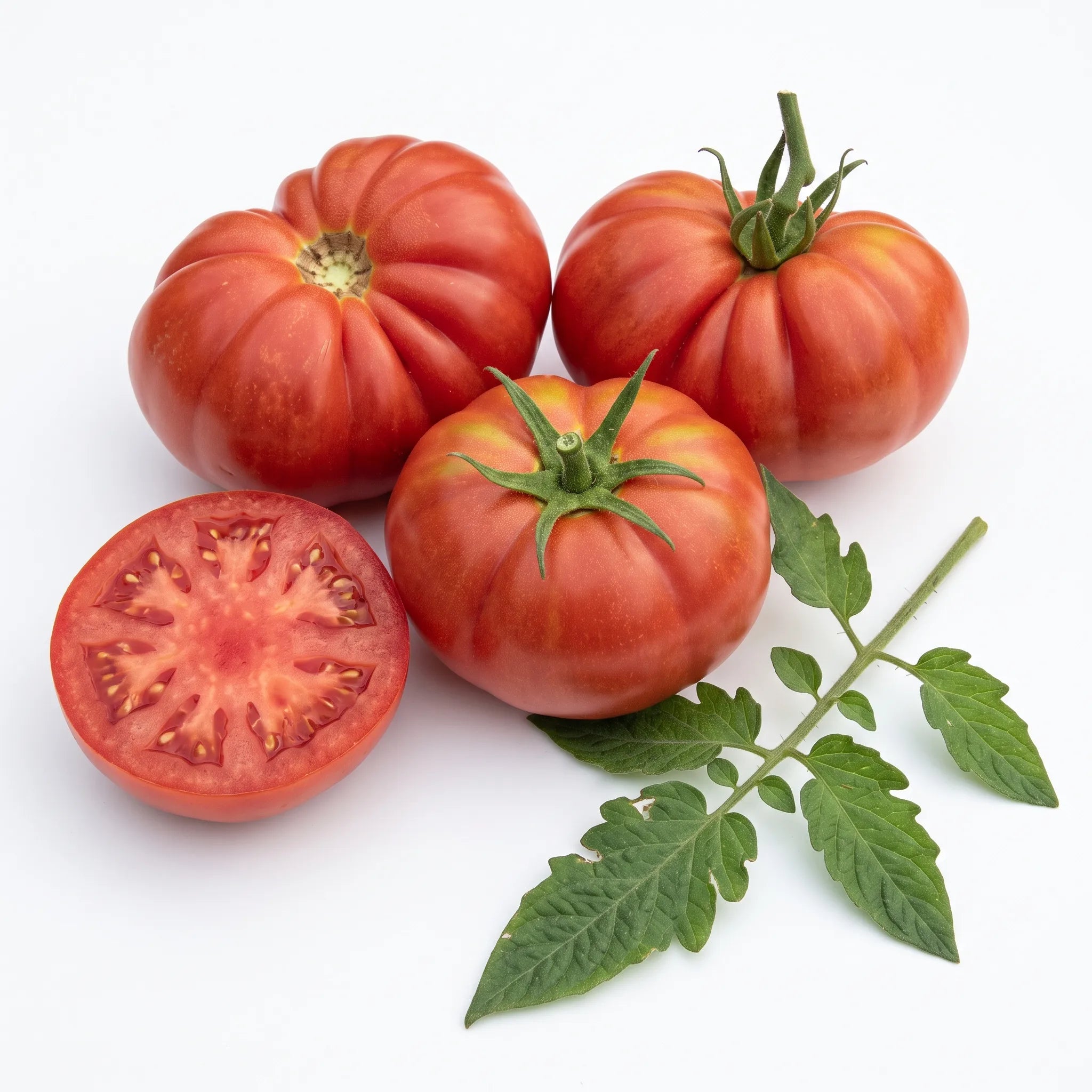
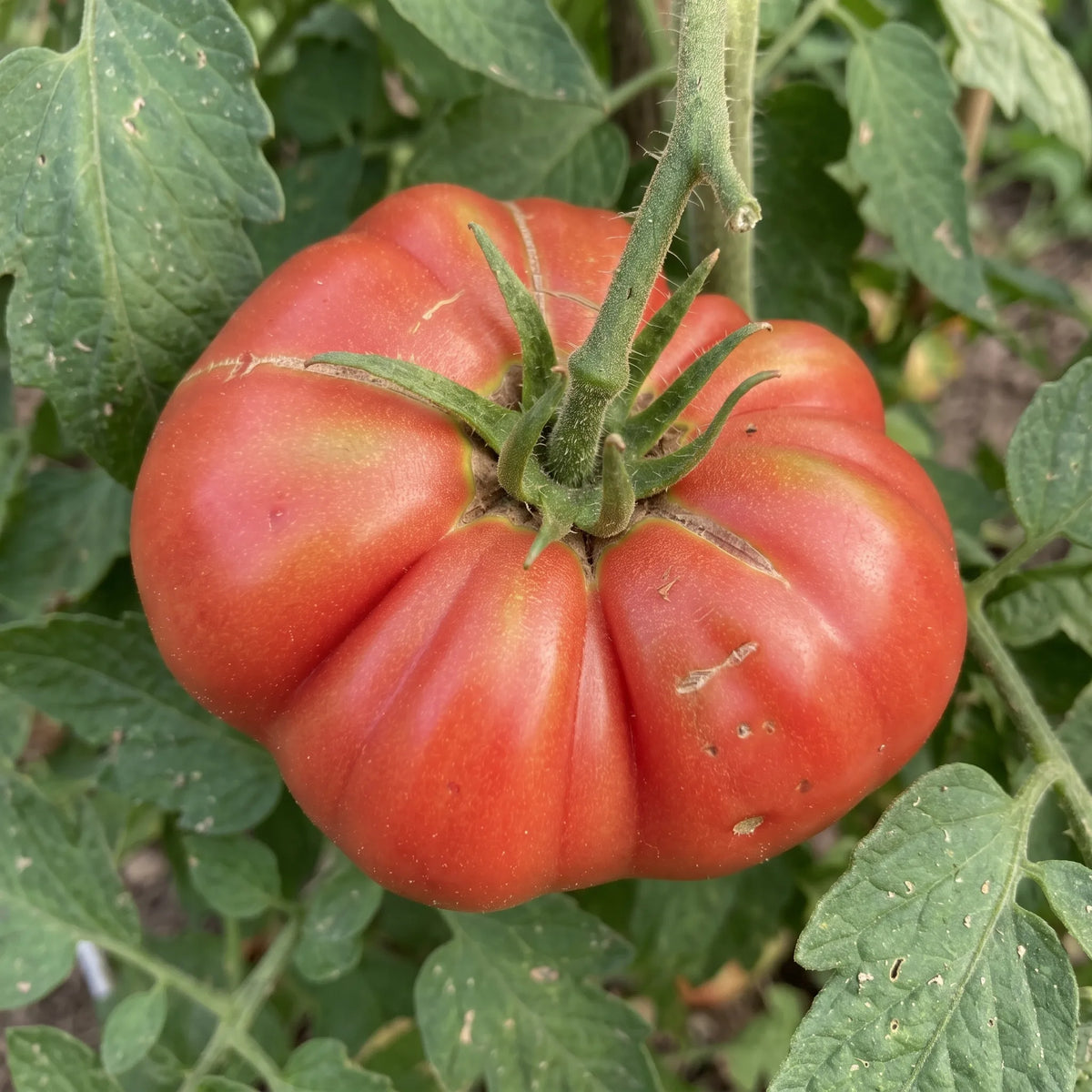
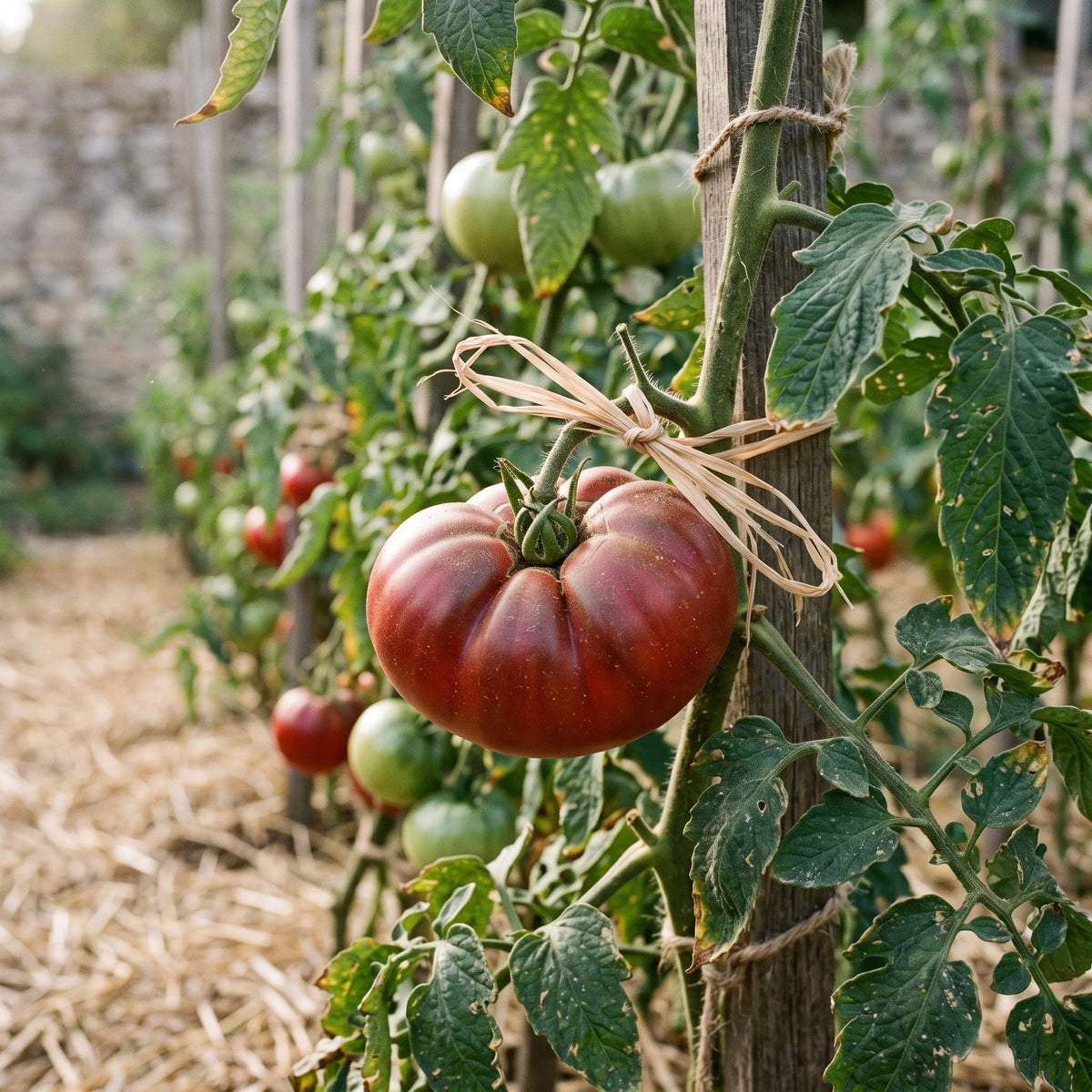
Marmande Tomato, Marmande VR: originating in Lot-et-Garonne at the beginning of the 20th century, it has remained the benchmark tomato of southwestern France. Flattened and gently ribbed, it has the rare advantage of being both large and early—making it possible to grow large fruits even where summers are short.
Characteristics:
-
Large size: 200 to 400 g per fruit, red, flattened, and slightly ribbed.
-
Early: it ripens even in cooler regions, which is rare among large varieties.
-
Firm, flavorful flesh: it holds up well both when cooked and sliced.
-
Versatile: stuffed, in salads, or in sauce—it does everything well.
Sowing advice:
-
Exposure: full sun and warmth.
-
Soil: deep, rich, loose, and well-drained. A large-fruited variety is nutrient-hungry: a generous addition of compost benefits it.
-
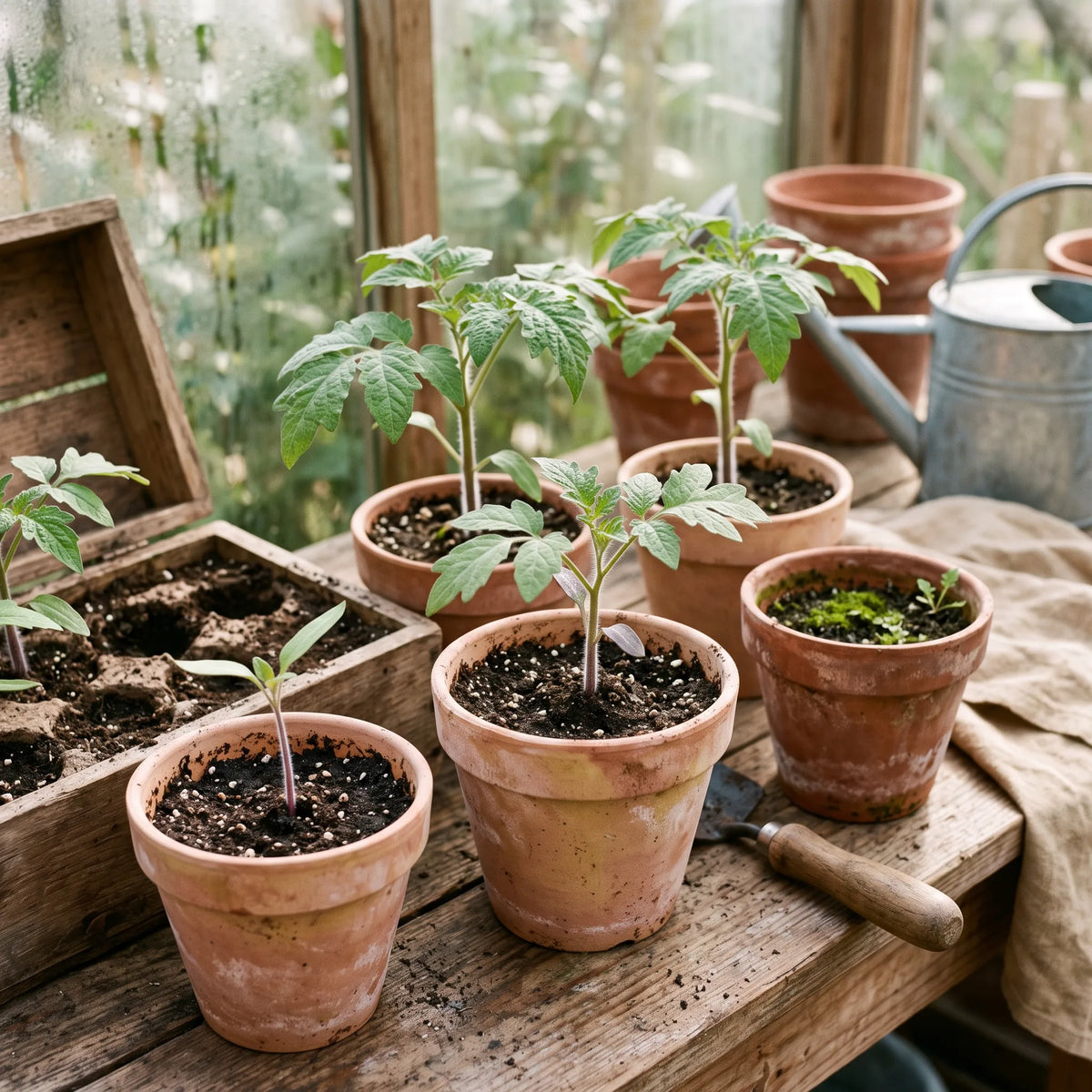
Method: sow from February to April under cover, at 20 °C minimum—below that, the seeds will not germinate. Cover with 5 mm of soil. Transplant into pots at the two true-leaf stage. See how to sow seeds.
Planting advice:
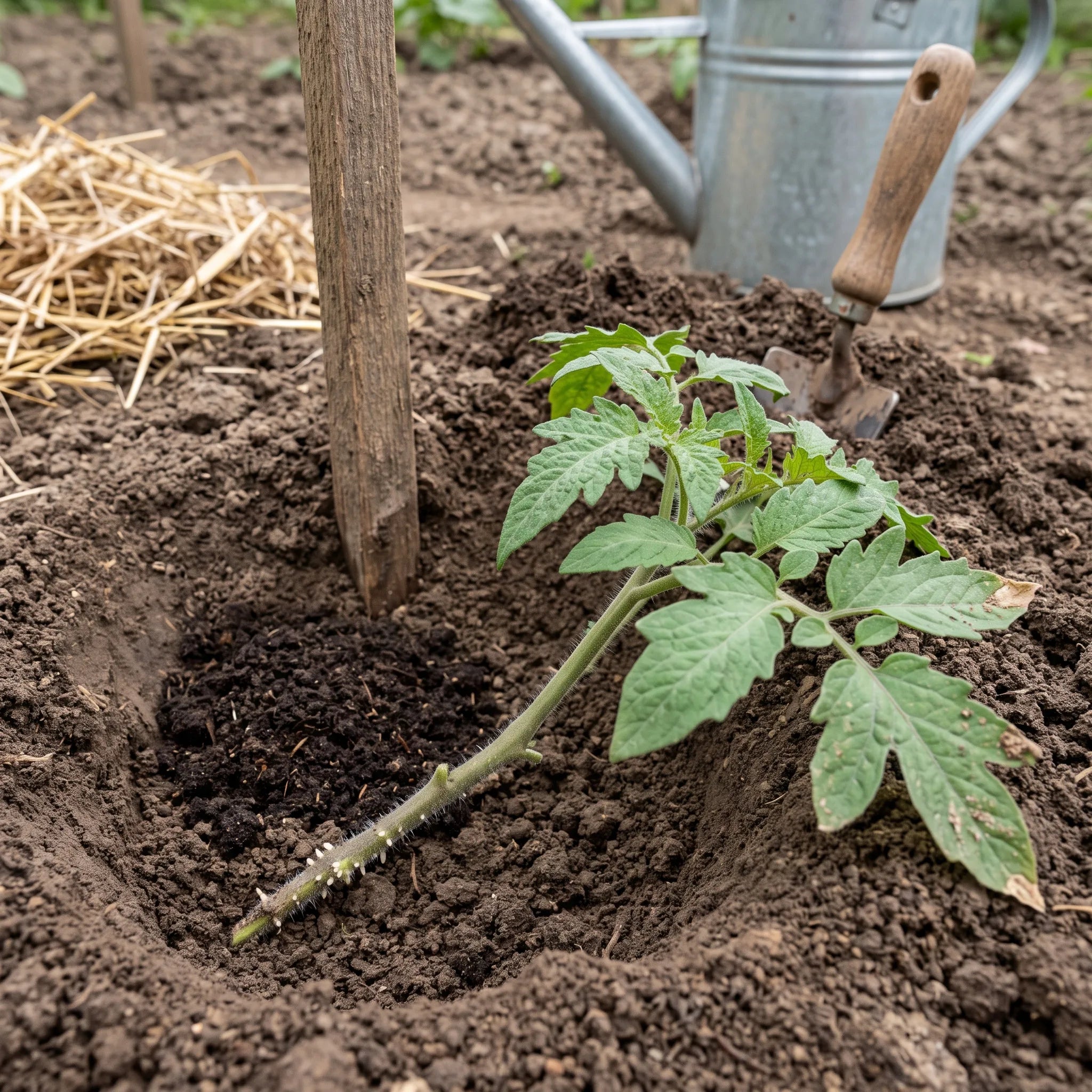
- Transplant after the last frosts, spacing plants 70 to 80 cm apart. Bury the stem up to the first leaves: tomatoes produce roots along the entire buried section, resulting in a more vigorous plant—useful for supporting large fruits.
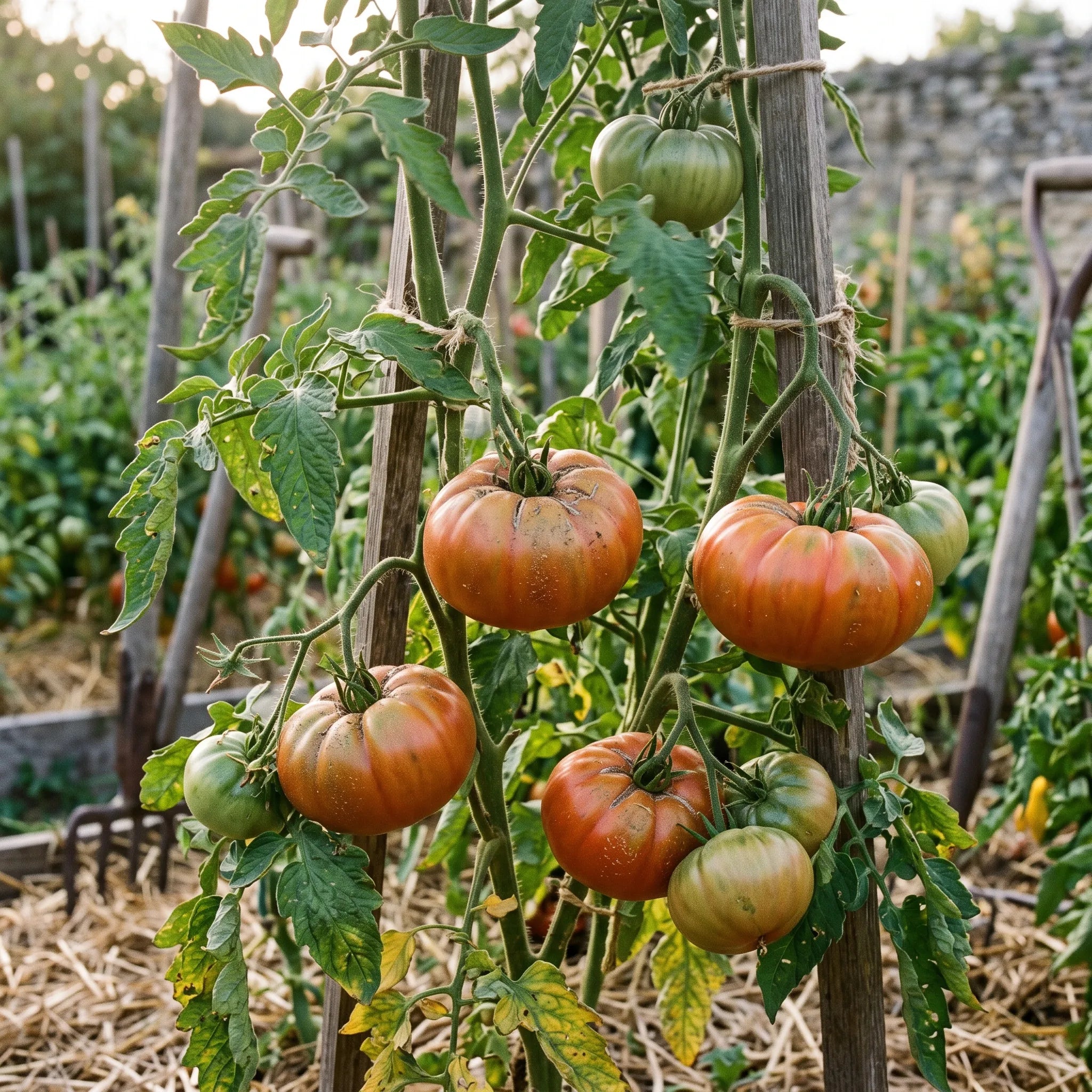
- This is an indeterminate variety: install a sturdy stake at planting time.
Care advice:
-
Always water at the base, never over the foliage, preferably in the morning: water on the leaves provides an entry point for blight. Apply a thick mulch.
- Water regularly and evenly: with large fruits, irregular watering causes splitting and blossom-end rot.
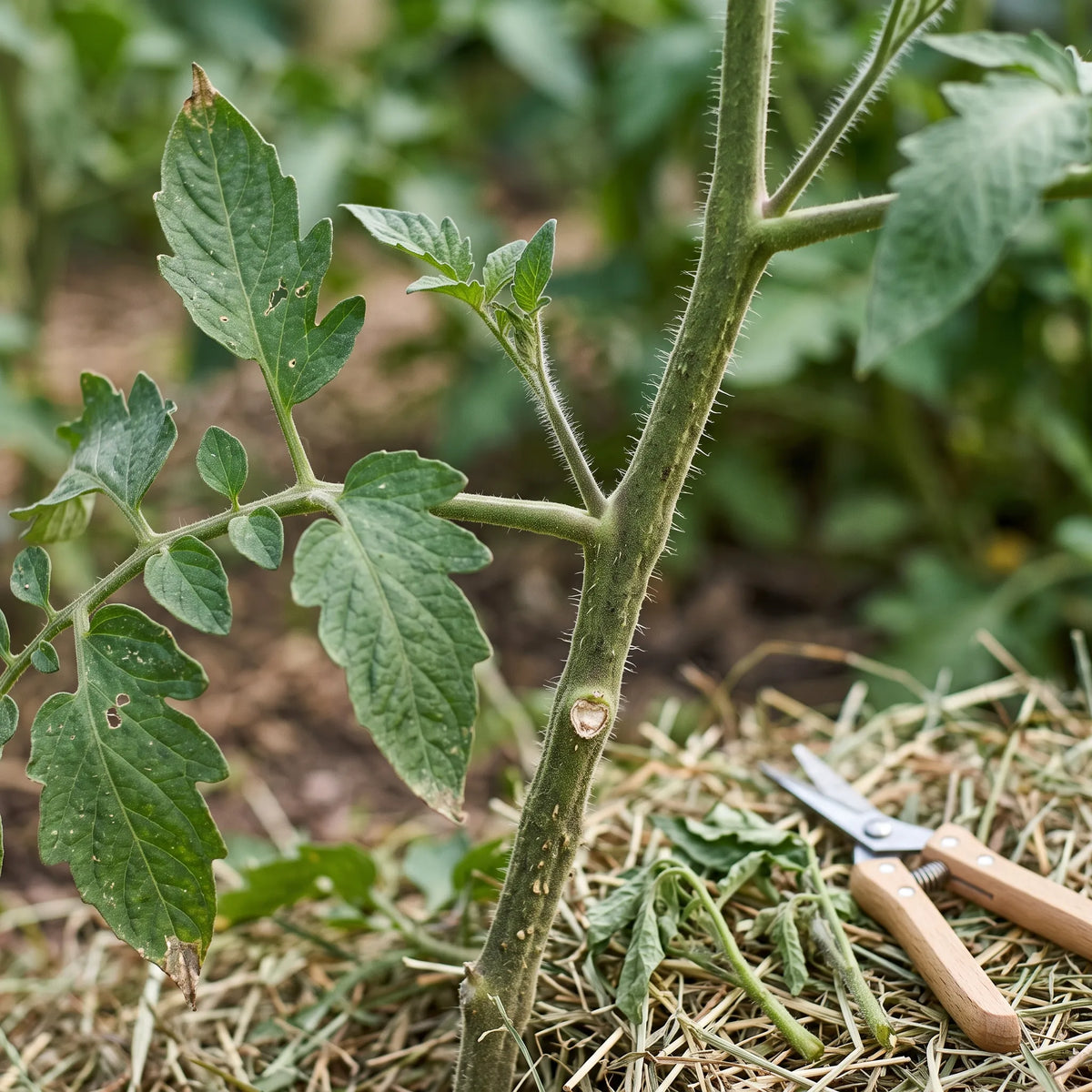
- Remove suckers—shoots that emerge in the leaf axils—and limit the plant to 5 or 6 trusses to obtain beautiful fruits.
- Rotate crops over three to four years.
Harvesting advice:
- Harvest when fully red, when the fruit yields slightly under your finger.
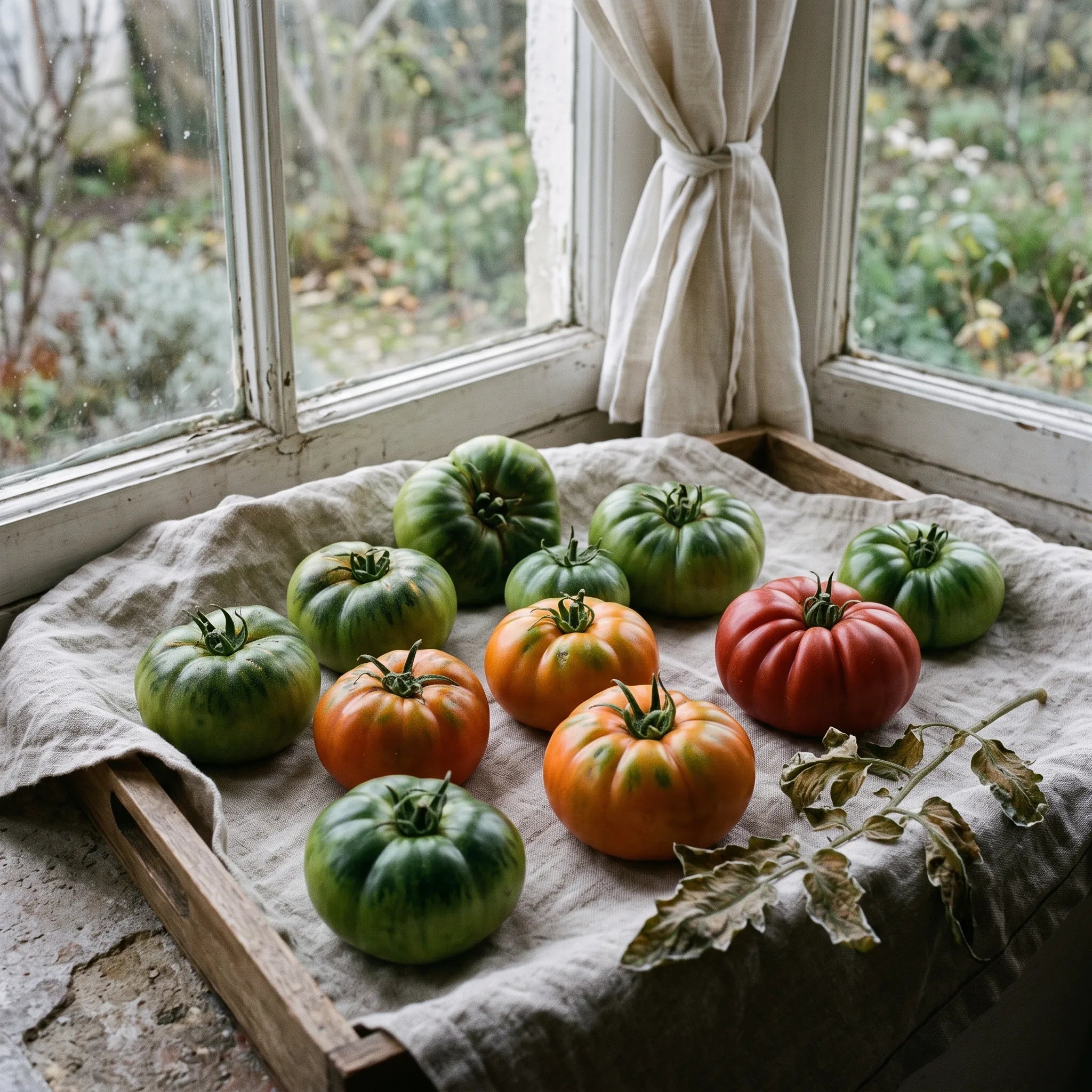
- At the end of the season, pick the last fruits while they are still green, before the frosts: placed indoors in front of a window, they will ripen slowly. A ripe fruit placed beside them speeds up the process.
Beneficial companion plants:
Benefits for biodiversity:
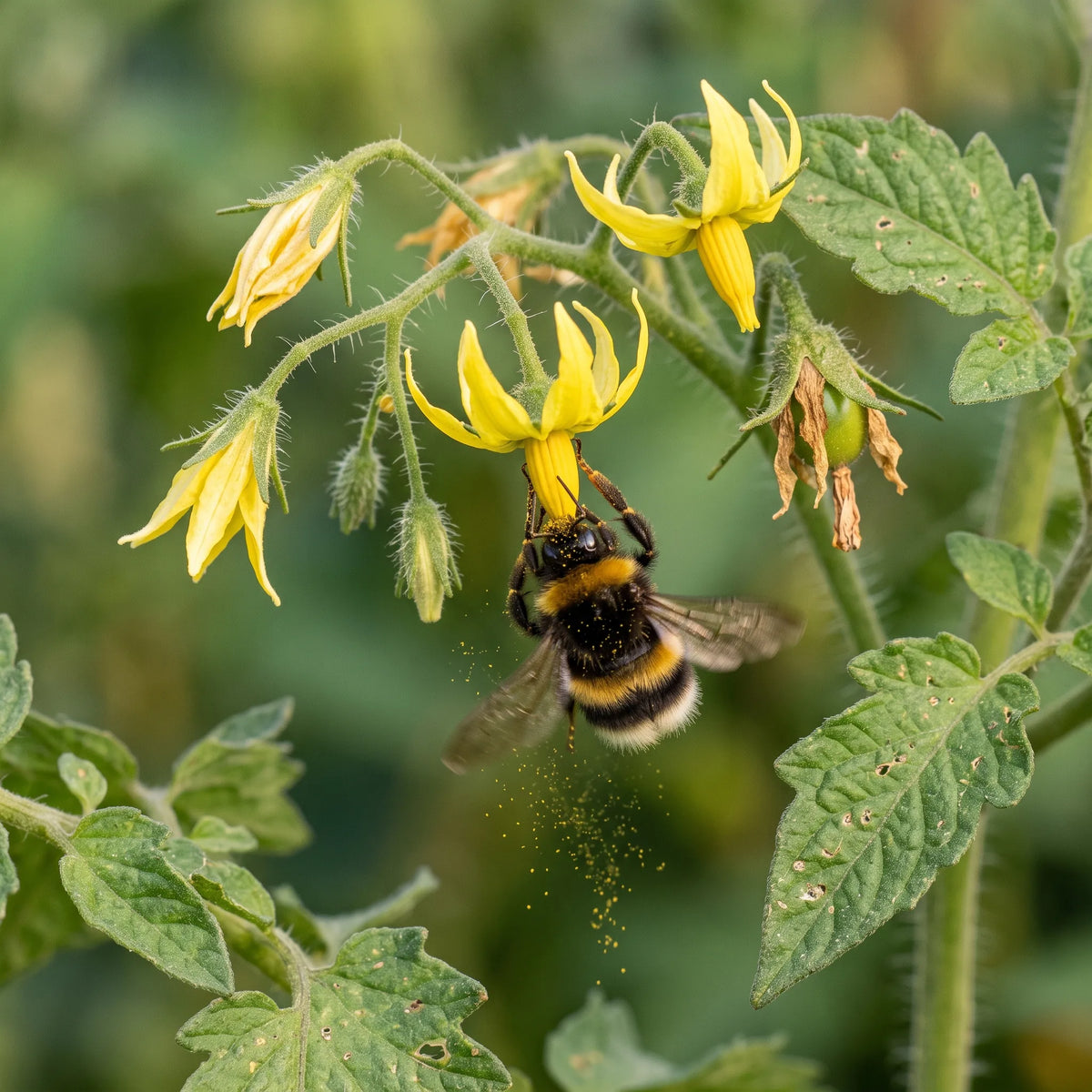
- Its flowers are pollinated by vibration: only bumblebees make full use of them. Welcoming them directly improves your harvest.
- As an old, seed-saving variety, growing it contributes to preserving cultivated diversity. See our heirloom tomatoes to sow.
Uses:
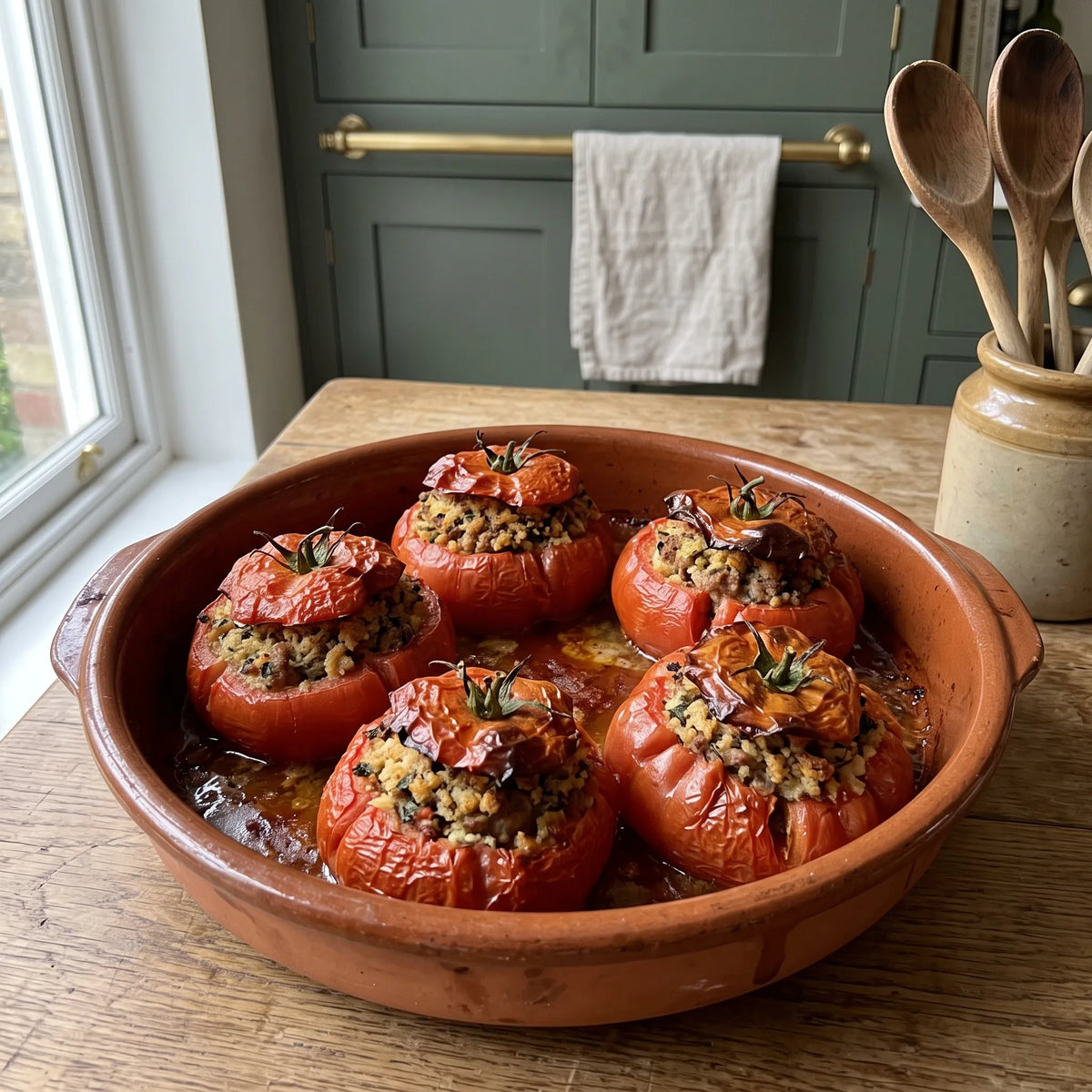
- Stuffed—its flattened shape and firm flesh are particularly well suited to this—in salads, sauce, or soup.
Saving your own seeds:
Remove the pulp from a beautiful, fully ripe fruit and let it ferment for two to three days in a little water—this step breaks down the gelatinous coating that inhibits germination—then rinse: the healthy seeds will sink to the bottom. Dry them flat. See how to save your seeds.
Commitment to Quality: at SemiSauvage - Permaculture, we grow and select our seeds with respect for all living things as our guiding principle. Based near the Auvergne Volcanoes, we choose open-pollinated, non-hybrid varieties, test them for germination rates, and carefully sort and package them, without any chemical treatment. Our conviction: to give gardeners back the ability to resow, year after year, seeds that truly belong to them.
Large fruits even in a cool climate: the tomato of southwestern France.