Beta vulgaris var. cicla “Red Rhubarb”
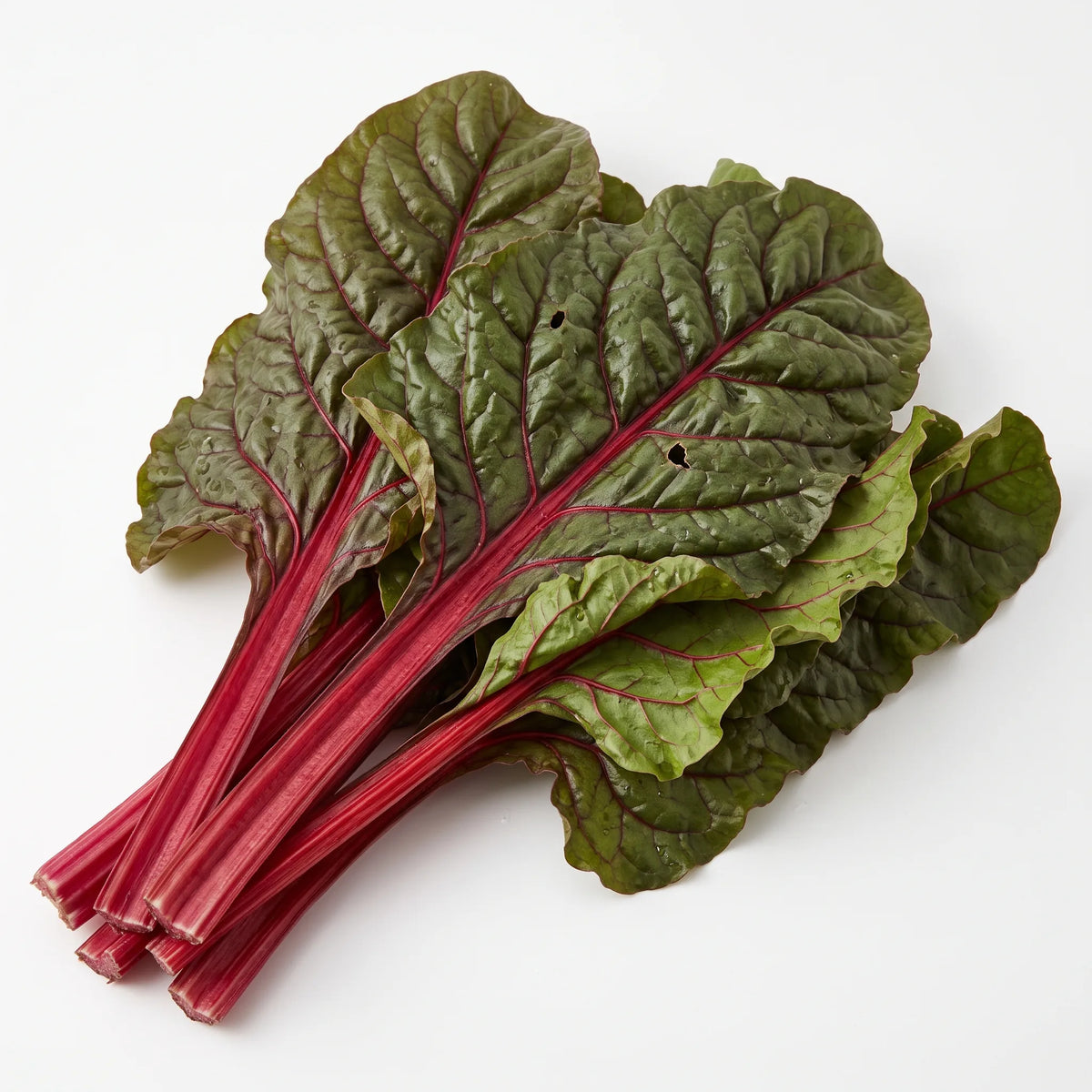
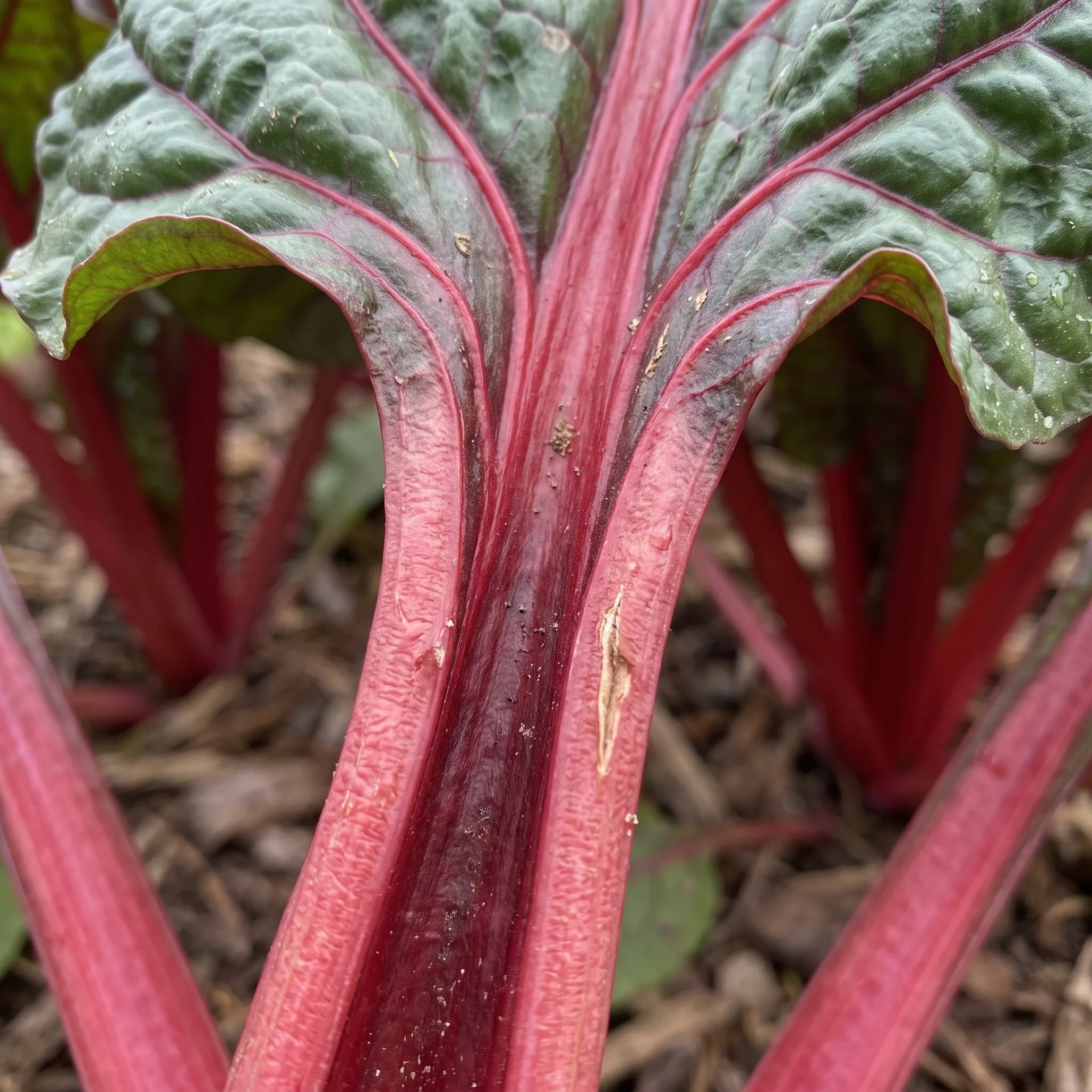
Red Rhubarb Swiss chard, red chard, red-stemmed chard, joutte: its bright crimson-red stems have earned it its name—they resemble rhubarb leaf stalks, though they have no botanical connection. It is the same species as beetroot, but selected for its leaves and stems rather than its root.
Characteristics:
-
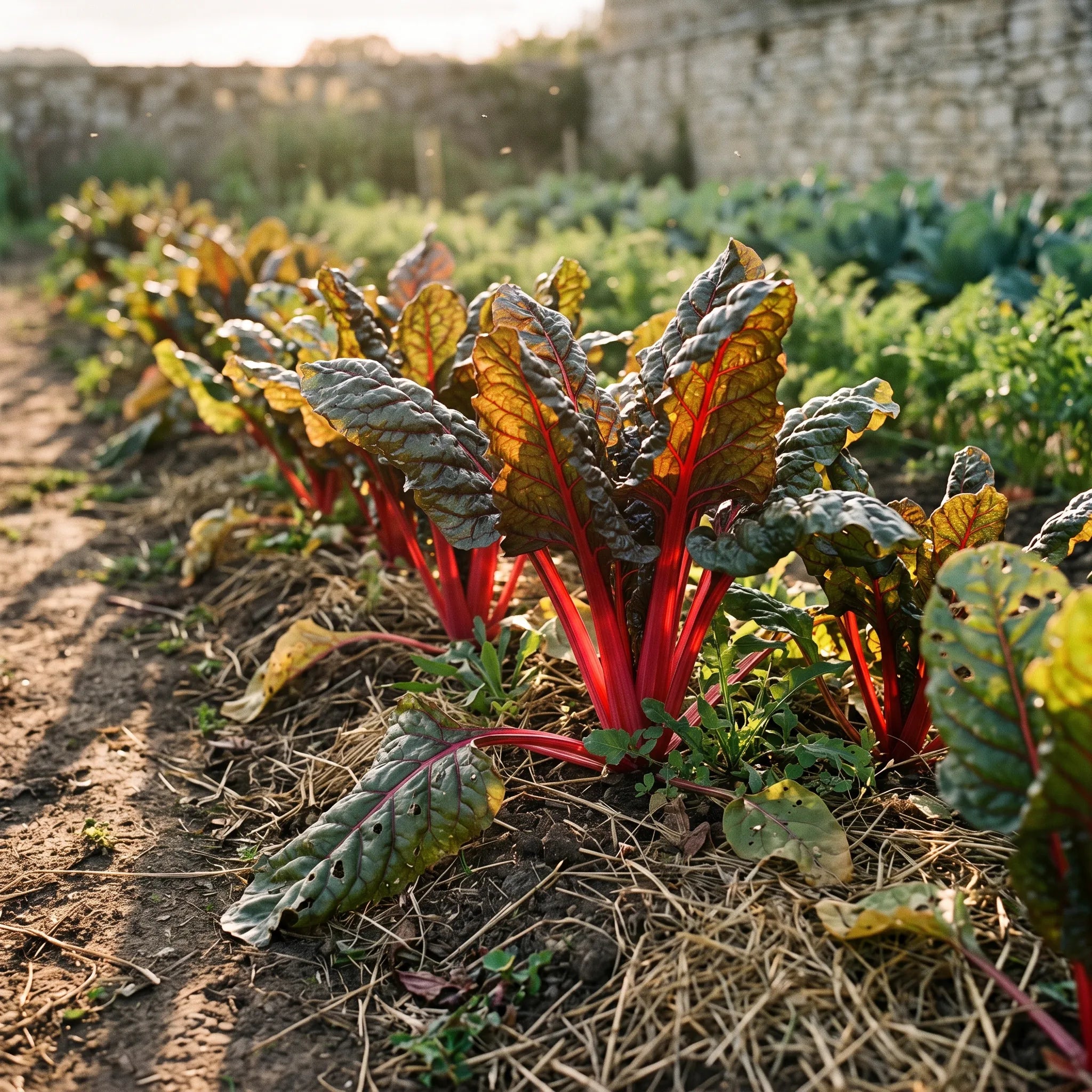
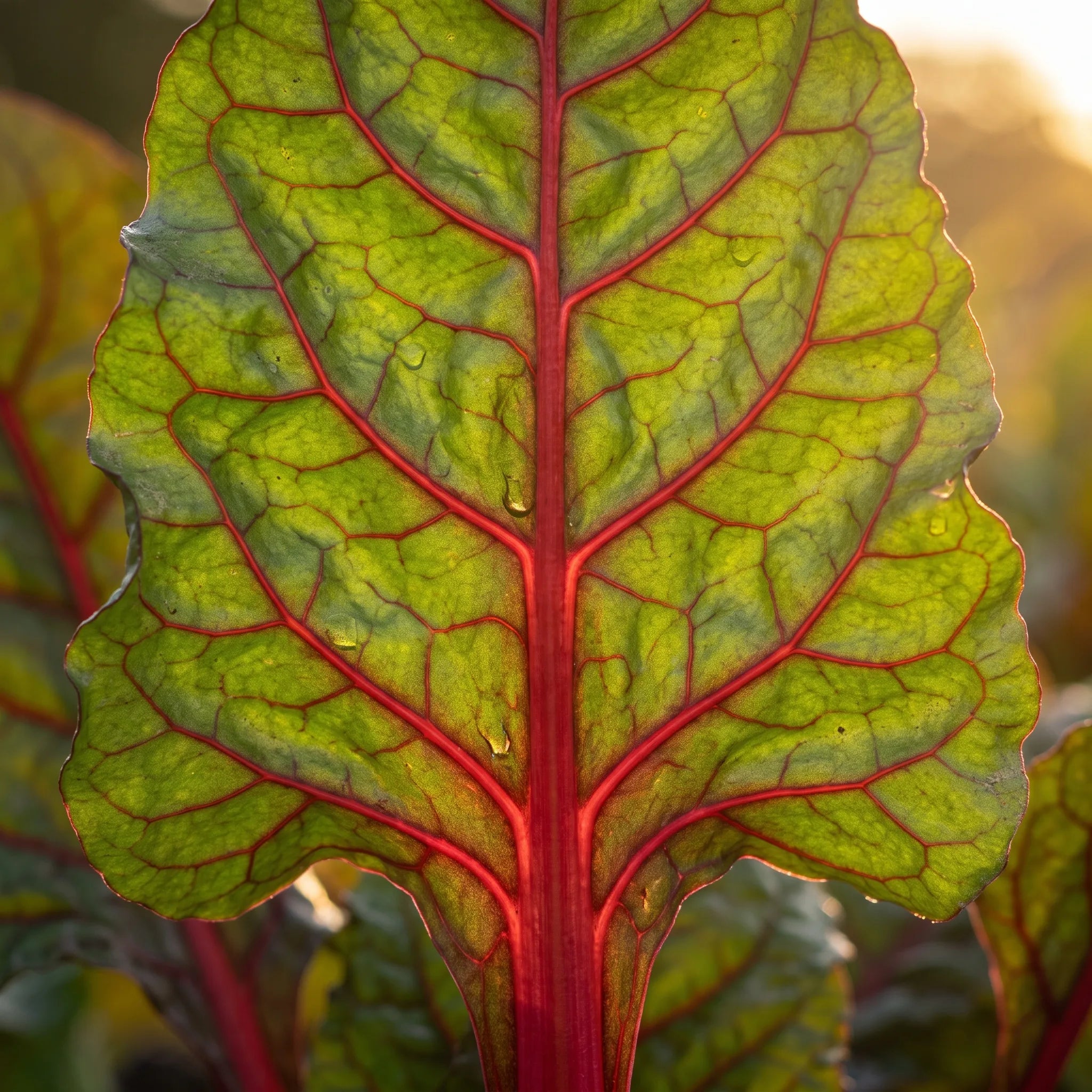
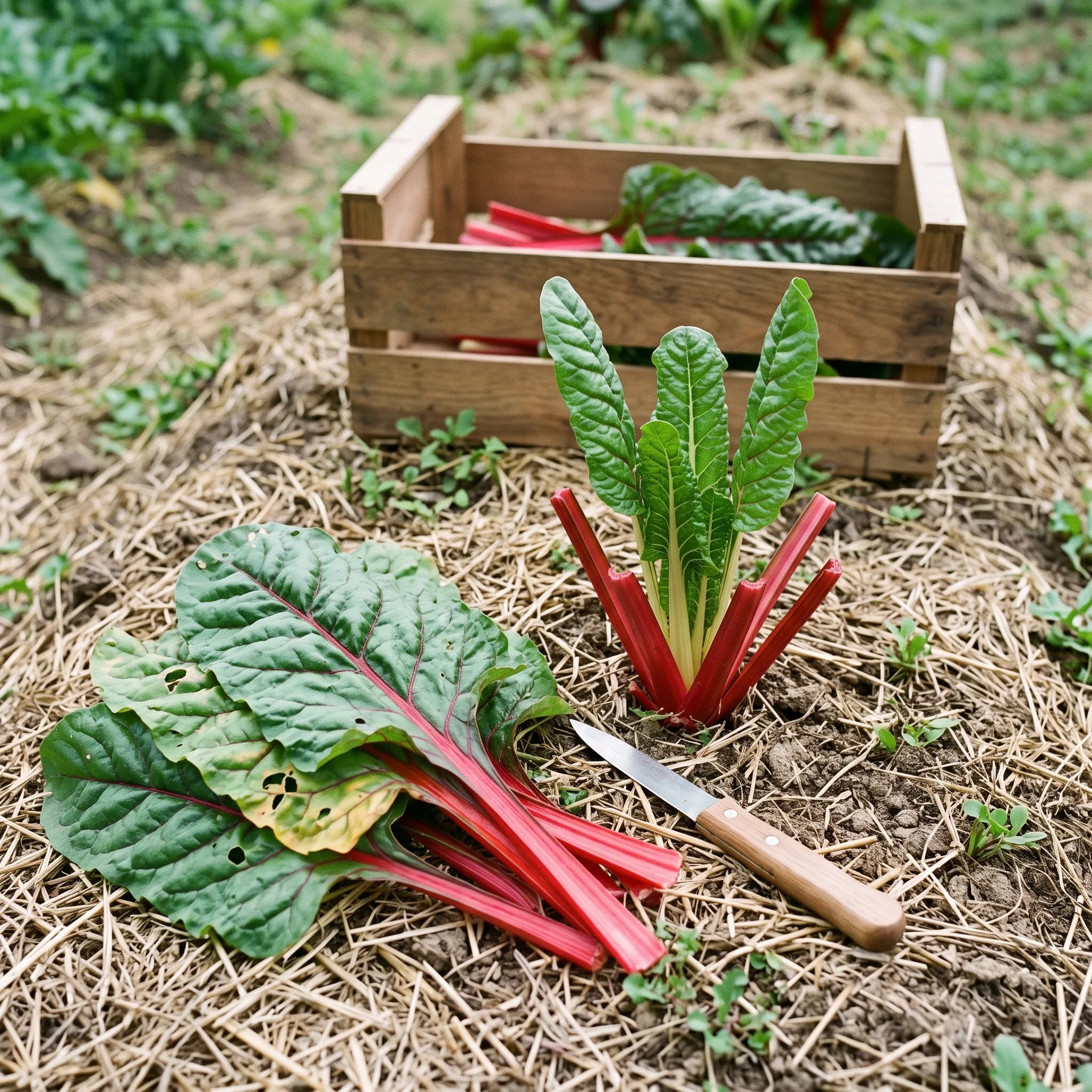
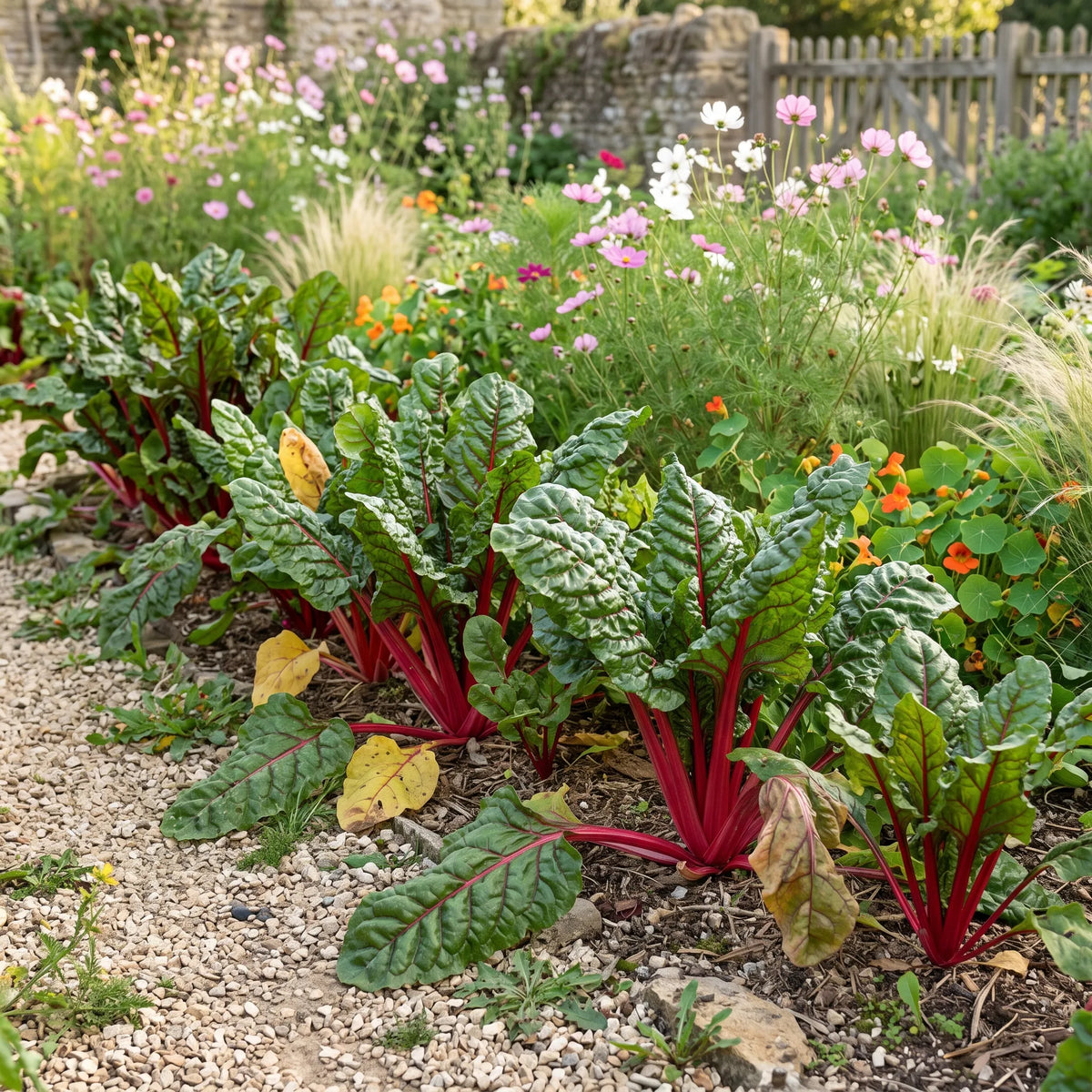
Crimson-red stems: luminous when backlit, spectacular in the vegetable garden or flower bed.
-
Two vegetables in one: the fleshy stems can be cooked like asparagus, while the green leaf blade is used like spinach.
-
Very long harvest: leaf by leaf, from spring until the first frosts.
-
Can be grown anywhere: in the ground, in a flower border, or even in a pot.
Sowing advice:
-
Exposure: sunny.
-
Soil: deep, moist, rich in organic matter, and well-drained. A generous addition of compost produces wider, more tender stems.
-
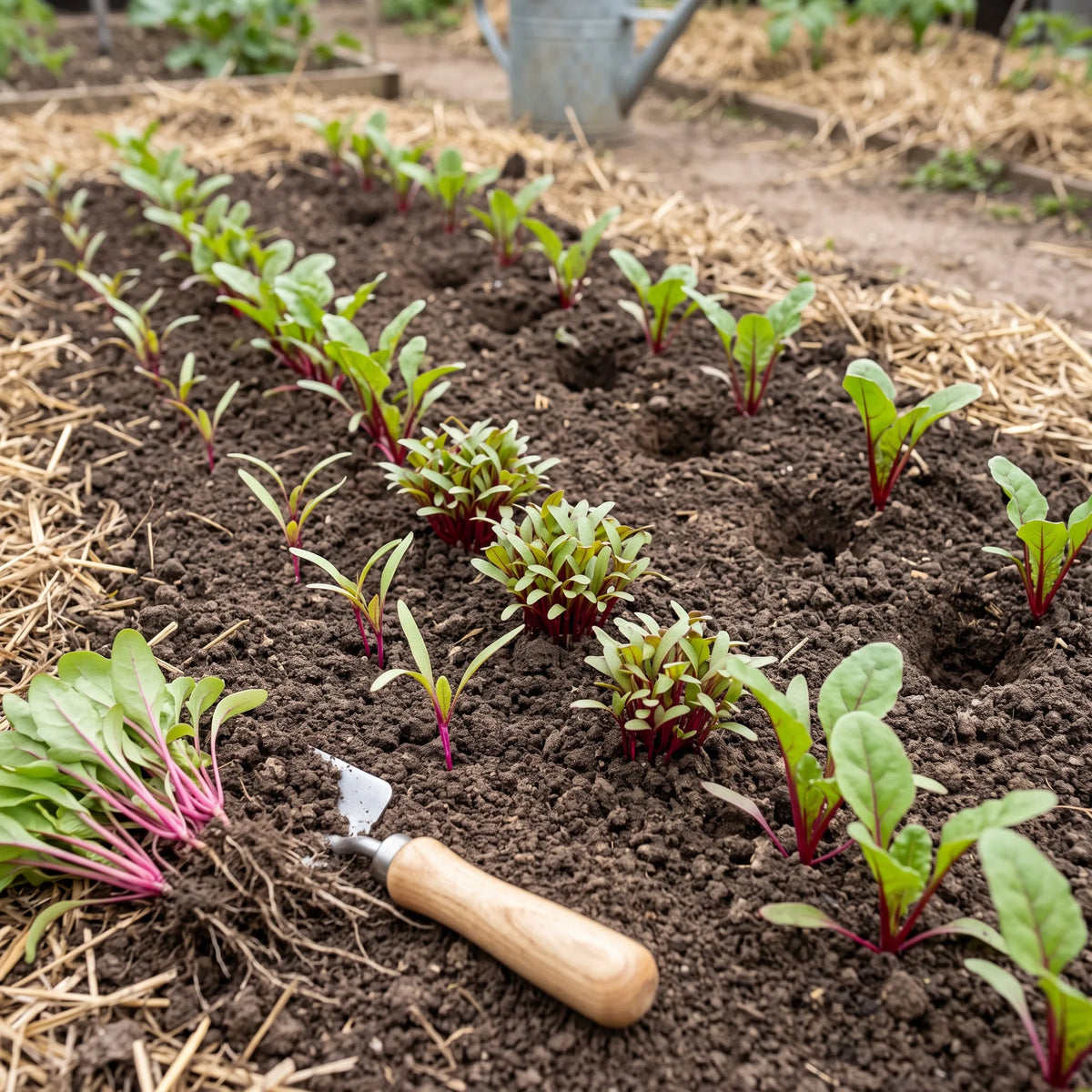
Method: sow from spring through summer, directly in place, 2 cm deep in rows spaced 40 cm apart. As with beetroot, each “seed” is a glomerule containing several seeds: thinning is essential. See how to sow your seeds.
Care advice:
- Thin to 30 cm apart once the plants have 4 leaves. Water regularly to keep the soil moist, especially during hot weather: this helps prevent premature bolting.
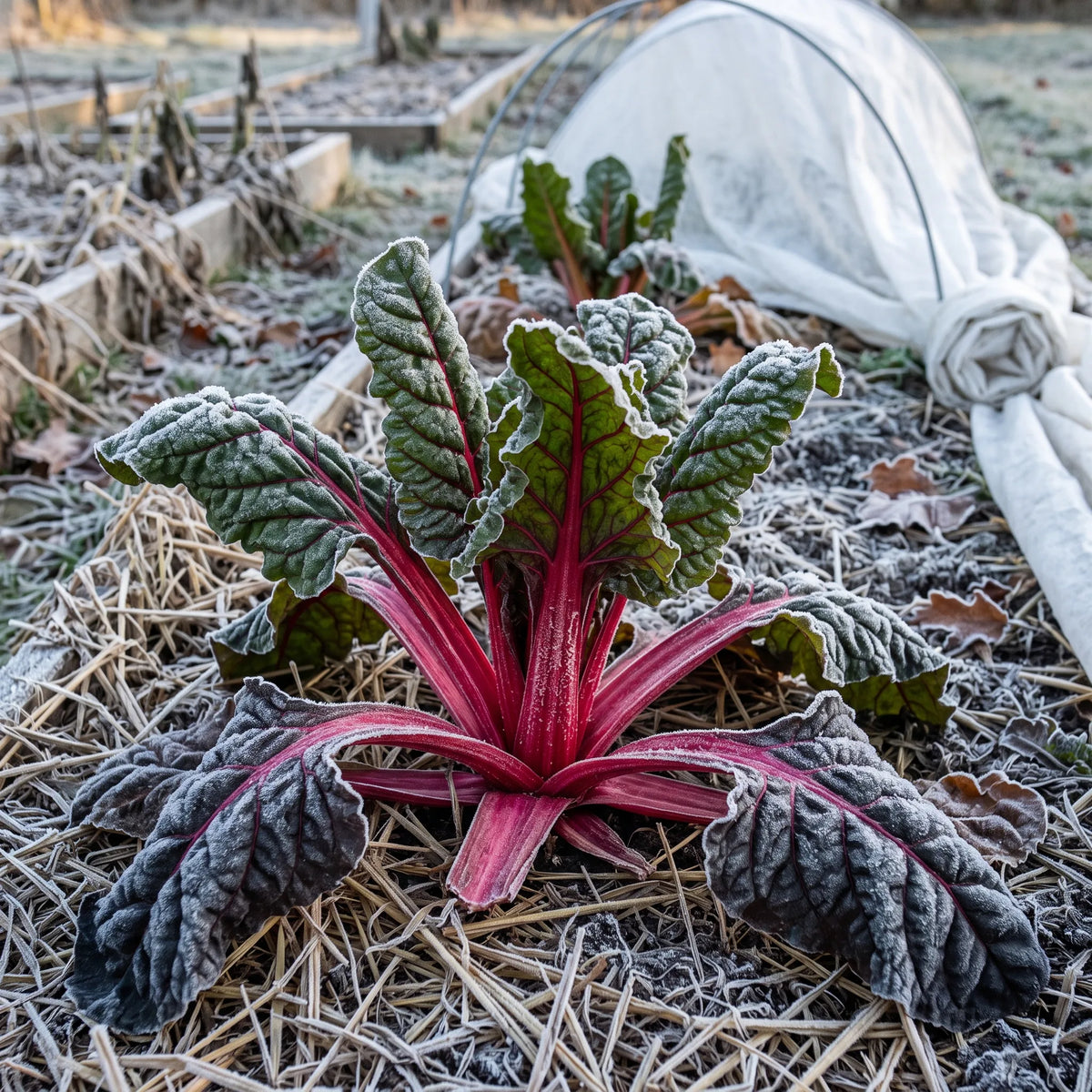
- Mulch around the base. In mild regions, a simple winter fleece allows harvesting throughout the winter.
Harvesting advice:
- Pick the outer leaves one at a time, always leaving the heart intact: the plant will regrow and produce for months. Never cut the entire clump.
- Harvest the young leaves, which are more tender, rather than waiting until they become huge.
Beneficial combinations:
Benefits for biodiversity:
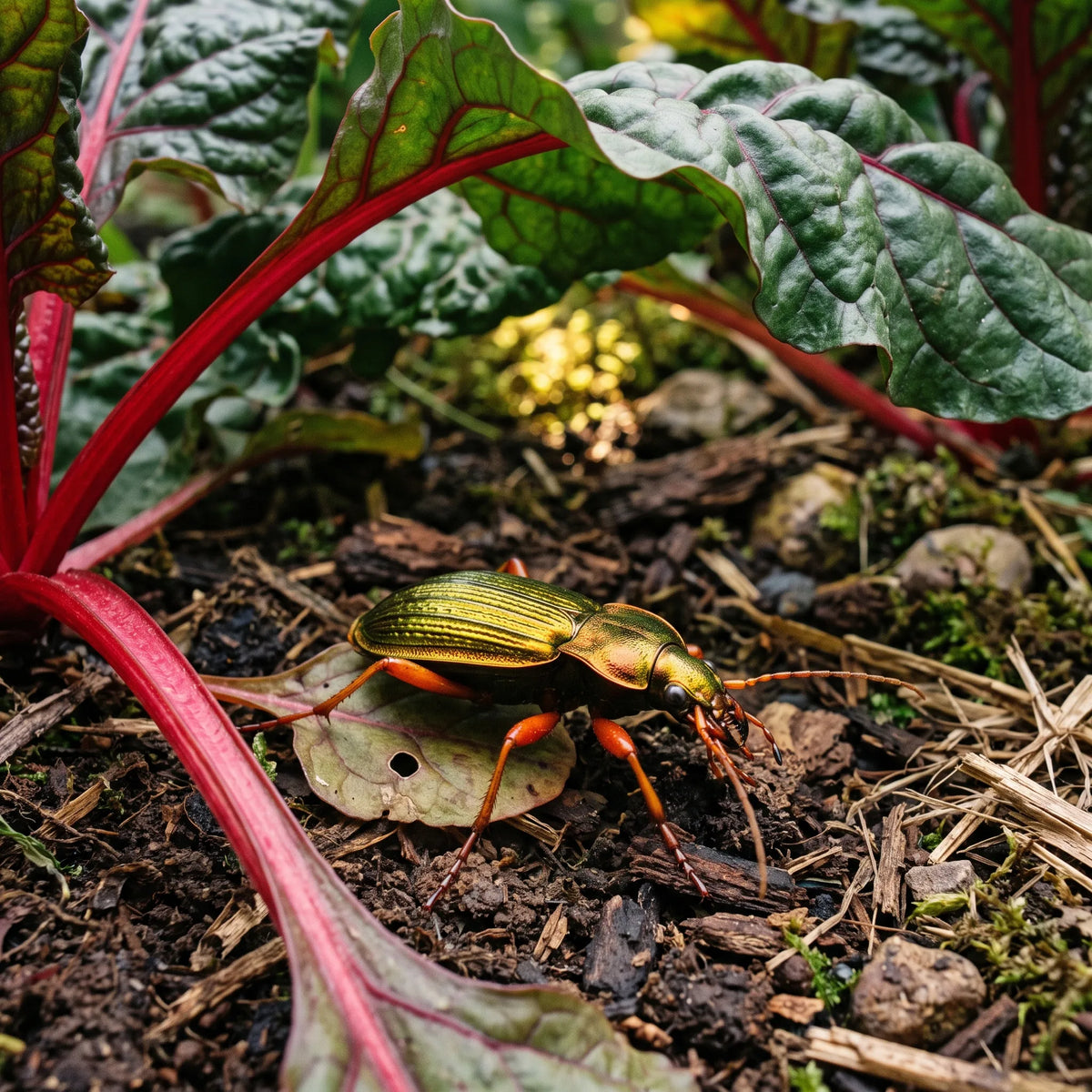
- Its broad, persistent foliage covers the soil for much of the year, protecting it from drying out and providing shelter for ground beetles and beneficial insects.
- Its long-lasting presence maintains plant cover in the late season, when most rows are empty.
Uses:
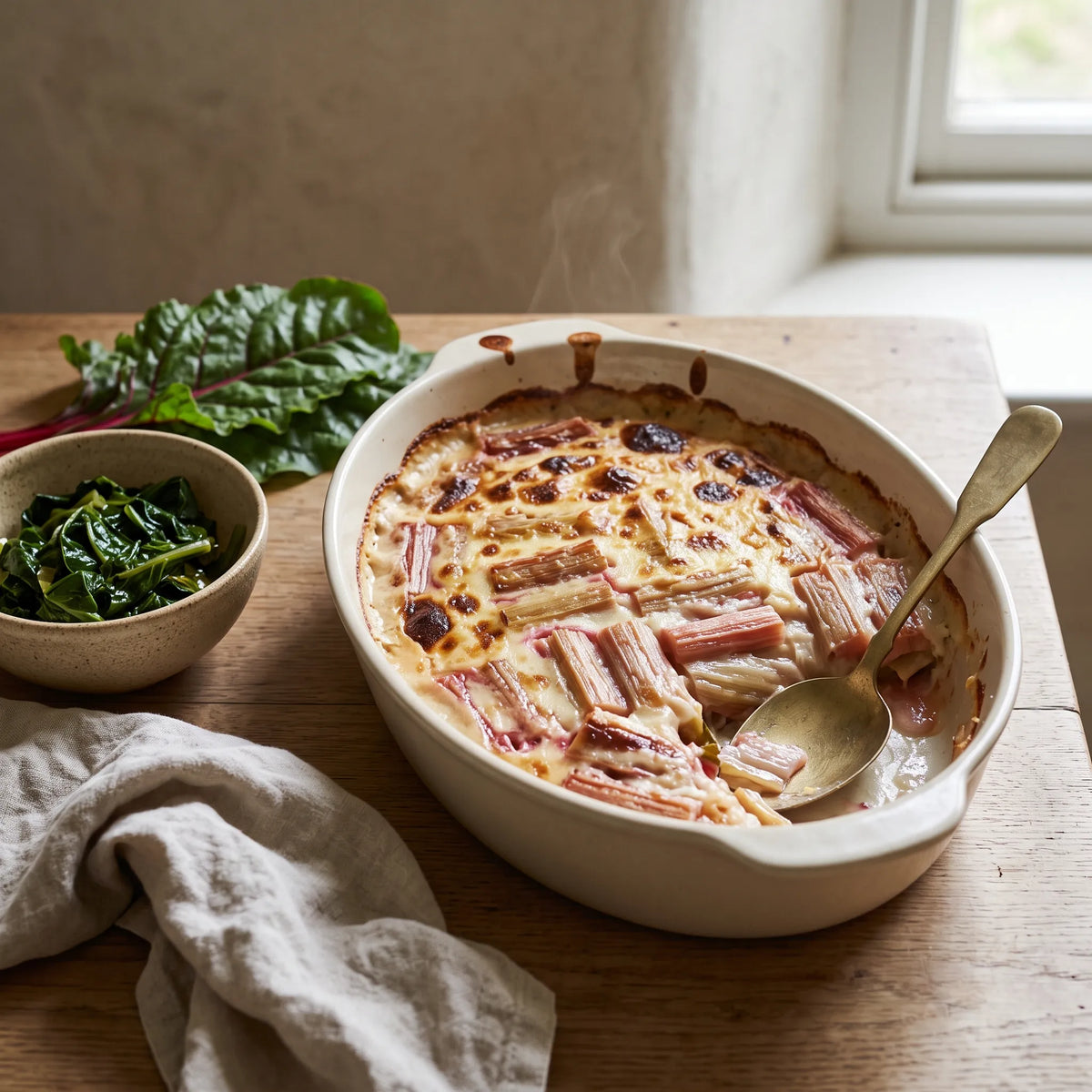
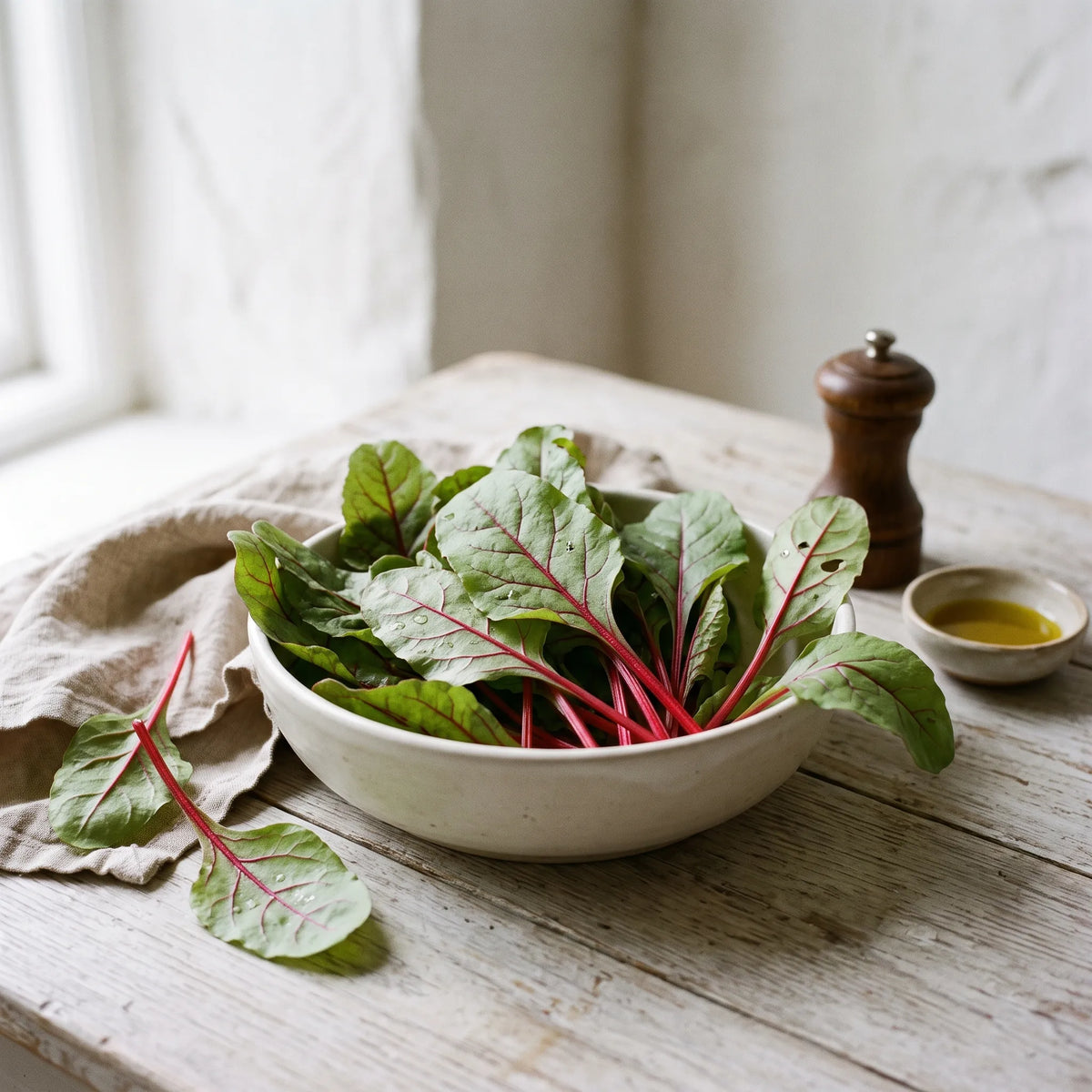
- Separate the stems from the greens: use the stems in béchamel sauce, pan-fried dishes, or gratins, and sauté the greens with garlic or use them in a pie. Young leaves can be eaten raw in salads, where their red veins make a striking display. See our heritage and perennial vegetables.
Saving your own seeds:
As a biennial, it is generally grown as an annual because it bolts quickly. Leave one plant in the ground over winter: the flowering stalk develops from June to September in the second year. Harvest the dry seed stalks. Be aware that it cross-pollinates with beetroot: isolate your seed plant. See saving your seeds.
Commitment to Quality: at SemiSauvage - Permaculture, we grow and select our seeds with respect for living organisms as our guiding principle. Based near the Auvergne Volcanoes, we choose open-pollinated, non-hybrid varieties, tested for their germination rate, carefully sorted and packaged, with no chemical treatment. Our belief: to give gardeners back the ability to resow, year after year, seeds that truly belong to them.
Two vegetables in one, with red stems that light up the vegetable garden.