Diospyros kaki
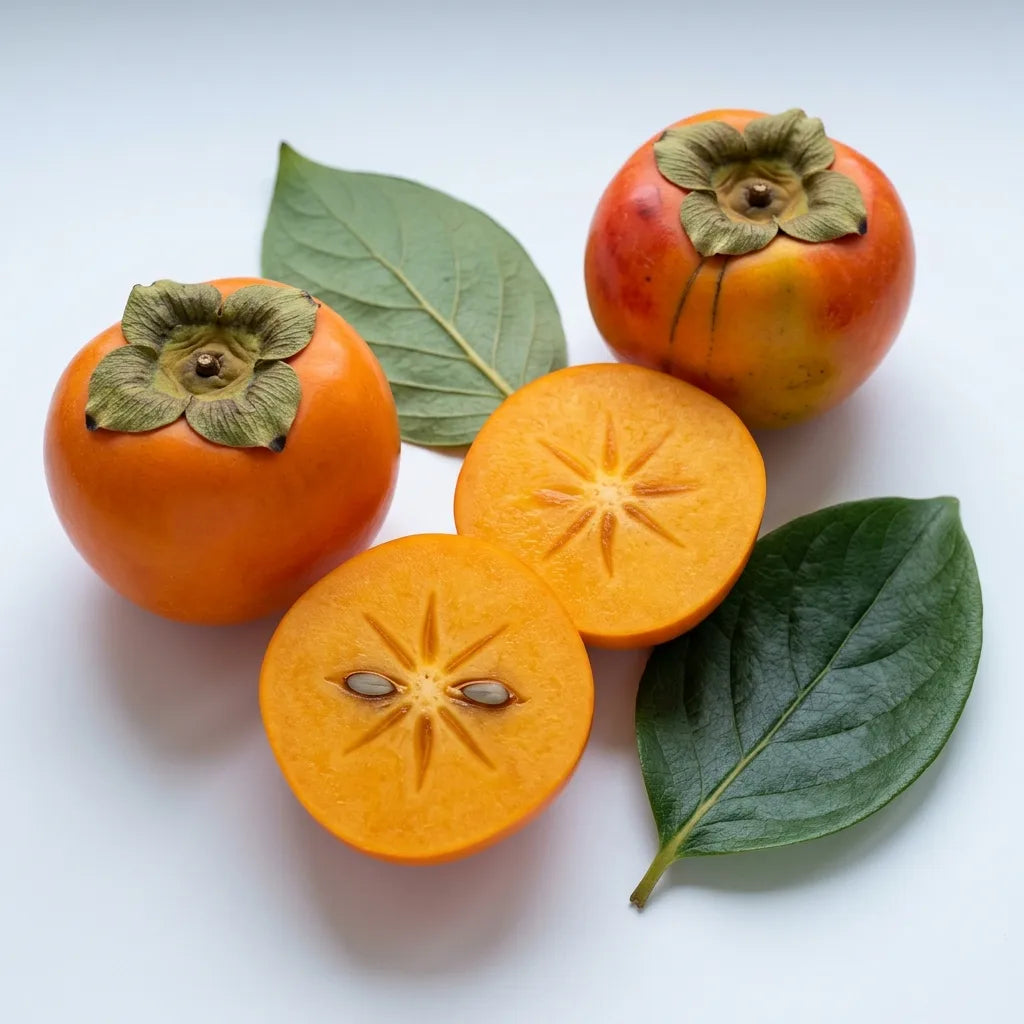
Persimmon, Japanese persimmon, kaki, date-plum: its genus name, Diospyros, means “wheat of Zeus” or “food of the gods” in Greek. In winter, when its leaves have fallen, its bright orange fruits remain suspended from the bare branches like lanterns—a sight worth planting it for on its own.
Characteristics:
-
Double display: fiery orange to red foliage in autumn, followed by fruits hanging from the bare branches in winter.
-
Medium-sized tree: 6 to 10 metres tall, deciduous, with a graceful, spreading shape.
-
Sweet fruits: fleshy orange fruits, harvested late in the season when the orchard has emptied.
-
Hardy and easy to grow: it withstands cold well and requires little care once established.
Good to know about astringency:
- Many persimmon varieties are astringent until fully ripe: eaten too early, they leave a very unpleasant, rough sensation in the mouth. Wait until the fruit is as soft as a pouch, almost translucent.
- Tip: one night in the freezer, or placing the fruit near ripe apples in a sealed bag, significantly speeds up the disappearance of the astringency.
Sowing advice:
-
Position: sunny and sheltered from cold winds.
-
Soil: deep, moist, well-drained and rather neutral. It does not tolerate highly calcareous soils or stagnant moisture well. Adding compost when planting supports its growth.
-
Method: cold stratification for 1 to 3 months is recommended (a moist mixture in the refrigerator). Then sow in a pot in spring, at 20–25 °C, in a light, well-drained growing medium. Germination takes 4 to 8 weeks. See how to sow your seeds.
Planting advice:
- Transplant into the ground after the last frosts, in a sunny position, allowing 4 to 5 metres of space.
- It also grows very well as a bonsai, where its miniature fruits make a striking impression—see our guide creating a bonsai from a seed.
Care advice:
- Water regularly during the first few years, then less frequently: persimmons tolerate drought once well rooted.
- Minimal pruning, at the end of winter: it fruits on the current year's wood, and overly severe pruning can compromise the harvest.
Harvesting advice:
- Harvest in late autumn, after the leaves have fallen, cutting the fruit with a piece of stem. Then leave it to ripen at room temperature until it becomes soft.
Beneficial companions:
Benefits for biodiversity:
- Its late fruits, often partly left on the tree, feed blackbirds, thrushes and warblers in the depths of winter—a rare resource at this time of year.
- Its discreet spring flowering is visited by bees, and its abundant leaf litter nourishes soil life.
Uses:
- Fresh fruit eaten with a spoon when fully soft, dried Japanese-style (hoshigaki), or made into jam, jelly and fruit paste. It is also a highly ornamental tree.
Symbolism:
The persimmon tree symbolises wisdom, patience and prosperity in many Asian cultures. It is often planted near homes for its longevity and the generosity of its fruits, which arrive when everything else has finished producing.
Harvesting your own seeds:
Take the seeds from a fully ripe fruit, remove all the pulp, dry them for a few days, then store them in a cool place until winter stratification. See storing your seeds.
Commitment to Quality: at SemiSauvage - Permaculture, we grow and select our seeds with respect for all living things as our guiding principle. Based near the Auvergne Volcanoes, we choose reproducible, non-hybrid varieties, tested for their germination rate, carefully sorted and packaged, with no chemical treatments. Our conviction: to give gardeners back the ability to resow, year after year, seeds that truly belong to them.
Orange lanterns on bare branches, in the heart of winter.