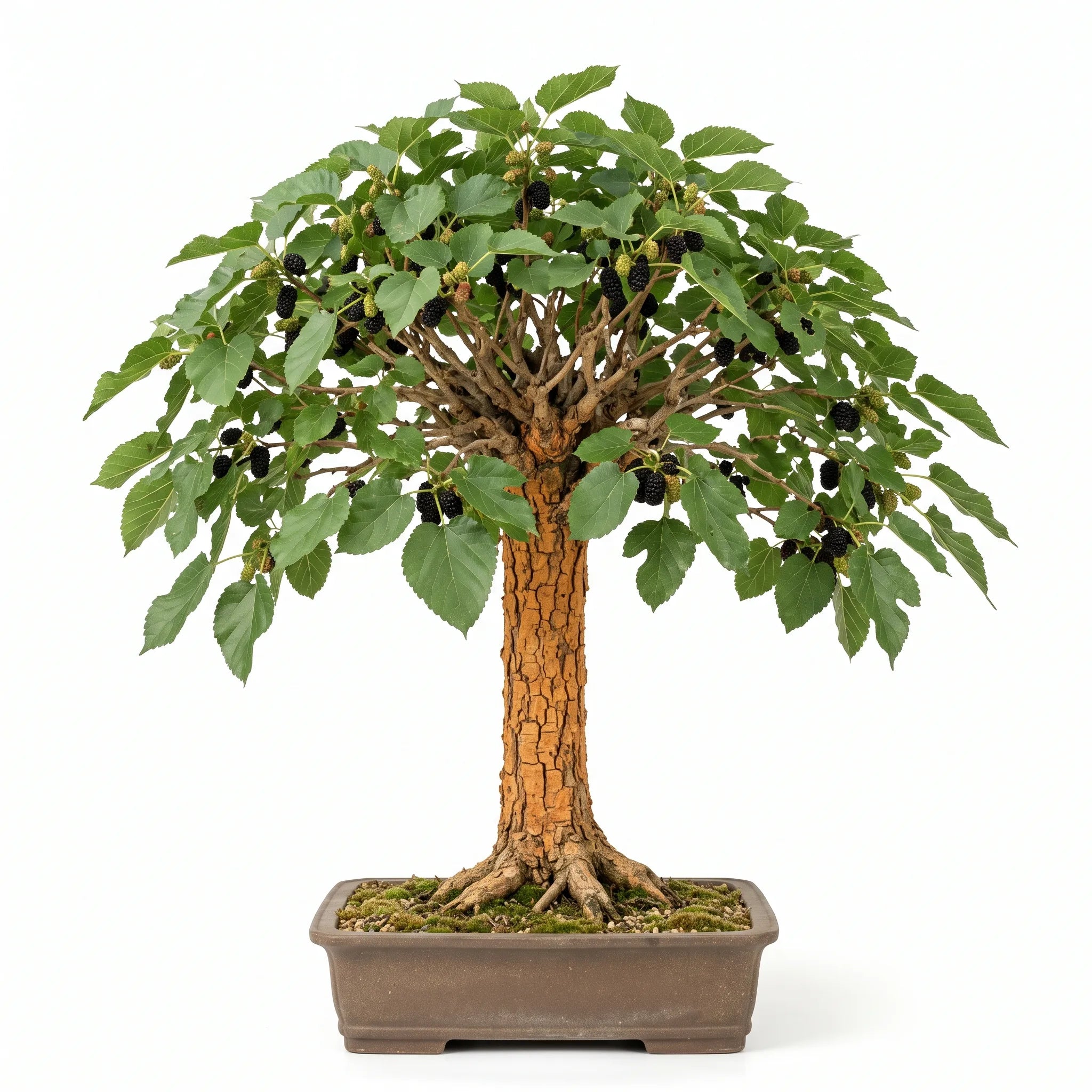
Morus nigra
Black mulberry, Eastern mulberry, black-fruited mulberry: not to be confused with the white mulberry, the one associated with silkworms. Cultivated since Antiquity for its juicy, slightly tart fruits, it has a reputation for being the wisest of trees: it only breaks dormancy once all risk of frost has passed, earning it the Roman nickname of the most cautious tree.
Characteristics:
-
Exceptional longevity: it can live for more than a hundred years and develops a very picturesque, twisted shape with age.
-
Medium size: 5 to 10 metres depending on conditions, with a spreading habit and dense foliage.
-
Summer fruiting: black-purple mulberries in July–August, following discreet spring flowering.
Precautions:
- Its fruits permanently stain clothing and paving: avoid planting it above a light-coloured terrace or walkway.
- Patience required: a mulberry grown from seed generally takes several years before fruiting.
Sowing advice:
-
Position: full sun or partial shade, sheltered from cold winds.
-
Soil: rich, moist, deep, slightly calcareous to neutral, and well drained. It tolerates acidic soils and stagnant moisture poorly. Adding compost when planting supports its growth.
-
Method: 6 to 8 weeks of cold stratification is recommended. Then sow 1 cm deep in a moist, well-drained substrate maintained between 18 and 22 °C. Allow 4 to 8 weeks for germination.
Planting advice:
- Transplant it while young to its permanent position, allowing space for its spreading crown. It does not tolerate late transplanting well.
Care advice:
- Water regularly during the first year; thereafter, the tree becomes highly drought-resistant. Hardy down to -20 °C.
- Prune as little as possible, and only in late summer: the mulberry bleeds heavily if pruned in spring.
Harvesting advice:
- The mulberries ripen gradually and detach at the slightest touch: spread a sheet on the ground and gently shake the branches, the most effective traditional method.
Beneficial combinations:
Benefits for biodiversity:
- Its fruits are a midsummer feast for birds: blackbirds, thrushes and warblers flock to it, making it an excellent “diversion” tree for protecting your other small fruits.
- Its dense crown provides shelter and nesting sites, while its leaf litter feeds soil life — see the basics of living soil.
Uses:
- Delicious fresh fruits, or used in jam, syrup, wine or dried. An excellent food-producing tree for a permaculture orchard, with genuine ornamental value as an added benefit.
Symbolism:
The black mulberry symbolises wisdom, patience and abundance. Planted in many monasteries and royal gardens across Europe, it also embodies the ancient memory of these places.
Harvesting your own seeds:
Crush very ripe mulberries in a little water, leave them to macerate for a few days, then rinse thoroughly: the tiny seeds will separate from the pulp. Dry them before winter stratification. See saving your seeds.
Commitment to Quality: at SemiSauvage - Permaculture, we grow and select our seeds with respect for living things as our guiding principle. Based near the Volcanoes of Auvergne, we choose reproducible, non-hybrid varieties, tested for their germination rate, carefully sorted and packaged, with no chemical treatments. Our belief: to give gardeners back the ability to resow, year after year, seeds that truly belong to them.
Sales reserved for amateur gardeners seeking quality and authenticity.