Nigella hispanica “Papillosa”
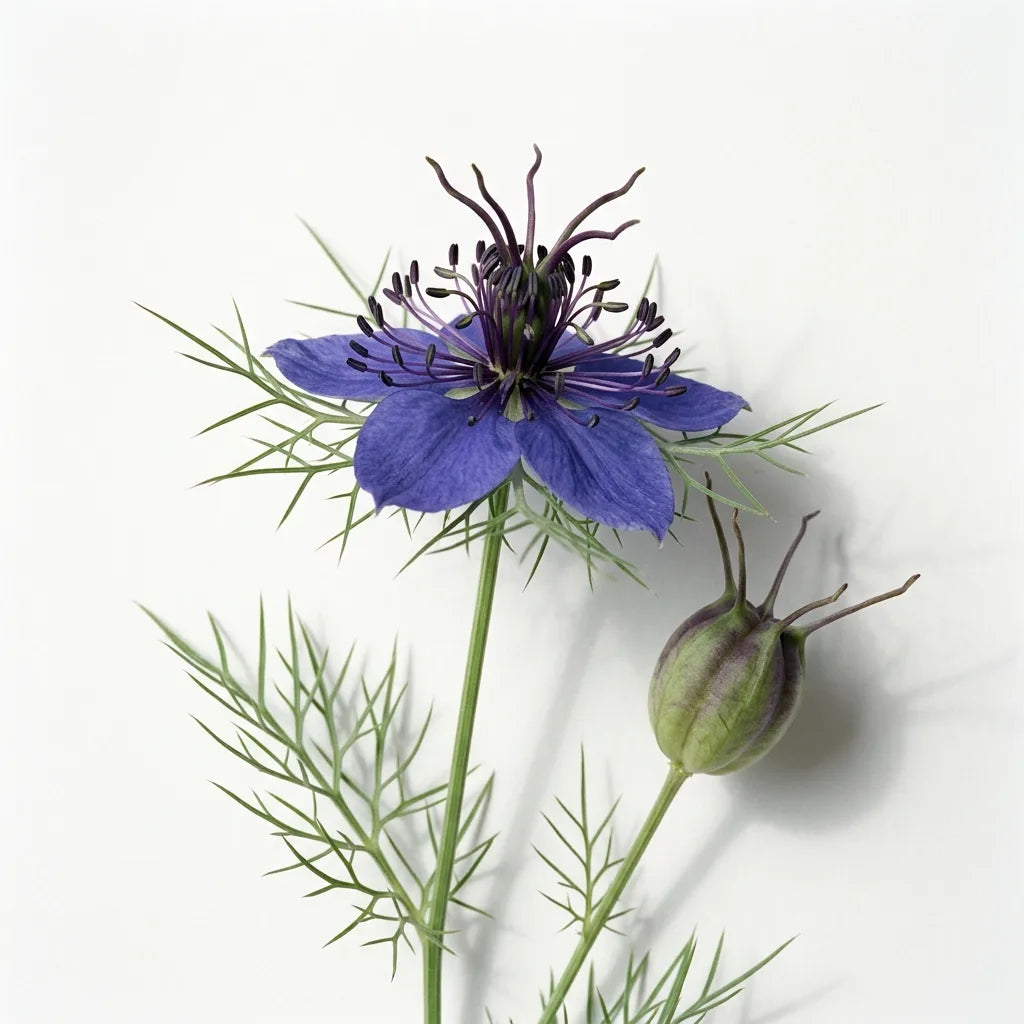
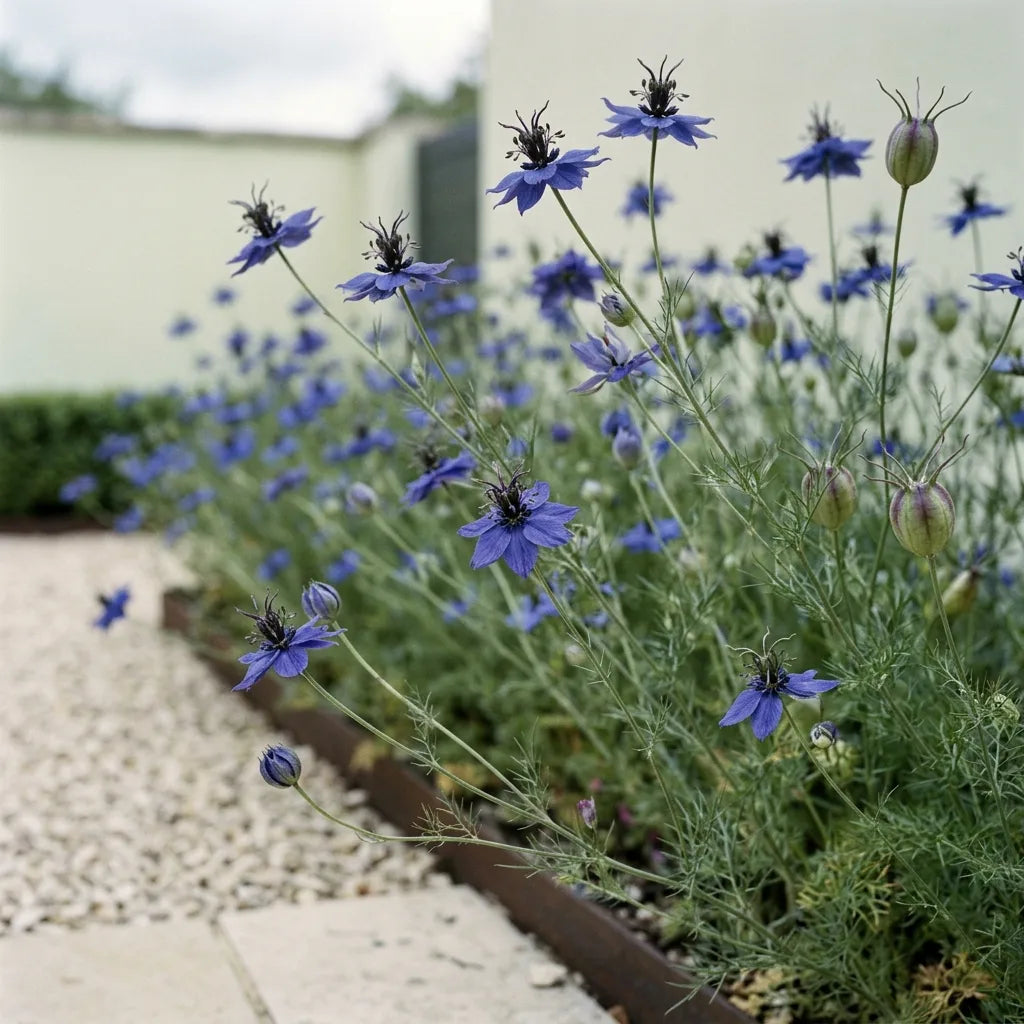
Spanish nigella, papillosa nigella, Spanish Venus’s hair: even more spectacular than its cousin, love-in-a-mist, it produces large deep-blue flowers whose prominent black stamens form an almost graphic crown at the heart of the corolla. Then comes a second spectacle: its swollen, lantern-shaped fruits, which are perfect for dried bouquets.
Characteristics:
-
Striking flowers: intense blue to violet, with highly visible black stamens, from June to August.
-
Naked flower, without a ruff: unlike love-in-a-mist, whose flower is surrounded by a ruff of fine bracts, Spanish nigella does without one. The corolla stands alone at the end of its stem, which is precisely what makes its crown of black stamens so clearly defined.
-
Decorative fruits: swollen lantern-shaped capsules topped with long horns, just as ornamental as the flowers.
-
Airy foliage: finely divided into very narrow strips, it forms a light cloud beneath the flowers. Up to 60 cm.
Sowing advice:
-
Exposure: full sun.
-
Soil: light, well-drained, rather calcareous and not too rich. Like many Mediterranean plants, it performs best in poor soil and dislikes stagnant moisture. No fertilization needed.
-
Method: no stratification required. Sow from March in pots, or directly in the ground from April onward, barely covering the seeds with a few millimeters of soil: light helps germination. Ideal temperature: 15–20 °C. As its root system does not tolerate transplanting well, direct sowing is preferable. See how to sow your seeds.
Care advice:
- Almost none. Stagger sowings every three weeks to extend flowering, and leave a few capsules to form for dried bouquets.
Harvesting advice:
- For dried bouquets, cut the stems when the capsules are fully swollen and beginning to change color, before they open, then dry them upside down.
Beneficial pairings:
Benefits for biodiversity:
- Its wide-open flowers and accessible pollen attract bees and bumblebees, which remain active around them all summer.
- Its seeds, left standing, feed small seed-eating birds in autumn.
Uses:
- Beds, borders, wild gardens, and flowering meadows. Highly prized in both fresh and dried bouquets for its ornamental capsules.
Symbolism:
Like all nigellas, it is associated with freedom, delicacy, and unrequited love, because of its brief flowering period and the graphic strangeness of its flowers.
Harvesting your own seeds:
Leave a few capsules to turn brown and dry completely on the plant until they open at the top, then turn them upside down over a container. Nigella also readily self-seeds from one year to the next. See how to store your seeds.
Commitment to Quality: at SemiSauvage - Permaculture, we grow and select our seeds with respect for all living things as our guiding principle. Based near the Auvergne Volcanoes, we choose reproducible, non-hybrid varieties, test them for germination rates, and carefully sort and package them without any chemical treatment. Our conviction: to give gardeners back the ability to resow, year after year, seeds that truly belong to them.
Sale reserved for amateur gardeners seeking quality and authenticity.