Marrubium vulgare
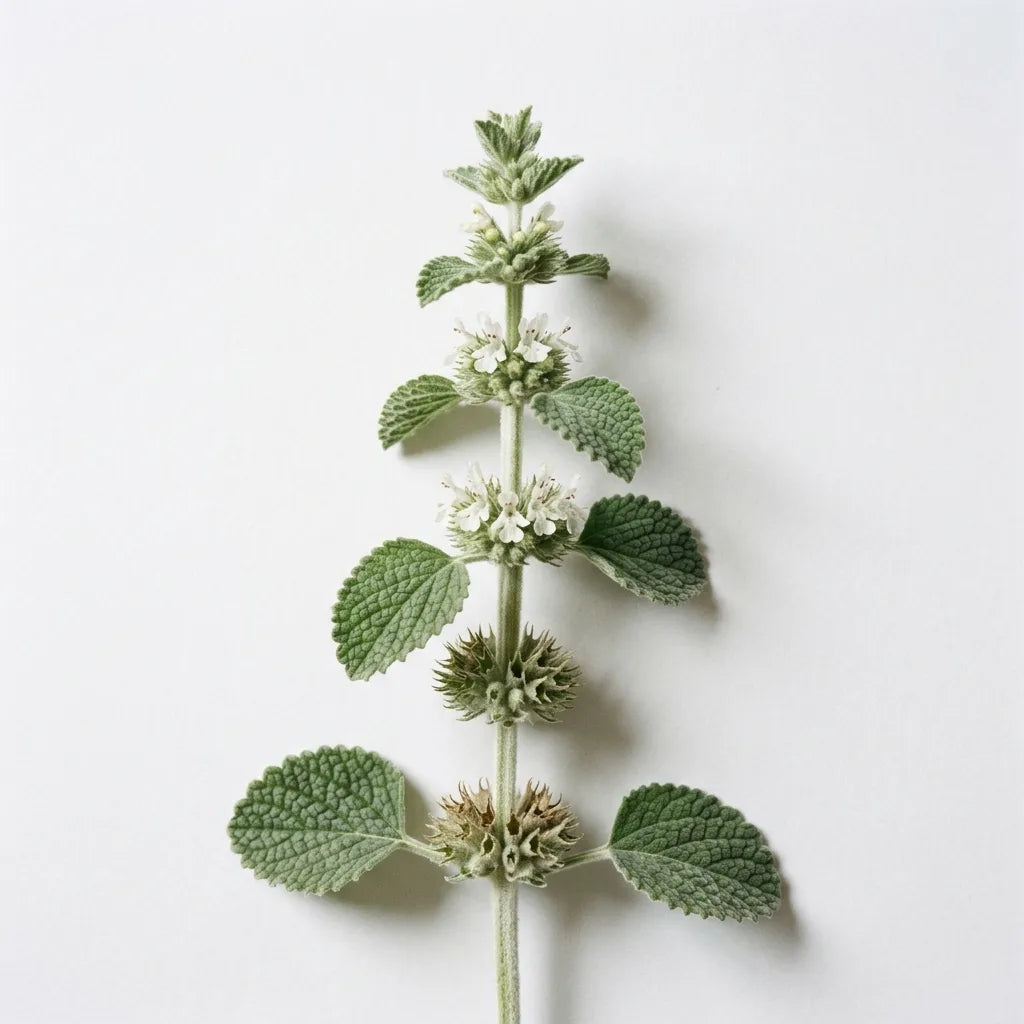
White horehound, common horehound, virgin herb, bonhomme: this small perennial with crinkled, woolly, almost silvery foliage was once found in every country garden before falling out of use. Its growth habit resembles mint, while its fragrance evokes thyme: an understated plant that deserves to make a comeback.
Characteristics:
-
Woolly foliage: crinkled leaves covered with a whitish down, highly decorative and silvery in appearance.
-
Hardy perennial: excellent resistance to both cold and drought, ideal for difficult gardens.
-
Bee-friendly: its whorls of small white flowers are highly attractive to bees.
Sowing advice:
-
Exposure: full sun; it appreciates heat and light.
-
Soil: poor, dry, stony, and well-drained — this is a plant of wasteland and waysides, thriving where little else will grow. Above all, it dislikes stagnant moisture. Do not amend the soil: lean soil concentrates its aromas and enhances its silvery foliage.
-
Method: sow in spring, on the surface since the seeds need light to germinate, in pots or directly in the ground. No soaking or stratification is necessary. See how to sow your seeds.
Planting advice:
- Transplant along borders, in rock gardens, or in herb beds, spacing plants 40 cm apart. It also grows very well in pots, making it a good option for small spaces.
Care advice:
- Almost none. Cut back the clump at the end of winter to keep it compact. No watering is needed once established.
Beneficial pairings:
Benefits for biodiversity:
- Highly valued by bees, it produces abundant nectar throughout a long summer flowering period.
- Its evergreen, woolly foliage provides winter shelter for small beneficial insects.
- Its drought resistance makes it a good candidate for water-wise gardens.
Uses:
- Its highly bitter aromatic leaves are used sparingly in infusions. A traditional medicinal plant of the European countryside. See our medicinal plants to sow.
- As a fermented plant extract, for the garden.
Harvesting your own seeds:
Leave the whorls to dry completely on the plant until they turn brown, then shake the stems over a container: the small seeds settle at the bottom of the prickly calyces. Handle with gloves, as the calyces are sharp. See how to store your seeds.
Commitment to Quality: at SemiSauvage - Permaculture, we grow and select our seeds with respect for all living things as our guiding principle. Based near the Auvergne Volcanoes, we choose reproducible, non-hybrid varieties, tested for their germination rate, carefully sorted and packaged, with no chemical treatment. Our conviction: to give gardeners back the ability to resow, year after year, seeds that truly belong to them.
Rediscover a forgotten herb of country gardens with these white horehound seeds.