Rheum rhabarbarum
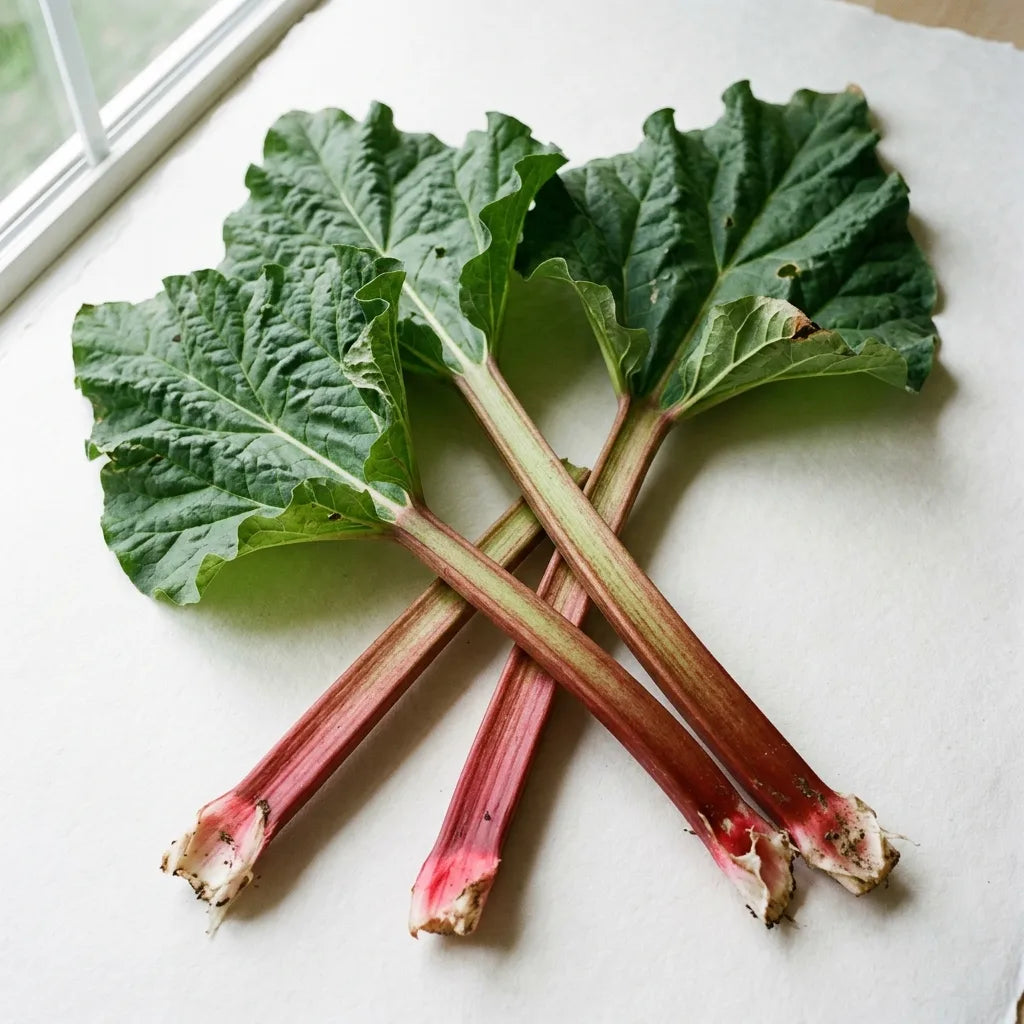
Rhubarb, garden rhubarb: halfway between a vegetable and a fruit, it is one of the few plants of which only the petiole is eaten—not the leaf, root, or flower stalk. An exceptionally hardy perennial that, once established, produces for ten to fifteen years while requiring almost nothing.
Characteristics:
-
Tangy petioles: these are the red or green “stalks” that are cooked.
-
Very long-lived perennial: a single plant produces for 10 to 15 years, with increasingly generous clumps.
-
Very hardy: it tolerates temperatures down to -20 °C, but suffers in very hot weather.
-
Impressive growth: its immense crinkled leaves also make it a highly decorative plant.
Precautions — read carefully:
-
Rhubarb leaves are toxic and must never be eaten, either raw or cooked: their high oxalic acid content causes digestive and kidney problems. Only the petioles, once the leaves have been cut off and discarded, are edible.
- Do not compost large quantities of leaves in compost intended for the vegetable garden, and keep them out of reach of livestock.
- Stop harvesting at the end of June: the oxalic acid concentration in the petioles increases late in the season, and the plant needs to replenish its reserves.
Sowing advice:
-
Exposure: preferably partial shade—it does not like high temperatures and thrives better in cool conditions than in scorching full sun.
-
Soil: deep, cool, rich, and well-drained, enriched with organic matter. This is a very nutrient-hungry plant: a generous addition of compost at planting and every autumn makes all the difference. However, it dislikes standing water, which causes the crown to rot.
-
Method: soak the seeds overnight in lukewarm water, or apply cold stratification for more uniform germination. Sow in spring in pots, 1 cm deep. See how to sow your seeds.
Planting advice:
- Transplant in spring or autumn, allowing at least 1 square metre per plant: the clump becomes substantial. Choose the location carefully, as it will remain there for more than ten years.
- In pots, place it in a warm, sheltered spot (greenhouse, conservatory) until spring is well established.
Care advice:
- Water regularly during dry periods, without overwatering. Mulch generously around the base.
- Cut off the flower stalk as soon as it appears: it exhausts the crown at the expense of the petioles.
- Divide the clump every 5 to 6 years to rejuvenate it.
Harvesting advice:
- Do not harvest anything the first year, and only lightly in the second. After that, pull the petioles by twisting them at the base rather than cutting them: healing is better and the crown is less exposed.
- Never harvest more than half of a plant’s petioles at one time.
Beneficial companions:
Benefits for biodiversity:
- Its immense leaves cover the soil, protect it from drying out, and shelter ground beetles and other beneficial insects close to the ground.
- If you allow a flower stalk to bloom on a well-established plant, its immense cream-coloured panicle will be heavily visited by bees.
Uses:
- Petioles in compotes, jams, pies, and crumbles, or as a tangy accompaniment to meat and oily fish.
Harvesting your own seeds:
Exceptionally allow a flower stalk to grow on a well-established plant, then harvest the winged seeds once they are brown and dry. Note: seedlings produce variable plants; dividing the crown remains the most reliable method for reproducing a good variety. See how to store your seeds.
Commitment to Quality: at SemiSauvage - Permaculture, we grow and select our seeds with respect for all living things as our guiding principle. Based near the Auvergne Volcanoes, we choose reproducible, non-hybrid varieties, tested for their germination rate, carefully sorted and packaged, with no chemical treatment. Our conviction: to restore gardeners’ ability to resow, year after year, seeds that truly belong to them.
Plant once, harvest for fifteen years.