Hypericum androsaemum
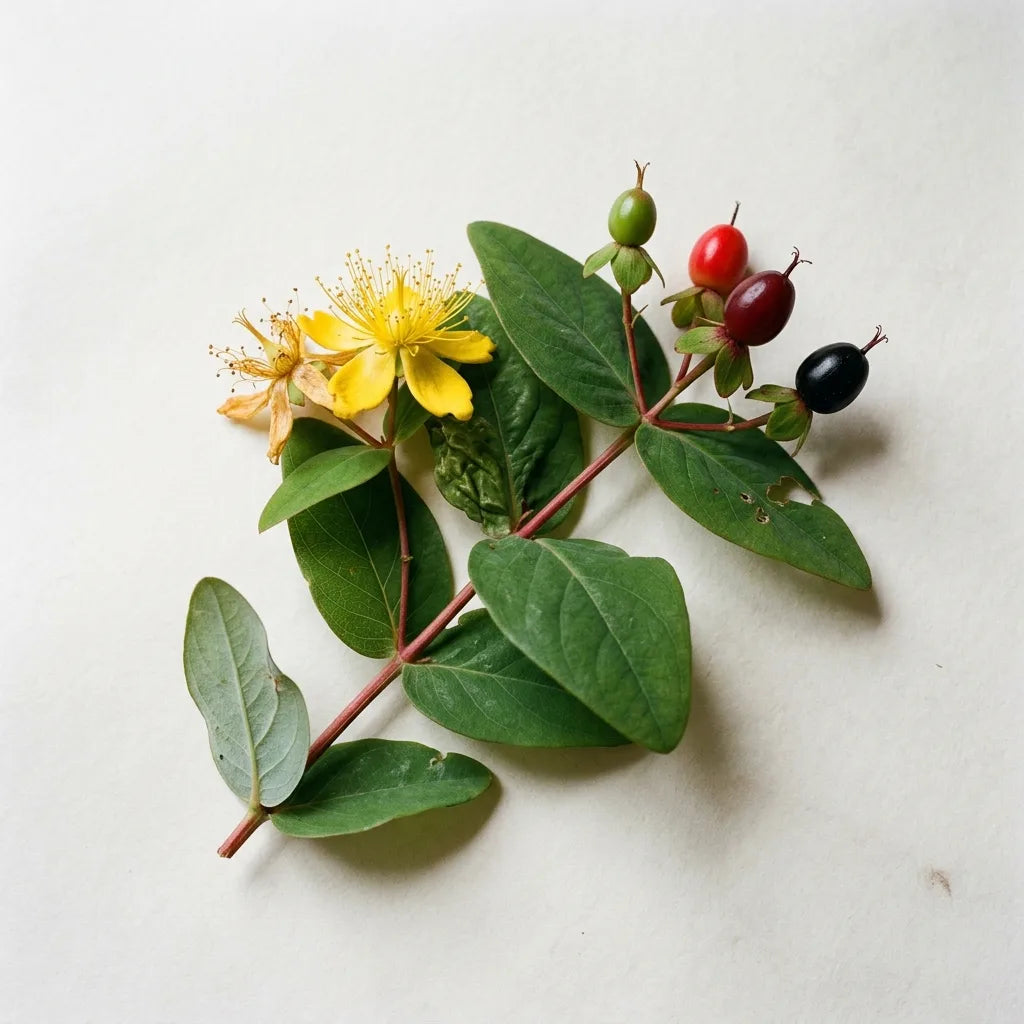
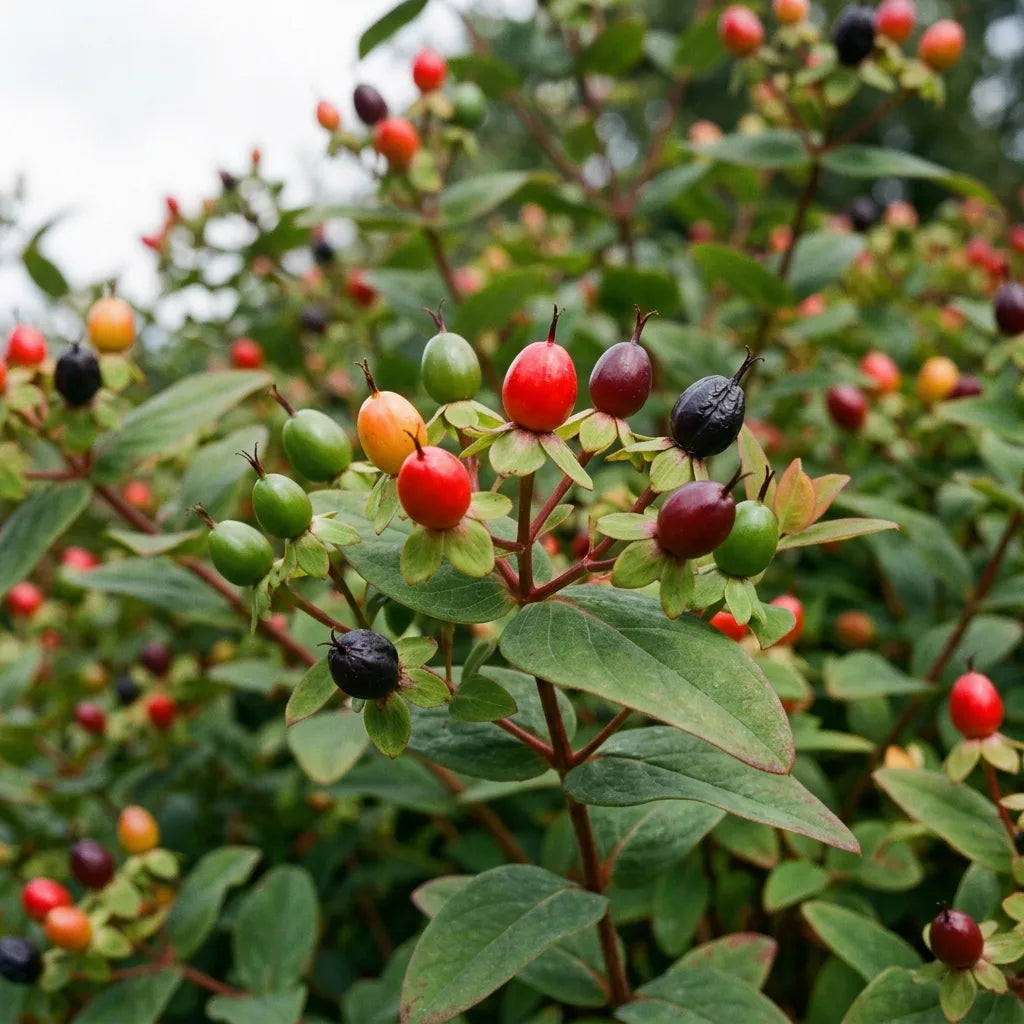
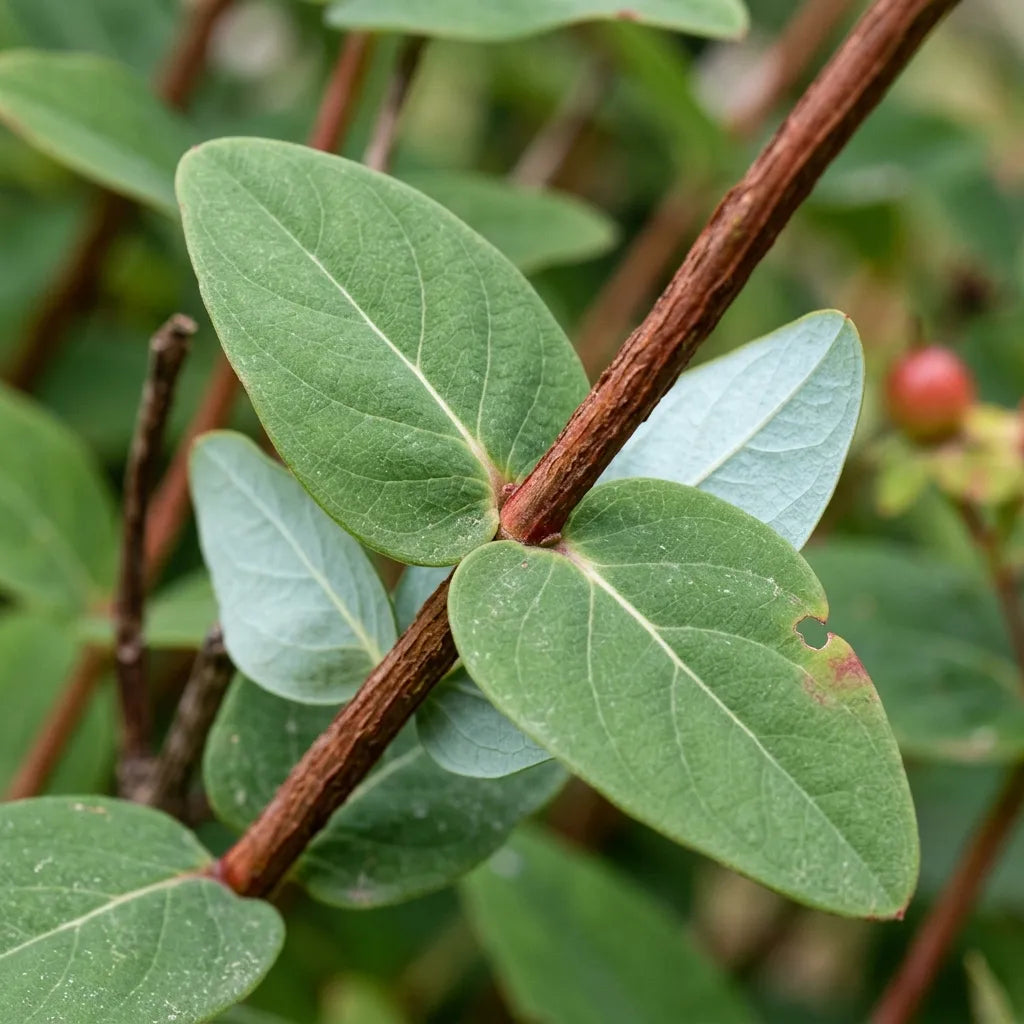
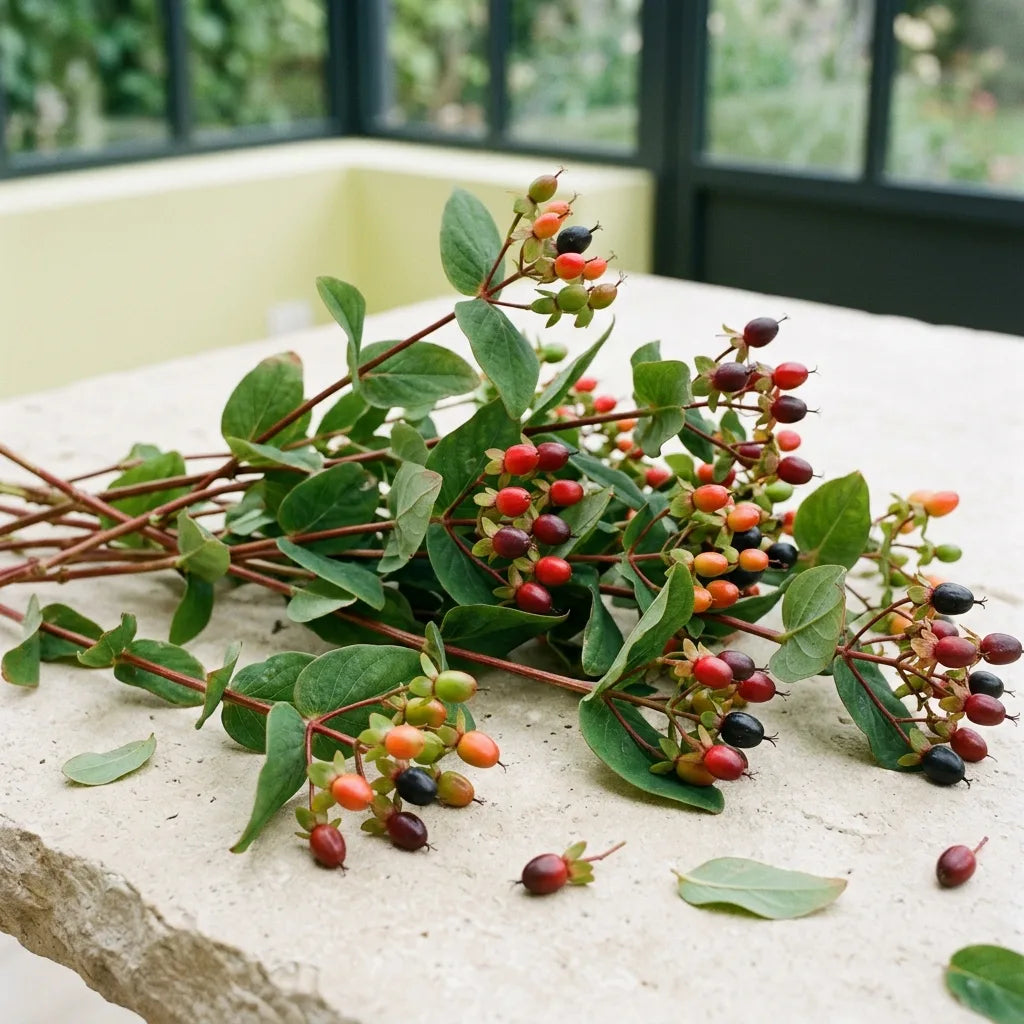
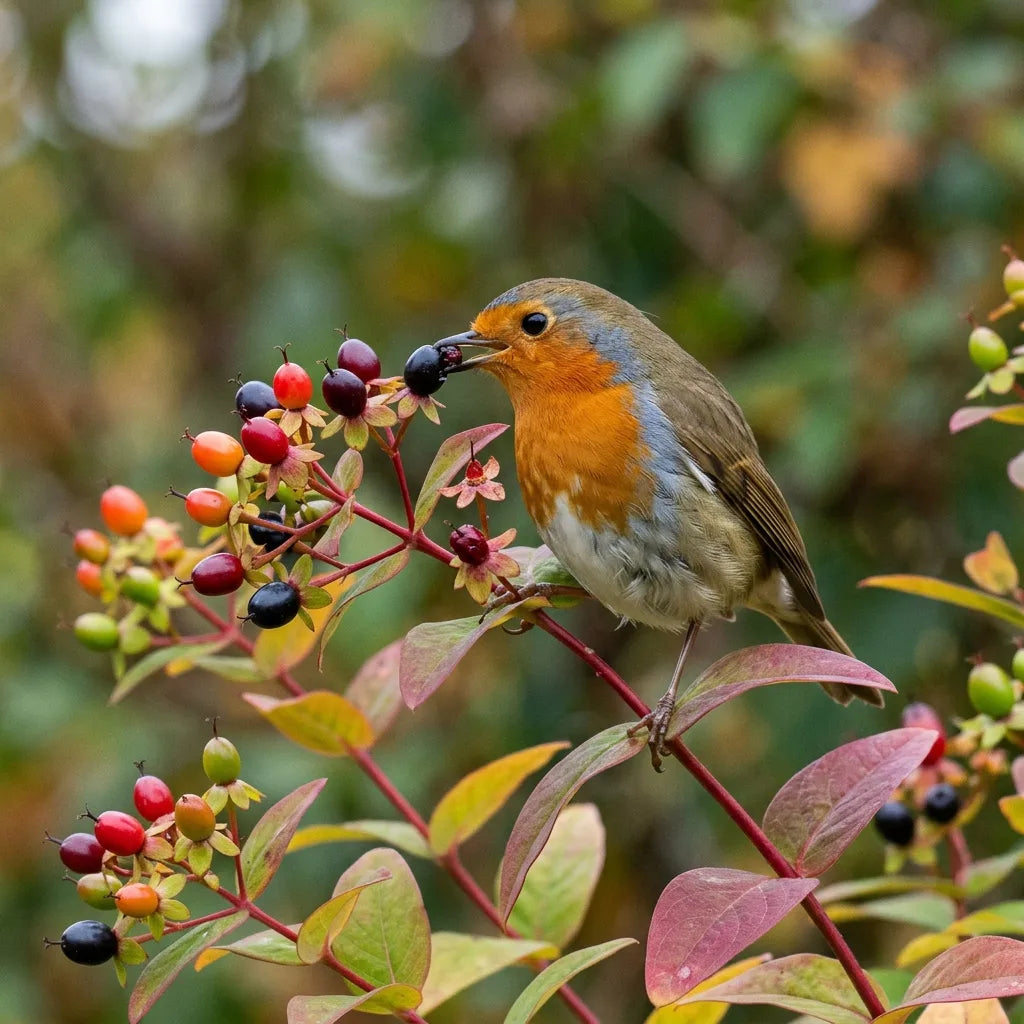
Androsema St. John's wort, officinal androsema, all-heal, blood herb: not to be confused with perforate St. John's wort, its herbaceous cousin. This one is a spreading shrub whose main appeal comes in autumn — its berries successively turn from green to bright red and then glossy black, often displaying all the colors at once on the same branch.
Characteristics:
-
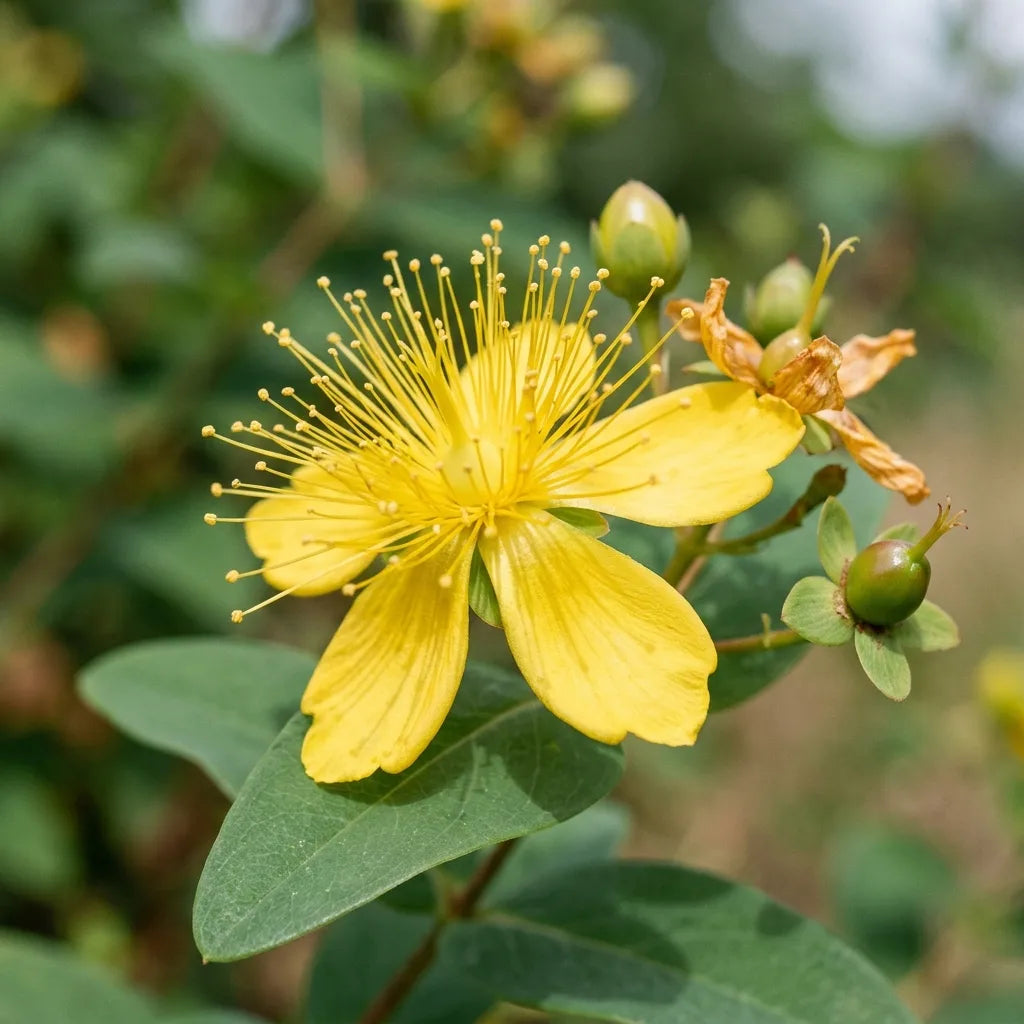
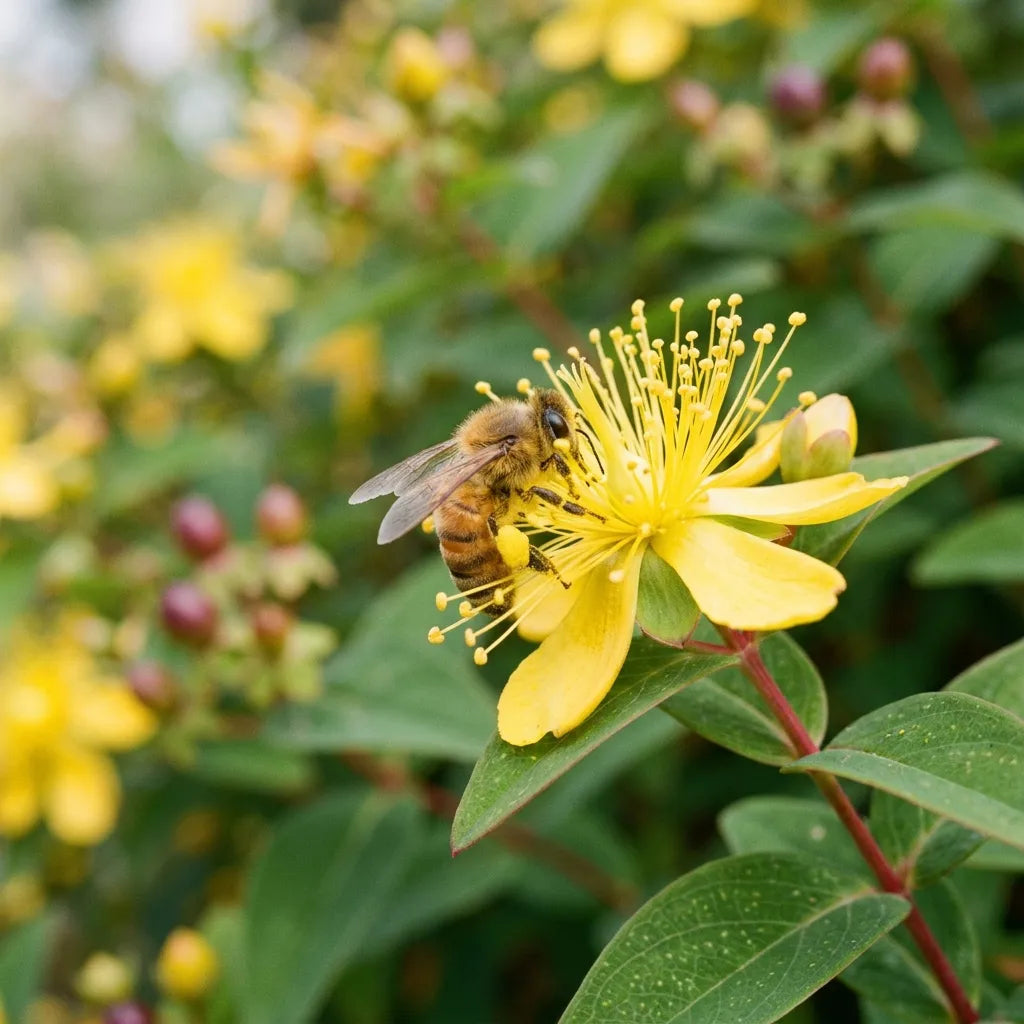
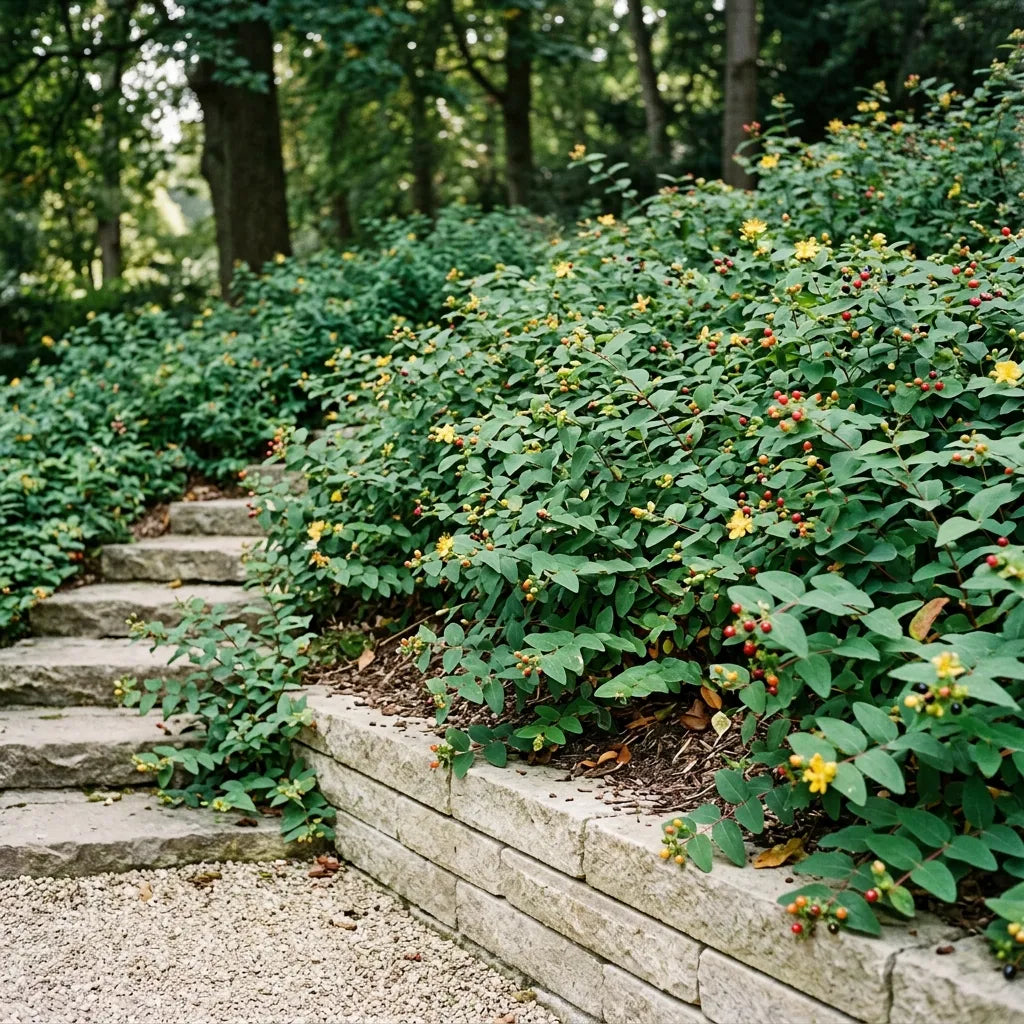
Dual seasonal interest: long-lasting bright yellow flowering from June to September, followed by decorative red fruits turning black.
-
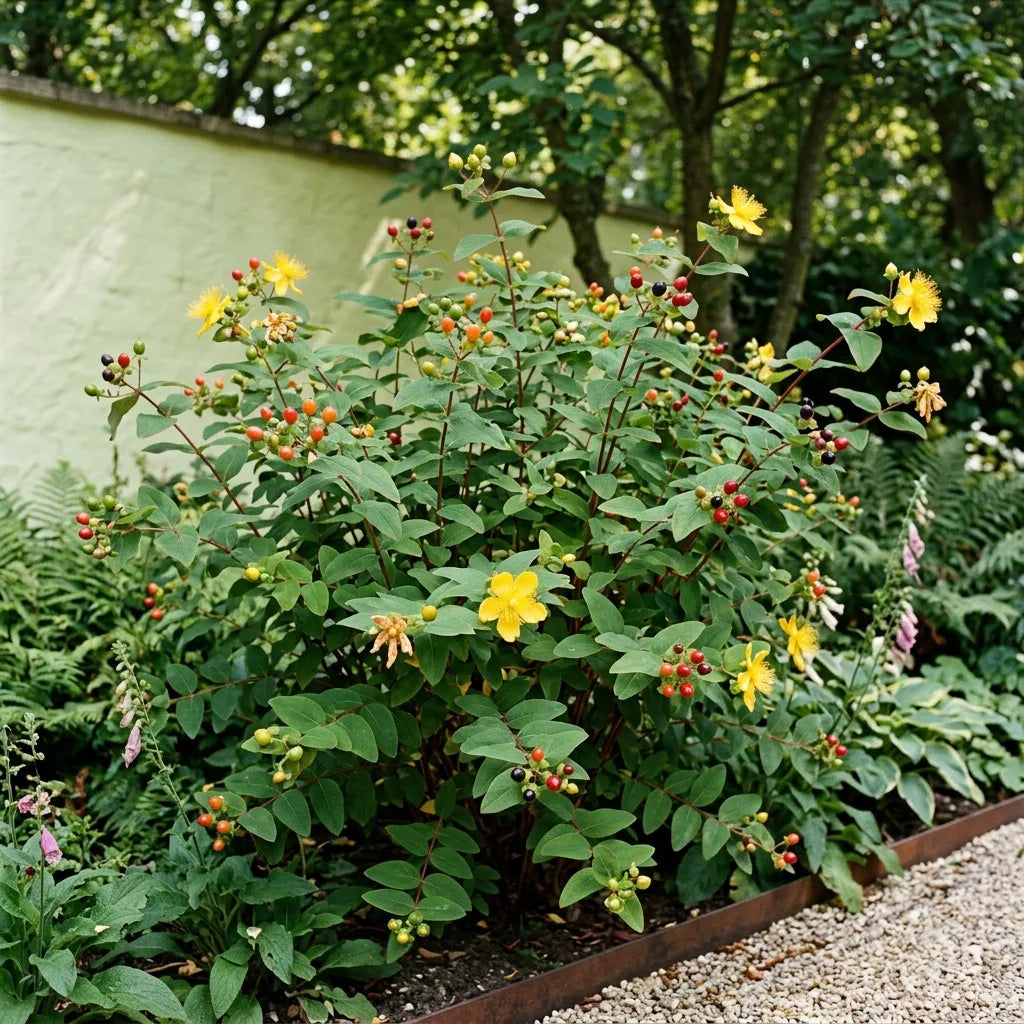
Spreading shrub: about 1 m tall, it effectively fills difficult spots in the garden.
-
Very easy to grow: it adapts to any type of soil, in full sun or partial shade.
-
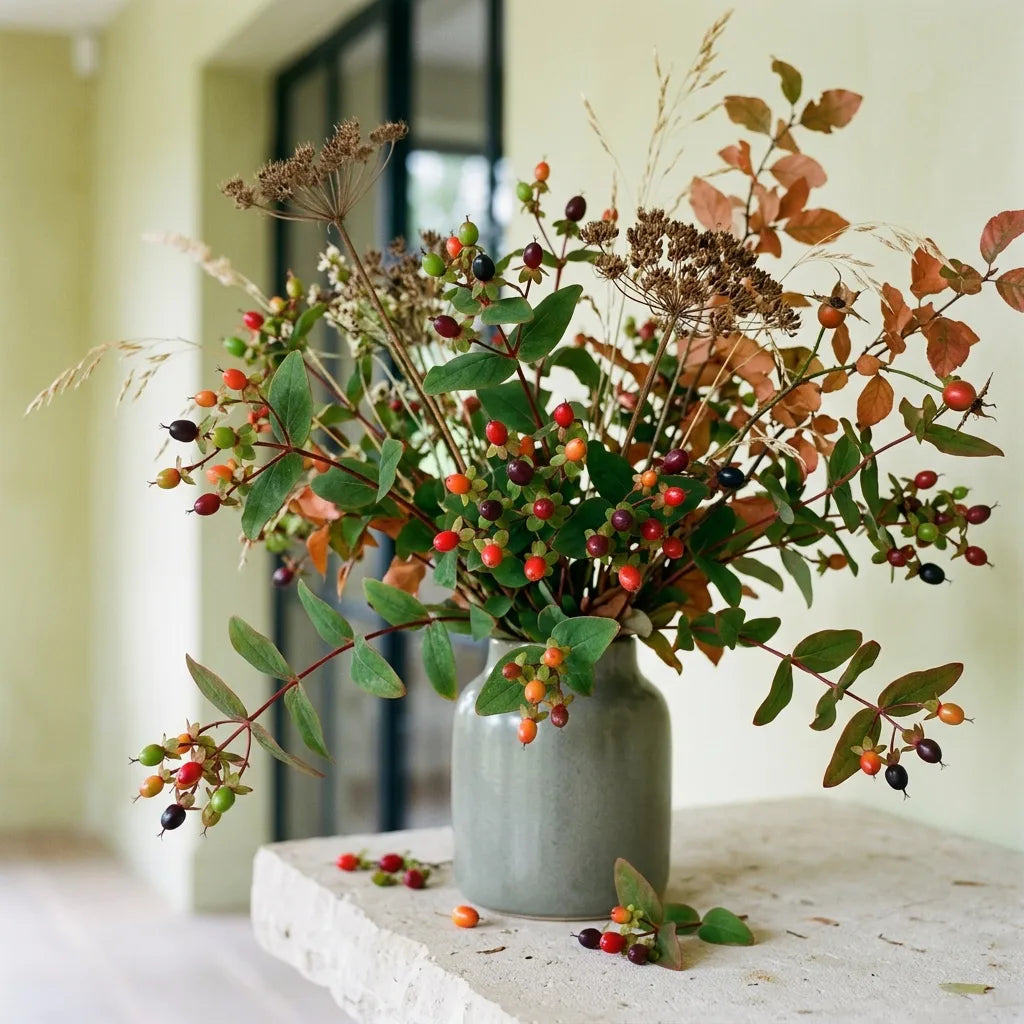
Branches for bouquets: its fruit-laden stems make a striking impression in autumn arrangements.
Precautions:
- Its decorative berries must not be eaten: reserve them for bouquets. Keep them out of the reach of young children.
Sowing advice:
-
Position: full sun or partial shade — it readily tolerates light shade, which is rare and valuable for a flowering shrub.
-
Soil: any type of soil, including poor or chalky soil, provided it remains somewhat moist. This is one of its great qualities: it grows where you no longer know what to plant.
-
Method: sow in spring, on the surface or barely covered — the seeds are tiny and need light to germinate. A period of cold improves the evenness of germination. See how to sow your seeds.
Planting advice:
- Transplant with 60 cm spacing, in borders, on slopes, in light woodland, or as ground cover at the base of taller shrubs.
Care advice:
- Water during the first two years; afterward it becomes self-sufficient.
- Cut the clump back at the end of winter, to 20 cm above the ground: it regrows vigorously and flowers on the current year's wood.
Harvesting advice:
- Cut the fruiting branches at the end of summer, when the berries still show a mixture of green, red, and black: this is when they are most decorative in bouquets.
Beneficial pairings:
- Its tolerance of light shade makes it a good woodland companion, alongside foxglove or honesty.
Benefits for biodiversity:
- Its yellow flowers with long stamens are very rich in pollen and attract bees and hoverflies throughout four months of flowering.
- Its berries feed birds in autumn, which then help spread its seeds.
- Its spreading habit protects the soil and provides shelter for small wildlife, including in shady corners of the garden.
Uses:
- Borders, slopes, ground cover for difficult spots, and especially autumn bouquets for its fruiting branches.
- Traditional medicinal plant — its nickname “all-heal” is a reminder of this. See our medicinal plants to sow.
Harvesting your own seeds:
Leave a few berries to turn completely black on the shrub, then crush them in a little water and rinse to separate the seeds from the pulp. Dry them before storing. See how to store your seeds.
Commitment to Quality: at SemiSauvage - Permaculture, we grow and select our seeds with respect for all living things as our guiding principle. Based near the Auvergne Volcanoes, we choose reproducible, non-hybrid varieties, tested for their germination rate, sorted and carefully packaged, with no chemical treatment. Our belief: to restore gardeners' ability to resow, year after year, seeds that truly belong to them.
A shrub that flowers all summer and produces fruiting branches for autumn bouquets.