Digitalis purpurea
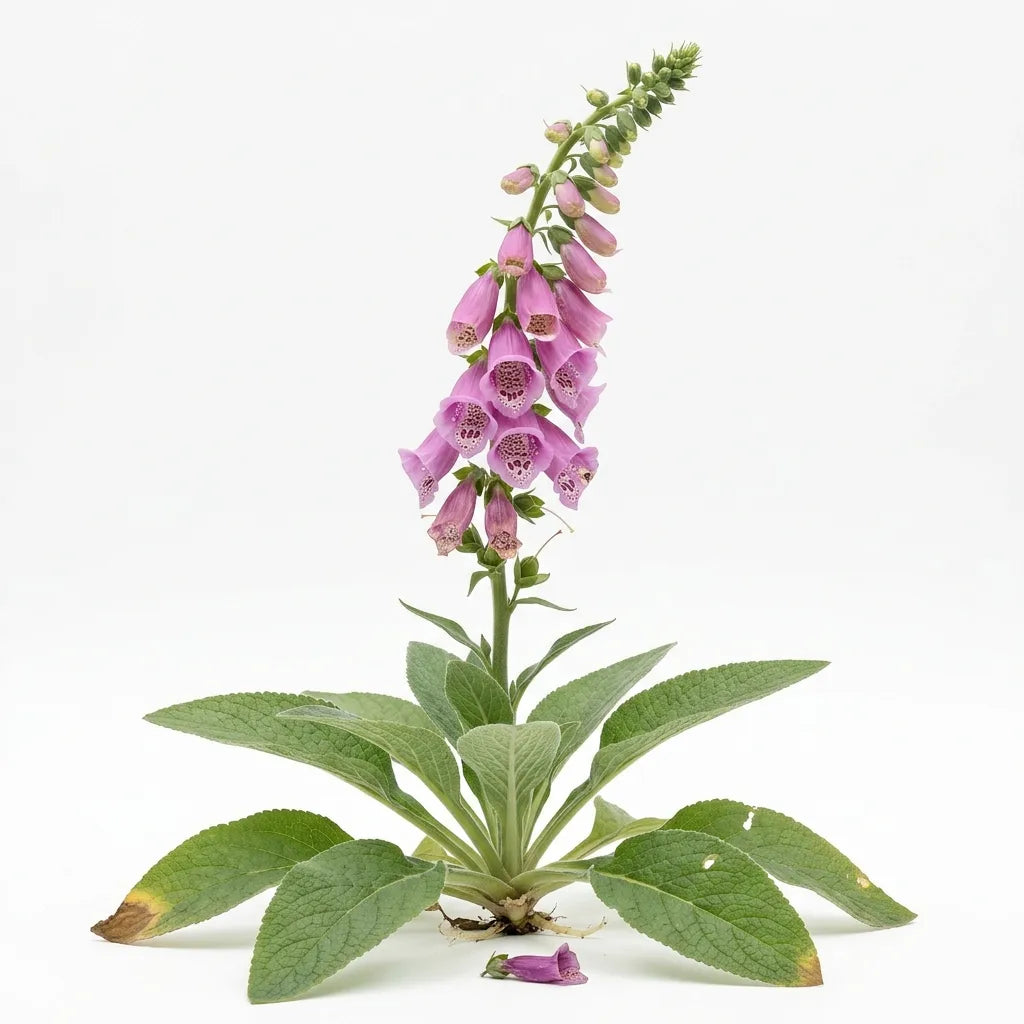
Foxglove, Our Lady’s glove, Virgin’s finger, and “gantelée”: all these names come from the shape of its flowers, those elongated bells into which a finger fits perfectly — digitalis comes from the Latin digitus, meaning finger. Its flower spikes, which can reach 2 metres, make it one of the most spectacular vertical plants for a shade garden.
Characteristics:
-
Majestic flower spikes: up to 2 metres tall, covered with purple bell-shaped flowers speckled inside, from May to July.
-
Shade plant: one of the few plants to flower so generously in shady conditions.
-
Biennial: a rosette in the first year, flowering in the second, then it self-seeds abundantly.
Precautions — please read carefully:
-
All parts of the plant are highly toxic if ingested — leaves, flowers, stems, roots, and seeds. Foxglove contains powerful cardiac glycosides: ingestion, even in small quantities, can be serious.
-
Do not plant it in a garden frequented by young children, or within reach of pets or livestock.
-
Risk of confusion when foraging: its first-year rosettes resemble those of comfrey, with which it has already been mistaken for culinary purposes. Never consume an unidentified rosette.
- Wear gloves when handling it and wash your hands afterwards. Clearly label your seed packets.
Sowing advice:
-
Exposure: partial shade to light shade — this is a plant of woodland edges and clearings, and it suffers in intense, scorching sunlight.
-
Soil: cool, humus-rich, light, and rather acidic, with good drainage. It appreciates woodland soils rich in organic matter and dislikes pronounced alkalinity as well as waterlogged conditions in winter.
-
Method: sow from September to April on the surface without covering, as the tiny seeds need light to germinate. Autumn sowing allows the winter cold to break dormancy naturally; alternatively, apply cold stratification.
Planting advice:
- Transplant at the back of a shaded border, spacing plants 40 cm apart, away from pathways and play areas.
Care advice:
- Keep the soil cool with mulch. Leave a few flower spikes to set seed: foxglove self-seeds and establishes itself permanently in colonies.
Beneficial combinations:
- It shares the shade and moisture requirements of honesty and forget-me-nots, creating a beautiful woodland border.
Benefits for biodiversity:
- Its tubular flowers are custom-designed for bumblebees: the dark markings inside the corolla are genuine guide marks leading to the nectar.
- It is one of the few plants to provide an abundant nectar resource in shady conditions, where pollinators find little food.
- Its seeds feed small seed-eating birds in autumn.
Uses:
- Strictly ornamental: the back of shaded borders, woodland edges, and woodland gardens. It also makes magnificent bouquets, which should be handled with gloves.
Symbolism:
Balancing beauty and danger, foxglove has always been associated with the world of fairies in Celtic traditions — its bells were said to serve as their hats or thimbles.
Harvesting your own seeds:
Leave the faded flower spikes to form their capsules, then harvest them once they are brown and dry — wearing gloves — and shake them over a container: the seeds are extremely fine and numerous. Clearly label the packet. See storing your seeds.
Commitment to Quality: at SemiSauvage - Permaculture, we grow and select our seeds with respect for living things as our guiding principle. Based near the Auvergne Volcanoes, we choose reproducible, non-hybrid varieties, tested for their germination rate, sorted, and carefully packaged, without any chemical treatment. Our belief: to give gardeners back the ability to resow, year after year, seeds that truly belong to them.
Sale reserved for knowledgeable amateur gardeners seeking quality and authenticity.