Cucurbita maxima
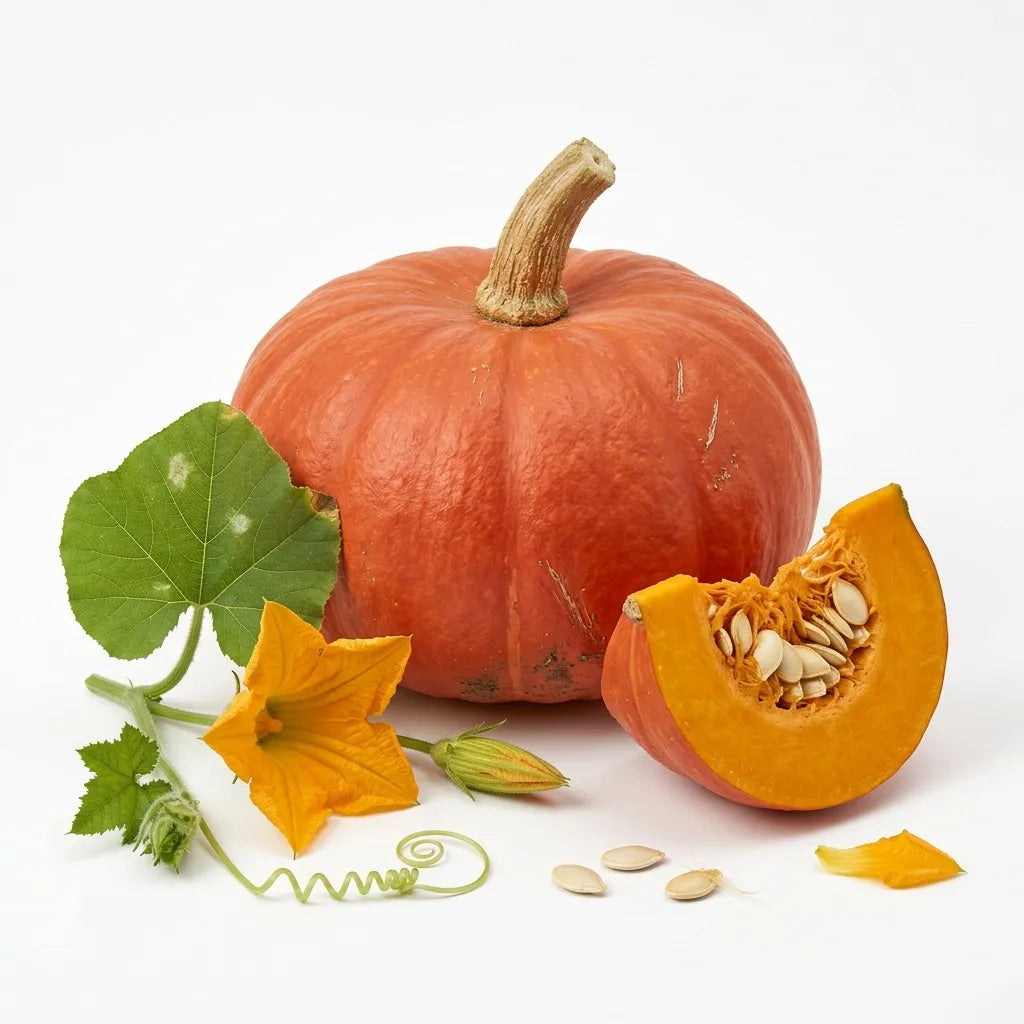
Winter squash, pumpkin, or giraumon: not to be confused with the Halloween pumpkin, its cousin with stringy flesh, better suited to carving than eating. The winter squash is recognizable by its tender, flared stem, and its thick, sweet flesh makes it one of the best keeping squashes for the vegetable garden.
Characteristics:
-
Thick, sweet flesh: deep orange, much finer than that of the pumpkin.
-
Large fruits: flattened and ribbed, they easily reach several kilograms.
-
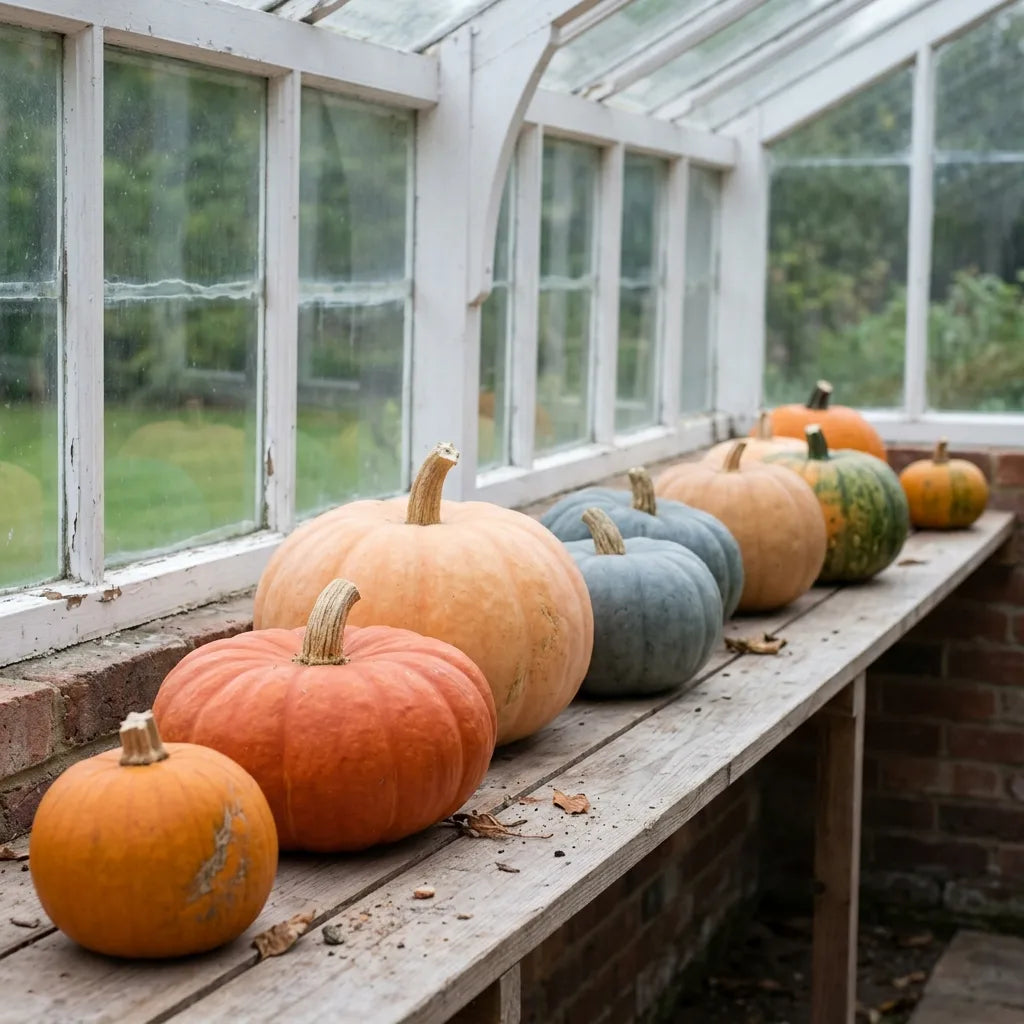
Long storage life: several months in a cool, well-ventilated place.
-
Undemanding: it succeeds even in moderately enriched soil.
Precautions:
- As with all cucurbits, a fruit with a very bitter taste may contain cucurbitacins, which irritate the digestive system. Always taste a small piece: if the bitterness is pronounced, discard the entire fruit.
Sowing advice:
-
Exposure: well exposed, in full sun.
-
Soil: deep and well drained. It tolerates poorly enriched soil, but adding mature compost significantly increases fruit size. It does not tolerate waterlogging around the crown.
-
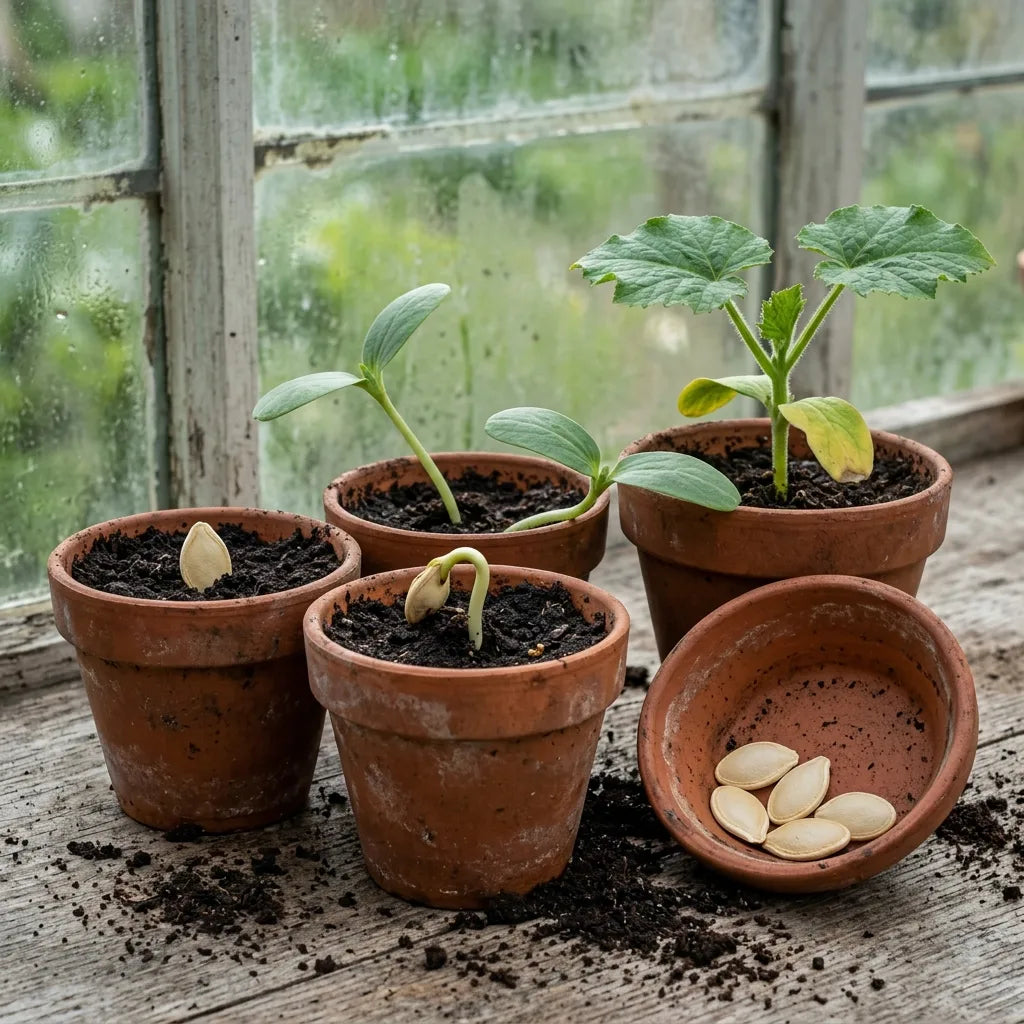
Method: sow either under cover, in a pot filled with compost, or directly in the ground, 2–3 cm deep, with the seed placed on its edge. In regions with harsh climates, sowing in a nursery makes it possible to plant out young plants as soon as the frosts have ended and bring the harvest forward before the cold returns. See how to sow your seeds.
Planting advice:
- Transplant after the frosts, spacing plants 1.5 metres apart: this is a very vigorous trailing plant. A thick mulch keeps the soil cool and the fruits clean.
Care advice:
- Water generously at the base, without wetting the foliage. Place a board under each fruit to isolate it from damp soil.
- Limit to 2 or 3 fruits per plant if you are aiming for large sizes, pinching out the stems after the last fruit.
Harvesting advice:
- Harvest before the frosts, when the stem is dry and the skin can no longer be scratched with a fingernail. Leave 5 cm of stem: if cut flush, the fruit rots quickly.
- Let them dry in the sun for around ten days before storing. Their flavour improves after one or two months in storage.
Beneficial companion plants:
Benefits for biodiversity:
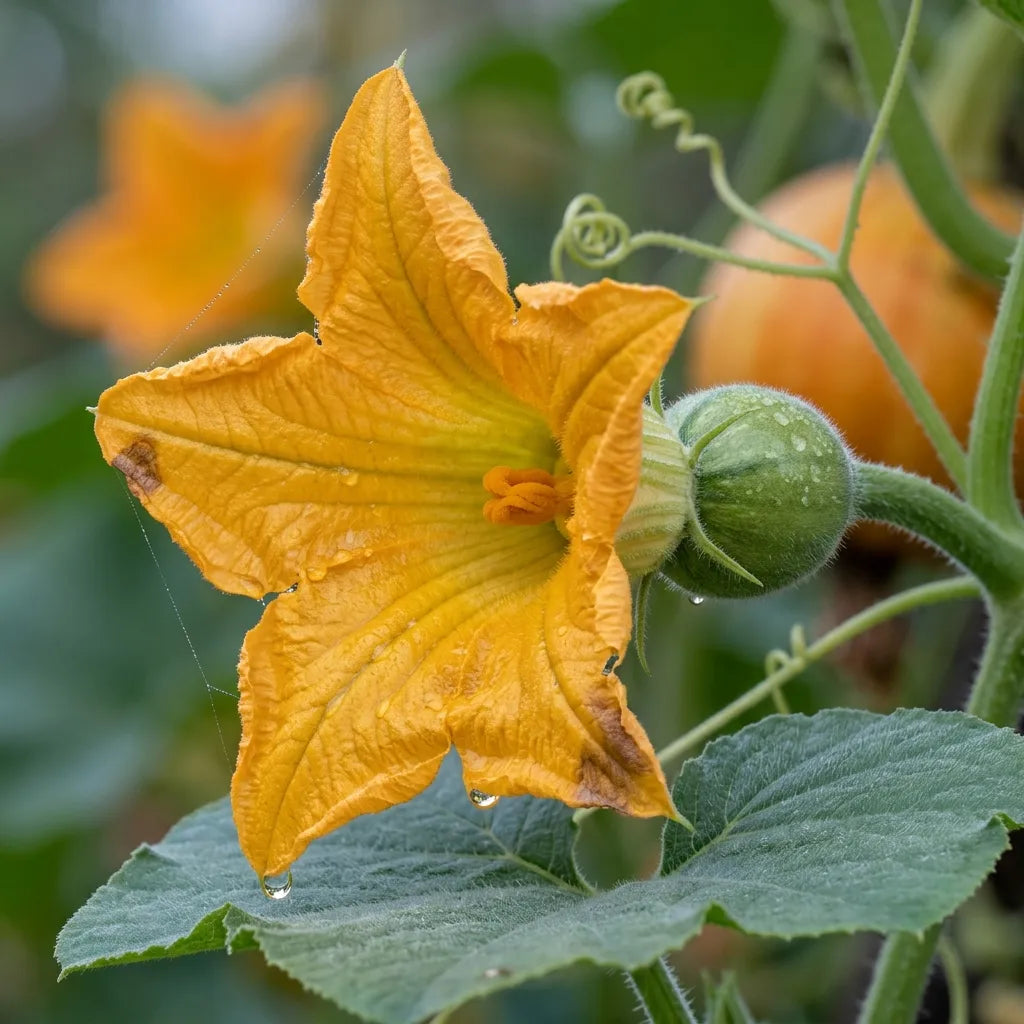
- Its large yellow flowers are a major source of pollen and nectar for bees and bumblebees, opening from daybreak.
- Its immense trailing foliage covers the ground all summer, suppressing weeds and protecting the soil from drying out.
Uses:
- In soup, gratins, mash, sweet tarts, or jam. The seeds can be roasted and eaten as a snack. Once cut open, cover the cut surface with plastic wrap: it keeps for about a week in the refrigerator.
Harvesting your own seeds:
Take the seeds from a fully ripe fruit, rinse them, and dry them flat for several days. Cucurbita maxima does not cross with zucchini (C. pepo) or butternut squash (C. moschata) — but it does cross with red kuri squash. See how to save your seeds.
Commitment to Quality: at SemiSauvage - Permaculture, we grow and select our seeds with respect for all living things as our guiding principle. Based near the Auvergne Volcanoes, we choose open-pollinated, non-hybrid varieties, test them for germination rates, and carefully sort and package them, without any chemical treatment. Our conviction: to give gardeners back the ability to resow, year after year, seeds that truly belong to them.
The generous, easy-to-grow, long-keeping squash.