
Tässä artikkelissa 8
Yksivuotinen kasvimaa perustuu kuluttavaan kiertoon: kylvetään, istutetaan taimet, korjataan sato, kitketään kasvit pois ja seuraavana vuonna aloitetaan taas alusta. Joka kevät maa paljastetaan uudelleen, ja kasvi lähtee liikkeelle siemenestä.
Syötävät monivuotiset kasvit kääntävät tämän asetelman päälaelleen. Kerran paikoilleen asettuneina ne tuottavat vuosien ajan, peittävät maan pysyvästi ja kehittävät juuristoja, joita yksivuotinen kasvi ei ehdi rakentaa. Se on toinen tapa ajatella kasvimaata — alussa hitaampi, mutta sen jälkeen paljon säästeliäämpi.
Mitä monivuotinen kasvi todella muuttaa
- Juuret ulottuvat aivan toiseen tapaan. Yksivuotisella kasvilla on muutama kuukausi aikaa tutkia maata; monivuotinen kasvi työskentelee siinä vuosia. Se yltää kerroksiin ja ravinnevarastoihin, joihin salaatti ei pääse, minkä ansiosta se sietää kuivuutta selvästi paremmin.
- Maa ei ole koskaan paljaana. Kun vuosittaista nollausta ei tarvita, ei synny eroosiota tai pintamaan liettymistä eikä typpi huuhtoudu viljelykasvien välissä.
- Mykorritsaverkosto vakiintuu. Tämä on kiinnostavin kohta: juurten symbioosien rakentuminen kestää useita vuosia, ja jokainen ylösrepiminen tuhoaa ne. Monivuotisten kasvien penkissä ne vakiintuvat pysyvästi — ja kasvi hyötyy paremmasta veden ja mineraalien saatavuudesta. Katso Elävän maan perusteet.
- Työmäärä romahtaa. Kun kasvusto on vakiintunut, kylvöä, taimien istuttamista tai intensiivistä kitkemistä ei tarvita.
- Sadot ajoittuvat eri aikaan. Monet monivuotiset kasvit tuottavat satoa aikaisin — maalis–huhtikuussa — kun yksivuotisella kasvimaalla ei ole vielä mitään tarjottavaa. Se on arjen konkreettisin hyöty.
Kääntöpuoli on todellinen: on odotettava. Parsaa voi korjata kolmannesta vuodesta alkaen, artisokkaa toisesta vuodesta, ja siemenestä kasvatettu marjakasvi tuottaa vielä myöhemmin. Monivuotiset kasvit eivät korvaa yksivuotista kasvimaata: ne täydentävät sitä, ja niitä istutetaan ajatellen viiden vuoden päähän.
Monivuotiset vihannekset
- Vihreä parsa — pitkäikäisesti tuottavin monivuotinen kasvi: hyvin juurtunut parsakasvusto tuottaa viidestätoista kahteenkymmeneen vuotta. Kylvä keväällä, ensimmäinen kevyt sato kolmantena vuonna. Vaatii syvän, vettä läpäisevän maan ja pysyvän kasvupaikan.
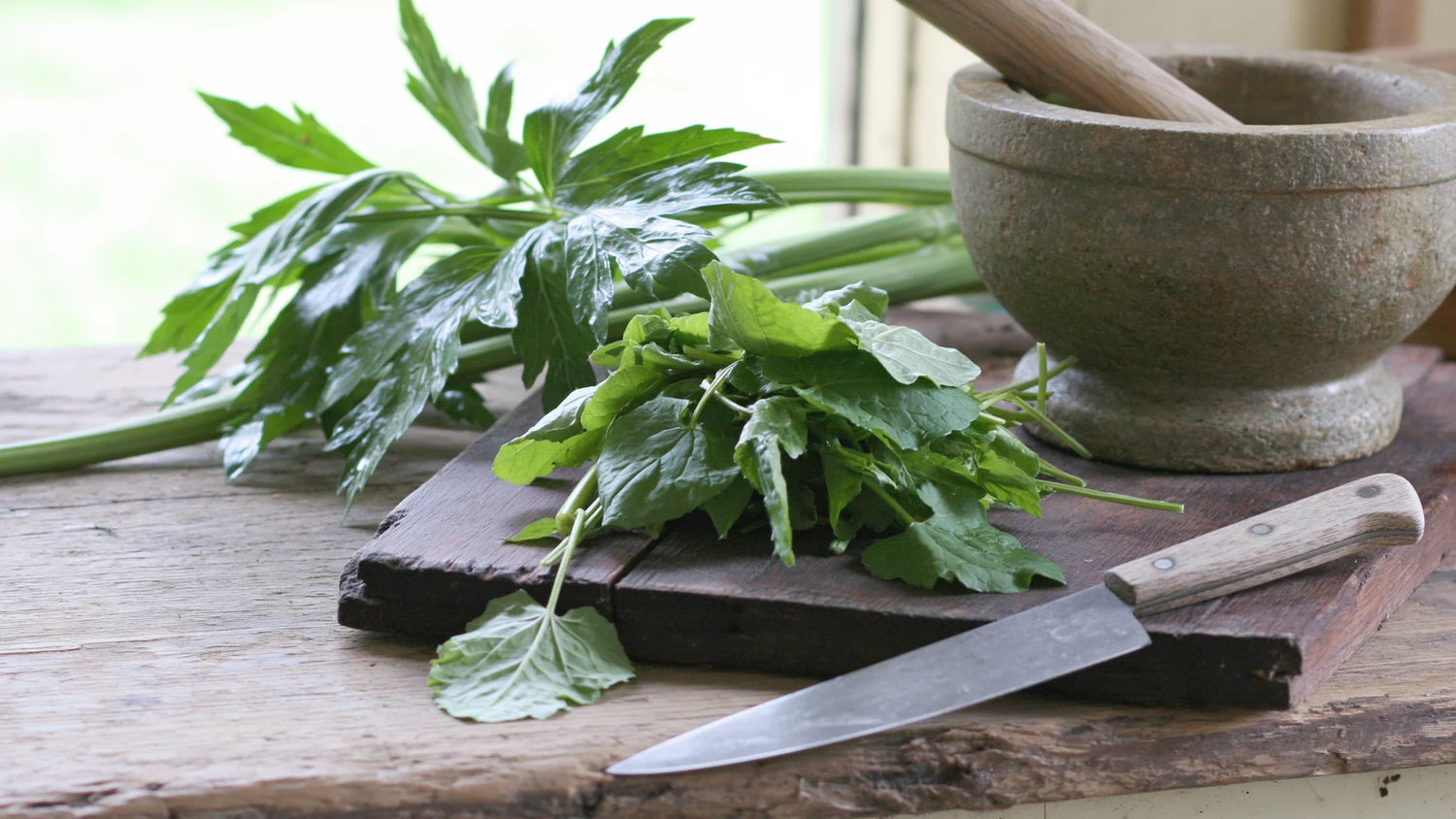
- Liperi (monivuotinen selleri) — erittäin voimakas sellerin maku ilman sellerin vaatimuksia. Yksi kasvi riittää mainiosti talouteen; se kasvaa kaksimetriseksi.
- Villiretikka — kirpeä juuri, erinomainen mauste. Erittäin vaikea hävittää kerran juurruttuaan: pienimmästäkin juurenpalasesta kasvaa uusi kasvi. Istuta se maahan upotettuun ruukkuun tai paikkaan, jonka käyttötarkoitusta et aio muuttaa.
- Karhunlaukka — varjossa viihtyvien perennojen ykkönen, puiden alla tai seinän pohjoispuolella. Sato korjataan maalis–huhtikuussa, ennen kaikkea muuta. Sen siemenet vaativat kylmäkäsittelyn, ja itäminen voi kestää kaksi talvea — älä heitä ruukkua pois.
- Humala — voimakaskasvuinen köynnös, joka kasvaa jopa kuusi metriä kaudessa. Nuoria kevätversoja voi käyttää parsan tavoin. Erinomainen peite pergolaan tai rumalle seinälle.
- Piikitön kapris — kuivaan, kivikkoiseen ja aurinkoiseen etelänpuoleiseen paikkaan. Itäminen on oikukasta ja kasvu hidasta, mutta kasvi sopii erinomaisesti olosuhteisiin, joissa mikään muu ei menesty.
Niitä täydentävät kerran istutettavat klassikot: raparperi, suolaheinä, latva-artisokka, kardi, monivuotinen purjo ja maa-artisokka.
Marjakasvit
Nämä ovat vaivaan nähden antoisimpia monivuotisia kasveja, ja ne sopivat erittäin hyvin kasvimaan reunuksille tai marja-aitaan.
- Metsämansikka — helpoin kylvämällä kasvatettava. Kylväytyy ja leviää rönsyillä itsestään, sietää puolivarjoa ja muodostaa pensaiden juurelle erinomaisen syötävän maanpeitteen.
- Vadelma — pienempi ja paljon aromaattisempi kuin kaupalliset lajikkeet. Leviää juurivesoilla: varaa sille rajattu alue.
- Villikarhunvatukka — elinvoimainen ja ihanteellinen suoja-aidaksi. Pidä se kurissa, sillä se vie tilaa.
- Punaherukka ja mustaherukka — sietävät puolivarjoa, joten ne sopivat hyvin puutarhan pohjoisosiin.
Rehellinen tarkennus: kylvämällä kasvatetut marjakasvit vaativat kärsivällisyyttä — usein kolmesta viiteen vuotta ennen ensimmäistä kunnollista satoa — ja tuottavat erilaisia yksilöitä, koska nämä lajit ovat ristipölytteisiä. Se on kiehtovaa, jos pitää valikoimisesta; sadonkorjuuta pelkästään tavoittelevalle se on hitaampaa kuin ostetun taimen istuttaminen. Molemmat tavat täydentävät hyvin toisiaan.
Monivuotiset yrtit ja kukat
Ne ovat vyöhykkeen 1 tuottoisimpia monivuotisia kasveja — niitä poimitaan ruoanlaiton lomassa.
- Puutarhamaiset yrttikasvit — timjami, salvia, laventeli, oregano, kynteli. Kasvualustan on oltava vettä läpäisevä ja vähäravinteinen; kastelua ei tarvita kasvien juurruttua.
- Ruohovartiset yrttikasvit — sitruunamelissa, ruohosipuli, rakuuna, mintut. Sitruunamelissa ja mintut leviävät voimakkaasti: rajaa ne omalle alueelleen.
- Monivuotiset syötävät kukat — malva, malva, kaunokki, punahattu. Katso Syötävien kukkien siemenet.
Istuta ne oikein
Väärään paikkaan istutettu monivuotinen kasvi aiheuttaa ongelmia kymmenen vuoden ajan. Viisi asiaa, jotka on ratkaistava ennen kylvöä.
- Valitse lopullinen kasvupaikka. Sijoita kasvit vuoroviljelyssä olevien penkkien ulkopuolelle, reunalle tai omalle alueelleen. Yksivuotisen kasvimaan keskellä kasvava monivuotinen kasvi haittaa työskentelyä ja tulee lopulta kitketyksi pois.
- Valmistele kasvualusta syvältä vain kerran. Kuohkeuta maa talikolla ja lisää kypsää kompostia ennen istutusta. Sen jälkeen et enää pääse muokkaamaan maata — tämä on ainoa tilaisuus.
- Ennakoi kasvin täysikasvuinen koko. Lipstikka kasvaa kaksimetriseksi ja humala kuusimetriseksi. Sijoita suuret kasvit pohjoispuolelle, jotta ne eivät varjosta muuta kasvustoa.
- Rajaa leviävät kasvit omalle alueelleen — piparjuuri, minttu, sitruunamelissa, maa-artisokka, vadelma. Upotettu ruukku, 30 cm syvälle painettu reunus tai erillinen kasvupaikka.
- Kastelkaa runsaasti ensimmäisenä vuonna, sitten vähentäkää kastelua. Silloin kehittyy juuristo, joka tekee kasveista omavaraisia.
Syysistutus on selvästi parempi vaihtoehto: kasvi ehtii juurtua talven ja kevään aikana ennen ensimmäistä kuivaa kauttaan.
Vältettävät sudenkuopat
- Istuttakaa kaikki samana vuonna. Silloin odotatte kolme vuotta saamatta mitään satoa. Istuttakaa kaksi tai kolme monivuotista kasvia vuodessa yksivuotisen kasvimaanne rinnalle.
- Aliarvioida leviävät kasvit. Piparjuurta ja maa-artisokkaa on käytännössä mahdotonta hävittää kokonaan. Se ei ole mikään pikkujuttu.
- Korjata satoa liian aikaisin. Toisena vuonna katkaistu parsa ei koskaan juurru kunnolla. Kärsivällisyys on tässä sijoitus.
- Sijoittaa ne vuoroviljelyyn. Ne eivät kuulu siihen — juuri siinä on koko idea.
- Unohtaa lannoittaa. Monivuotinen kasvi käyttää samaa maaperää joka vuosi: vuosittainen kompostilisä pintaan syksyllä tekee pitkällä aikavälillä eron.
Usein kysytyt kysymykset
Voiko kasvimaa koostua pelkästään monivuotisista kasveista?
Se on mahdollista, mutta lautanen olisi epätasapainoinen: vihanneshedelmiä ja tavanomaisia juureksia olisi vähän. Tehokkain ratkaisu yhdistää reunamalle sijoitetun monivuotisten kasvien alueen ja vuoroviljelyssä olevat yksivuotiset penkit — kummallakin on omat vahvuutensa.
Kuinka kauan ensimmäiseen satoon?
Vaihtelee paljon: muutama kuukausi suolaheinällä, sitruunamelissalla tai yrteillä; kaksi vuotta latva-artisokalla ja raparperilla; kolme vuotta parsalla; kolmesta viiteen vuotta siemenistä kasvatetuilla marjakasveilla.
Köyhdyttävätkö monivuotiset kasvit maaperää?
Vähemmän kuin luulisi: ne kierrättävät osan ravinnevarastoistaan joka syksy palauttamalla mineraaleja juurille, ja putoavat lehdet ravitsevat pintamaata. Vuosittainen kompostilisä riittää ylläpitämään tasapainoa.
Toimiiko se ruukussa?
Yrteille ja ahomansikoille ne sopivat erittäin hyvin. Parsalle, lipstikalle tai marjakasveille eivät — ne tarvitsevat syvyyttä. Katso Parvekeviljelmä.
Kylvö vai taimet?
Kylvö maksaa vähän, mahdollistaa omien siementen keräämisen myöhemmin ja tuottaa kasvupaikkaan sopeutuneita yksilöitä. Taimilla säästää yhdestä kolmeen vuotta. Vaikeasti itävien lajien — karhunlaukan, kapriksen ja parsan — kylvö vaatii menetelmällisyyttä; juuri se tekee siitä kiinnostavaa.
Tärkeimmät asiat
Syötävät monivuotiset kasvit eivät korvaa yksivuotista kasvimaata, vaan tuovat sen rinnalle omillaan toimivan kerroksen. Aloita kolmesta helposta lajista — suolaheinästä, ruohosipulista ja ahomansikasta — istuta ne syksyllä reunamille ja lisää joukkoon kaksi tai kolme joka vuosi. Viiden vuoden kuluttua osa sadostasi ei enää vaadi sinulta mitään.
Lisää aiheesta
- Puutarhan suunnittelu kasvuvyöhykkeiden ja valoisuuden mukaan
- Syötävien kukkien siemenet
- Kylmästratifiointi: miksi ja miten siemenet idätetään?
- Kuivuutta kestävät kasvit
Tutustu monivuotisten kasvien ja hedelmäkasvien siementen valikoimaamme — kylvä kerran, korjaa satoa vuosien ajan.

Jätä kommentti
Tämä sivu on suojattu hCaptcha-tunnistuksella, ja hCaptchan tietosuojakäytäntöjä ja käyttöehtoja sovelletaan.