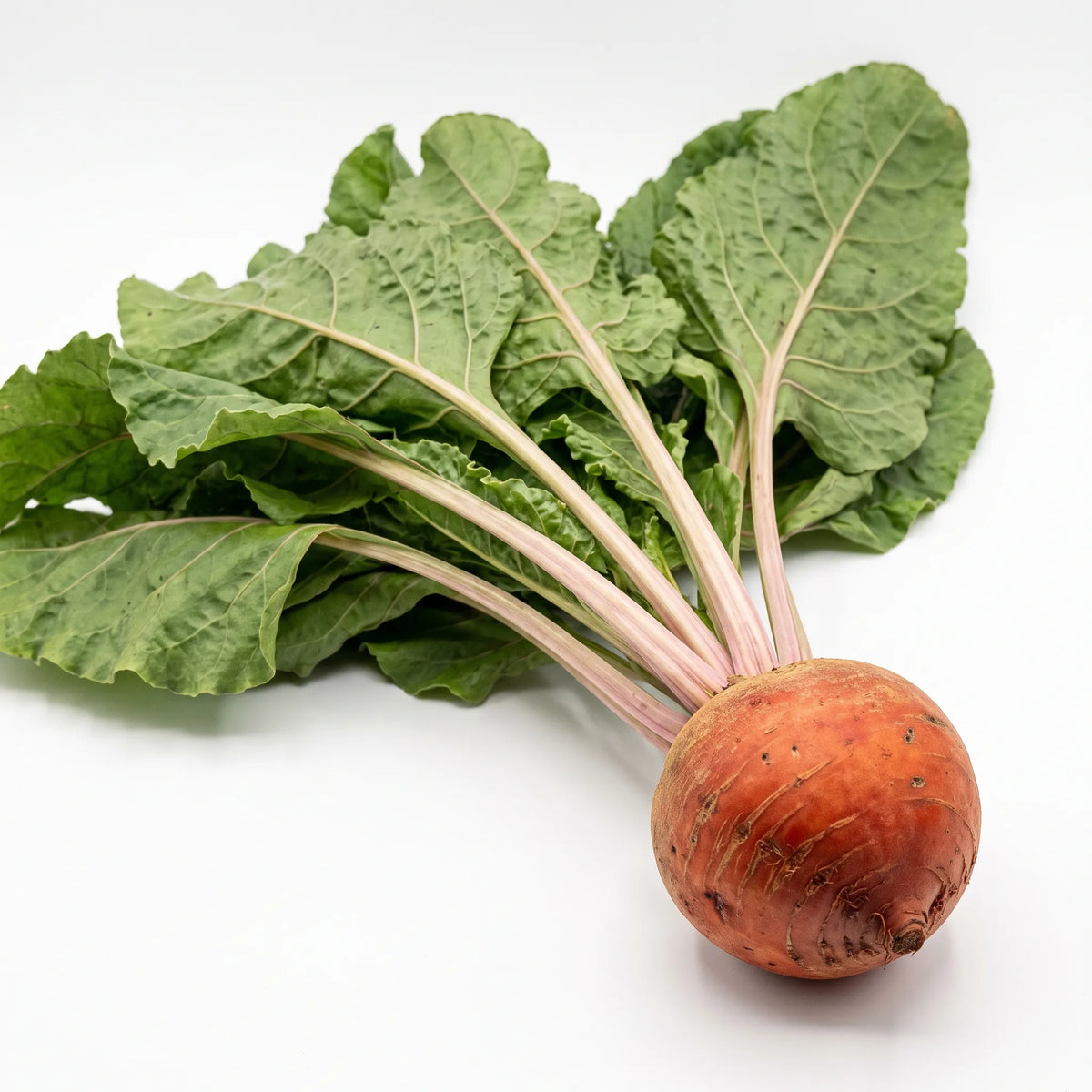
Beta vulgaris “Chioggia”
Chioggia beet, Chioggia beetroot, candy-striped beet: cut it in half and you’ll understand its nickname—its flesh reveals concentric pink and white rings, like a lollipop. This 19th-century Italian variety, originating from the Venice Lagoon, is also one of the sweetest.
Characteristics:
-
Striped flesh: concentric pink and white rings, spectacular when thinly sliced.
-
Mild, sweet flavor: less earthy than red beetroot, excellent raw.
-
Historic Italian variety, seed-saving variety.
-
Suitable for container growing: it grows very well in a planter on a balcony or terrace.
Sowing advice:
-
Exposure: sunny.
-
Soil: cool, light, loose, and deep, enriched with well-rotted compost. Avoid stony soils, which deform the roots, and never add fresh manure.
-
Method: sow from March to June to stagger harvests, 2 cm deep in rows 30 cm apart. Soak the seeds for one hour in lukewarm water to encourage germination. Each “seed” is a glomerule containing 3 to 6 fused seeds—which explains the clustered emergence. See how to sow your seeds.
Care advice:
-
Thin without fail to 10 cm apart as soon as 3 or 4 leaves appear. The good news: beetroot is the only root vegetable that can be transplanted easily—the seedlings removed are not wasted.
- Water regularly, especially during dry periods: fluctuations in water supply cause the roots to split.
Harvesting advice:
- Harvest young, when 5 to 8 cm in diameter: this is when the rings are most contrasting and the flesh most tender. If too large, it becomes paler and fibrous.
- Leave 3 cm of stem when cutting off the tops, which can be cooked like chard.
Beneficial pairings:
Benefits for biodiversity:
- Its broad foliage covers the soil, protects it from drying out, and provides shelter for ground beetles and beneficial insects.
- Growing colorful heirloom varieties like this one directly contributes to maintaining cultivated diversity.
Uses:
-
Best eaten raw: its striped color fades when cooked, so serve it as carpaccio or grated in a salad to make the most of the pattern. If you cook it, choose the oven rather than boiling water, and add a splash of vinegar.
Saving your own seeds:
As a biennial, it produces seed in its second year: keep a few roots protected from frost and replant them in spring. Harvest the dry flower stalks. Beware, it crosses with chard and other beets: isolate your seed plant. See how to save your seeds.
Commitment to Quality: at SemiSauvage - Permaculture, we grow and select our seeds with respect for all living things as our guiding principle. Based near the Volcanoes of Auvergne, we choose open-pollinated, non-hybrid varieties, test them for germination rates, and carefully sort and package them, without any chemical treatment. Our conviction: to give gardeners back the ability to resow, year after year, seeds that truly belong to them.
The beetroot that is eaten raw, for the pleasure of the eyes.