Allium cepa
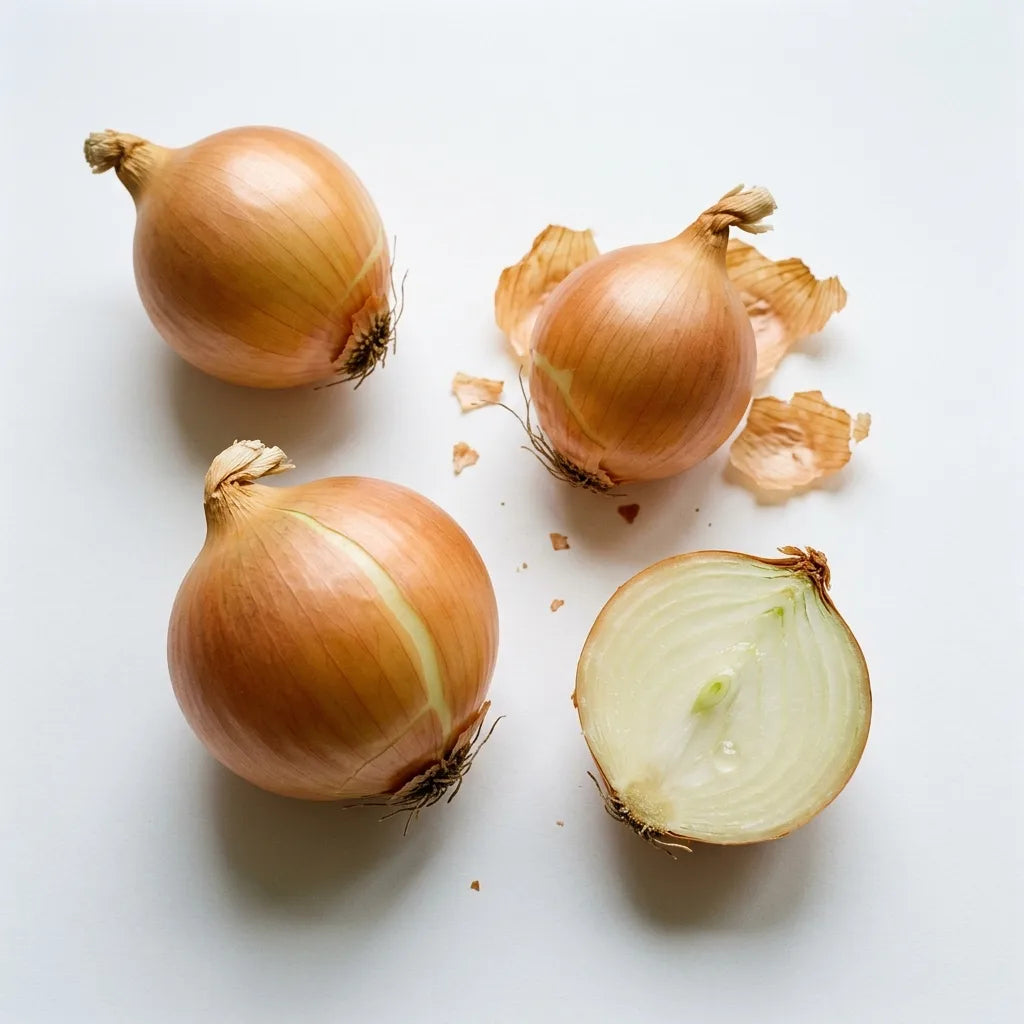
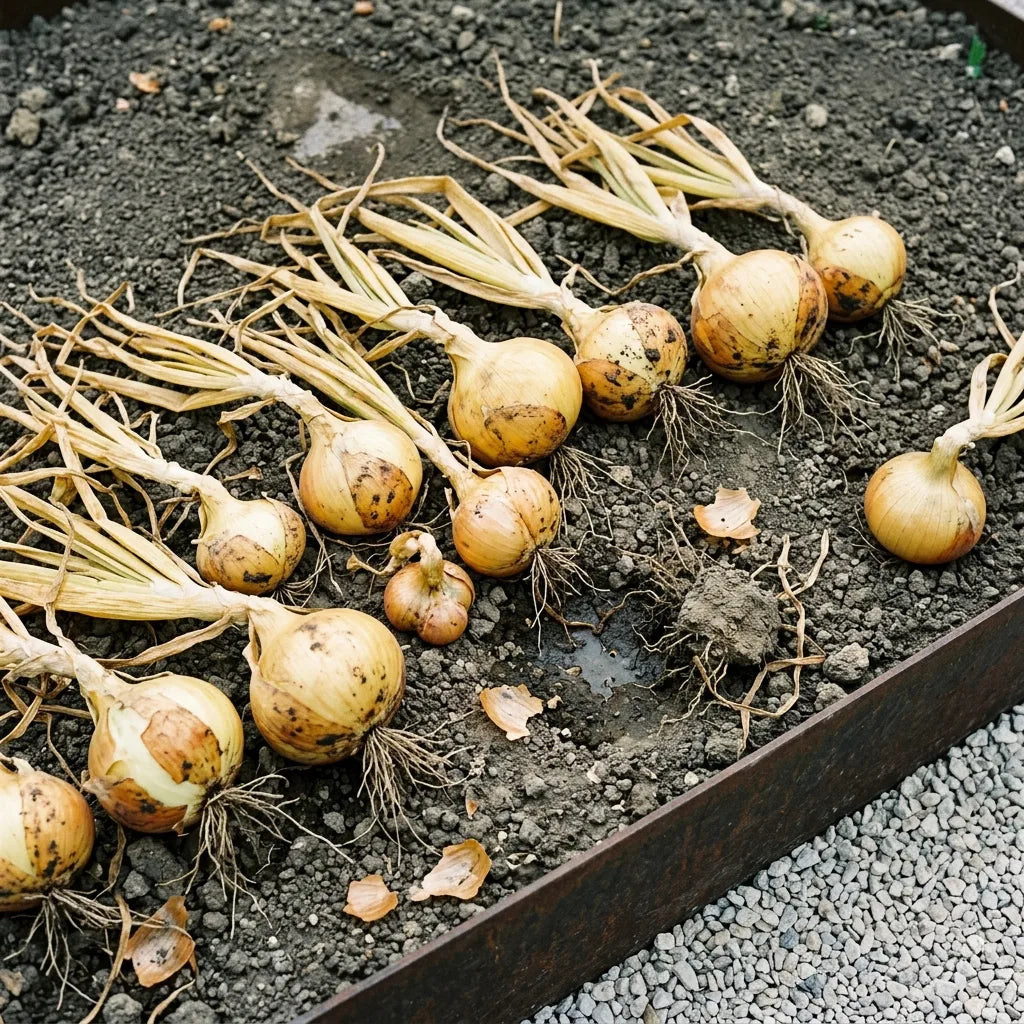
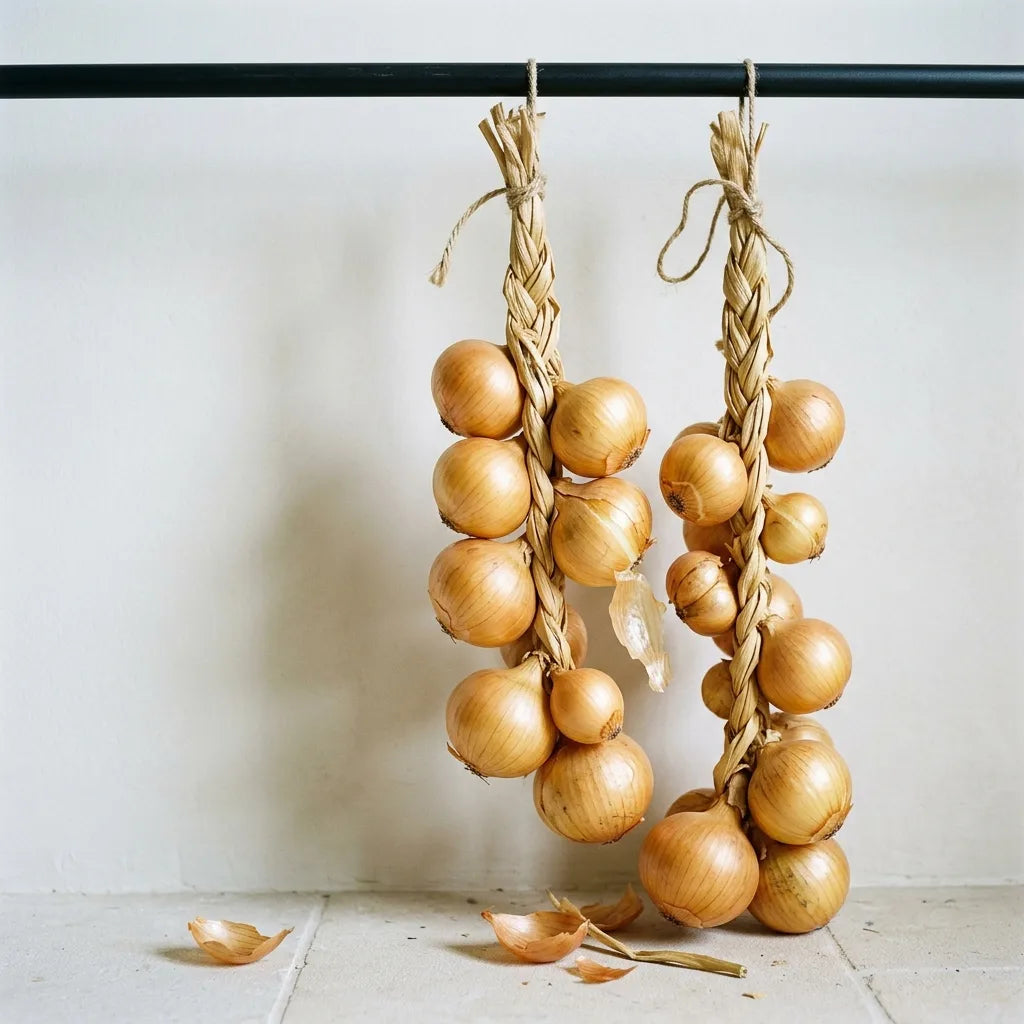
Yellow straw onion, storage onion: this is the ultimate keeping onion, the one traditionally braided into strings and stored throughout the winter in a pantry. Its fine, thoroughly dried golden skin is precisely what allows it to keep for so long without sprouting or rotting.
Characteristics:
-
Excellent storage: when properly dried, it keeps for up to 8 months in a dry, dark place.
-
Distinctive flavor: much more robust than sweet onions, it is perfect cooked and for everyday cooking.
-
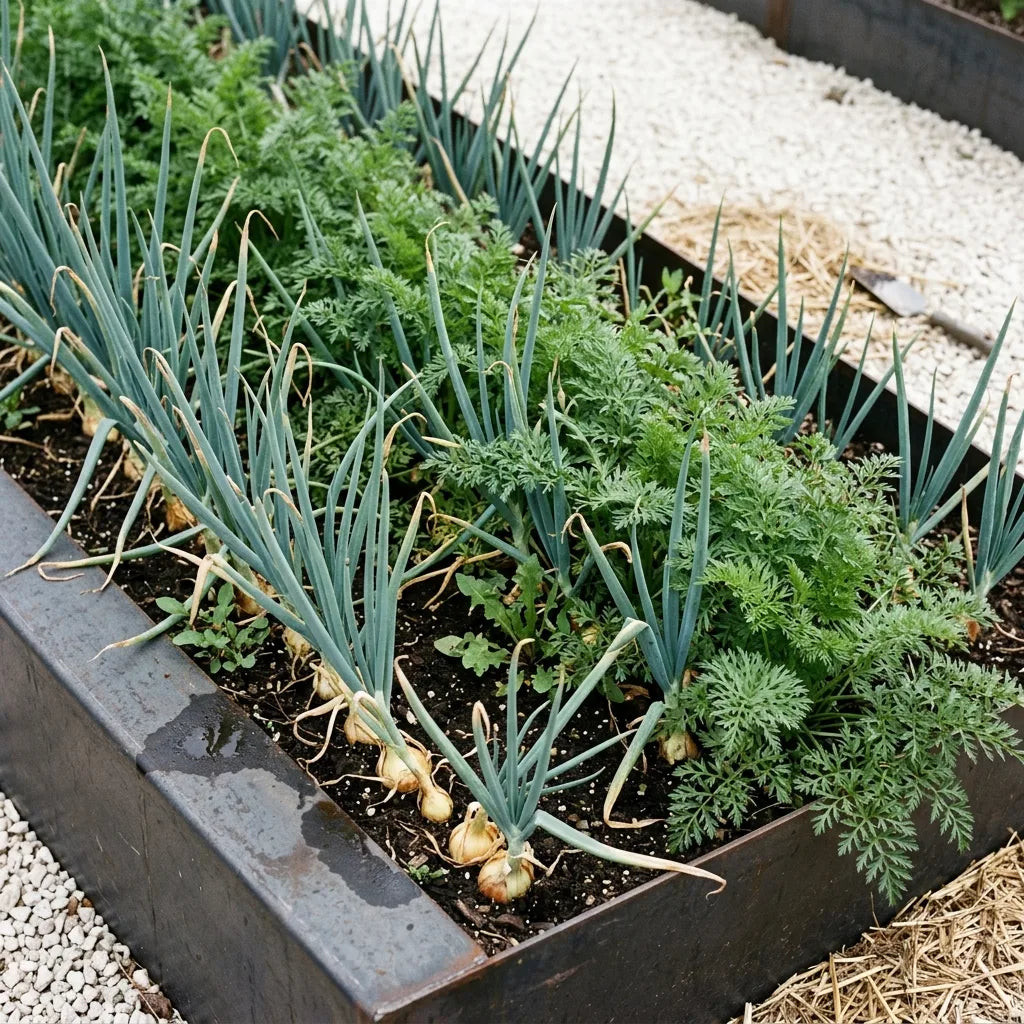
Garden ally: it notably keeps carrot fly away from neighboring crops.
-
Hardy and easy: it adapts to almost any soil, even poor, stony soil.
Sowing advice:
-
Exposure: warm and in full sun.
-
Soil: light, loose, and above all well drained. It tolerates poor soil, which suits it very well: the absolute rule is never to add fresh manure or nitrogen, as these directly compromise bulb storage.
-
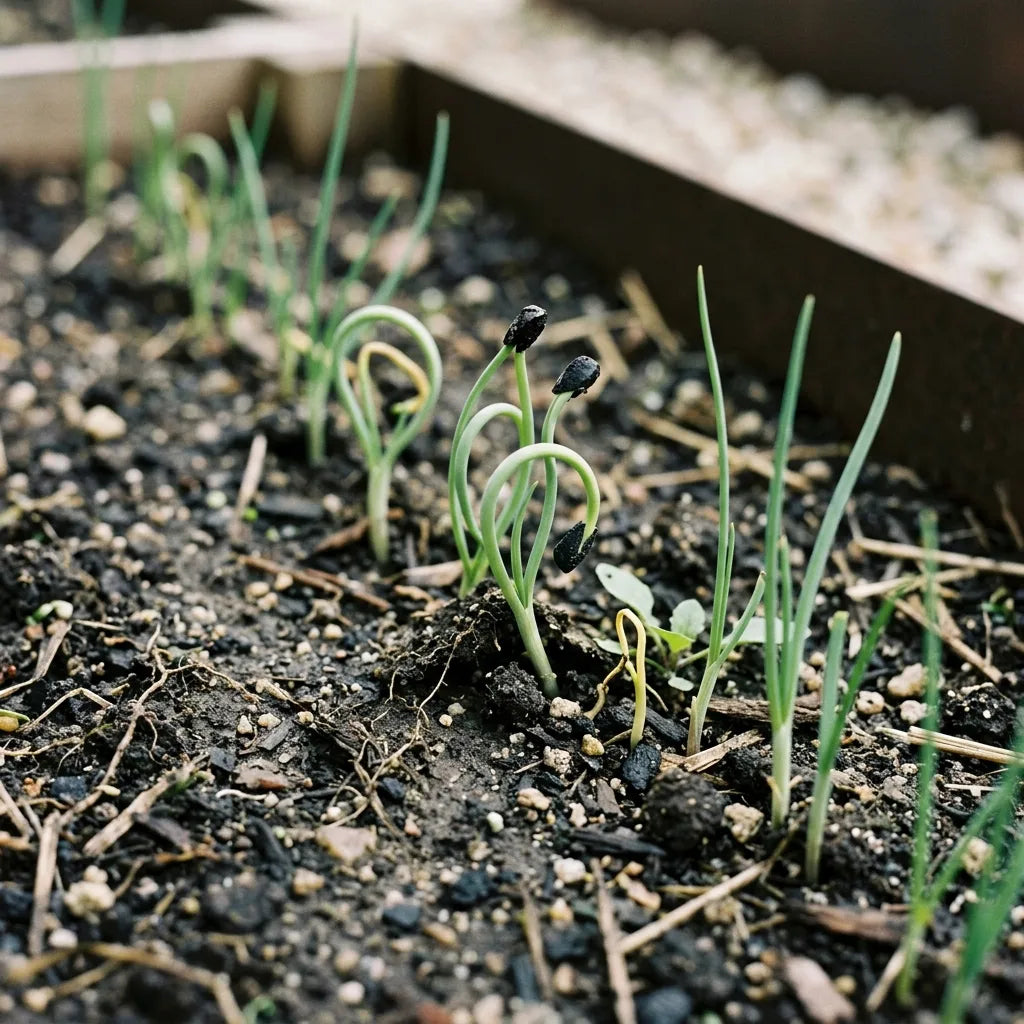
Method: sow under cover in winter or early spring, or directly in place from February onward, in rows 25 cm apart, barely covering the seeds. See how to sow your seeds.
Care advice:
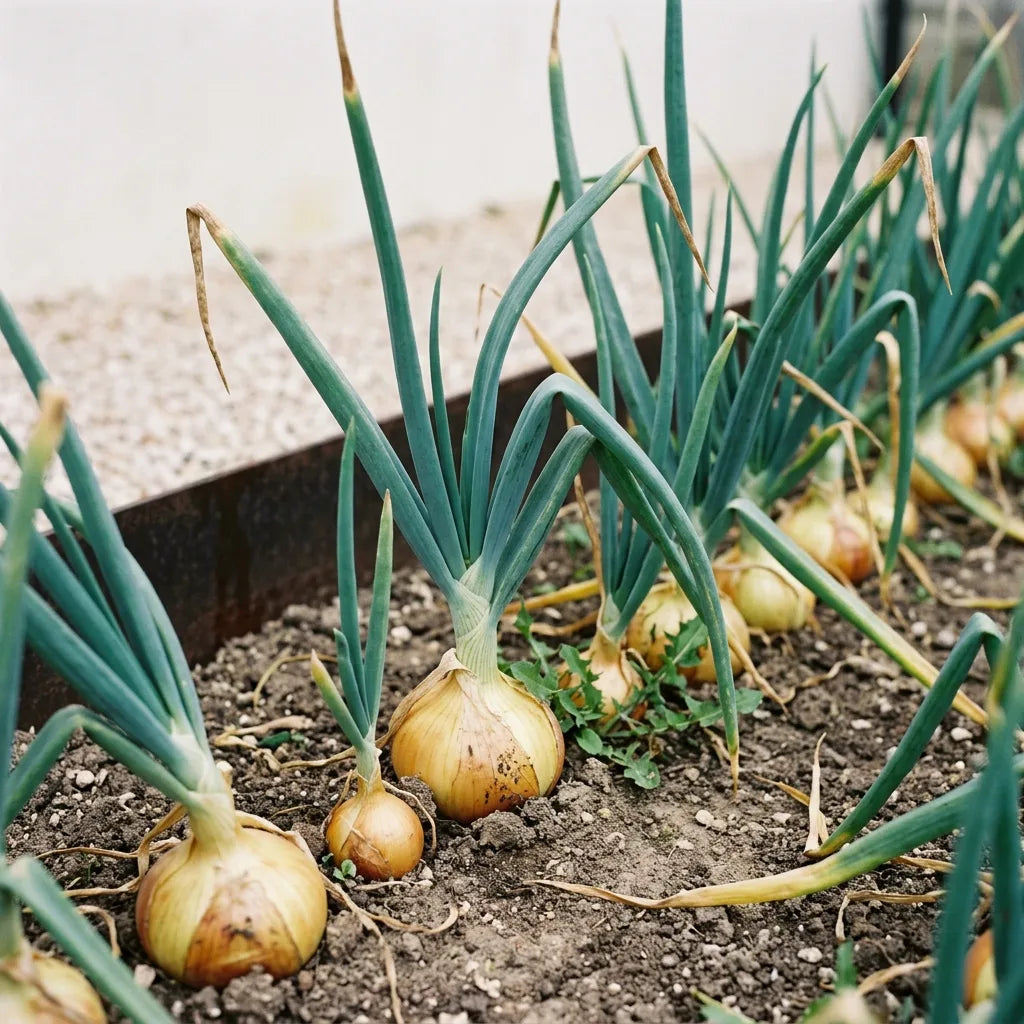
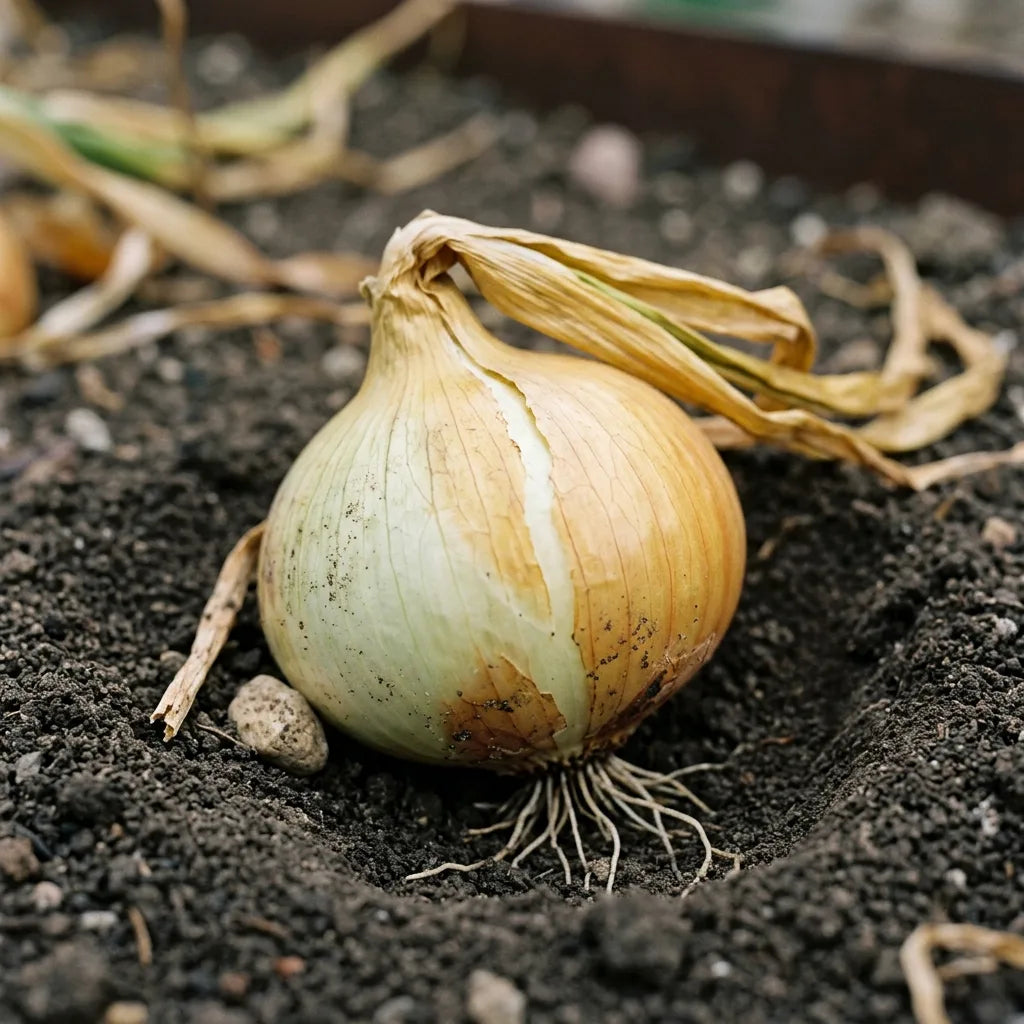
- Thin to 10 cm apart and hoe frequently. Tip: gently clear the soil away from around the bulbs toward the end of their growth so they can ripen in the sun, helping them store better.
- Stop all watering as soon as the bulbs begin to form.
Harvesting advice:
- Harvest when the foliage falls over and turns yellow, in dry weather. Leave the bulbs to dry in the sun for a week, then braid them or store them in a cool, dry, dark place.
- Do not cut the foliage too short: it protects the neck and prevents rotting.
Beneficial companion planting:
Benefits for biodiversity:
- Its sulfur compounds disorient several pests, naturally reducing pressure on neighboring crops.
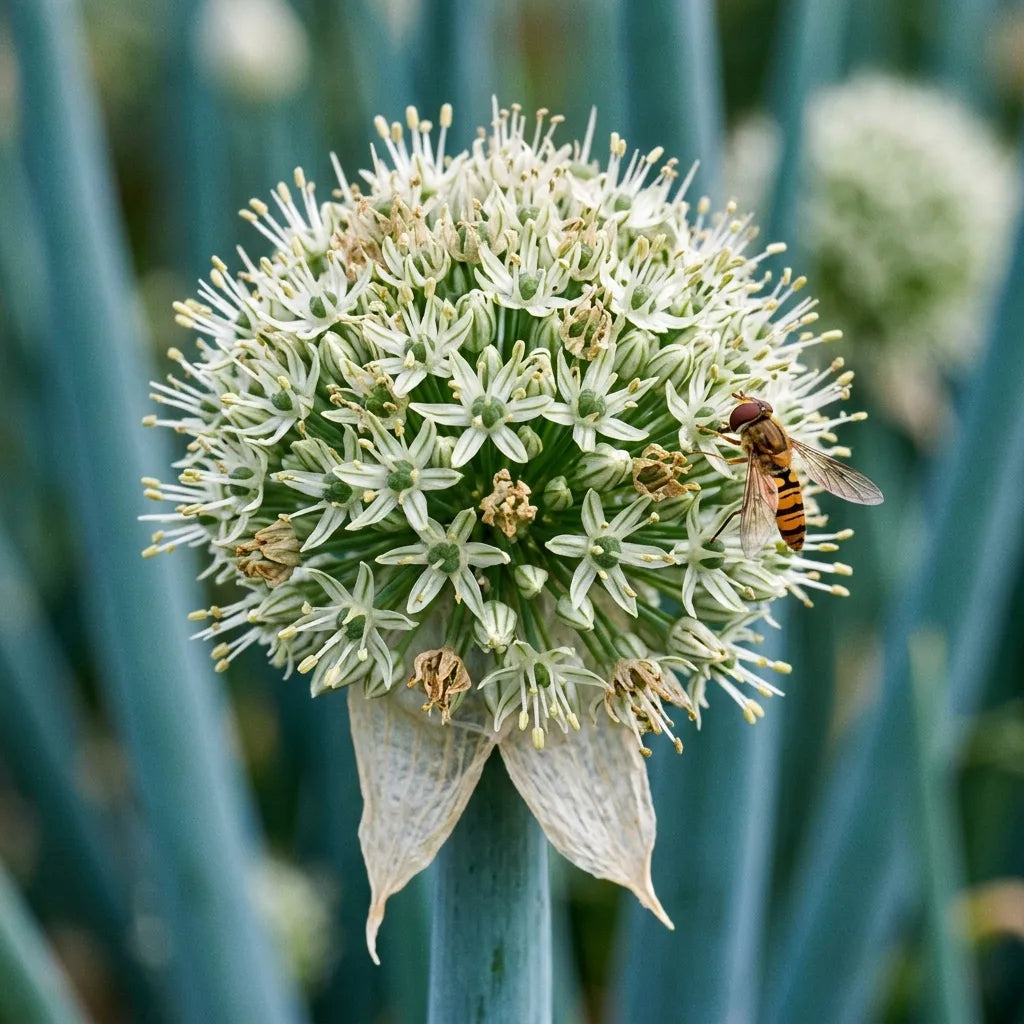
- If allowed to flower, its umbels are among the most visited flowers in the kitchen garden by bees and hoverflies.
Uses:
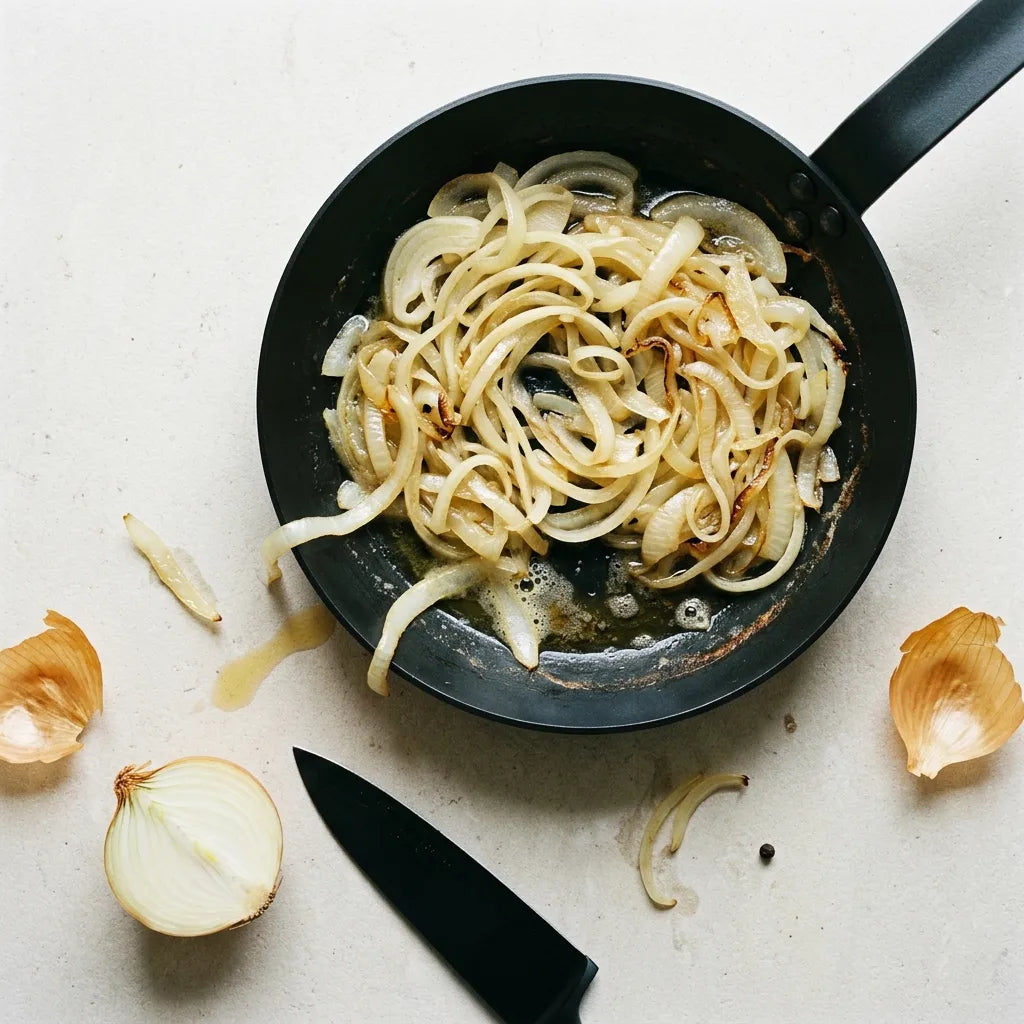
- The everyday onion: soups, sauces, stews, tarts, and preserves. Its full flavor stands up well to long cooking.
Saving your own seeds:
Replant two or three attractive stored bulbs in spring: they will flower and produce seeds that same year. Harvest the umbels when the capsules open to reveal black seeds. Isolate them from other onion varieties to prevent cross-pollination. See how to save your seeds.
Commitment to Quality: at SemiSauvage - Permaculture, we grow and select our seeds with respect for living things as our guiding principle. Based near the Volcanoes of Auvergne, we choose open-pollinated, non-hybrid varieties, tested for their germination rate, carefully sorted and packaged, with no chemical treatment whatsoever. Our belief: to give gardeners back the ability to resow, year after year, seeds that truly belong to them.
The onion you braid and that feeds you all winter.